

The Easter Shutdown: Why Parts of the World Pause During Easter
The Easter Shutdown is a period when many countries experience temporary closures of businesses, government offices, financial markets, and schools during the Easter holiday season. Rooted in centuries-old Christian traditions, this annual slowdown typically occurs around Good Friday and Easter Sunday, creating a long weekend in many regions. This article explores the history, global impact, economic effects, cultural traditions, and modern relevance of the Easter Shutdown.
CULTURE/TRADITIONEVENT/SPECIALCELEBRATION/FESTIVALS
Kim Shin
3/27/20265 min read
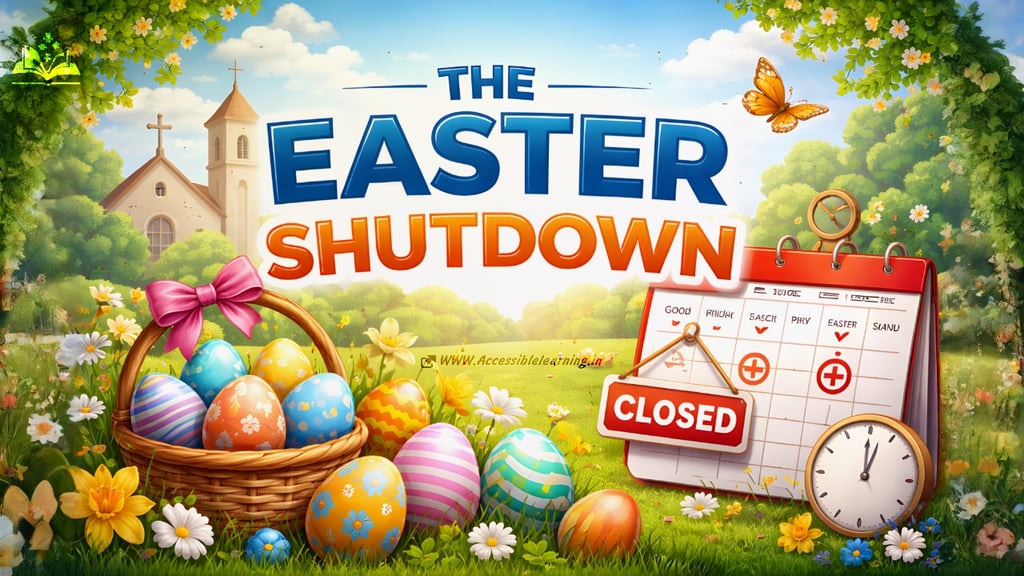
Every year around Easter, many countries experience a noticeable slowdown often called the “Easter Shutdown.” Offices close, financial markets pause, schools go on holiday, and people take time off to celebrate religious traditions, travel, or spend time with family.
Unlike unexpected shutdowns caused by crises or economic events, the Easter Shutdown is predictable and deeply rooted in centuries-old religious and cultural traditions. In many parts of Europe, Latin America, and Oceania, it creates one of the longest public holiday weekends of the year.
Below is a deeper look at how and why the Easter Shutdown happens, how it affects society, and why it still matters today.
What Is the Easter Shutdown?
The Easter Shutdown refers to the temporary pause or slowdown in business activity during the Easter holiday period. The shutdown is usually linked to the Christian observance of Holy Week, which includes several important days:
Holy Saturday
In many countries this creates a four-day-long weekend, though some schools and institutions extend the break for an entire week.
Historical Origins of the Easter Break
The idea of pausing work during Easter dates back to medieval Christian Europe, when religious observances were closely tied to everyday life.
Historically:
Communities stopped work to attend church services.
Markets and shops closed on major religious days.
Religious processions and ceremonies filled town squares.
Over centuries, these practices became official national holidays in many countries. Even in modern secular societies, the tradition remains because it supports cultural heritage and social connection.
Countries Where the Easter Shutdown Is Most Visible
Europe
The Easter shutdown is especially strong in many European countries. Typical closures include:
Banks and government offices
Financial markets
Schools and universities
Many retail stores
Countries where the Easter break is widely observed include:
Germany
Spain
Italy
Austria
Norway
Sweden
Switzerland
In parts of Scandinavia, businesses sometimes close from Maundy Thursday until the Tuesday after Easter, creating a longer spring break.
Latin America
In Latin America, Easter celebrations are closely tied to Semana Santa (Holy Week) traditions. Many countries host:
Large religious processions
Street festivals and cultural events
Pilgrimages and church ceremonies
Countries where Easter activities are particularly significant include:
Mexico
Guatemala
Brazil
Peru
Colombia
During this period, schools often close for a week, and tourism increases significantly.
Australia and New Zealand
Australia and New Zealand observe a widely recognized four-day national holiday weekend.
The official break typically includes:
Good Friday
Easter Saturday
Easter Sunday
Easter Monday
Many retail businesses close on Good Friday due to national trading regulations.
North America
The Easter shutdown is less widespread in North America.
In the United States:
Easter Sunday is widely celebrated socially and religiously.
Good Friday is not a federal holiday.
Most businesses remain open.
However, some schools and financial markets still adjust their schedules during the Easter weekend.

Impact on Global Financial Markets
The Easter period can influence global financial activity, especially because several major markets close during the holiday.
Common market closures include:
London Stock Exchange
Frankfurt Stock Exchange
Euronext markets
Many European banking systems
These pauses can temporarily reduce global trading volumes and delay financial settlements.
Supply Chains and Logistics Slowdowns
Another effect of the Easter Shutdown appears in international logistics. During the holiday weekend:
Ports operate with reduced staff
Truck transport decreases
Customs offices close in some regions
For companies involved in manufacturing or global trade, this can lead to short shipping delays or schedule adjustments. Businesses often plan shipments ahead of the Easter period to avoid disruptions.
Tourism and Travel Surge
While some sectors slow down, tourism experiences a strong boost during the Easter season.
Popular activities include:
Spring holiday travel
Cultural festivals
Religious pilgrimages
Family vacations
Major Easter travel destinations often include:
Rome
Seville
Jerusalem
Prague
Vienna
Airlines and hotels frequently report high booking volumes during Easter week.
Unique Cultural Traditions Around Easter
Different cultures celebrate Easter with unique customs that contribute to the holiday atmosphere.
Examples include:
Easter Egg Hunts: Children search for hidden decorated eggs or chocolate treats.
Religious Processions: Many cities host dramatic reenactments of biblical events.
Decorated Eggs: Countries such as Ukraine and Poland have traditional hand-painted eggs.
Special Easter Foods: Typical dishes include roast lamb, sweet breads, and festive pastries.
These traditions help keep Easter culturally relevant even for people who do not observe it religiously.
The Easter Shutdown and Work-Life Balance
In many places, the Easter holiday period is seen as a symbolic pause between winter and spring.
For workers, it provides:
A long weekend to relax
Time with family and friends
A chance to travel or celebrate
Some companies even align corporate calendars around Easter, scheduling fewer meetings and allowing employees to take leave.
The Digital Economy During Easter
Even though traditional sectors slow down, digital services often remain active.
During Easter:
Online shopping continues
Streaming services see increased usage
Remote work allows some businesses to stay operational
This contrast shows how modern economies balance traditional holidays with global digital connectivity.


Environmental and Social Effects
Interestingly, temporary slowdowns like the Easter shutdown can have short-term environmental benefits. During the holiday period there may be:
Reduced commuting
Lower industrial output
Less urban congestion
Although temporary, these pauses highlight how holiday breaks can slightly reduce environmental pressure.
Why the Easter Shutdown Still Matters
Despite globalization and a 24-hour economy, Easter remains one of the few times when entire regions collectively slow down. The Easter shutdown continues to matter because it reflects:
Religious heritage
Cultural traditions
Seasonal celebrations
The importance of rest and family time
For millions of people around the world, Easter provides a moment to pause, reflect, celebrate, and reconnect with community and tradition.
FAQ's
Q: What is the Easter Shutdown?
The Easter Shutdown refers to a temporary slowdown or closure of businesses, government offices, financial markets, and schools during the Easter holiday period. It usually occurs around Good Friday, Easter Sunday, and Easter Monday, creating a long holiday weekend in many countries.
Q: Why do businesses close during Easter?
Many businesses close during Easter because the holiday has strong religious, cultural, and historical significance in Christian-majority regions. Governments designate several days as public holidays, allowing workers to observe religious traditions, attend church services, and spend time with family.
Q: Which countries experience an Easter Shutdown?
The Easter shutdown is most noticeable in Europe, Latin America, Australia, and New Zealand. Countries such as Germany, Spain, Italy, Brazil, and Mexico often see widespread closures of banks, offices, and schools during the Easter period.
Q: Does the Easter Shutdown affect global financial markets?
Yes. Several major financial markets close during Easter holidays. For example, European stock exchanges and some banking systems pause trading on Good Friday and sometimes Easter Monday, which can temporarily reduce global trading activity.
Q: How long does the Easter Shutdown usually last?
The duration varies by country, but it typically lasts two to four days. In many places, the shutdown runs from Good Friday through Easter Monday, forming a long weekend. In some regions, schools and institutions extend the break to a full week.
Q: Do all countries observe the Easter Shutdown?
No. The impact of the Easter shutdown depends on national traditions. While many European and Latin American countries observe widespread closures, places like the United States and Canada usually maintain normal business operations, except for certain markets and schools.
Q: How does the Easter Shutdown affect travel and tourism?
The Easter holiday period often leads to increased travel and tourism. Many people take advantage of the long weekend to visit family, go on spring vacations, or attend religious festivals and cultural events in cities around the world.
Q: What industries are most affected by the Easter Shutdown?
Industries that rely on government services, banking systems, logistics, and international trade often experience temporary slowdowns. However, sectors like tourism, hospitality, and retail often see increased activity during the holiday period.
Q: Is the Easter Shutdown related only to religion?
Although Easter is a Christian holiday, the shutdown has evolved into a broader cultural and social tradition. Many people who are not religious still participate in Easter celebrations, family gatherings, and holiday travel.
Q: How do companies prepare for the Easter Shutdown?
Businesses often plan ahead by adjusting work schedules, shipping deadlines, and financial transactions before the holiday period begins. This helps minimize disruptions caused by closures and reduced working hours.
Subscribe to Frontier Intelligence
All © Copyright reserved by Accessible-Learning Hub
| Terms & Conditions
Accessible Learning Hub — Actionable clarity for high-agency minds.
Weekly breakdowns on AI breakthroughs, capital flow, and human performance systems. Zero fluff.