

Ottoman Empire: The Complete History, Rise, Fall & Legacy!
Discover the full history of the Ottoman Empire: its rise in 1299, golden age, major sultans, culture, military power, and eventual collapse in 1922. A comprehensive, fact-rich guide for students, researchers, and history enthusiasts.
TURKEYEMPIRES/HISTORYHISTORY
Jagdish Nishad
3/27/202615 min read
What Was the Ottoman Empire?
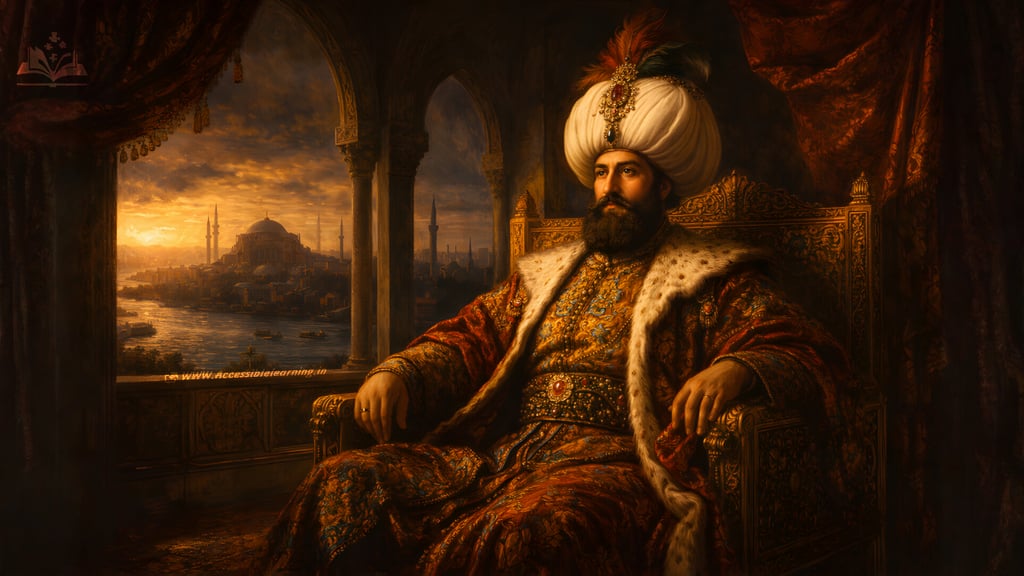
The Ottoman Empire (also known as the Osmanlı İmparatorluğu in Turkish) was one of the largest, most enduring, and most influential empires in world history. Founded by Osman I in 1299 in northwestern Anatolia (modern-day Turkey), it expanded over six centuries to encompass three continents: Europe, Asia, and Africa.
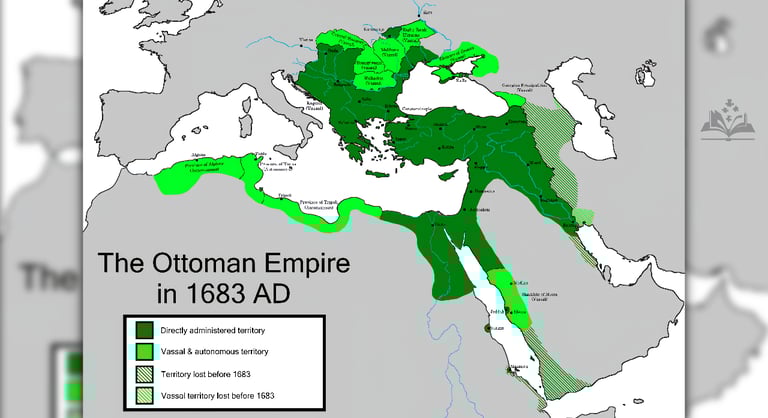
At its zenith in the 16th and 17th centuries, the Ottoman Empire stretched from the gates of Vienna in the west to the Persian Gulf in the east and from the Crimean Peninsula in the north to the deserts of North Africa in the south a territory exceeding 5.2 million square kilometers.
The empire was a multi-ethnic, multi-religious superstate that governed over 30 million subjects at its peak, speaking dozens of languages and practicing a wide spectrum of faiths, including Islam, Christianity, Judaism, and beyond.
To understand the modern Middle East, the Balkans, North Africa, and even parts of Eastern Europe is to understand the Ottoman world that shaped them.
When Did the Ottoman Empire Start and End?
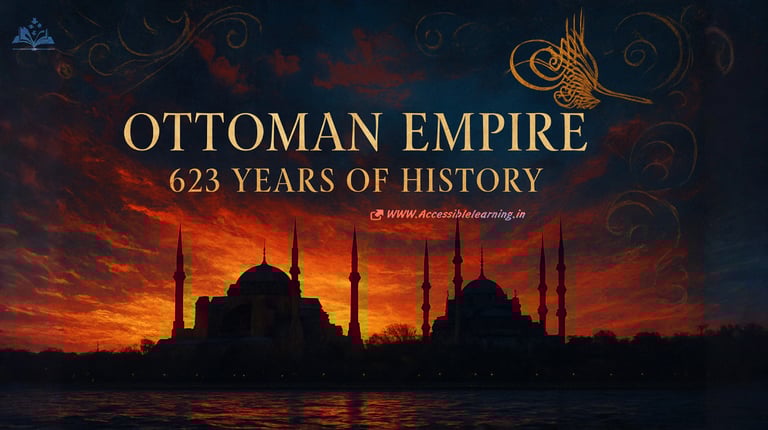
The Ottoman Empire officially began in 1299 CE when Osman I declared independence from the Seljuk Sultanate and founded his own principality in Söğüt, Anatolia. It formally ended on November 1, 1922, when the Grand National Assembly of Turkey abolished the sultanate, dissolving more than 600 years of Ottoman rule.
The Ottoman Caliphate the religious dimension of Ottoman authority was abolished separately on March 3, 1924, by Mustafa Kemal Atatürk's newly formed Republic of Turkey. Duration: Approximately 623 years making it one of the longest-lived empires in recorded history.
The Rise of the Ottoman Empire (1299–1453)
Origins: Osman I and the Anatolian Frontier
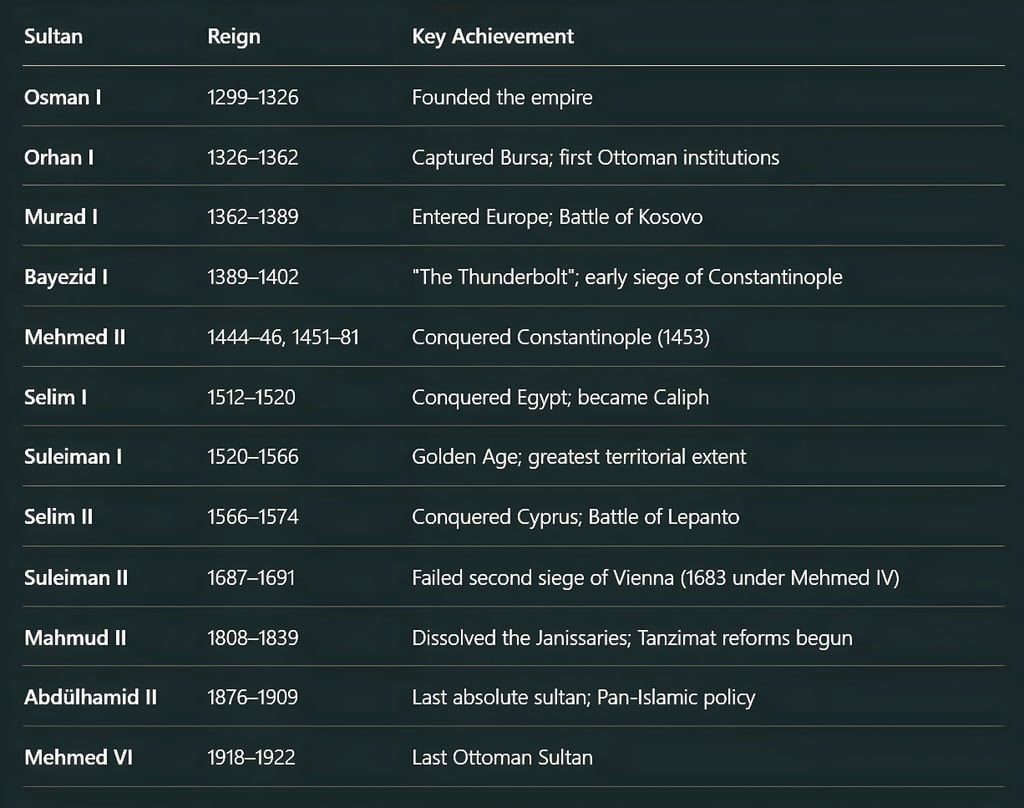
The Ottomans trace their lineage to the Kayı tribe, a branch of the Oghuz Turks who migrated westward from Central Asia. Under Osman I (r. 1299–1326), this small frontier principality began a relentless campaign of expansion against the weakening Byzantine Empire.
Osman's son, Orhan I (r. 1326–1362), captured the city of Bursa in 1326, making it the first Ottoman capital. Orhan introduced early institutions a standing army, an administrative structure, and standardized coinage that gave the nascent empire organizational depth.
Crossing into Europe: Murad I and the Balkans
Under Murad I (r. 1362–1389), the Ottomans crossed the Dardanelles and entered the Balkans, capturing Edirne (Adrianople) in 1369 and making it the new Ottoman capital. The pivotal Battle of Kosovo (1389) shattered the Serbian coalition and opened the Balkans to full Ottoman domination, though Murad himself was assassinated in its aftermath.
Bayezid I (r. 1389–1402), known as Yıldırım ("the Thunderbolt"), consolidated Balkan gains and besieged Constantinople. His campaign was interrupted only by the devastating defeat at the Battle of Ankara (1402) at the hands of Timur (Tamerlane), which temporarily fragmented the empire.
Recovery and Prelude to Constantinople
After a decade of civil war known as the Ottoman Interregnum (1402–1413), Mehmed I and then Murad II (r. 1421–1451) rebuilt the empire's cohesion, recaptured lost territories, and laid the military and diplomatic groundwork for the event that would change the world: the conquest of Constantinople.
The Golden Age: Height of Power (1453–1566)
The Fall of Constantinople (1453)
On May 29, 1453, the 21-year-old Sultan Mehmed II — forever after called Fatih, "the Conqueror" breached the walls of Constantinople with an army of roughly 80,000 soldiers and a revolutionary deployment of massive siege cannons cast by the Hungarian engineer Urban.
The fall of Constantinople:
Ended the Byzantine Empire, which had lasted over 1,000 years
Gave the Ottomans full control of the Bosphorus strait and Black Sea trade
Sent shockwaves through Christian Europe, accelerating the search for new trade routes (indirectly spurring the Age of Discovery)
Established Istanbul as the new Ottoman capital, a city Mehmed reimagined as a cosmopolitan imperial hub
Mehmed invited Greek, Armenian, and Jewish scholars and merchants back to repopulate and enrich his new capital, transforming it into one of the world's great cities within decades.
Selim I: Expansion into the Islamic World
Selim I ("the Grim," r. 1512–1520) dramatically reoriented Ottoman power southward and eastward. In just eight years, he:
Defeated the Safavid Shah Ismail I at the Battle of Chaldiran (1514), securing eastern Anatolia
Crushed the Mamluk Sultanate at Marj Dabiq (1516) and Ridaniyya (1517), absorbing Syria, Egypt, and the Hejaz (including Mecca and Medina)
Assumed the title of Caliph spiritual leader of all Sunni Muslims elevating the empire to a sacred dimension
This expansion doubled Ottoman territory and revenues almost overnight.
Suleiman the Magnificent: The Apex
Suleiman I (r. 1520–1566), known in the West as the Magnificent and in his own realm as Kanuni ("the Lawgiver"), brought the Ottoman Empire to its absolute apex of power, prestige, and cultural brilliance.
His military achievements were staggering:
Captured Belgrade (1521) and the island of Rhodes (1522)
Annihilated Hungary at the Battle of Mohács (1526)
Besieged Vienna (1529): the high-water mark of Ottoman expansion in Europe
Extended control over Iraq and the Persian Gulf by 1535
Dominated the Mediterranean through the naval genius of Admiral Hayreddin Barbarossa
Equally important were his legal and administrative reforms. Suleiman codified Ottoman secular law (kanun), creating a sophisticated legal framework that complemented Islamic sharia. His reign is considered the Ottoman Golden Age a period of architectural magnificence, literary flowering, and imperial confidence.
The Ottoman Military: Janissaries, Sipahis & Siege Warfare
The Ottoman military machine was, for centuries, the most feared and formidable in the world a complex, layered system of professional soldiers, cavalry, and naval forces.
The Janissaries (Yeniçeri)
Perhaps the most iconic Ottoman military institution, the Janissaries were an elite infantry corps recruited primarily through the devshirme system a levy of Christian boys from Balkan provinces who were converted to Islam, given rigorous military and administrative training, and formed into a uniquely loyal standing army directly serving the sultan.
At their height, the Janissaries were Europe's first true professional standing army, feared for their discipline, their use of firearms, and their esprit de corps. However, they became increasingly politically powerful over time capable of making or breaking sultans and were finally and brutally dissolved by Mahmud II in the Auspicious Incident of 1826.
The Sipahis
The Sipahis were the Ottoman feudal cavalry, supported by land grants (timars). They formed the backbone of the Ottoman field army and were particularly formidable in the 14th through 16th centuries. Like the Janissaries, they eventually grew politically unwieldy as the timar system weakened.
Naval Power
Ottoman naval power reached its peak under Hayreddin Barbarossa, the Grand Admiral who dominated the Mediterranean in the 1530s–1540s. The Ottoman navy fought across the Red Sea, the Indian Ocean, and the Mediterranean, making the empire a true maritime power.
The Battle of Lepanto (1571), a coalition of European Christian states delivered a major defeat to the Ottoman fleet, though the Ottomans rebuilt their navy with remarkable speed within two years.
Siege Warfare and Gunpowder
The Ottomans were early and innovative adopters of gunpowder artillery. The massive bombards used to breach Constantinople's walls in 1453 were engineering marvels of the age. The Ottoman military's integration of cannon and firearms gave them a decisive edge over opponents still reliant on traditional medieval warfare.
Ottoman Society, Culture & Daily Life
The Millet System
One of the most sophisticated aspects of Ottoman governance was the millet system a framework of structured legal and cultural autonomy for non-Muslim communities (Greeks, Armenians, and Jews). Each millet governed its own internal legal and religious affairs under its own religious leaders (patriarch, chief rabbi), paying a special tax (jizya) in exchange for protection and freedom of worship.
This system made the Ottoman Empire remarkably tolerant by pre-modern standards, enabling diverse communities to coexist, though it also hardened group identities that would eventually fuel nationalist tensions in the 19th century.
The Harem and Palace Life
The Ottoman imperial harem was far more than a domestic space; it was a political institution. The Topkapı Palace in Istanbul housed not only the sultan and his family but also thousands of court officials, servants, and administrative personnel. The sultan's mother (Valide Sultan) wielded enormous informal political power, especially during the so-called Sultanate of Women (approximately 1520–1683).
Literature and Poetry
Ottoman classical literature, written in Ottoman Turkish (a highly Persianized, Arabicized literary language), produced extraordinary poetry in the tradition of Persian mystical verse. Poets like Fuzuli, Baki, and Nedim stand among the finest in the Islamic literary tradition. The reign of Suleiman was particularly rich in literary patronage.
Coffeehouses and Social Life
The Ottoman Empire gave the world the coffeehouse (kahvehane) a revolutionary social institution where men gathered to play games, hear news, discuss politics, and listen to music. By the 17th century, Istanbul had over 600 coffeehouses. This institution spread to Europe, directly inspiring the café culture of Vienna, London, and Paris.
Religion and the Ottoman Caliphate
Islam was the official state religion and foundation of Ottoman legitimacy. The sultan was simultaneously a temporal ruler and (after Selim I's assumption of the title in 1517) the Caliph, the symbolic successor to the Prophet Muhammad and protector of the two holy cities of Mecca and Medina.
The chief religious official was the Sheikh al-Islam (Şeyhülislam), who issued legal rulings (fatwas) and headed the empire's vast network of Islamic law (sharia) courts.
The empire also oversaw major Sufi orders, such as the Mevlevi Order (the "Whirling Dervishes" founded by followers of Rumi) and the Bektashi Order, which was closely tied to the Janissaries.

Ottoman Architecture and Art
The Genius of Mimar Sinan
No name defines Ottoman architecture more completely than Mimar Sinan (c. 1489–1588), the chief architect to three successive sultans and the designer of over 370 structures across the empire. His masterpieces include:
Süleymaniye Mosque (Istanbul, 1557): a soaring complex of mosque, schools, hospital, and caravanserai built for Suleiman the Magnificent
Selimiye Mosque (Edirne, 1574): considered Sinan's personal masterpiece, with a dome exceeding the dimensions of the Hagia Sophia
Şehzade Mosque (Istanbul, 1548): built as a memorial to Suleiman's beloved son Şehzade Mehmed
Sinan's genius lay in solving the structural challenges of spanning enormous domes over open prayer halls, creating sublime spaces of light and geometric harmony.
The Hagia Sophia
After the conquest of Constantinople in 1453, the Hagia Sophia, originally a Byzantine Christian cathedral, was converted into a mosque, its interiors adorned with Islamic calligraphy and covered mosaics, while its minarets became defining features of Istanbul's skyline. It remained an Ottoman imperial mosque until 1934, when it was converted into a museum by Atatürk. In 2020, it was reconverted into a mosque.
Iznik Ceramics and Illuminated Manuscripts
Ottoman decorative arts reached extraordinary heights in Iznik ceramics, brilliantly colored tiles featuring floral and geometric designs that adorned mosques, palaces, and public buildings across the empire. Ottoman illuminated manuscripts (tezhip) and calligraphy were equally prized art forms, their masters held in the same regard as poets and architects.
Economy and Trade Routes of the Ottoman Empire
Control of the Silk Road
The Ottoman Empire sat at the crossroads of the world's most lucrative trade routes, connecting Europe to Asia and Africa. Control of routes through Anatolia, the Levant, Egypt, and the Black Sea gave the Ottomans enormous leverage over the global spice, silk, and slave trades.
This commercial dominance was one of the principal motivations behind European powers' frantic search for alternative sea routes to Asia, a quest that directly led to Portuguese explorer Vasco da Gama's rounding of Africa (1498) and Columbus's westward voyage (1492).
Agricultural Wealth and the Timar System
Ottoman agricultural production was organized around the timar system, in which the sultan granted military officers (sipahis) the right to collect taxes from specific agricultural areas in exchange for military service. This system, effective in the 14th–16th centuries, gradually broke down as the empire shifted to a cash-based economy and hired mercenary troops.
The Capitulations
The capitulations (imtiyazât) were trade treaties granting European merchants (initially Genoese and Venetians, later French, English, and Dutch) special legal and commercial privileges within the empire. Originally tools of Ottoman diplomacy and commercial management, they became serious liabilities in the 19th century as European economic power grew, contributing to the empire's financial subordination.
The Decline and Fall of the Ottoman Empire (1699–1922)
The Long Retreat (1683–1800)
The failure of the Second Siege of Vienna (1683), repulsed by a Polish-Austrian relief force, marks the beginning of the Ottoman strategic retreat in Europe. The subsequent Great Turkish War (1683–1699) ended with the Treaty of Karlowitz (1699), by which the Ottomans ceded Hungary to the Habsburg Empire, the first major territorial loss in Ottoman history.
Throughout the 18th century, the empire faced simultaneous pressure from an expanding Russian Empire under Peter and Catherine the Great (who coveted the Black Sea and Constantinople) and resurgent Austrian power in Central Europe.
The "Sick Man of Europe"
By the 19th century, European diplomats had dubbed the Ottoman Empire the "Sick Man of Europe," a phrase widely attributed to Tsar Nicholas I. The empire struggled with:
Military defeats against Russia (Russo-Turkish Wars of 1768–1774, 1787–1792, 1806–1812, 1828–1829, and 1877–1878)
Greek independence (1821–1829)
Egyptian autonomy under Muhammad Ali
Balkan nationalist uprisings (Serbian, Bulgarian, Romanian, Albanian)
Crippling debt to European creditors
The declaration of bankruptcy in 1875 and the establishment of the Ottoman Public Debt Administration (1881), effectively placing Ottoman finances under European supervision
The Tanzimat Reform Era (1839–1876)
Recognizing the existential threat of European dominance, a generation of reformist Ottoman statesmen launched the Tanzimat ("Reorganization") period. Key reforms included:
The Gülhane Imperial Edict (1839): guaranteed security of life, property, and honor to all subjects regardless of religion
The Hatt-ı Hümayun (1856): expanded equality between Muslims and non-Muslims
Creation of new secular schools, courts, and administrative systems modeled on European precedents
The first Ottoman Constitution (1876) and representative parliament
However, Sultan Abdülhamid II (r. 1876–1909) suspended the constitution in 1878, ruling as an autocrat and promoting Pan-Islamic solidarity as a defensive ideology against European encroachment.
The Young Turks and the Committee of Union and Progress (CUP)
In 1908, the Young Turk Revolution forced Abdülhamid II to restore the constitution. The Committee of Union and Progress (CUP), led by figures like Enver Pasha, Talaat Pasha, and Cemal Pasha (the so-called "Three Pashas"), gradually took control of the government.
The empire suffered devastating losses in the Balkan Wars (1912–1913), losing nearly all of its remaining European territory.
The Ottoman Empire and World War I
The Ottoman Empire entered World War I on the side of the Central Powers (Germany and Austria-Hungary) in October 1914, motivated by a secret alliance signed in August 1914 and the hope that victory would help recover lost territories and stave off European dominance.
Key fronts and events:
Gallipoli Campaign (1915–1916): The Allied attempt to capture Istanbul via the Dardanelles strait ended in a catastrophic defeat, with over 250,000 Allied casualties. For Turkey, it was a defining national moment; the defense was commanded by Mustafa Kemal, who became a national hero.
Arab Revolt (1916): With British encouragement and the promise of Arab independence, Sharif Hussein of Mecca led an uprising against Ottoman authority, opening a southern front. The British intelligence officer T.E. Lawrence became synonymous with this campaign.
Armenian Genocide (1915–1916): The CUP government orchestrated the systematic deportation and mass killing of the Armenian population of Anatolia. Scholarly consensus estimates that between 600,000 and 1.5 million Armenians perished in an event recognized as genocide by many nations, though the Republic of Turkey disputes this characterization. This remains one of the most painfully contested historical and political questions of the 20th century.
Mesopotamia and Palestine: Ottoman forces fought protracted campaigns against British forces advancing from Egypt and the Persian Gulf, eventually losing Baghdad (1917) and Jerusalem (1917).
The Ottomans were on the losing side when the Armistice of Mudros ended hostilities on October 30, 1918.
The End of the Ottoman Empire and Birth of Modern Turkey
The Treaty of Sèvres (1920), imposed by the victorious Allies, proposed to partition Anatolia itself, giving territory to Greece and Armenia and creating an internationally controlled zone around Istanbul. For many Turks, this was an existential humiliation.
Mustafa Kemal Atatürk, the hero of Gallipoli, led the Turkish War of Independence (1919–1923) against both the Allied occupation and Greek military forces in western Anatolia. The Greek-Turkish War ended with a decisive Turkish victory and the Convention Concerning the Exchange of Populations (1923), a traumatic forced exchange of approximately 1.5 million Greeks from Anatolia and 500,000 Muslims from Greece, permanently reshaping the demographic map of the Aegean.
The Treaty of Lausanne (July 24, 1923) replaced Sèvres, recognized the new Turkish state's borders, and formally ended the Ottoman chapter in world history.
The Republic of Turkey was proclaimed on October 29, 1923, with Mustafa Kemal Atatürk as its first president. He launched sweeping westernization reforms: abolishing the sultanate and caliphate, replacing Arabic script with the Latin alphabet, mandating secular education, and transforming Turkey into a modern nation-state.
Ottoman Empire's Legacy and Its Influence Today
The Ottoman Empire's collapse did not erase its profound influence; rather, it embedded it into the foundations of dozens of modern nations.
Political Borders
The post-World War I dissolution of the Ottoman Empire produced the modern borders of the Middle East, drawn largely by British and French diplomats under the Sykes-Picot Agreement (1916), borders that cut across ethnic, tribal, and religious communities, creating fault lines still generating conflict today (Iraq, Syria, Israel-Palestine, Lebanon, and Jordan).
Cultural Continuity
Ottoman culinary traditions gave the world kebab, baklava, coffee, yogurt dishes, and dozens of other foods now considered staples across Europe, the Middle East, and Central Asia. Languages like modern Turkish, Arabic, Greek, Serbian, Romanian, and Albanian carry thousands of Ottoman loanwords. Ottoman music, poetry, and architectural vocabulary remain living traditions in the cultures of former Ottoman lands.
The Balkans and Modern Turkey
The Balkans were shaped indelibly by five centuries of Ottoman administration. Religious affiliations, architectural forms (mosques, hammams, and bridges), family names, and administrative traditions across Bosnia, Albania, Kosovo, Bulgaria, and Greece all carry Ottoman imprints.
Modern Turkey sees itself simultaneously as the inheritor and successor of the Ottoman world, a complex inheritance debated passionately in Turkish politics and culture between Kemalist secular nationalists and those who advocate a more explicitly Ottoman-Islamic identity (Osmanlıcılık or Neo-Ottomanism).
The Question of Ottoman Nostalgia
The contemporary political phenomenon of "Neo-Ottomanism" associated with Turkey under President Recep Tayyip Erdoğan and the AKP party seeks to reassert Turkish regional influence in the former Ottoman world: Syria, Iraq, Libya, the Balkans, and the Caucasus. Critics see it as romantic imperialism; supporters frame it as natural regional leadership rooted in shared history and culture.
Frequently Asked Questions
Q: What was the Ottoman Empire, and why was it important?
The Ottoman Empire (1299–1922) was a vast multi-ethnic, multi-religious empire that ruled much of southeastern Europe, western Asia, and northern Africa for over six centuries. It was important because it controlled major trade routes between East and West, preserved and transmitted classical Islamic scholarship, shaped the cultures of over 40 modern nations, and left deep political, architectural, and cultural legacies across three continents.
Q: Who founded the Ottoman Empire?
The Ottoman Empire was founded by Osman I (also spelled Osman Gazi), a Turkic chieftain who established an independent principality in northwestern Anatolia around 1299 CE. The empire's name derives from the Arabic form of his name: Uthmān → Ottoman.
Q: What caused the fall of the Ottoman Empire?
The Ottoman Empire's fall resulted from multiple interconnected causes: repeated military defeats (particularly against Russia and Austria), the loss of Balkan territories in the 19th and early 20th centuries, economic dependency on European creditors, internal nationalist movements among non-Turkish subjects, the disastrous choice to join the Central Powers in World War I, and the subsequent Allied occupation of Ottoman territories. The final blow was Mustafa Kemal Atatürk's Turkish War of Independence, after which the sultanate was abolished in November 1922.
Q: How large was the Ottoman Empire at its peak?
At its maximum territorial extent under Suleiman the Magnificent in the mid-16th century, the Ottoman Empire covered approximately 5.2 million square kilometers, encompassing modern Turkey, Greece, Bulgaria, Serbia, Hungary, Romania, Ukraine, Syria, Lebanon, Israel-Palestine, Jordan, Iraq, Saudi Arabia (the Hejaz), Egypt, Libya, Tunisia, Algeria, and parts of Sudan and the Caucasus.
Q: What religion was the Ottoman Empire?
The Ottoman Empire was officially a Sunni Muslim state. The Sultan was also the Caliph from 1517 onward, giving him supreme spiritual authority over Sunni Muslims worldwide. However, the Ottoman system (the millet system) granted considerable legal and religious autonomy to Christian and Jewish communities living within its borders.
Q: Who was the greatest Ottoman sultan?
Most historians point to Suleiman I ("the Magnificent," r. 1520–1566) as the greatest Ottoman sultan, citing his unmatched combination of military conquest, legal codification, administrative reform, and cultural patronage. Mehmed II ("the Conqueror") is equally celebrated for the conquest of Constantinople in 1453. Selim I is admired for his rapid, dramatic expansion and assumption of the Caliphate.
Q: What is the difference between the Ottoman Empire and the Turkish Empire?
"Ottoman Empire" is the correct historical term for the empire founded by Osman I. "Turkish Empire" is an informal, and somewhat inaccurate, popular synonym, inaccurate because the empire was genuinely multi-ethnic, ruling and incorporating Arabs, Greeks, Slavs, Kurds, Armenians, Jews, Berbers, and many others. The empire's ruling class was Ottoman Turkish, but the state itself was cosmopolitan in composition and ideology.
Q: When did the Ottoman Empire end?
The Ottoman Sultanate was formally abolished on November 1, 1922, by the Grand National Assembly of Turkey. The last sultan, Mehmed VI, went into exile. The Ottoman Caliphate was abolished separately on March 3, 1924. The Republic of Turkey was proclaimed on October 29, 1923, as the Ottoman Empire's legal and territorial successor state.
Q: Did the Ottoman Empire practice slavery?
Yes. Like most pre-modern empires, the Ottoman Empire practiced slavery in several forms. Enslaved people were obtained through war, raids, and trade. However, Islamic law regulated slavery and forbade the enslavement of free Muslims. The most distinctive Ottoman institution was the devshirme, the levy of Christian boys for military and administrative training, a form of institutionalized forced service distinct from chattel slavery but deeply coercive. Slavery in the Ottoman Empire was officially abolished under pressure from European powers in 1882, though the practice continued informally in some areas longer.
Q: What is the Ottoman Empire called today?
There is no single country that directly replaced the Ottoman Empire. Its Anatolian core became the Republic of Turkey (1923). Its Arab provinces became the modern states of Syria, Lebanon, Jordan, Iraq, Israel, Palestine, Saudi Arabia, Yemen, and others, most under initial British or French mandate. Its Balkan territories became or were absorbed into Greece, Bulgaria, Serbia, Romania, Albania, and other Balkan states. Its North African provinces became Libya, Tunisia, Algeria, and Egypt.
Subscribe to Frontier Intelligence
All © Copyright reserved by Accessible-Learning Hub
| Terms & Conditions
Accessible Learning Hub — Actionable clarity for high-agency minds.
Weekly breakdowns on AI breakthroughs, capital flow, and human performance systems. Zero fluff.