

The Mongol Empire: Rise, Reign, and the Legacy That Reshaped the World
From the windswept steppes of Mongolia to the gates of Vienna and the harbors of China, the Mongol Empire wasn't just the largest contiguous land empire in history; it was the first true engine of globalization. This article explores how a confederation of nomadic tribes forged a world-altering civilization: the conquests, the culture, the commerce, and the complex legacy that still echoes across modern borders, politics, and populations.
CHINAEMPIRES/HISTORYHISTORY
Kim Shin
3/18/202611 min read

What Was the Mongol Empire?
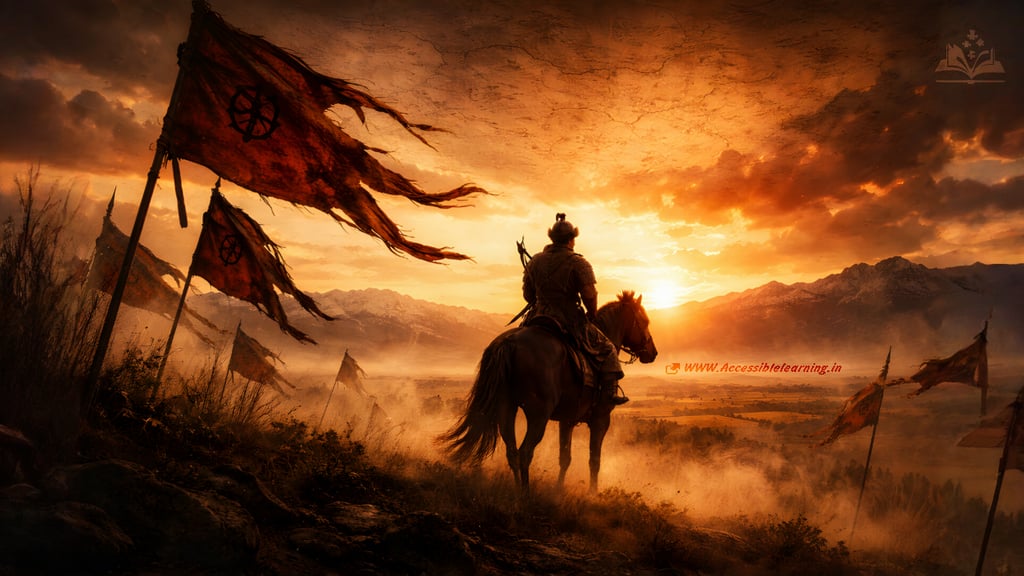
The Mongol Empire was the largest contiguous land empire ever established in human history, stretching at its peak from the Pacific coast of East Asia to the doorstep of Eastern Europe. Founded in 1206 CE by Genghis Khan, born Temüjin, it encompassed roughly 24 million square kilometers at its territorial zenith, governing an estimated 100 million people across dozens of modern-day nations.
More than a story of conquest, the Mongol Empire is a story of transformation: of trade routes reopened, of cultures collided, of plagues spread, and of a political sophistication far more nuanced than the popular image of thundering horsemen suggests.
The Rise of Genghis Khan: From Orphan to World Conqueror
Early Life and Tribal Unification
Temüjin was born around 1162 CE on the steppes of what is now Mongolia. His early life was marked by hardship; his father was poisoned by a rival tribe when Temüjin was roughly nine years old, and his family was subsequently abandoned by their clan. He was even captured and enslaved by a rival chieftain before escaping.
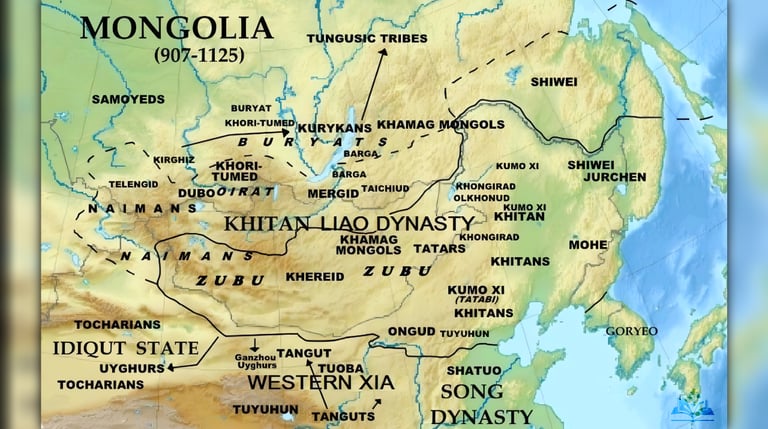
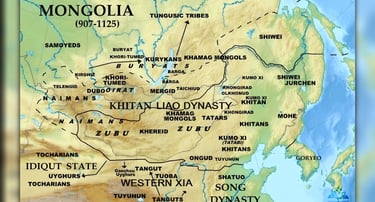
These experiences forged a man with an exceptional talent for survival, coalition-building, and strategic patience. Over decades of warfare and diplomacy, Temüjin subdued or absorbed the major tribal confederations of the Mongolian steppe the Tatars, Keraites, Naimans, and Merkits uniting them under a single banner.
The Great Kurultai of 1206
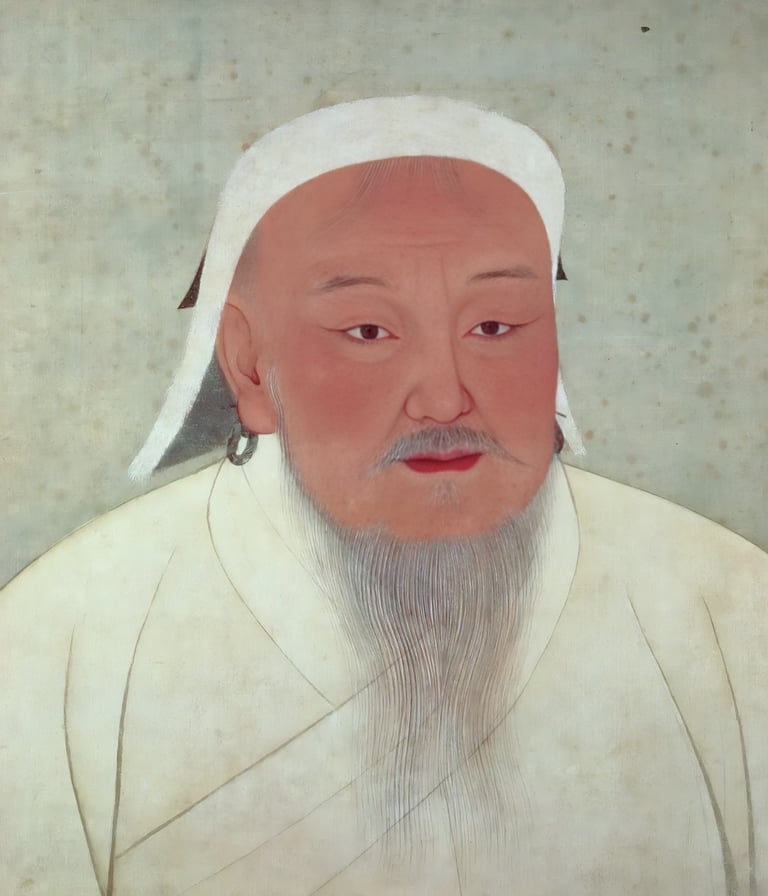
In 1206, at a grand assembly (kurultai) on the banks of the Onon River, Temüjin was proclaimed Genghis Khan, a title historians debate but often translate as "Universal Ruler" or "Oceanic Khan." This moment marks the official founding of the Mongol Empire.
Genghis Khan immediately began restructuring Mongolian society along military and meritocratic lines. He abolished the old tribal aristocracy, organized his army into units of tens, hundreds, thousands, and ten-thousands (tumens), and created a legal code called the Yasa a set of laws that governed everything from military conduct to trade.
Military Genius: How the Mongols Conquered the World
The Mongol military machine was not simply brute force. It was a sophisticated, adaptive war system that routinely defeated armies five to ten times its size.
Speed and mobility were its defining features. Mongol cavalry could cover 100 miles in a single day, an almost incomprehensible pace for medieval warfare. Each soldier rode multiple horses, rotating between them to maintain pace.
Psychological warfare was equally central. The Mongols systematically offered cities a chance to surrender peacefully. Those that complied were often spared and integrated. Those that resisted faced total destruction, a policy deliberately designed to make the next city think twice. Word spread far faster than armies.
Intelligence and adaptability completed the picture. The Mongols adopted siege warfare technologies from the Chinese and Persians, recruited engineers, used spies extensively, and adapted battlefield tactics to terrain and enemy style with remarkable flexibility.
Major Campaigns Under Genghis Khan
Xi Xia (Western Xia Dynasty): 1209–1227. The campaign that opened the path into China.
Jin Dynasty (Northern China): 1211–1234. Decades of grinding warfare that eventually collapsed one of China's most powerful dynasties.
Khwarazmian Empire (Central Asia/Persia): 1219–1221. One of history's most rapid and devastating conquests was triggered when the Khwarazmian Shah executed Mongol trade envoys, a catastrophic diplomatic miscalculation. Cities like Samarkand, Bukhara, and Merv, which had been among the wealthiest in the Islamic world, were reduced to ruins.
The Expansion Under Genghis Khan's Successors
Genghis Khan died in 1227, likely from injuries sustained during a campaign against Xi Xia. But the empire did not die with him; it accelerated.
Ögedei Khan and the Push West
His son Ögedei Khan (r. 1229–1241) continued the conquest of the Jin Dynasty and launched the spectacular Mongol invasion of Europe under generals Subutai and Batu Khan. In 1241, Mongol forces simultaneously crushed Polish and Hungarian armies at the Battle of Legnica and the Battle of Mohi, two of medieval Europe's greatest military disasters. Only Ögedei's sudden death halted the westward advance, forcing the Mongol generals to return east for a succession kurultai.
Möngke Khan and the Islamic World
Under Möngke Khan (r. 1251–1259), the Mongols turned south and west into the Islamic heartland. His brother Hülegü Khan sacked Baghdad in 1258, executing the Abbasid Caliph Al-Musta'sim and effectively ending the Abbasid Caliphate a political and cultural institution that had endured for five centuries. Historians still debate the death toll, but estimates range from tens of thousands to over a million.
The Mongol advance into the Middle East was finally halted at the Battle of Ain Jalut in 1260, where the Egyptian Mamluks, themselves former military slaves, defeated a Mongol force in modern-day Palestine. It was one of the first decisive military defeats the Mongols had suffered and is often cited as a turning point in world history.
Kublai Khan and the Yuan Dynasty
Kublai Khan (r. 1260–1294) completed the conquest of China's Song Dynasty by 1279, establishing the Yuan Dynasty, the first time all of China had been ruled by a non-Han foreign power. He moved the capital to Dadu (modern Beijing) and became one of history's most famous rulers, immortalized by Marco Polo's accounts.
Kublai's attempted invasions of Japan (1274 and 1281) failed catastrophically due to typhoon storms the Japanese called kamikaze ("divine winds"). His campaigns into Southeast Asia Vietnam, Burma, and Java also ended in failure or inconclusive results, illustrating the limits of Mongol power in jungle and maritime environments.
The Pax Mongolica: The World-Changing Peace
Between roughly 1250 and 1350, large portions of Eurasia enjoyed what historians call the Pax Mongolica, the Mongol Peace. Under a single political authority stretching from China to Eastern Europe, trade along the Silk Road flourished as never before.
For the first time in history, a merchant could travel from Venice to Beijing with relative safety. The Mongols maintained roads, established postal relay stations (yam system), guaranteed safe passage for ambassadors, and standardized weights and measures across their domains.
This era of connectivity had enormous consequences:
Technology transfer: Gunpowder, printing, and other Chinese innovations flowed westward.
Cultural exchange: Persian art, Islamic science, and Chinese craftsmanship blended in Mongol courts.
Diplomatic contact: The papacy, European kings, and the Mongols exchanged embassies. William of Rubruck and John of Plano Carpini journeyed to the Mongol court, producing some of the earliest European accounts of Central and East Asia.
Marco Polo's travels: Whether entirely factual or embellished, Marco Polo's account of his time at Kublai Khan's court introduced European audiences to the wealth and sophistication of the East, helping inspire the Age of Exploration.
The Black Death: The Mongol Empire's Most Devastating Legacy
The Silk Road that the Mongols kept open also carried something catastrophic: the bubonic plague. Scholars widely believe the pandemic we call the Black Death was spread across Eurasia along Mongol trade and military routes in the 1340s.
The outbreak is often traced to Central Asia, spreading west to the Crimea and then by ship to Europe, where it killed an estimated 30–60% of Europe's population between 1347 and 1353. The Mongol siege of Caffa in 1346 — where besieging forces reportedly catapulted plague-ridden corpses over the city walls is sometimes cited as one of history's first instances of biological warfare, though the full epidemiology is more complex.
The Fragmentation of the Empire
The Mongol Empire never had a stable succession mechanism. After Möngke Khan's death in 1259, civil war between Kublai and his brother Ariq Böke fractured imperial unity. The empire splintered into four major successor states, known as khanates:
The Yuan Dynasty (East Asia): Ruled by Kublai Khan and his successors, governing China and Mongolia. Overthrown by the native Han Chinese Ming Dynasty in 1368.
The Chagatai Khanate (Central Asia): Occupying the heartland of Central Asia, it persisted in various forms well into the 17th century.
The Ilkhanate (Persia and the Middle East): Founded by Hülegü Khan. Its rulers gradually converted to Islam. It dissolved in the mid-14th century, eventually giving way to successor dynasties, including the Timurids, whose most famous descendant, Timur (Tamerlane), launched his own devastating campaigns in the late 14th century.
The Golden Horde (Russia and the Pontic Steppe): The khanate that had the most lasting impact on Russian history. It dominated the Rus principalities for roughly 250 years, a period Russians call the Mongol Yoke (c. 1237–1480). The Golden Horde converted to Islam in the early 14th century and eventually fragmented into the Kazan, Astrakhan, and Crimean Khanates, among others.
The Mongol Empire's Impact on the Modern World
The Mongol Empire's consequences reverberate into the 21st century in ways both subtle and stark.
Russia's political culture was shaped by centuries of Mongol rule. Historians debate how deeply the Mongol Yoke influenced Russian autocracy, centralization, and foreign policy orientation a debate that remains live and often politically charged.
The Islamic world's demographic and intellectual decline following the Mongol sack of Baghdad is considered a pivotal factor in the relative shift of global intellectual leadership. Libraries, irrigation systems, and urban centers destroyed in the 13th century took centuries to rebuild, if they were rebuilt at all.
China's demographic collapse during the Mongol conquest has been estimated at tens of millions of deaths. Yet Kublai Khan's Yuan Dynasty also laid administrative groundwork that the subsequent Ming Dynasty inherited.
Central Asia's depopulation was so severe in some regions that it permanently altered the ethnic and linguistic composition of the landscape. Areas that had been predominantly Iranian-speaking became increasingly Turkic.
The modern map of Eurasia, with the borders of Russia, China, Iran, and the Central Asian republics, was in many ways drawn in the crucible of Mongol conquest and the post-Mongol rearrangements that followed.
Mongol Culture, Religion, and Governance
A common misconception is that the Mongols were culturally nihilistic destroyers rather than builders. The reality is more complex.
Religious tolerance was a defining feature of the Mongol Empire. Genghis Khan's Yasa guaranteed freedom of religion across the empire. At various points, Mongol rulers patronized Buddhism, Nestorian Christianity, Tibetan Lamaism, Taoism, and Islam. The Mongol court was a remarkable meeting place of faiths.
Shamanism remained the spiritual bedrock of traditional Mongolian society, even as rulers pragmatically adopted other faiths for political legitimacy.
The arts flourished in Mongol-controlled Persia and China. The Ilkhanate period produced extraordinary Persian miniature painting, blending Chinese artistic influences with Islamic aesthetics in an entirely new visual language. The Yuan Dynasty's court was a center of Chinese drama, painting, and poetry.
Administrative sophistication was real. The Mongols relied heavily on literate administrators from conquered peoples. Persian, Chinese, and Uyghur bureaucrats ran the empire's day-to-day governance, while Mongol nobles provided military and political authority.
Key Figures of the Mongol Empire
Genghis Khan (c. 1162–1227): Founder and Great Khan. The architect of the empire's military and legal foundations.
Subutai (c. 1175–1248): Genghis Khan's greatest general. He won more than 65 pitched battles across three decades, campaigning in China, Persia, Russia, and Europe. Many military historians rank him among the greatest commanders in history.
Ögedei Khan (1186–1241): Genghis Khan's chosen successor. Completed the Jin conquest and launched the invasion of Europe.
Möngke Khan (1209–1259): Restored order after a period of succession crisis. Launched simultaneous campaigns in the Middle East and China.
Kublai Khan (1215–1294): Completed the conquest of China. Founded the Yuan Dynasty. Patron of arts and trade. The ruler Marco Polo served.
Hülegü Khan (1217–1265): Sacked Baghdad. Founded the Ilkhanate.
Batu Khan (c. 1205–1255): Grandson of Genghis, founder of the Golden Horde. Led the invasion of Russia and Europe.
The Mongol Empire in Modern Scholarship and Culture
Academic understanding of the Mongol Empire has shifted significantly over the past three decades. Scholars like Timothy May, Jack Weatherford (whose 2004 book Genghis Khan and the Making of the Modern World became a popular landmark), Peter Jackson, and David Morgan have moved away from purely destructive narratives toward more nuanced assessments of Mongol governance, connectivity, and cultural synthesis.
Mongolia itself, the modern nation-state, has experienced a powerful nationalist revival of Chinggisid identity since the fall of Soviet-imposed restrictions in 1990. Genghis Khan appears on Mongolian currency and airport names and is the subject of intense national pride.
In popular culture, the Mongol Empire continues to inspire films, novels, games, and television series, from Mongolian epic cinema to global streaming productions, reflecting enduring fascination with a story that combines the elemental forces of power, destruction, and transformation at a world-historical scale.

Frequently Asked Questions
Q: How large was the Mongol Empire at its peak?
At its greatest extent around 1279–1280 CE, the Mongol Empire covered approximately 24 million square kilometers, roughly 16% of the Earth's total land area. This makes it the largest contiguous land empire in recorded history. (The British Empire was ultimately larger in total area but was not contiguous.)
Q: Who was Genghis Khan, and why is he historically significant?
Genghis Khan, born Temüjin around 1162 CE, was the founder and first Great Khan of the Mongol Empire. He is historically significant for unifying the fractious Mongol and Turkic tribes, creating a military system that conquered more territory than any single leader before or since, establishing the first Pax Mongolica trade network across Eurasia, and laying the foundations of governance systems that shaped the modern states of China, Russia, Iran, and Central Asia.
Q: Why did the Mongol Empire fall?
The Mongol Empire declined due to a combination of factors: the lack of a reliable succession mechanism led to repeated civil wars; the empire's sheer size made centralized governance increasingly impractical; assimilated Mongol elites in China, Persia, and Russia gradually adopted local cultures and lost cohesion; the Black Death devastated trade networks that underpinned Mongol prosperity; and successor dynasties like the Ming in China and the Mamluks in Egypt successfully expelled or repelled Mongol power.
Q: Did the Mongols have a positive or negative impact on history?
This remains one of historiography's genuinely contested questions. The destruction caused by Mongol conquests in terms of cities destroyed, populations killed, and civilizations disrupted was catastrophic by any measure. Scholarly estimates of deaths attributable to Mongol campaigns range from 10 to 40 million. At the same time, the Pax Mongolica enabled an unprecedented exchange of goods, ideas, technology, and people across Eurasia, with consequences that arguably include the Renaissance and the Age of Exploration. The honest answer is both.
Q: What was the Yasa, the Mongol law code?
The Yasa (also Jasaq) was the legal code attributed to Genghis Khan, proclaimed at the 1206 kurultai. It covered military discipline, criminal law, trade regulations, and diplomatic conduct. It guaranteed religious freedom, prohibited the pollution of water sources, and mandated the death penalty for a range of offenses, including betrayal, theft above a certain threshold, and repeated bankruptcy. Much of it survives only through secondary accounts, as no complete primary text has been found.
Q: What happened to the descendants of Genghis Khan?
Genghis Khan's direct descendants, known as the Borjigin clan or the "Golden Family," ruled the successor khanates for generations. Kublai Khan's Yuan Dynasty lasted until 1368. The Golden Horde fragmented but left successor states that survived into the 18th century. Timur (Tamerlane), though not a Chinggisid by descent, legitimized his rule by marrying into the family. Modern genetic studies suggest that roughly 0.5% of the world's male population, approximately 16 million men, may carry a Y-chromosome lineage associated with Genghis Khan, a finding that has been widely discussed, though its attribution to Genghis specifically remains probabilistic rather than certain.
Q: How did the Mongols treat the peoples they conquered?
Mongol policy toward conquered peoples was conditional rather than uniform. Populations that submitted without resistance were typically integrated into the empire, their administrative elites often retained in service, their religions protected, and their artisans and scholars valued. Populations that resisted, especially those that resisted after an initial surrender offer was refused often faced massacre, enslavement, or forced displacement. Skilled craftsmen, engineers, scribes, and physicians were frequently spared and relocated to Mongol centers regardless of conquest context.
Q: What is the Mongol Yoke, and how did it affect Russia?
The "Mongol Yoke" (tataro-mongol'skoye igo in Russian) refers to the period from roughly 1237 to 1480 during which the Rus principalities paid tribute to and were subject to the authority of the Golden Horde. During this period, Russian princes had to travel to the Mongol court to receive patents (yarlyki) confirming their right to rule. The Mongols conducted periodic census operations and tax collection campaigns. The long-term cultural and political impact remains debated: some historians argue it contributed to Russia's political centralization and authoritarianism; others emphasize that Russian institutional development was shaped primarily by Byzantine and internal factors.
Timeline of the Mongol Empire PDF
Subscribe to Frontier Intelligence
All © Copyright reserved by Accessible-Learning Hub
| Terms & Conditions
Accessible Learning Hub — Actionable clarity for high-agency minds.
Weekly breakdowns on AI breakthroughs, capital flow, and human performance systems. Zero fluff.