

Maslenitsa (Pancake Week): History, Traditions, Food & Meaning Explained
Maslenitsa (Pancake Week) is a vibrant Slavic festival that marks the farewell to winter and the joyful welcome of spring. Celebrated in Russia and other Eastern European cultures, it’s known for golden blini (thin pancakes), folk music, outdoor games, family visits, and the symbolic burning of a winter effigy. In this guide, explore Maslenitsa’s history, traditions, cultural meaning, and how people celebrate it today.
CULTURE/TRADITIONEVENT/SPECIALRUSSIAEUROPEAN UNION
Kim Shin
2/7/20267 min read
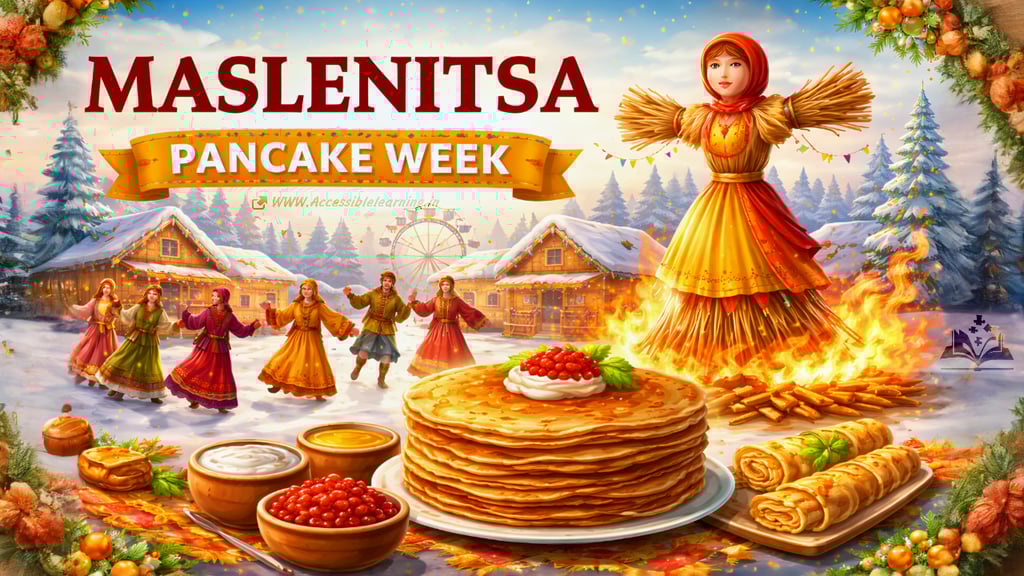
Maslenitsa, widely known as Pancake Week, is one of the most colorful and emotionally rich festivals celebrated across Slavic cultures. It’s best known for blini (thin pancakes), folk music, outdoor games, family gatherings, and the unforgettable tradition of burning a straw effigy to mark the end of winter.
But Maslenitsa is not only a food festival. It is a powerful seasonal celebration built on community, renewal, and the human instinct to welcome hope after long, difficult winters. It sits at a fascinating crossroads of ancient pagan traditions and Orthodox Christian customs, giving it layers of meaning that remain relevant even today.
What Is Maslenitsa?
Maslenitsa is a traditional Slavic holiday celebrated primarily in:
Russia
Belarus
Ukraine
other regions with Eastern Slavic communities
It takes place during the last week before Great Lent in Orthodox Christianity, which is why it often feels like a final grand feast before the fasting season begins.
Why it’s called “Pancake Week”
Maslenitsa is strongly linked to dairy-rich foods, especially blini, because this week traditionally allows:
✅ butter
✅ milk
✅ sour cream
✅ cheese
✅ eggs
But it excludes meat, as people gradually transition into Lent. This makes it the “last indulgent week” before a more spiritual and disciplined period.
When Is Maslenitsa Celebrated?
Maslenitsa has no fixed date. It changes every year because it depends on the Orthodox calendar.
It always occurs:
one week before Great Lent
usually during February or March
In countries with cold climates, it also fits perfectly into the natural seasonal rhythm: winter starts losing strength, and people begin longing for sunlight and warmth.
The Deeper Meaning of Maslenitsa (Not Just Celebration)
Maslenitsa holds a special place in culture because it celebrates something deeply human: transition.
This is a festival about:
moving from cold to warmth
from darkness to light
from isolation to community
from heaviness to hope
It’s not just seasonal. It’s psychological.
In many ways, Maslenitsa represents the moment when people remind themselves:
“Winter ends. Life returns. We survive, and we begin again.”
Maslenitsa Origins: Pagan Sun Festival Meets Orthodox Tradition
Maslenitsa is one of those cultural celebrations that survived centuries by adapting rather than disappearing.
Ancient Pagan Roots
Before Christianity arrived in Slavic lands, seasonal festivals were essential for survival and morale. People celebrated the sun’s return because it meant:
longer days
thawing snow
the possibility of planting and harvest
renewed life
Blini were strongly tied to this “sun symbolism” because they’re:
round
warm
golden
They were essentially edible sunshine.
Orthodox Christian Influence
When Orthodox Christianity became dominant, the festival merged into the church calendar as
Cheesefare Week (also called Butter Week)
This maintained traditional joy but gave it a spiritual purpose: preparing people for Great Lent.


Why Pancakes (Blini) Are the Heart of Maslenitsa
Blini are not just food. They are the festival’s emotional core.
What are blini?
Blini are thin pancakes, often made with:
flour (wheat or buckwheat)
milk or kefir
eggs
butter
sometimes yeast (for airy texture)
They are cooked repeatedly throughout the week, often in huge quantities.
Why blini matter emotionally
Blini represent:
warmth in cold days
hospitality
generosity
togetherness
Even strangers at Maslenitsa festivals may be offered pancakes as a symbol of welcome.
Traditional Maslenitsa Meals and Toppings
Maslenitsa food is both simple and deeply comforting.
Popular toppings and fillings
Sweet
honey
berry jam
sweet cream cheese / tvorog
condensed milk
poppy seeds
Savory
sour cream
mushrooms
cheese
smoked fish (like salmon)
caviar (luxury tradition in some regions)
Blini can also be stacked like cakes or rolled into filled wraps.
How Maslenitsa Is Celebrated: Traditions That Bring Communities Together
Maslenitsa isn’t only celebrated at home. It’s a festival that thrives outdoors, in public spaces and villages.
Most famous Maslenitsa traditions include:
sledding down snowy hills
folk dancing and singing
circle dances called khorovod
snowball fights
fairs with crafts and local foods
costume performances
games like tug-of-war and strength contests
These traditions have one purpose: to bring people out of isolation and into shared joy.
The 7 Days of Maslenitsa (Day-by-Day Meaning)
Maslenitsa traditionally lasts a week, and each day carries cultural significance.
Monday – Meeting Maslenitsa
start of celebration
first blini cooked
preparation begins
Traditionally, the first pancake was often dedicated to remembrance of ancestors or offered to someone in need.
Tuesday – Games and Courting
This day has a playful tone:
games
flirting and matchmaking
social visits
Historically it was common for young people to meet potential partners during this week.
Wednesday – The Hospitality Day
A warm family tradition:
mothers-in-law invite sons-in-law for pancakes
It’s half food, half relationship-building.
Thursday – Wide Maslenitsa Begins
This marks the loudest and most energetic period:
celebrations increase
public activities begin
dancing and competitions
This is Maslenitsa at its peak.
Friday – Return Invitation
Now the son-in-law hosts his mother-in-law, a reminder that respect should be mutual.
Saturday – Family and Gift Day
Family gatherings intensify, gifts may be exchanged, and the atmosphere becomes more home-centered again.
Sunday – Forgiveness Sunday
This is the spiritual heart of Maslenitsa. People ask each other for forgiveness:
within families
among friends
neighbors and community members
This tradition is powerful because it shows the festival is not only about eating. It’s also about healing relationships.
The Bonfire Tradition: Burning the Maslenitsa Effigy
The most iconic Maslenitsa moment happens near the end of the week. A large straw effigy representing Winter (and sometimes negativity, suffering, hunger, and hardship) is burned in a public bonfire.
What does it symbolize?
winter’s end
cleansing of pain
rebirth of nature
welcoming spring
letting go of emotional burdens
In the past, ashes were sometimes scattered onto fields, symbolizing:
fertility
prosperity
a strong harvest
Maslenitsa Festivals in Modern Russia (and Beyond)
Maslenitsa remains huge today.
In modern cities
You’ll often see:
organized cultural events
stage performances
public pancake stands
museums and parks hosting celebrations
tourists participating
In villages and families
The traditional version is still alive:
home-made blini
local gatherings
folk songs
local games
Even modern families use Maslenitsa to reconnect with tradition.
Why Maslenitsa Still Feels Relevant Today
Maslenitsa survived centuries because it fulfills something timeless. Modern life has stress, isolation, and burnout. Winter adds:
low energy
lack of sunlight
emotional heaviness
Maslenitsa acts as a cultural reset button:
eat together
laugh together
forgive each other
step into spring with lighter hearts
That’s why Maslenitsa remains meaningful even for people who are not religious.
More Than Pancakes, It’s a Celebration of Renewal
Maslenitsa is one of the best examples of how a culture turns a difficult season into something beautiful. It reminds us that:
warmth matters
community matters
food is love
and spring always comes back
And with it comes a message that feels universal:
Let go of winter. Welcome the light. Begin again.
FAQ's
Q: What is Maslenitsa (Pancake Week)?
Maslenitsa is a traditional Slavic festival celebrated for one week before Orthodox Lent. It marks the farewell to winter and the welcoming of spring, and it is especially known for eating blini (thin pancakes), family gatherings, folk games, and burning a straw effigy.
Q: Why is Maslenitsa called Pancake Week?
Maslenitsa is called Pancake Week because people eat blini throughout the festival. Blini are made with dairy products like milk, butter, and eggs, which are traditionally allowed during Maslenitsa but restricted during Lent.
Q: When is Maslenitsa celebrated?
Maslenitsa is celebrated during the week immediately before Great Lent in the Orthodox Christian calendar. Since Lent’s dates change each year, Maslenitsa usually falls between February and March.
Q: Which countries celebrate Maslenitsa?
Maslenitsa is mainly celebrated in Russia, Belarus, and Ukraine, along with other regions where Eastern Slavic communities live. It is also celebrated by Slavic diaspora communities in Europe, the USA, and Canada.
Q: Is Maslenitsa a religious holiday or a pagan festival?
Maslenitsa is both. It has ancient pagan roots connected to seasonal sun rituals and the arrival of spring, but it was later integrated into Orthodox Christian tradition as Cheesefare Week, the final week before Lent.
Q: What are blini, and why are they important during Maslenitsa?
Blini are thin pancakes made from flour, milk, eggs, and butter. During Maslenitsa, blini represent the sun because they are round and golden, symbolizing warmth, light, and new life after winter.
Q: What is the meaning of burning the Maslenitsa effigy?
Burning the Maslenitsa effigy symbolizes saying goodbye to winter and letting go of hardships. The fire represents cleansing, renewal, and welcoming spring. In older traditions, the ashes were seen as a symbol of fertility and future harvest.
Q: What happens on Forgiveness Sunday in Maslenitsa?
Forgiveness Sunday is the final day of Maslenitsa, when people ask friends and family for forgiveness to begin Lent with a clean heart. This tradition focuses on peace, emotional renewal, and repairing relationships.
Q: What is Cheesefare Week, and how is it related to Maslenitsa?
Cheesefare Week is the Orthodox Christian name for Maslenitsa. It is the last week before Lent, when meat is avoided, but dairy foods like cheese, butter, and sour cream are still allowed.
Q: What foods are traditionally eaten during Maslenitsa?
The most traditional food is blini, served with toppings like sour cream, honey, jam, cheese, mushrooms, smoked fish, or caviar. People also eat other dairy-rich foods, as Maslenitsa is the last feast week before Lent.
Q: What are the main traditions of Maslenitsa?
The main traditions include:
making and eating blini
visiting friends and relatives
folk singing and dancing
sledding and winter games
fairs and performances
burning the Maslenitsa effigy
practicing forgiveness on the final day
Q: How long does Maslenitsa last?
Maslenitsa lasts for seven days, starting on Monday and ending on Sunday (Forgiveness Sunday). The week is filled with both social celebrations and cultural rituals.
Q: What is the cultural significance of Maslenitsa today?
Maslenitsa remains significant because it brings people together during the end of winter. It represents warmth, community, hope, and renewal, and it is celebrated as both a cultural tradition and a seasonal festival.
Q: How is Maslenitsa celebrated in modern Russia?
In modern Russia, Maslenitsa is celebrated with large public festivals in parks and city squares. People enjoy concerts, folk performances, games, food stalls, and pancake events, ending with a public bonfire and effigy burning.
Q: Can tourists take part in Maslenitsa celebrations?
Yes, tourists can participate in Maslenitsa celebrations. Public festivals often include pancake stalls, performances, traditional games, and cultural shows. It is one of the best times to experience Slavic folk culture in Russia and nearby regions.
Q: Is Maslenitsa the same as Mardi Gras?
Maslenitsa is similar to Mardi Gras because both happen before Lent and involve feasting. However, Maslenitsa has distinct Slavic traditions such as blini, folk winter games, and burning the effigy to symbolize the end of winter.
Q: What does Maslenitsa symbolize?
Maslenitsa symbolizes:
the end of winter
the return of sunlight
hope and renewal
family warmth and hospitality
forgiveness and emotional cleansing
Q: Why do people visit family during Maslenitsa?
Maslenitsa focuses on social unity. Visiting family strengthens relationships, shares blessings through food, and reinforces community support before the spiritual period of Lent begins.
Q: Is Maslenitsa celebrated outside Russia?
Yes. Maslenitsa is celebrated in many countries through Slavic diaspora communities, cultural centers, Orthodox churches, and festivals. Events are common in parts of Europe, the United States, and Canada.
Q: What should you wear to a Maslenitsa festival?
Maslenitsa is a winter festival, so warm clothing is essential. In outdoor celebrations, people often wear coats, gloves, boots, and scarves. At cultural events, some wear traditional Slavic scarves and folk-style clothing.
Subscribe To Our Newsletter
All © Copyright reserved by Accessible-Learning Hub
| Terms & Conditions
Knowledge is power. Learn with Us. 📚

