

Orthodox Christmas Day: Meaning, Traditions, and Global Celebrations
Orthodox Christmas Day is a sacred Christian celebration observed on January 7 by millions worldwide. Rooted in ancient tradition, it honors the birth of Jesus Christ through prayer, fasting, symbolic rituals, and deeply meaningful cultural practices that continue to guide faith and family life today.
CULTURE/TRADITIONEVENT/SPECIALRUSSIACELEBRATION/FESTIVALS
Kim Shin
12/31/20255 min read
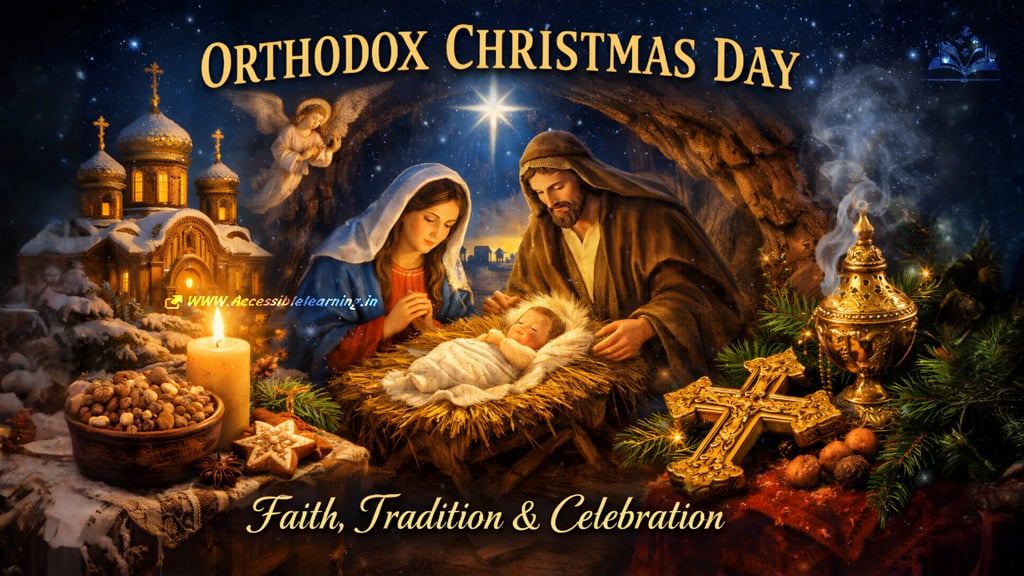
Orthodox Christmas Day is a deeply spiritual celebration observed by millions of Christians across Eastern Europe, Russia, the Middle East, Africa, and parts of Asia. Unlike the widely known December 25 Christmas, Orthodox Christmas is usually celebrated on January 7, following ancient church calendars and centuries-old traditions. More than a festive date, it is a sacred moment focused on faith, humility, and the birth of Jesus Christ.
Why Is Orthodox Christmas Celebrated on January 7?
The primary reason lies in the calendar system. Many Orthodox churches still follow the Julian Calendar, introduced by Julius Caesar in 45 BCE. Over time, this calendar fell behind the solar year. When the Gregorian Calendar was adopted in the 16th century and is now used worldwide, a 13-day difference emerged.
December 25 on the Julian Calendar falls on January 7 on the Gregorian Calendar
Churches such as the Russian, Serbian, Georgian, and Jerusalem Orthodox Churches still observe the Julian system
Some Orthodox churches, like the Greek and Romanian Orthodox Churches, use a revised calendar and celebrate Christmas on December 25
This calendar difference explains the unique timing while preserving ancient Christian tradition.
Spiritual Meaning of Orthodox Christmas
Orthodox Christmas emphasizes spiritual preparation over celebration. The birth of Christ is seen not just as a historical event, but as a reminder of humility, sacrifice, and divine love.
Key spiritual themes include:
The incarnation of Jesus Christ as God in human form
Hope, renewal, and salvation
Inner reflection, prayer, and repentance
The focus is less on material gifts and more on reconnecting with faith and family.
The Nativity Fast: Preparing for Christmas
Before Orthodox Christmas, believers observe a 40-day Nativity Fast, beginning on November 15. This period is similar in purpose to Lent and encourages spiritual discipline.
During the fast:
Meat, dairy, and sometimes fish are restricted
Believers increase prayer and charitable acts
The goal is purification of mind and body before Christmas Day
The fast ends on January 7, making the Christmas meal especially meaningful.
Orthodox Christmas Eve Traditions
Christmas Eve, known as Paramony, is a solemn and symbolic day.
Common traditions include:
Fasting until the first star appears in the evening sky, symbolizing the Star of Bethlehem
Attending long church services with scripture readings and hymns
Lighting candles to represent Christ as the light of the world
In many cultures, the evening meal includes simple, meatless dishes with deep symbolic meaning.
Orthodox Christmas Day Celebrations
On January 7, the mood shifts from quiet reflection to joyful celebration.
Typical observances include:
Midnight or early morning Divine Liturgy
Greeting others with phrases like “Christ is Born” and the response “Glorify Him”
Family gatherings and festive meals featuring traditional dishes
In contrast to commercial celebrations, Orthodox Christmas remains closely tied to worship and tradition.
Traditional Orthodox Christmas Foods
Food plays a symbolic role, reflecting gratitude and abundance after fasting.
Popular dishes vary by region:
Kutya (wheat, honey, and nuts) in Slavic countries
Roasted meats and rich stews after the fast ends
Bread and pastries shaped with religious symbols
Each dish carries spiritual meaning tied to life, resurrection, and blessing.
Orthodox Christmas Around the World
Orthodox Christmas is celebrated differently across cultures while maintaining core religious values.
Russia & Ukraine: Church-centered celebrations, traditional chants, and family feasts
Serbia: The burning of the badnjak (oak branch) symbolizing warmth and sacrifice
Ethiopia: Known as Genna, marked by early morning services and communal gatherings
Middle East: Observed by Orthodox Christian minorities with strong emphasis on liturgy
These variations show how faith adapts to culture without losing its essence.
How Orthodox Christmas Differs from Western Christmas
While both celebrate the birth of Christ, there are notable differences:
Date: January 7 vs December 25
Calendar: Julian vs Gregorian
Focus: Worship and fasting vs festive customs and gift-giving
Tone: Spiritual and traditional rather than commercial
These differences highlight diverse expressions of the same Christian belief.


Why Orthodox Christmas Still Matters Today
In a fast-moving world, Orthodox Christmas offers a pause. It encourages people to slow down, reflect, and reconnect with spiritual roots. Its continued observance shows the strength of tradition and the timeless relevance of faith.
For many, Orthodox Christmas is not just a holiday. It is a reminder of humility, compassion, and hope, values that remain essential across cultures and generations.
Orthodox Christmas Day stands as a powerful expression of ancient Christian tradition. Celebrated on January 7 by millions worldwide, it blends faith, fasting, family, and cultural heritage into a meaningful spiritual experience. Whether observed in a grand cathedral or a quiet home, Orthodox Christmas continues to inspire devotion and unity through its deep-rooted traditions and sacred message.
FAQ's
Q: The Role of Church Hymns and Sacred Chants
Orthodox Christmas services are rich in ancient hymns, many written over a thousand years ago. These chants are not performed for entertainment. They are prayers sung collectively, often without musical instruments. The human voice alone is used to maintain purity and focus during worship. The lyrics narrate the Nativity story and connect believers emotionally to early Christian communities.
Q: Symbolism of Icons During Christmas
Icons play a central role during Orthodox Christmas. Special Nativity icons depict the birth of Christ with layered symbolism. The cave represents the fallen world, the swaddling clothes foreshadow burial, and the angels signify divine joy. Families often place icons in a prominent space at home during the Christmas season for daily prayer and reflection.
Q: Theological Emphasis on Mystery, Not Spectacle
Orthodox Christianity approaches Christmas as a divine mystery rather than a dramatic event. The Church teaches that Christ’s birth reveals God entering human suffering quietly and humbly. This perspective shapes the tone of Orthodox Christmas, which avoids spectacle and instead embraces silence, contemplation, and reverence.
Q: Christmas and the Liturgical Calendar
Orthodox Christmas begins a twelve-day liturgical period that continues until the Feast of Theophany (Epiphany). These days are considered spiritually festive, meaning fasting rules are relaxed. The period reflects joy and spiritual light, culminating in the celebration of Christ’s baptism.
Q: Traditional Blessings and House Visits
In some Orthodox cultures, priests visit homes after Christmas to offer house blessings. Holy water, prayers, and incense are used to bless families and living spaces for the new year. This tradition reinforces the belief that faith extends beyond church walls into daily life.
Q: Role of Elders and Oral Traditions
In many Orthodox households, elders share Nativity stories, prayers, and moral teachings during Christmas gatherings. These stories are passed down orally rather than through written texts, preserving cultural identity and strengthening family bonds across generations.
Q: Minimalism in Decoration
Unlike modern decorative trends, Orthodox Christmas decorations are often simple and symbolic. Candles, evergreen branches, and stars are preferred over elaborate displays. Each element represents eternal life, divine light, or guidance, reinforcing the spiritual tone of the season.
Q: The Greeting Exchange Tradition
Orthodox Christmas greetings are not casual wishes. Phrases exchanged during the season are theological affirmations, acknowledging Christ’s birth as a living truth rather than a past event. This practice turns everyday interaction into an act of faith.
Q: Orthodox Christmas in Modern Times
Despite urbanization and digital life, Orthodox Christmas remains largely unchanged. Many churches still conduct long night services, and families continue traditional meals at home rather than public venues. This resistance to change reflects the Church’s commitment to preserving sacred continuity.
Subscribe to Frontier Intelligence
All © Copyright reserved by Accessible-Learning Hub
| Terms & Conditions
Accessible Learning Hub — Actionable clarity for high-agency minds.
Weekly breakdowns on AI breakthroughs, capital flow, and human performance systems. Zero fluff.