

Martyrs’ Day: Honoring the Sacrifice That Shaped a Nation
Martyrs’ Day is observed to honor the brave souls who sacrificed their lives for the nation’s freedom, unity, and values. This day serves as a reminder of the cost of independence, the legacy of Mahatma Gandhi, and the responsibility every citizen carries to uphold peace, democracy, and national integrity.
EVENT/SPECIALINDIA/BHARATCELEBRATION/FESTIVALS
Kim Shin
1/21/20265 min read
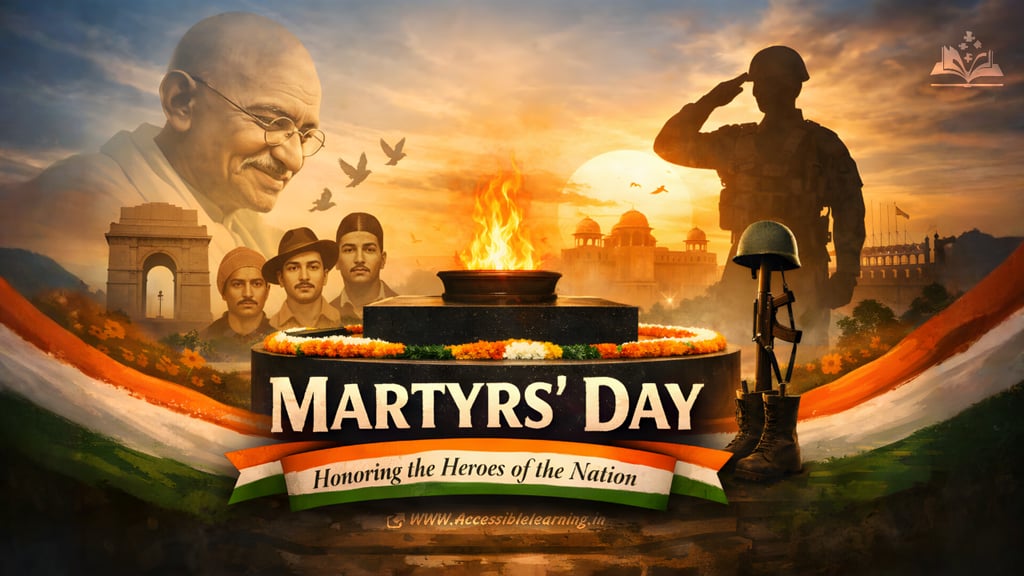
Martyrs’ Day is observed to honor those who laid down their lives for the nation, its people, and its values. In India, Martyrs’ Day is commemorated on 30 January, the day Mahatma Gandhi was assassinated in 1948. It is a moment of collective remembrance, reflection, and respect for all who sacrificed their lives so the country could breathe in freedom, dignity, and self-determination.
More than a date on the calendar, Martyrs’ Day reminds us that the rights we enjoy today were earned through immense personal loss and unwavering courage.
Why Martyrs’ Day Is Observed in India
India’s struggle for independence was long, complex, and often painful. Thousands of freedom fighters faced imprisonment, torture, exile, and death while resisting colonial rule. Mahatma Gandhi’s assassination marked a turning point in independent India’s moral and political history, making 30 January a symbol of sacrifice, peace, and national unity.
Martyrs’ Day is not limited to remembering one individual. It honors all known and unknown martyrs who gave their lives for India’s freedom, sovereignty, and democratic ideals.
Historical Background and Significance
Mahatma Gandhi, often called the Father of the Nation, believed in non-violence, truth, and moral courage. His death shocked the nation and the world. Observing Martyrs’ Day on 30 January serves as a reminder that freedom must be protected not just by strength, but by values.
Over time, the day has come to represent:
Respect for sacrifice and selflessness
Reflection on the cost of independence
Commitment to peace, unity, and constitutional values
It is a day that connects history with responsibility, urging every citizen to uphold the principles for which martyrs stood.
How Martyrs’ Day Is Observed
Across India, Martyrs’ Day is marked with solemn dignity.
National Observances
The President, Prime Minister, and senior leaders pay tribute at Raj Ghat, New Delhi.
A two-minute silence is observed nationwide at 11:00 AM to honor the martyrs.
Prayer meetings and memorial services are held in schools, government offices, and public institutions.
Educational and Community Activities
Schools conduct speeches, essays, and discussions on freedom fighters.
Documentaries, exhibitions, and cultural programs highlight India’s independence movement.
Citizens visit memorials and statues of national heroes to offer flowers and respect.
These observances help younger generations understand history not as distant facts, but as lived sacrifice.
Martyrs Beyond the Freedom Movement
While 30 January is linked to the freedom struggle, the idea of martyrdom extends further. India also honors:
Soldiers who died defending the nation
Police and security personnel who sacrificed their lives in the line of duty
Civilians who lost their lives protecting national integrity and social harmony
Martyrs’ Day stands as a collective remembrance of all who placed the nation above themselves.
Relevance of Martyrs’ Day in Modern Times
In a fast-changing world, Martyrs’ Day carries renewed importance. It reminds us that:
Freedom is not permanent unless protected by responsible citizenship
Democracy survives through participation, tolerance, and respect
Peace is a choice that requires courage and restraint
Remembering martyrs is not only about honoring the past. It is about shaping how we live today and what kind of future we build.
Human-Centered Meaning of Martyrdom
Martyrs were not distant heroes born to sacrifice. They were ordinary people with families, dreams, and fears. What set them apart was their willingness to place collective good above personal safety.
Understanding martyrdom in this human way creates empathy, gratitude, and accountability. It encourages citizens to serve society honestly, uphold justice, and stand against injustice in everyday life.


Different Dates of Martyrs’ Day in India
While 30 January is the most widely recognized Martyrs’ Day, India observes other martyr remembrance days as well:
23 March to honor Bhagat Singh, Sukhdev, and Rajguru
21 October as Police Commemoration Day
16 December as Vijay Diwas, remembering soldiers of the 1971 war
This shows that martyrdom in India is remembered across different movements, eras, and services, not limited to one historical moment.
Role of Martyrs’ Day in Nation-Building
Martyrs’ Day plays a quiet but vital role in shaping national character. It reinforces:
A shared national memory across regions and communities
Respect for constitutional values and civil harmony
Awareness that independence was achieved collectively, not individually
By remembering sacrifice, societies stay grounded and avoid taking freedom for granted.
Martyrs’ Day and Youth Awareness
For younger generations, Martyrs’ Day acts as a bridge between textbooks and real-life values.
It encourages critical thinking about freedom, responsibility, and rights
It inspires ethical leadership and civic engagement
It promotes patriotism rooted in understanding, not slogans
When youth connect emotionally with history, they are more likely to protect the nation’s future.
Global Perspective on Martyrdom
Many countries observe days similar to Martyrs’ Day:
To remember war heroes
To honor resistance leaders
To recognize victims of political violence
India’s observance stands out because it emphasizes peace, non-violence, and moral courage, especially through the legacy of Mahatma Gandhi. This gives Martyrs’ Day a universal message beyond borders.
Symbolism Associated With Martyrs’ Day
Several symbols are closely linked with the day:
White flowers symbolizing peace and remembrance
Silence representing respect and reflection
Prayer meetings emphasizing moral unity over political division
These symbols keep the observance dignified and inclusive.
Martyrs’ Day in Literature and Media
Indian literature, cinema, and art have played a major role in preserving the memory of martyrs:
Poems and songs expressing sacrifice and patriotism
Films portraying freedom struggles and personal loss
Biographies that humanize national heroes
Such creative expressions ensure that martyrdom remains emotionally relevant, not just historically accurate.
Ethical Message of Martyrs’ Day
At its core, Martyrs’ Day delivers a strong ethical message:
Power must be guided by responsibility
Freedom must coexist with discipline
National interest should never overshadow humanity
These lessons are especially important in times of social conflict and political polarization.
How Citizens Can Truly Honor Martyrs
Beyond ceremonies, meaningful ways to honor martyrs include
Practicing honesty and integrity in daily life
Respecting diversity and democratic dialogue
Standing against injustice, violence, and corruption
Serving society through education, service, or innovation
Living with purpose is the most lasting tribute.

FAQ's
Q: What is Martyrs’ Day?
Martyrs’ Day is observed to honor individuals who sacrificed their lives for the nation, its freedom, and its core values. In India, it is a day of remembrance, respect, and reflection.
Q: When is Martyrs’ Day observed in India?
Martyrs’ Day in India is observed on 30 January, marking the assassination of Mahatma Gandhi in 1948.
Q: Why is 30 January significant?
30 January is significant because Mahatma Gandhi, the Father of the Nation, was assassinated on this day. It symbolizes sacrifice, non-violence, and moral courage.
Q: Who are remembered on Martyrs’ Day?
The day honors Mahatma Gandhi along with all freedom fighters, soldiers, police personnel, and civilians who laid down their lives for the nation.
Q: How is Martyrs’ Day observed across the country?
A two-minute silence is observed at 11:00 AM, leaders pay tributes at memorials, and schools and institutions hold prayer meetings, speeches, and remembrance programs.
Q: What is the importance of Martyrs’ Day for students and youth?
Martyrs’ Day helps young people understand the value of freedom, encourages responsible citizenship, and connects historical sacrifice with modern civic duties.
Q: Is Martyrs’ Day observed only in India?
No. Many countries observe similar days to honor national heroes and war martyrs, though India’s observance strongly emphasizes peace and non-violence.
Q: How can citizens truly honor martyrs today?
By living with integrity, respecting democratic values, promoting unity, and contributing positively to society through service and responsibility.
Q: What message does Martyrs’ Day convey in modern times?
It reminds citizens that freedom must be protected through ethical behavior, social harmony, and active participation in democracy.
Q: Is Martyrs’ Day a public holiday in India?
Martyrs’ Day is not a national public holiday, but it is officially observed with nationwide ceremonies and remembrance activities.
Subscribe to Frontier Intelligence
All © Copyright reserved by Accessible-Learning Hub
| Terms & Conditions
Accessible Learning Hub — Actionable clarity for high-agency minds.
Weekly breakdowns on AI breakthroughs, capital flow, and human performance systems. Zero fluff.