

Martyrdom of Imam Ali: History, Lessons, and His Timeless Legacy
Learn the full story of Imam Ali’s martyrdom, including historical events, political context, and real-world lessons on justice, leadership, and faith. Discover why Imam Ali’s sacrifice still inspires millions across the world today.
CULTURE/TRADITIONEVENT/SPECIALCELEBRATION/FESTIVALS
Kim Shin
3/1/20265 min read
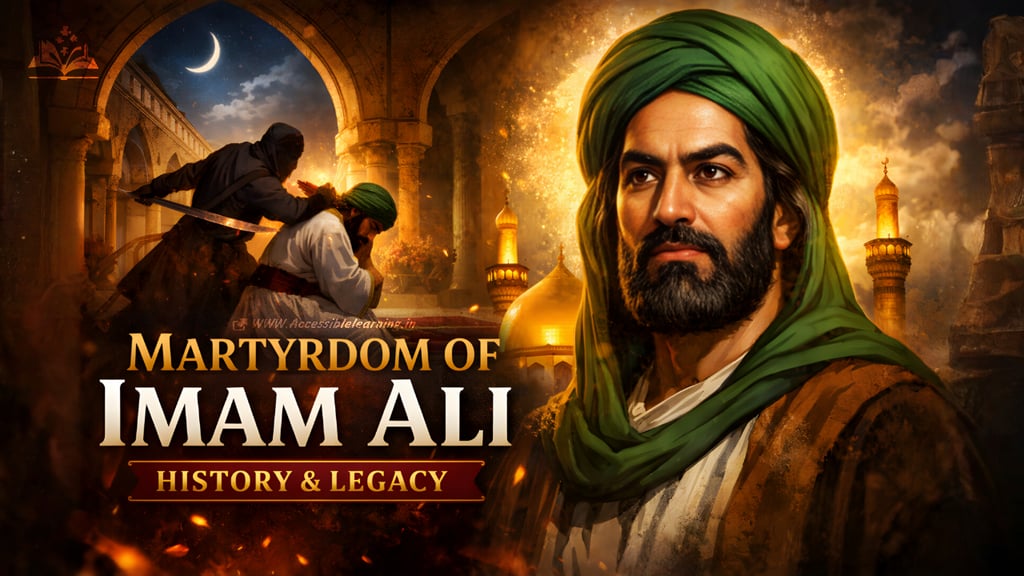
The martyrdom of Imam Ali ibn Abi Talib is one of the most powerful moments in Islamic history. It is not only a story of loss but also a reminder of justice, courage, leadership, and moral strength. His life and death continue to influence politics, ethics, spirituality, and social movements around the world.
This article explores the history behind Imam Ali’s martyrdom and why his message still matters in real life today.
Who Was Imam Ali?
Imam Ali ibn Abi Talib was the cousin and son-in-law of Prophet Muhammad and one of the earliest followers of Islam. Raised in the Prophet’s home, he became known for his deep faith, sharp intellect, and unmatched bravery.
In Sunni tradition, he is the fourth caliph. In Shia tradition, he is the first Imam. Across both traditions, he is remembered as a leader who lived with humility and ruled with fairness.
He was famous for saying that a society can survive disbelief but not injustice. That idea still echoes in discussions about leadership and governance today.
Political Context Before His Martyrdom
After the passing of Prophet Muhammad, the Muslim world faced major political tensions. Conflicts like the Battles of Jamal and Siffin created divisions. A group called the Kharijites emerged, opposing Imam Ali’s decisions and declaring him unfit to lead.
From this group came a plan to assassinate key Muslim leaders. One of the attackers, Abdur Rahman ibn Muljam, targeted Imam Ali.
This shows how political extremism and intolerance have existed in every era. Imam Ali’s story is often cited today when discussing the dangers of radical thinking.
The Night of the Attack
During the holy month of Ramadan in 661 CE, Imam Ali went to lead Fajr prayer at the Great Mosque of Kufa. While he was in prostration, Ibn Muljam struck him with a poisoned sword.
Despite his wounds, Imam Ali remained calm. He spoke words of faith and forgiveness. His famous statement, “By the Lord of the Kaaba, I have succeeded,” showed his belief that dying for truth is a victory.
His Final Advice
In the days before his passing, Imam Ali gave guidance that still feels relevant today:
Care for the poor and orphans
Maintain justice in society
Avoid revenge and hatred
Stay united as a community
He even instructed his family to treat his attacker with fairness. That level of self-control is rare in history.
Sacred Places Connected to His Martyrdom
Great Mosque of Kufa
This mosque in Kufa, Iraq, is where Imam Ali was attacked. It remains a place of reflection, prayer, and remembrance.
Shrine of Imam Ali in Najaf
His burial site in Najaf is one of the most visited holy places in the Islamic world. Millions visit every year seeking inspiration and peace.

Real-World Impact of Imam Ali’s Legacy
Imam Ali’s teachings are not just spiritual ideas. They influence real life in many ways.
Justice in Governance
Imam Ali wrote detailed letters to governors about fair leadership. One famous letter to Malik al-Ashtar is studied in political science and ethics courses. It talks about accountability, equality before the law, and protecting minorities.
Today, these ideas are referenced in discussions about transparent government and anti-corruption reforms.
Social Welfare and Charity
Imam Ali personally helped widows, orphans, and the poor. He carried food at night so no one would know it came from the ruler.
Many charities in the Middle East, South Asia, and Africa run orphan support and food programs in his name. His example shapes modern humanitarian work.
Conflict Resolution
Imam Ali avoided violence whenever possible. Even during wars, he prohibited harming civilians, destroying crops, or abusing prisoners.
These principles are now part of modern humanitarian law and ethics in warfare discussions.
Leadership Training
Business schools and leadership coaches often quote Imam Ali’s sayings on humility, honesty, and responsibility.
His advice that leaders must serve people rather than control them is widely used in modern leadership models.
Interfaith Respect
Imam Ali protected non-Muslim citizens and upheld their rights. His famous saying that people are either your brothers in faith or equals in humanity is often quoted in interfaith dialogue today.
Why His Martyrdom Still Matters
Imam Ali’s death shows that standing for justice can come at a cost. But it also shows that moral courage shapes history. His life answers questions people still ask today:
How should leaders treat citizens?
How do we respond to injustice?
How do we balance power with compassion?
His example offers practical guidance.
How Muslims Remember Him Today
In the last ten nights of Ramadan, especially on the 19th and 21st nights, people remember Imam Ali through prayer, charity, and reflection.
Scholars study his sermons from Nahj al-Balagha, which cover topics like ethics, governance, spirituality, and personal growth.
His teachings are shared in schools, mosques, universities, and leadership seminars worldwide.
Lessons for Modern Life
Imam Ali’s martyrdom teaches lessons that apply to anyone, regardless of religion.
Speak truth even when it is unpopular
Treat opponents with fairness
Help the poor quietly
Lead with integrity
Seek knowledge and self-discipline
These are values that improve families, businesses, and nations.
The martyrdom of Imam Ali is more than a historical tragedy. It is a story of courage, justice, patience, and faith that continues to guide humanity.
His life reminds us that real leadership comes from compassion and honesty. His death shows that sacrifice for truth leaves a legacy that lasts forever.
Even after centuries, Imam Ali’s message still speaks to the world, asking every generation the same question: will we choose power, or will we choose justice?


FAQ's
Q: When did Imam Ali attain martyrdom?
Imam Ali was struck on the 19th of Ramadan in 661 CE and passed away on the 21st of Ramadan in Kufa, Iraq.
Q: Who attacked Imam Ali, and why?
Imam Ali was attacked by Abdur Rahman ibn Muljam, a member of the Kharijite group. The attack was motivated by political disagreements after internal conflicts within the Muslim community.
Q: Where did the attack on Imam Ali take place?
The attack happened during Fajr prayer inside the Great Mosque of Kufa in Iraq.
Q: Where is Imam Ali buried?
Imam Ali is buried in Najaf, Iraq. His shrine is one of the most important pilgrimage sites in the Islamic world.
Q: Why is Imam Ali’s martyrdom important in Islam?
His martyrdom represents sacrifice for justice, faith, and truth. It teaches lessons about patience, leadership, and standing against injustice.
Q: How do Muslims remember Imam Ali’s martyrdom today?
Muslims remember him during the last ten nights of Ramadan through prayers, charity, sermons, and studying his teachings from Nahj al-Balagha.
Q: What were Imam Ali’s last teachings?
In his final moments, Imam Ali emphasized caring for the poor, maintaining justice, avoiding revenge, and staying united as a community.
Q: What is Imam Ali known for besides his martyrdom?
He is remembered for his wisdom, bravery, deep knowledge, fairness in governance, and devotion to God. His sayings and sermons continue to guide people worldwide.
Subscribe to Frontier Intelligence
All © Copyright reserved by Accessible-Learning Hub
| Terms & Conditions
Accessible Learning Hub — Actionable clarity for high-agency minds.
Weekly breakdowns on AI breakthroughs, capital flow, and human performance systems. Zero fluff.