

Ramadan (Tentative): A Month That Reshapes Time, Self, and Society
Ramadan (Tentative) is a sacred month of fasting, reflection, and renewal shaped by the lunar calendar. This article explores its deeper meaning, daily practices, social impact, spiritual wisdom, and relevance in the modern world, offering a perspective beyond common explanations.
CULTURE/TRADITIONEVENT/SPECIALCELEBRATION/FESTIVALS
Jainul Khan
2/7/20265 min read
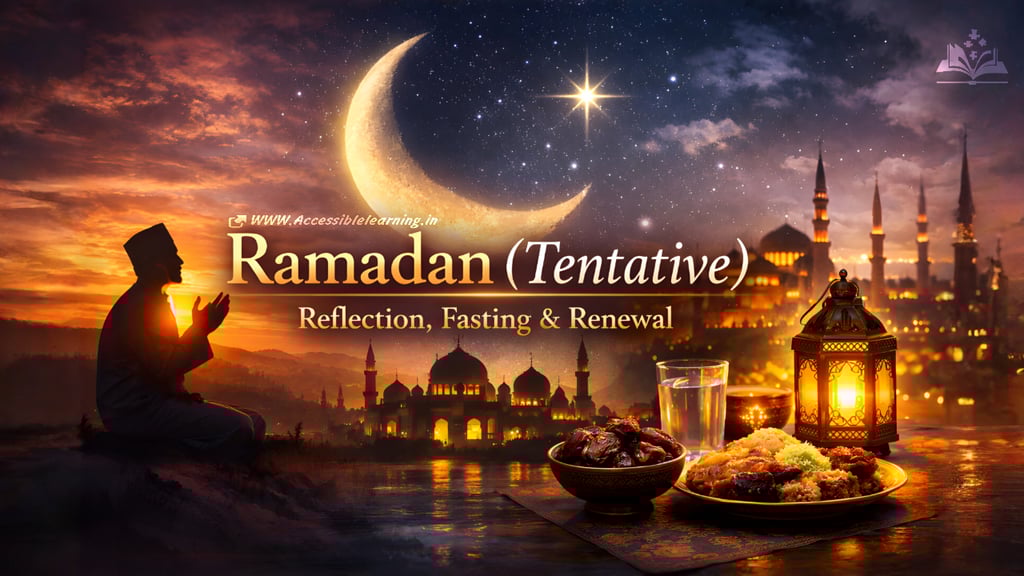

Ramadan is not simply a religious month marked by fasting. It is a lived experience that alters daily rhythms, emotional awareness, and social behavior. The word “tentative” attached to Ramadan reflects an essential truth: its arrival is not locked to a fixed date but depends on the sighting of the crescent moon. This uncertainty is not a complication. It is part of the wisdom of the month.
Ramadan teaches people to live with awareness rather than control, to prepare without obsession, and to accept that meaningful moments often arrive without exact timelines.
The Deeper Purpose of Ramadan
At a surface level, Ramadan is known for fasting from dawn to sunset. At a deeper level, it is a structured pause from excess.
The fast trains have three core qualities:
Self-discipline: By voluntarily stepping away from basic comforts, people learn control over impulse, habit, and desire.
Conscious living: Every action during Ramadan feels intentional. Eating, speaking, working, resting, and even thinking are done with more awareness.
Moral alignment: Ramadan emphasizes honesty, humility, patience, and forgiveness. The fast is considered incomplete if behavior remains harmful, arrogant, or careless.
In this way, Ramadan is not about enduring hunger. It is about refining character.
The Significance of the Moon and the Idea of “Tentative”
Ramadan begins with the sighting of the new moon. This makes its start date dependent on nature, geography, and human observation.
This process reinforces several values:
Trust in shared witness rather than prediction alone
Acceptance of variation across cultures and regions
A reminder that not everything meaningful can be automated
In a world built around fixed schedules and certainty, Ramadan keeps one foot grounded in the natural world.
The Structure of a Ramadan Day
Pre-Dawn: Beginning With Intention
The day starts before sunrise with suhoor. This meal is quiet, practical, and purposeful. Beyond nourishment, it represents readiness. People begin the day consciously, knowing they will face hunger, thirst, and fatigue with patience.
Daytime: Fasting in Motion
Fasting does not remove people from daily responsibilities. Work, education, travel, and family life continue. This creates a unique internal challenge: managing emotions, productivity, and interactions without the usual physical comforts.
Many report heightened emotional awareness during these hours. Small irritations feel louder, but so do moments of calm and gratitude.
Sunset: Breaking the Fast
Iftar is the emotional anchor of the day. The first sip of water, the first bite of food, and the shared silence before eating hold symbolic weight. It is a daily reminder that restraint has an endpoint and that patience is rewarded.
Night: Reflection and Renewal
Nights during Ramadan often feel different. There is more stillness, more prayer, more reading, and more quiet conversation. Sleep schedules shift, but many describe a sense of inner clarity despite physical tiredness.


Ramadan and Emotional Awareness
One of the least discussed aspects of Ramadan is how it sharpens emotional intelligence.
Hunger exposes habits:
How quickly anger rises
How often impatience appears
How dependent mood is on comfort
Ramadan does not judge these reactions. It reveals them. This awareness allows people to observe themselves honestly and correct gently rather than react blindly.
Community, Charity, and Shared Responsibility
Ramadan is deeply communal. Even when fasting alone, individuals are part of a larger rhythm shared by millions.
Charity intensifies during this month. Acts of giving are not framed as generosity but as responsibility. Feeding others, supporting those in hardship, and sharing resources are seen as extensions of fasting itself.
The logic is simple: if hunger teaches empathy, empathy must lead to action.
Physical Balance and Moderation
Ramadan encourages moderation, not denial. Meals are meant to nourish, not compensate. When practiced with balance, fasting can:
Reset eating habits
Reduce impulsive consumption
Improve mental focus
Encourage mindful nutrition
Excessive indulgence contradicts the spirit of the month. Ramadan repeatedly points back to balance as a form of respect for the body.
Ramadan in the Contemporary World
Modern life has changed how Ramadan is experienced, but not why it exists.
Digital reminders, flexible work hours, online charity platforms, and global communication have reshaped logistics. Yet the emotional core remains untouched.
Ramadan still offers something rare: a shared slowdown. A collective moment where productivity is balanced with presence and ambition is softened by humility.
What Ramadan Leaves Behind
Ramadan does not end when fasting stops. Its real impact appears afterward.
People often leave the month with:
Stronger self-control
A calmer response to stress
Reduced attachment to excess
Renewed clarity about values
The most successful Ramadan is not measured by perfect fasting but by lasting change.
Ramadan arrives without certainty and leaves without noise. Its tentative beginning reminds us that life does not always offer advance notice. Its disciplined days teach restraint. Its quiet nights invite reflection. And its lessons often stay long after the moon has moved on.
In a world that constantly demands more, Ramadan gently asks a different question: what happens when we choose less, with intention?

Frequently Asked Questions
Q: What is Ramadan, and why is it important?
Ramadan is a sacred month in Islam focused on fasting, self-discipline, prayer, and personal reflection. It is important because it commemorates the period when divine guidance was revealed and encourages individuals to strengthen their moral character, empathy, and spiritual awareness.
Q: Why is Ramadan called “tentative”?
Ramadan is called tentative because its start and end dates depend on the sighting of the crescent moon. Since moon sightings can vary by location and conditions, the exact date is usually confirmed only a day in advance.
Q: Who is required to fast during Ramadan?
Fasting is required for healthy adult Muslims. However, children, the elderly, travelers, pregnant or nursing women, and those with medical conditions may be exempt or allowed alternatives based on their situation.
Q: What happens during fasting hours in Ramadan?
During fasting hours, individuals abstain from food, drink, smoking, and physical intimacy from dawn until sunset. Alongside this, they are encouraged to practice patience, kindness, honesty, and self-control in behavior and speech.
Q: Is Ramadan only about fasting from food and water?
No. Physical fasting is only one part of Ramadan. The deeper focus is on spiritual growth, emotional discipline, ethical behavior, and increased awareness of others’ struggles.
Q: How does Ramadan affect daily life and work?
Daily routines often shift during Ramadan. Meal times change, sleep schedules adjust, and many people become more intentional with time and energy. In many places, work hours are adapted to support fasting individuals.
Q: Is fasting during Ramadan healthy?
When practiced with balance and proper nutrition, fasting during Ramadan can support mental clarity and healthier eating habits. The emphasis is on moderation, hydration, and mindful consumption rather than excess.
Q: What is the significance of charity during Ramadan?
Charity is strongly emphasized during Ramadan. Acts of giving, supporting those in need, and sharing meals are considered essential expressions of empathy and social responsibility during the month.
Q: How is Ramadan observed in the modern world?
In the modern world, Ramadan is supported by digital tools such as prayer-time apps, online charity platforms, and flexible schedules. Despite technological changes, the spiritual and human-centered essence of Ramadan remains unchanged.
Q: What is the main lesson of Ramadan?
The main lesson of Ramadan is conscious living. It teaches restraint in a world of excess, empathy in times of comfort, and reflection in the midst of constant distraction.
Subscribe To Our Newsletter
All © Copyright reserved by Accessible-Learning Hub
| Terms & Conditions
Knowledge is power. Learn with Us. 📚

