

Lala Lajpat Rai: The Lion of Punjab Who Roared Against Colonial Rule
Discover Lala Lajpat Rai, Punjab Kesari freedom fighter, martyr & social reformer. Complete biography, Simon Commission protest, legacy & impact on India's independence.
BIOGRAPHY/HISTORYHISTORYINDIAN HISTORY
Keshav Jha
12/23/202510 min read
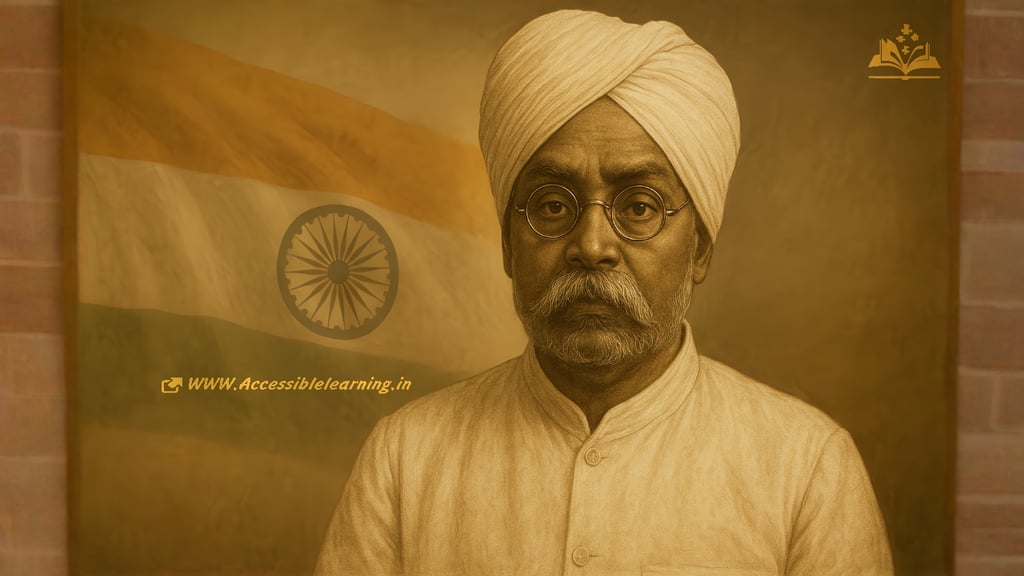
Who Was Lala Lajpat Rai?
Lala Lajpat Rai stands as one of India's most formidable freedom fighters, earning the legendary title "Punjab Kesari" (Lion of Punjab) for his unwavering resistance against British colonial oppression. Born on January 28, 1865, in Dhudike village (now in Punjab, Pakistan), this revolutionary leader, social reformer, and author became a defining voice in India's independence movement during the early 20th century.
As part of the famous "Lal Bal Pal" triumvirate alongside Bal Gangadhar Tilak and Bipin Chandra Pal, Lajpat Rai championed the cause of Swaraj (self-rule) through bold political activism, social reform, and an uncompromising stance against colonial injustice. His martyrdom in 1928, following a brutal police assault during a peaceful protest, galvanized India's freedom struggle and inspired countless revolutionaries.
Early Life and Educational Foundation
Family Background and Formative Years
Lala Lajpat Rai was born into a middle-class Aggarwal family in Dhudike, Ferozepur district. His father, Munshi Radha Krishna Agarwal, worked as an Urdu and Persian teacher, instilling in young Lajpat the values of education and cultural pride. His mother, Gulab Devi, nurtured his spiritual and moral development.
The family later moved to Rewari (present-day Haryana), where Lajpat Rai completed his early education. This period shaped his understanding of Punjab's rich cultural heritage and the economic exploitation suffered by Indian farmers and workers under British rule.
Academic Pursuits and Legal Career
Lajpat Rai pursued his higher education at Government College, Lahore, where he studied law. In 1886, he obtained his law degree and began practicing at the Lahore High Court. His legal career brought him face-to-face with the systematic injustices perpetrated by colonial authorities, deepening his commitment to political activism.
During his college years, he became associated with Arya Samaj, a Hindu reform movement founded by Swami Dayananda Saraswati. This association profoundly influenced his worldview, combining nationalist fervor with social reform ideals.
Political Awakening and Entry into Freedom Struggle
The Arya Samaj Influence
Lala Lajpat Rai's involvement with Arya Samaj marked his transformation from lawyer to revolutionary leader. He established several Dayanand Anglo-Vedic (DAV) schools and colleges, including the renowned DAV College in Lahore (1886), which became centers of nationalist education challenging British cultural domination.
Through Arya Samaj, he promoted Hindu social reform, women's education, widow remarriage, and the eradication of caste discrimination—issues that complemented his political vision of an independent, egalitarian India.
Joining the Indian National Congress
Lajpat Rai joined the Indian National Congress in 1888, initially supporting moderate approaches to reform. However, witnessing the ineffectiveness of petitions and constitutional methods, he gradually aligned with the extremist faction advocating more aggressive resistance strategies.
His political philosophy emphasized:
Swadeshi movement: Promoting indigenous industries and boycotting British goods
National education: Establishing educational institutions free from colonial curriculum
Mass mobilization: Engaging common people in political struggle
Economic nationalism: Addressing exploitative economic policies
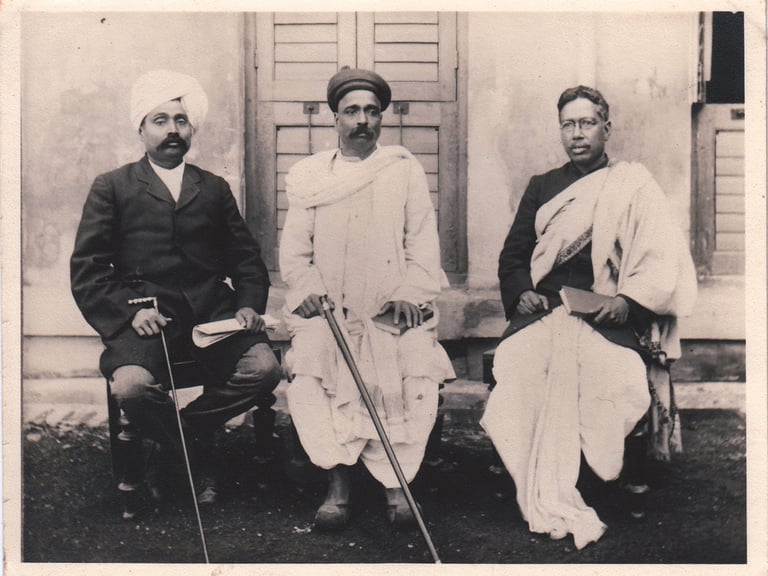
The Lal Bal Pal Triumvirate: Revolutionary Leadership
Formation of the Extremist Faction
The early 1900s witnessed the emergence of the "Lal Bal Pal" trio—Lala Lajpat Rai, Bal Gangadhar Tilak, and Bipin Chandra Pal—who challenged the Congress moderates' gradualist approach. This triumvirate advocated for
Immediate self-rule rather than gradual constitutional reforms
Direct confrontation with colonial authorities
Mass agitation and civil disobedience
Revival of Indian culture and traditions as resistance tools
Their influence transformed the Indian National Congress from an elite debating society into a mass movement capable of mobilizing millions.
Leadership During Partition of Bengal (1905)
When Lord Curzon announced the Partition of Bengal in 1905, Lajpat Rai emerged as a leading voice against this divisive policy designed to weaken Indian unity. He actively participated in the Swadeshi and Boycott movements, organizing protests across Punjab and encouraging Indians to reject British-manufactured goods.
His fiery speeches and writings during this period established him as one of India's most effective political communicators, capable of inspiring both educated elites and rural masses.
Deportation and Exile: The Price of Resistance
The 1907 Deportation to Mandalay
In May 1907, the British government, viewing Lajpat Rai as a dangerous agitator, deported him without trial to Mandalay, Burma (present-day Myanmar), under Regulation III of 1818. This arbitrary action sparked widespread protests across India and international criticism of British colonial repression.
During his six-month detention, Lajpat Rai remained defiant, using the period for reading, writing, and planning future resistance strategies. His deportation paradoxically elevated his status as a martyr-hero, strengthening his popular appeal.
International Advocacy and American Sojourn
Following his release in November 1907, Lajpat Rai traveled extensively to England and the United States between 1914 and 1920. During his American stay, he:
Established the Indian Home Rule League of America (1917)
Published "Young India" magazine to build international support for Indian independence
Delivered lectures at universities and public forums exposing British colonial atrocities
Connected with other anti-colonial movements and progressive intellectuals
His international advocacy helped create a global awareness network supporting India's freedom struggle, countering British propaganda that portrayed colonial rule as benevolent.
Social Reform and Educational Contributions
Champion of Women's Rights
Lajpat Rai consistently advocated for women's education and empowerment, radical positions in early 20th-century India. He established schools for girls, supported widow remarriage, and opposed child marriage and purdah (female seclusion) practices.
His writings emphasized that India's progress depended on women's active participation in social, economic, and political life—a progressive vision that challenged both colonial and orthodox indigenous patriarchal structures.
Establishing Educational Institutions
Beyond DAV colleges, Lajpat Rai founded numerous institutions that became nurseries for nationalist consciousness:
Servants of the People Society (1921): Organization dedicated to social service and national reconstruction
Tilak School of Politics (1920): Training ground for political workers
Lakshmi Insurance Company and Punjab National Bank: Economic institutions promoting Indian capital formation
These institutions embodied his belief that political freedom required economic self-reliance and an educated citizenry.
Labor Movement Leadership
Recognizing workers' exploitation under colonial capitalism, Lajpat Rai organized India's first labor unions and led strikes demanding fair wages and working conditions. He viewed labor organization as crucial for both economic justice and anti-colonial resistance, uniting working-class struggles with nationalist aspirations.
Literary Contributions and Ideological Legacy
Prolific Writer and Journalist
Lajpat Rai authored numerous books and articles articulating his political philosophy and historical analysis. Key works include:
"Young India: An Interpretation and a History of the Nationalist Movement from Within" (1916): Comprehensive analysis of India's freedom struggle
"England's Debt to India" (1917): Economic critique of colonial exploitation
"The Problem of National Education in India" (1920): Vision for decolonized education
"Unhappy India" (1928): Response to Katherine Mayo's disparaging "Mother India"
Biographies of Mazzini, Garibaldi, and Shivaji: Drawing inspiration from international revolutionary heroes
His writings combined rigorous historical research with passionate advocacy, making complex political-economic arguments accessible to ordinary readers.
Ideological Framework: Nationalism, Reform, and Religion
Lajpat Rai's ideology blended several streams:
Cultural Nationalism: Emphasizing India's civilizational heritage while advocating progressive reform
Economic Critique: Analyzing colonial drain theory and advocating swadeshi economics
Hindu Reform: Supporting Arya Samaj's rationalist reformation while promoting Hindu-Muslim unity
Democratic Ideals: Envisioning independent India as a democratic republic with social justice
This multifaceted vision positioned him as both revolutionary and reformer, radical and traditionalist—a complexity that enhanced his broad appeal.
The Simon Commission Protest and Martyrdom
Background to the Simon Commission
In 1928, the British government appointed the Simon Commission to review constitutional reforms in India. The commission's all-white composition, excluding any Indian members, sparked nationwide outrage as an insult to Indian aspirations for self-governance.
Lajpat Rai and other Congress leaders organized massive protests demanding the commission's boycott and immediate self-rule. The slogan "Simon Go Back" echoed across India as thousands participated in demonstrations.
The Fatal Lahore Protest: October 30, 1928
On October 30, 1928, Lajpat Rai led a peaceful protest march against the Simon Commission at Lahore railway station. British police, led by Superintendent James A. Scott, brutally lathi-charged the unarmed protesters. Lajpat Rai, standing at the front, received severe blows to his chest.
Despite his injuries, he delivered his immortal declaration:
"Every blow aimed at me is a nail in the coffin of British imperialism."
Death and National Mourning
Lajpat Rai's condition deteriorated rapidly, and he succumbed to his injuries on November 17, 1928, barely 18 days after the assault. His death at age 63 sent shockwaves across India, transforming him from leader to legendary martyr.
His funeral in Lahore witnessed an unprecedented gathering of mourners from all communities. The nation observed his death as state murder, fueling revolutionary fervor that would eventually force British withdrawal two decades later.


Revolutionary Response: The Lahore Conspiracy Case
Bhagat Singh's Revenge
Lajpat Rai's death catalyzed revolutionary violence. Bhagat Singh, Rajguru, Sukhdev, and other members of the Hindustan Socialist Republican Association plotted to assassinate James Scott in revenge.
On December 17, 1928, they mistakenly killed British police officer John Saunders instead of Scott during their operation in Lahore. This incident launched the famous Lahore Conspiracy Case, leading to Bhagat Singh's eventual execution in 1931—creating another iconic martyr directly linked to Lajpat Rai's legacy.
The chain of martyrdom—Lajpat Rai's death inspiring Bhagat Singh's action, which led to his own execution—became a powerful narrative in India's freedom struggle, demonstrating how sacrifice begot sacrifice in the fight for independence.
Legacy and Commemoration
Lasting Impact on Indian Freedom Struggle
Lala Lajpat Rai's contributions to India's independence movement remain profound:
Transforming Congress: Shifting it from moderate petitioning to mass mobilization
Economic Nationalism: Establishing indigenous institutions that survived independence
Educational Reform: Creating nationalist education networks
Martyrdom Narrative: His death exemplifying ultimate sacrifice for freedom
International Advocacy: Building global support networks for independence
Memorials and Tributes
Post-independence India has honored Lajpat Rai through:
Lala Lajpat Rai Memorial in Shimla: Commemorating his contributions
Naming institutions: Universities, hospitals, markets, and roads across India
Postage stamps: Government of India issued commemorative stamps in 1965 and 2015
Punjab Kesari title: Permanently associated with his name in historical memory
Annual observances: November 17 marked in educational institutions
Relevance in Contemporary India
Lajpat Rai's legacy continues resonating in modern India:
His economic nationalism influences contemporary swadeshi movements
His emphasis on education and institution-building remains relevant
His model of combining social reform with political struggle inspires activists
His writings provide historical perspective on colonial exploitation
His martyrdom symbolizes sacrifice for collective good
Lala Lajpat Rai's life embodies the transformation of India's freedom struggle from constitutional petitioning to mass resistance. His multifaceted legacy—as revolutionary leader, social reformer, educator, writer, and martyr—demonstrates how comprehensive nationalism requires addressing political oppression, economic exploitation, social injustice, and cultural subjugation simultaneously.
His famous words, "Every blow aimed at me is a nail in the coffin of British imperialism," proved prophetic. Each sacrifice in India's freedom struggle, beginning with leaders like Lajpat Rai, indeed weakened colonial foundations until independence became inevitable.
Today, the Lion of Punjab continues roaring through the institutions he established, the ideas he propagated, and the sacrificial example he set—reminding contemporary Indians that freedom demands eternal vigilance, institutional building, and willingness to sacrifice comfort for collective good.
His life poses enduring questions: How do we balance tradition with reform? How do we resist oppression while building alternatives? How do we transform individual sacrifice into collective liberation? These questions, central to Lajpat Rai's struggle, remain relevant for every generation seeking justice and dignity.
Frequently Asked Questions
Q: Why is Lala Lajpat Rai called Punjab Kesari?
Lala Lajpat Rai earned the title "Punjab Kesari" (Lion of Punjab) for his fearless leadership in India's freedom struggle, particularly his bold resistance against British colonial policies in Punjab. His courage during protests, deportation, and eventual martyrdom exemplified lionhearted valor, making this title synonymous with his name in Indian history.
Q: What was the role of Lala Lajpat Rai in the Indian freedom struggle?
Lala Lajpat Rai played multiple crucial roles: he was part of the extremist "Lal Bal Pal" triumvirate that transformed Congress into a mass movement; led the Swadeshi and Boycott movements; established nationalist educational institutions; organized labor unions; conducted international advocacy for Indian independence; and became a martyr whose death inspired revolutionary actions, including Bhagat Singh's activities.
Q: How did Lala Lajpat Rai die?
Lala Lajpat Rai died on November 17, 1928, from injuries sustained during a brutal police lathi-charge on October 30, 1928, in Lahore. He was leading a peaceful protest against the all-white Simon Commission when British police, under Superintendent James A. Scott, violently attacked the demonstrators. The severe blows to his chest proved fatal, making him a martyr for India's independence.
Q: What is the Lal Bal Pal trio in Indian history?
The "Lal Bal Pal" trio refers to three prominent extremist leaders of the Indian National Congress: Lala Lajpat Rai, Bal Gangadhar Tilak, and Bipin Chandra Pal. Formed in the early 1900s, this triumvirate advocated aggressive resistance against British rule, mass mobilization, and immediate self-rule (Swaraj) instead of gradual constitutional reforms favored by moderate Congress members.
Q: What were Lala Lajpat Rai's contributions to education?
Lala Lajpat Rai established numerous educational institutions, including DAV College Lahore (1886) and multiple DAV schools across Punjab and the Tilak School of Politics (1920), and promoted nationalist education free from colonial curriculum. He emphasized women's education, vocational training, and education as a tool for political consciousness, creating an alternative educational network that nurtured independence movement participants.
Q: What was Lala Lajpat Rai's connection with Arya Samaj?
Lala Lajpat Rai was deeply associated with Arya Samaj, the Hindu reform movement founded by Swami Dayananda Saraswati. Through Arya Samaj, he promoted social reforms including women's education, widow remarriage, caste equality, and rationalist interpretation of Hindu texts. He established DAV institutions as part of Arya Samaj's educational mission, combining religious reform with nationalist politics.
Q: Who killed Lala Lajpat Rai, and what was the aftermath?
British police under Superintendent James A. Scott killed Lala Lajpat Rai through a brutal lathi charge during the Simon Commission protests on October 30, 1928. His death sparked revolutionary action—Bhagat Singh and associates attempted to assassinate Scott in revenge but mistakenly killed officer John Saunders, leading to the famous Lahore Conspiracy Case and eventually Bhagat Singh's execution.
Q: What books did Lala Lajpat Rai write?
Lala Lajpat Rai authored several influential books, including "Young India: An Interpretation and a History of the Nationalist Movement from Within" (1916), "England's Debt to India" (1917), "The Problem of National Education in India" (1920), "Unhappy India" (1928), and biographies of Mazzini, Garibaldi, and Shivaji. He also edited "Young India" magazine during his American sojourn.
Q: What was Lala Lajpat Rai's role in the Swadeshi movement?
Lala Lajpat Rai was a leading organizer of the Swadeshi movement following the 1905 Partition of Bengal. He mobilized masses in Punjab to boycott British goods, promote indigenous industries, establish Indian-owned banks and insurance companies, and create economic self-reliance as a foundation for political independence. His economic nationalism combined boycott with constructive swadeshi institution-building.
Q: When is Lala Lajpat Rai's death anniversary observed?
Lala Lajpat Rai's death anniversary is observed annually on November 17, commemorating his martyrdom in 1928. Educational institutions, political organizations, and cultural groups across India organize programs remembering his contributions to the freedom struggle and his sacrifice for Indian independence.
Subscribe to Frontier Intelligence
All © Copyright reserved by Accessible-Learning Hub
| Terms & Conditions
Accessible Learning Hub — Actionable clarity for high-agency minds.
Weekly breakdowns on AI breakthroughs, capital flow, and human performance systems. Zero fluff.