

Day of Family, Love, and Faithfulness: Russia’s Celebration of Lasting Relationships and Family Values
Discover the history, meaning, traditions, and significance of the Day of Family, Love, and Faithfulness. Learn how this July 8 celebration honors strong families, lasting marriages, loyalty, and enduring love.
CULTURE/TRADITIONEVENT/SPECIALRUSSIA
Kim Shin | Anastasia
6/28/20265 min read
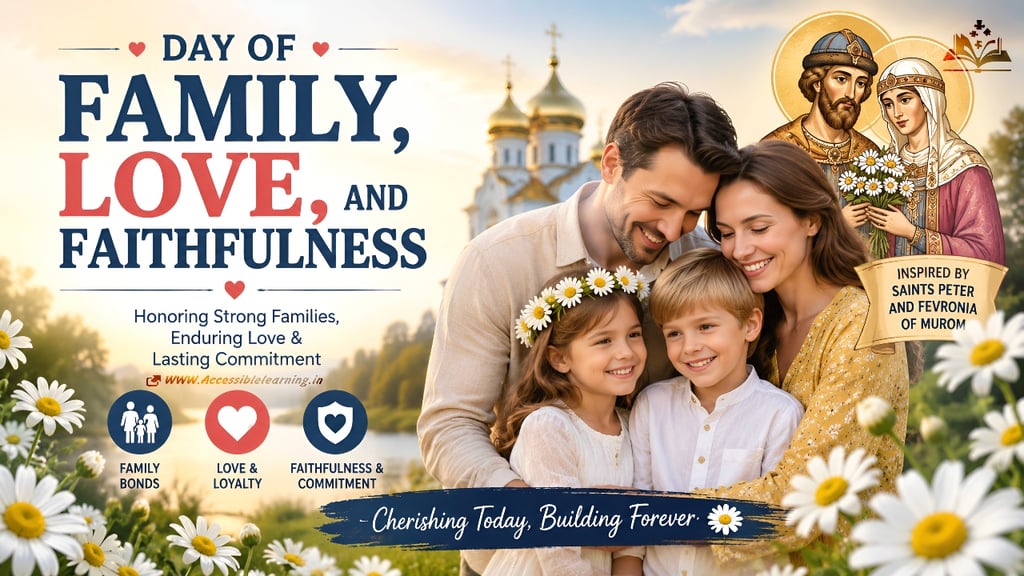
The Day of Family, Love, and Faithfulness is a national observance celebrated annually on July 8 in Russia. Dedicated to the values of strong families, enduring love, loyalty, and mutual respect, the holiday serves as a cultural counterpart to celebrations that focus primarily on romantic relationships. Instead of emphasizing fleeting romance, this day highlights the importance of commitment, marriage, family unity, and faithfulness over time.
In an era marked by changing social dynamics and rising individualism, the Day of Family, Love, and Faithfulness stands as a reminder that lasting relationships require dedication, sacrifice, trust, and shared responsibility. Rooted in centuries-old traditions and inspired by the story of Saints Peter and Fevronia of Murom, the celebration combines religious heritage, cultural values, and modern family-focused activities.
This article explores the history, significance, traditions, symbolism, and modern relevance of the Day of Family, Love, and Faithfulness.
What Is the Day of Family, Love, and Faithfulness?
The Day of Family, Love, and Faithfulness is a Russian holiday that honors the following:
Strong family bonds
Lifelong marital commitment
Loyalty between spouses
Respect among family members
The role of families in society
The observance encourages people to appreciate their spouses, children, parents, and relatives while reflecting on the importance of stable and supportive family relationships.
Unlike commercial celebrations centered on gifts and consumerism, this holiday focuses on values, relationships, and emotional connection.
When Is the Day of Family, Love, and Faithfulness Celebrated?
The holiday is observed every year on July 8. The date corresponds with the Orthodox Christian feast day of Saints Peter and Fevronia, who are regarded as patrons of marriage and family life.
Throughout Russia and in some neighboring regions, communities organize cultural events, family festivals, concerts, educational programs, and ceremonies honoring long-married couples.
Historical Origins of the Holiday
The Story of Saints Peter and Fevronia
The origins of the celebration trace back to the medieval city of Murom. According to Orthodox Christian tradition:
Prince Peter of Murom suffered from a serious illness.
Fevronia, a wise and compassionate young woman, healed him.
Peter married Fevronia despite opposition from members of the nobility.
The couple faced hardships and exile but remained devoted to each other.
Their loyalty, faith, and mutual respect became legendary.
They died on the same day and were later canonized as saints.
Their story became a symbol of marital harmony and enduring love. For centuries, Orthodox believers honored Saints Peter and Fevronia as protectors of family life and marriage.
Establishment as a Modern Holiday
The modern observance emerged in the early 21st century.
The city of Murom promoted the idea of a nationwide family-centered celebration inspired by the saints' legacy. The initiative gained public support and eventually expanded across Russia.
The holiday was officially recognized and became widely celebrated as a day dedicated to strengthening family values and encouraging social stability through healthy family relationships.
Today, government institutions, cultural organizations, schools, religious communities, and local authorities participate in various events related to the holiday.
Why the Holiday Matters
Strengthening Family Bonds
Families are often described as the foundation of society. Strong family relationships contribute to:
Emotional well-being
Child development
Social stability
Economic security
Community resilience
The holiday encourages people to invest time and effort into nurturing these relationships.
Promoting Long-Term Commitment
Modern culture often celebrates instant gratification and short-term success. The Day of Family, Love, and Faithfulness highlights a different message:
Real relationships require:
Patience
Communication
Forgiveness
Trust
Shared goals
The celebration recognizes couples who have remained together through decades of challenges and achievements.
Recognizing the Value of Faithfulness
Faithfulness extends beyond romantic loyalty. The concept includes:
Keeping promises
Supporting loved ones during difficult times
Being dependable
Demonstrating integrity
Maintaining mutual respect
These qualities form the foundation of healthy relationships and stable families.
Symbol of the Holiday: The Daisy
One of the most recognizable symbols of the Day of Family, Love, and Faithfulness is the daisy flower. The daisy represents the following:
Purity
Sincerity
Loyalty
Simplicity
True affection
Its bright white petals and yellow center symbolize warmth, openness, and enduring love.
During celebrations, daisies appear in the following:
Decorations
Greeting cards
Souvenirs
Public art displays
Family events
The flower has become closely associated with the holiday's message.

Traditional Celebrations
Family Gatherings
Families often spend the day together through the following:
Shared meals
Outdoor activities
Visits to relatives
Family reunions
Community events
The emphasis is on quality time rather than expensive gifts.
Cultural Festivals
Many cities organize the following:
Folk music performances
Dance shows
Art exhibitions
Historical presentations
Children's activities
These events promote both cultural heritage and family participation.
Marriage Celebrations
Some couples choose July 8 for:
Weddings
Anniversary celebrations
Renewal of vows
Family ceremonies
The date is considered especially meaningful because of its association with lasting love and marital devotion.
Honoring Long-Married Couples
A notable tradition involves recognizing couples who have been married for many years. Communities may present awards, certificates, or public acknowledgments to couples who demonstrate:
Loyalty
Dedication
Family leadership
Positive examples for younger generations
These recognitions reinforce the holiday's emphasis on enduring relationships.
Religious Significance
For Orthodox Christians, the day carries important spiritual meaning. Churches hold:
Special prayers
Religious services
Pilgrimages
Commemorations of Saints Peter and Fevronia
Believers seek blessings for:
Marriage
Family harmony
Children's well-being
Relationship stability
The religious aspect remains a central component of the holiday for many participants.
Modern Relevance
Addressing Contemporary Challenges
Families around the world face increasing pressures:
Financial stress
Work-life imbalance
Digital distractions
Social isolation
Relationship conflicts
The Day of Family, Love, and Faithfulness encourages reflection on how families can remain connected despite these challenges.
Supporting Children's Development
Research consistently shows that supportive family environments contribute to:
Better educational outcomes
Improved emotional health
Greater social confidence
Stronger resilience
The holiday highlights the responsibility families have in shaping future generations.
Building Strong Communities
Communities are strengthened when families thrive. Healthy family relationships often contribute to:
Volunteerism
Social trust
Civic participation
Community support networks
The holiday promotes these broader social benefits alongside personal relationships.
Key Values Celebrated on the Day
The Day of Family, Love, and Faithfulness revolves around several core principles:
Love
A deep commitment that goes beyond temporary emotions.
Faithfulness
Remaining loyal, trustworthy, and dependable.
Respect
Treating family members with dignity and understanding.
Responsibility
Supporting loved ones and fulfilling family obligations.
Unity
Working together through life's successes and difficulties.
Compassion
Showing kindness, patience, and empathy toward others.
How People Can Celebrate
Anyone can embrace the spirit of the holiday by:
Spending meaningful time with family
Expressing gratitude to loved ones
Reconnecting with relatives
Supporting elderly family members
Reflecting on personal relationships
Sharing family stories and traditions
Participating in community activities
Strengthening communication within the family
The focus remains on relationships rather than material gifts.
The Day of Family, Love, and Faithfulness is more than a celebration of romance. It is a tribute to the enduring relationships that sustain individuals, families, and communities. Inspired by the timeless example of Saints Peter and Fevronia, the holiday emphasizes commitment over convenience, loyalty over temporary affection, and family unity over individual isolation.
In a rapidly changing world, the values honored on July 8 remain as relevant as ever. Strong families do not emerge by chance. They are built through trust, respect, sacrifice, and faithfulness. The Day of Family, Love, and Faithfulness serves as a powerful reminder that lasting relationships remain one of humanity's greatest sources of strength, stability, and meaning.
Frequently Asked Questions
Q: What is the Day of Family, Love, and Faithfulness?
It is a Russian holiday celebrated on July 8 that honors family values, marital commitment, love, loyalty, and faithfulness.
Q: Who inspired the holiday?
The celebration is inspired by Saints Peter and Fevronia of Murom, who are considered patrons of marriage and family life.
Q: Why is the daisy associated with the holiday?
The daisy symbolizes purity, sincerity, loyalty, and enduring love, making it an ideal emblem for the celebration.
Q: Is the holiday religious or secular?
It has both religious and secular elements. Orthodox Christians observe its spiritual significance, while many communities celebrate its broader family-centered values.
Q: How do people celebrate the holiday?
Common activities include family gatherings, cultural festivals, weddings, anniversary celebrations, and recognition of long-married couples.
Q: Why is the holiday important today?
It encourages people to strengthen family relationships, promote loyalty and commitment, and recognize the vital role families play in society.
Subscribe to Frontier Intelligence
All © Copyright reserved by Accessible-Learning Hub
| Terms & Conditions
Accessible Learning Hub — Actionable clarity for high-agency minds.
Weekly breakdowns on AI breakthroughs, capital flow, and human performance systems. Zero fluff.