

Basel Fasnacht: Complete Guide to Switzerland’s Most Famous Carnival
Basel Fasnacht is Switzerland’s most iconic carnival, famous for its 4 AM “Morgestraich” start, glowing lantern parades, masked cliques, and sharp political satire. This in-depth guide covers the history, traditions, key events, costumes, music, travel tips, and everything you need to know to experience Basel Fasnacht like a local.
CULTURE/TRADITIONEVENT/SPECIALCELEBRATION/FESTIVALSEUROPEAN UNION
Kim Shin
2/13/20266 min read
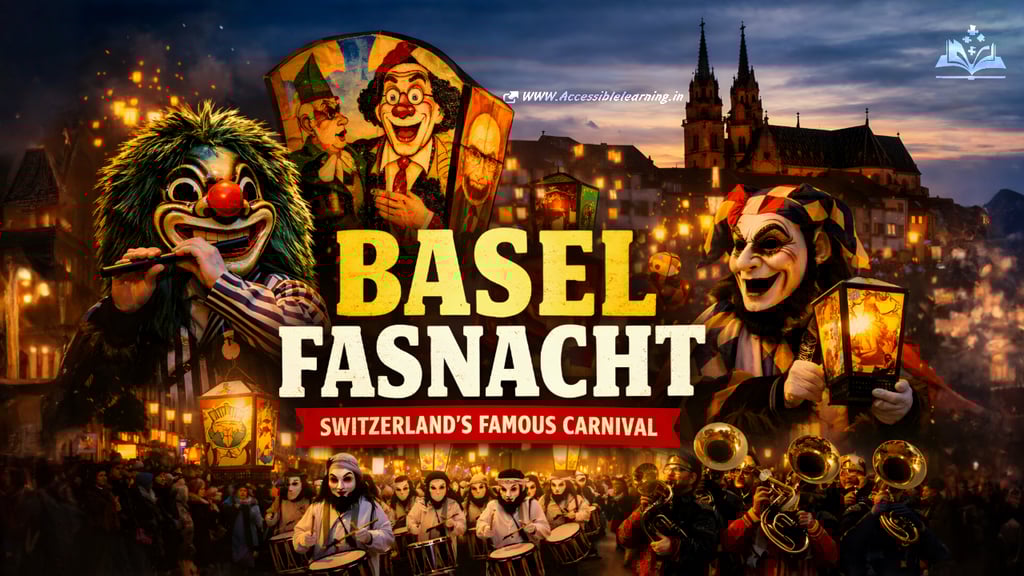
Basel Fasnacht is not just a festival. It’s a living tradition, a city-wide performance, and one of the most iconic cultural events in Switzerland. Every year, the streets of Basel transform into an unforgettable world of lantern-lit parades, sharp satire, masked performers, rhythmic drumming, and music that feels like it comes from another era.
If you’re searching for an in-depth guide to Basel Fasnacht, this article covers everything: history, meaning, traditions, key events, costumes, music, travel tips, etiquette, and why this carnival is unlike anything else in Europe.
What Is Basel Fasnacht?
Basel Fasnacht (also written as Basler Fasnacht) is Basel’s traditional carnival, celebrated in the city of Basel in northwestern Switzerland. It is recognized globally for being:
Switzerland’s biggest carnival
A major cultural identity of Basel
Exceptionally artistic, political, and satirical
Organized with discipline and deep tradition
Basel Fasnacht takes place every year on the Monday after Ash Wednesday**, which makes it unique compared to many other European carnivals that end before Lent begins. This timing alone sets the tone: Basel Fasnacht is a carnival with its own rules, rhythm, and personality.
Why Basel Fasnacht Is So Famous
Many people compare carnivals across Europe: Venice Carnival, Cologne Carnival, Nice Carnival, and Rio Carnival. But Basel Fasnacht stands apart. Here’s why it is world-famous:
1) It Starts at 4:00 AM in Total Darkness
Basel Fasnacht begins with a haunting and magical event called Morgestraich, where the entire old town goes dark and only lanterns light the streets.
2) The Festival Is Built on Satire
Basel Fasnacht is sharp, witty, and political. It is known for public commentary on:
local Swiss politics
European events
global news
social issues
corporate scandals
This is not a “party carnival” alone. It’s also a cultural voice.
3) It’s Lantern Culture at Its Highest Level
Massive painted lanterns (some like moving art galleries) are a signature of Fasnacht.
4) It’s Not About Alcohol
Unlike some carnivals where drinking dominates, Basel Fasnacht is more disciplined and performance-based, with a strong emphasis on music and tradition.
History of Basel Fasnacht (Origins and Evolution)
The roots of Basel Fasnacht go back centuries and are connected to pre-Lenten traditions in Europe. Like many carnivals, it developed as a period of public expression, reversal of roles, and social release before Lent.
Basel’s carnival evolved into something more structured over time, shaped by:
Basel’s urban culture and trade identity
guild traditions (Zünfte)
Protestant influence (Basel became a strong Reformation city)
the city’s focus on art, craftsmanship, and discipline
Interestingly, Basel Fasnacht continued even under Protestant Basel, which makes it historically remarkable. It became less religious and more civic-cultural, turning into a tradition that represents Basel’s identity rather than purely religious calendars.
When Does Basel Fasnacht Happen?
Basel Fasnacht takes place over three consecutive days, traditionally called:
Monday
Tuesday
Wednesday
It begins on Monday at 4:00 AM and ends on Thursday morning at 4:00 AM, totaling exactly 72 hours.
Why After Ash Wednesday?
Most European carnivals end before Lent begins. Basel intentionally celebrates later, which reflects Basel’s unique tradition and historical independence.
How Basel Fasnacht Works: The Main Elements
To truly understand Basel Fasnacht, you need to know the three pillars that define it:
1) Cliques (Groups)
The festival is largely organized around Cliques, which are groups of performers who march and play music together. These groups often include:
drummers (Tambouren)
piccolo flute players (Pfeifer)
lantern bearers
masked marchers
Cliques can range from small to very large, and they often spend months preparing.
2) Costumes and Masks (Larven)
Performers wear costumes called Gstade and masks known as Larven. The masks are:
exaggerated
sometimes grotesque
often humorous
designed to keep anonymity
That anonymity is important because Fasnacht is about expression without personal identity.
3) Music: Drums and Piccolos
The sound of Fasnacht is unmistakable: a hypnotic rhythm of drums and shrill, sharp piccolo melodies. It can feel intense at first, but once you absorb it, it becomes addictive and emotionally powerful.
The Key Events of Basel Fasnacht
1) Morgestraich (Monday 4:00 AM)
This is the opening event and the heart of the entire carnival. At exactly 4:00 AM, the city center goes dark:
streetlights switch off
shop lights go off
the crowd becomes silent
Then you hear:
drums rolling in the distance
piccolo melodies approaching
Suddenly:
lanterns appear like moving paintings
masked groups march through narrow streets
the old city becomes a surreal, moving museum
Morgestraich is not loud partying. It’s almost sacred in mood.
2) The Cortège (Monday and Wednesday Afternoon)
The Cortège is the main parade, held twice during Fasnacht:
Monday afternoon
Wednesday afternoon
But unlike typical parades:
there is no single official parade route
cliques move in planned loops through the city
it feels like the whole city becomes the parade
The Cortège features:
massive lanterns
costumes and satire
music performances
decorated wagons
spectators receiving treats
Gugge Music (Tuesday Evening)
Basel Fasnacht also includes energetic brass and percussion bands called Guggenmusik. This part is louder, funnier, more chaotic, and very crowd-friendly. If Morgestraich feels artistic and mysterious, Gugge music feels like wild street energy.
Lantern Exhibition (Ladärne)
One of the most underrated highlights is the lantern exhibition. During Fasnacht, many lanterns are displayed publicly so visitors can see the painted artwork in detail.
These lanterns often include:
commentary messages
caricatures
storytelling scenes
satire and humor
You don’t just “watch” Fasnacht in Basel. You read it and decode it.


What Makes Basel Fasnacht Different From Other Carnivals?
Basel Fasnacht is unique because it combines:
Artistic Excellence
The masks, lanterns, costumes, and themes are made with incredible craftsmanship.
Political Intelligence
The satire is not random jokes. It’s often deep and culturally informed.
Disciplined Tradition
Everything is structured: timings, rules, and even behavior.
Identity and Privacy
Performers remain anonymous behind masks. It creates equality and shared spirit.
Fasnacht Traditions You Should Know
Throwing “Räppli”
Performers and visitors throw colorful confetti called Räppli. Important: Basel’s Räppli tradition is serious.
It’s part of the carnival atmosphere
But it can also get chaotic (in a fun way)
Locals often avoid carrying open bags or items you don’t want filled with confetti
Fasnachtskiechli and Onion Tart
Food is an essential part of the festival. Popular Fasnacht foods include:
Fasnachtskiechli (crispy fried pastry with powdered sugar)
Zwiebelwähe (onion tart)
Käsewähe (cheese tart)
warm soups (popular in early morning cold)
Themes (Sujet)
Each clique picks a theme (sujet) often related to:
politics
culture
city events
celebrities
controversial decisions
The theme shapes:
masks
costumes
lantern artwork
lyrics and slogans
The Social Meaning of Basel Fasnacht
Basel Fasnacht is a cultural mirror. It reflects:
public frustrations
social values
humor
criticism
identity
For Basel, Fasnacht is not a tourist attraction first. It is a community tradition, a yearly reset, and a shared language. Locals often say you don’t just attend Fasnacht. You live it.
How to Experience Basel Fasnacht as a Visitor
If you want to visit, your experience depends on the event you choose.
Best for First-Time Visitors:
Monday 4:00 AM Morgestraich
Cortège parade (Monday afternoon)
Lantern exhibition
Gugge music (Tuesday evening)
Best for Photography:
Lanterns at night
Morgestraich low-light scenes
Old Basel streets with costumes
Best for Families:
Daytime Cortège
Lantern displays
Food markets and calm viewing areas
Basel Fasnacht Travel Tips (Very Practical)
1) Book Hotels Early
Basel Fasnacht is extremely popular. Hotels fill early, and prices rise fast.
2) Wear Warm Clothes
Early mornings in Basel can be freezing, especially at 4:00 AM. Bring:
warm jacket
gloves
scarf
comfortable shoes
3) Respect the Cliques
Do not block their path.
Do not touch lanterns.
Do not interfere with performances.
4) Don’t Use Flash Photography During Morgestraich
It ruins the mood and can annoy performers.
5) Expect Crowds
Basel’s old town streets are narrow. Arrive early to get a good viewing position.
Basel Fasnacht Etiquette (Do’s and Don’ts)
Do:
✅ Stay behind performers when they march
✅ Dress warmly and comfortably.
✅ Enjoy the satire, even if you don’t understand all the Swiss-German references
✅ Watch quietly during Morgestraich
Don’t:
❌ Don’t throw confetti aggressively at performers
❌ Don’t touch masks or lanterns
❌ Don’t step into marching paths
❌ Don’t expect it to be like Rio or Cologne (it’s different on purpose)
FAQ's
Q: Is Basel Fasnacht free?
Yes, most street events are free to watch. Some indoor events or special performances may require tickets.
Q: What language is used in Fasnacht?
Swiss German dominates, especially the Basel dialect. Satire text may be hard to understand for non-locals, but visuals and energy are universal.
Q: Is Basel Fasnacht suitable for tourists?
Absolutely, but it’s best enjoyed with respect for tradition. It’s not designed like a tourist show, which is part of its beauty.
Q: Is it safe?
Yes. Basel is generally safe. Still, it’s crowded, so take normal precautions for valuables.
Q: What’s the best day to visit?
If you have limited time:
Monday early morning (Morgestraich) is the most iconic.
Wednesday Cortège is great if you missed Monday.
Why Basel Fasnacht Is Worth Experiencing at Least Once
Basel Fasnacht is not just colorful. It’s meaningful. It is:
art in motion
political satire on the street
a cultural tradition preserved with pride
one of Europe’s most unique nighttime festivals
And the moment when the lights go out at 4:00 AM, and lanterns move through the old streets like glowing paintings, you’ll understand why Basel calls it the best three days of the year.
Basel Fasnacht is a rare kind of festival: deep, mysterious, joyful, sharp, and artistic. It doesn’t rely on simple spectacle. Instead, it earns its magic through tradition and craft.
Whether you visit as a traveler, a photographer, a culture lover, or someone who just wants to see a festival unlike anything else in Switzerland, Basel Fasnacht is a once-in-a-lifetime experience that stays in memory long after the last drumbeat fades.
Subscribe To Our Newsletter
All © Copyright reserved by Accessible-Learning Hub
| Terms & Conditions
Knowledge is power. Learn with Us. 📚

