

Yunishigawa Kamakura Festival: A Quiet Winter Light in Japan’s Snow Country
The Yunishigawa Kamakura Festival is a traditional winter event in Tochigi Prefecture, Japan, where hundreds of candle-lit snow domes illuminate a quiet mountain village. Rooted in history and seasonal belief, the festival offers a peaceful blend of culture, snowfall, and hot spring life.
CULTURE/TRADITIONEVENT/SPECIALTRAVEL LIFECELEBRATION/FESTIVALSJAPAN
Kim Shin
1/8/20264 min read
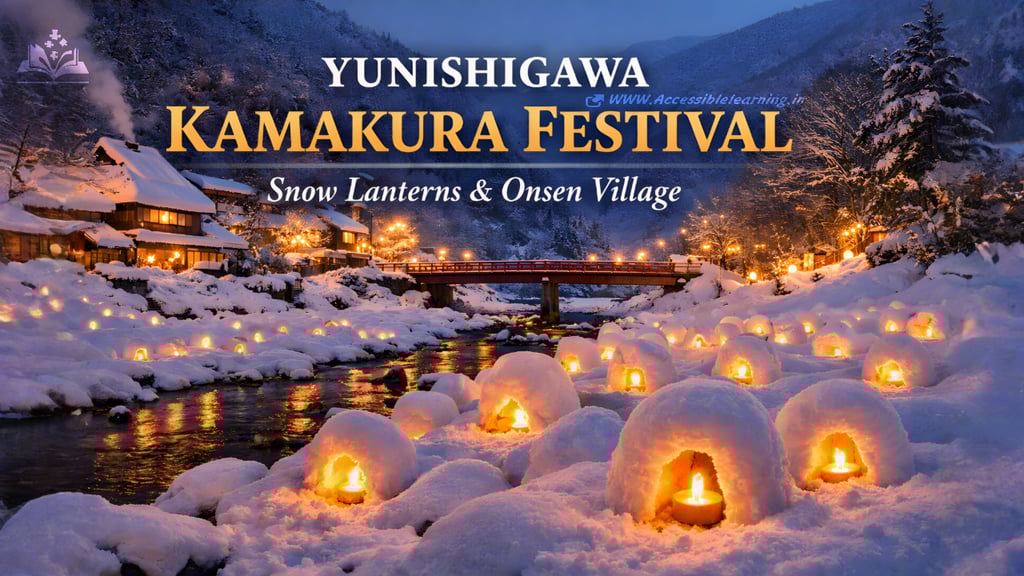
Hidden deep in the mountains of Tochigi Prefecture, the Yunishigawa Kamakura Festival is a winter event shaped by snow, silence, and tradition. Unlike large-scale snow festivals built for spectacle, this one feels personal. It is created by a small onsen village that has learned to live with long winters and uses them as a source of beauty rather than hardship.
The festival transforms Yunishigawa Onsen into a glowing snow village where candlelight reflects gently off white landscapes, offering visitors a rare chance to experience winter the way rural Japan still understands it.
Meaning of “Kamakura” and Its Seasonal Role
A kamakura is a dome-shaped structure made from packed snow. In Japan’s heavy-snow regions, these shelters were traditionally built as temporary sacred spaces. Families would place altars inside to honor water deities and pray for protection from floods, fire, and crop failure.
In Yunishigawa, the kamakura tradition evolved into hundreds of miniature kamakura, each holding a candle. These are not decorations alone. They symbolize gratitude toward nature and respect for water, snow, and seasonal cycles that sustain rural life.
Festival Duration and Snow Conditions
The festival typically runs from late January through late February, depending on snowfall levels. Unlike fixed-date events, the success of the Yunishigawa Kamakura Festival relies heavily on natural snow accumulation. This dependence on weather reinforces the festival’s authenticity and connection to nature.
Heavy snowfall is common, and the village often looks completely buried under white layers, enhancing the visual impact of the lanterns after sunset.
Illumination Areas and Village Layout
The main viewing zones include
The Sawaguchi River, where rows of glowing kamakura line the banks
Shrine grounds set slightly uphill, creating layered lighting effects
Walkways near ryokan inns and traditional houses
Because the village is small, visitors can explore the entire illuminated area on foot, allowing for slow observation rather than rushed sightseeing.
Sensory Experience Beyond Visual Beauty
What makes the festival memorable is not only how it looks but also how it feels.
The sound of snow being crushed under boots
Steam rising from hot springs into cold night air
The faint scent of burning candles mixed with wood smoke
Near-total silence broken only by flowing water
These subtle elements turn the festival into an immersive experience rather than a visual event.
Local Food and Winter Comfort Dishes
During festival evenings, visitors can find simple local food offerings designed for cold weather, such as:
Hot miso-based soups
Grilled mochi and rice cakes
River fish prepared in traditional mountain style
Warm amazake (sweet fermented rice drink)
The food reflects survival cuisine rather than street food culture, reinforcing the village’s rural identity.
Photography and Artistic Appeal
The Yunishigawa Kamakura Festival is especially popular among photographers who appreciate low-light and atmospheric compositions. The soft candlelight creates natural contrast against snow without harsh shadows, making it ideal for night photography.
Because artificial lighting is minimal, photos often retain a natural, almost film-like quality.
Relationship With Yunishigawa Onsen Culture
Yunishigawa is first and foremost a hot spring village. Many visitors plan their trip around outdoor rotenburo baths, where they can soak while snow falls around them.
The festival and onsen culture complement each other perfectly. The cold enhances the warmth, and the warmth makes the cold meaningful rather than uncomfortable.
Community Involvement and Preservation
One of the festival’s most important aspects is that it is community-built. Local residents, inn owners, and volunteers shape the snow lanterns every year. There is no large corporate sponsorship or commercial branding.
This grassroots involvement keeps the festival small, sustainable, and emotionally grounded.


Who Should Visit This Festival
The Yunishigawa Kamakura Festival is ideal for:
Travelers seeking quiet cultural experiences
Couples looking for a romantic winter setting
Photographers and writers
Visitors interested in traditional Japan rather than modern entertainment
It may not appeal to those looking for fireworks, concerts, or large crowds.
Practical Travel Considerations
Winter transport can be slow due to snow-covered roads
Evening temperatures often fall below freezing
Staying overnight is strongly recommended
Public transport runs less frequently in winter
Planning ahead improves the experience significantly.
Cultural Value in the Modern Era
In an age where festivals are often optimized for social media, the Yunishigawa Kamakura Festival remains intentionally modest. It does not try to impress. It invites visitors to slow down, observe, and feel the season.
The kamakura melts when winter ends, leaving no permanent structures behind. This impermanence reflects a core Japanese value: beauty exists because it does not last.
The Yunishigawa Kamakura Festival is not just a winter attraction. It is a living reminder of how humans once adapted to nature with respect rather than control. For those willing to embrace cold, silence, and simplicity, it offers one of Japan’s most quietly powerful seasonal experiences.
FAQ's
Q: What is the Yunishigawa Kamakura Festival known for?
The festival is known for hundreds of small snow domes, called kamakura, illuminated with candles at night. These glowing lanterns create a calm and atmospheric winter scene unique to rural Japan.
Q: When is the best time to visit the Yunishigawa Kamakura Festival?
The best time is during the evening hours between late January and late February, after sunset, when the candlelight illuminations are fully visible. Snowfall conditions can affect the exact schedule.
Q: Is the Yunishigawa Kamakura Festival suitable for families?
Yes, the festival is family-friendly. However, parents should prepare children for cold temperatures and snowy walking paths, as the village experiences heavy winter conditions.
Q: Do I need to buy tickets to attend the festival?
No, the Yunishigawa Kamakura Festival is free to attend. Visitors can walk through the illuminated areas without purchasing an entry ticket.
Q: How cold does it get during the festival?
Temperatures often drop below freezing in the evening. Heavy winter clothing, gloves, boots, and thermal layers are strongly recommended.
Q: Can I stay overnight in Yunishigawa during the festival?
Yes, staying overnight in a local ryokan is highly recommended. Many accommodations offer hot spring baths, which enhance the overall winter festival experience.
Q: Is the festival crowded like other famous snow festivals in Japan?
No, compared to major events such as the Sapporo Snow Festival, Yunishigawa remains relatively quiet and uncrowded, making it ideal for visitors seeking a peaceful atmosphere.
Q: Is photography allowed at the festival?
Yes, photography is allowed and encouraged. The soft candlelight and snow create excellent night photography conditions, though tripods should be used carefully on snowy paths.
Subscribe To Our Newsletter
All © Copyright reserved by Accessible-Learning Hub
| Terms & Conditions
Knowledge is power. Learn with Us. 📚

