

Why Emotional Intelligence Matters in School and Career Success
Emotional intelligence is a key factor in student success and career growth. Learn how EQ improves learning, leadership, relationships, mental health, and workplace performance with real-world examples and practical tips.
SCIENCE/PHILOSOPHYA LEARNINGEDUCATION/KNOWLEDGENEW YOUTH ISSUES
Shiv Singh Rajput
2/24/20266 min read
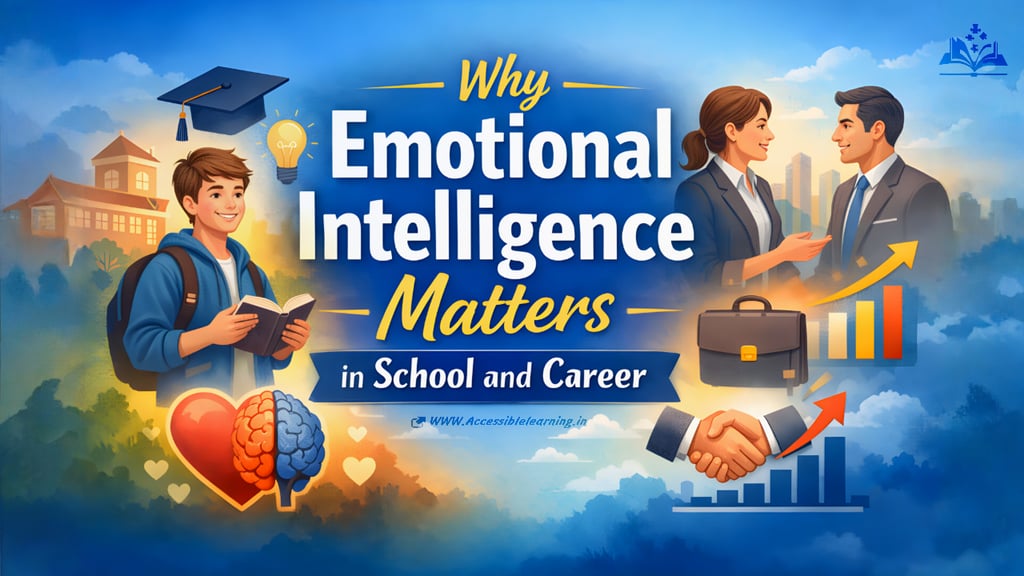
In classrooms, offices, and everyday life, intelligence is often measured through grades, test scores, and technical skills. But real success rarely depends on IQ alone. Emotional intelligence, the ability to understand and manage emotions in yourself and others, plays a powerful role in how students learn and how professionals grow in their careers.
Today, schools and companies across the world are realizing that emotional intelligence is not a soft skill. It is a life skill. From teamwork and leadership to mental health and decision-making, emotional intelligence shapes how people perform, connect, and succeed.
This article explores why emotional intelligence matters in school and career growth, how it affects real-world success, and how students and professionals can develop it.
What Is Emotional Intelligence?
Emotional intelligence, often called EI or EQ, refers to the ability to recognize, understand, manage, and influence emotions in healthy and productive ways.
The Five Core Elements
Self-awareness – Knowing your emotions and how they affect your behavior
Self-regulation – Managing impulses, anger, and stress
Motivation – Staying focused and positive toward goals
Empathy – Understanding the emotions of others
Social skills – Building relationships, teamwork, and communication
Unlike IQ, emotional intelligence can be developed throughout life through practice and reflection.
Why Emotional Intelligence Matters in School
Better Learning and Academic Performance
Students who understand their emotions can manage stress during exams, stay focused in class, and recover from failure faster. Emotional intelligence helps students avoid panic, frustration, and distraction.
Improved Relationships With Teachers and Classmates
Students who show empathy, listen actively, and communicate clearly build stronger friendships and better relationships with teachers. This creates a positive learning environment and reduces classroom conflicts.
Stronger Mental Health
Students today face pressure from grades, social media comparisons, and family expectations. Emotional intelligence helps them recognize anxiety, jealousy, anger, or fear and deal with them in healthy ways.
Reduced Bullying and Peer Pressure
Students who understand emotions are less likely to bully others. They are also more confident in saying no to peer pressure related to cheating, drugs, or risky behavior.
Better Discipline and Decision-Making
Emotionally intelligent students think before reacting. They learn responsibility, patience, and accountability early in life.
Improved Creativity and Problem Solving
When students manage stress and frustration, their minds stay open. This improves creativity, innovation, and logical thinking in subjects like science, writing, and design.
Digital Behavior and Social Media Awareness
Students today live online. Emotional intelligence helps them avoid online fights, cyberbullying, and negative comparison culture. They learn to respond, not react.
Confidence and Public Speaking Skills
Students with emotional awareness speak clearly, manage stage fear, and present ideas confidently.
Leadership Development From a Young Age
Class representatives, team captains, and group leaders need emotional intelligence to guide others. Students who understand people become natural leaders.
Better Adaptation to College Life
Students leaving school for college often struggle with independence. Emotional intelligence helps them manage loneliness, workload, and new social environments.
Why Emotional Intelligence Matters in Career Growth
Communication Skills in the Workplace
Most jobs require teamwork. Emotional intelligence helps professionals listen carefully, respond respectfully, and express ideas clearly. It prevents misunderstandings.
Leadership and Team Management
Great leaders are emotionally aware. Managers with high emotional intelligence motivate teams, handle conflict calmly, and build trust.
Adaptability in a Changing World
Technology, AI tools, and remote work are changing jobs quickly. Emotional intelligence helps professionals stay calm, learn new tools, and adapt to change.
Better Decision-Making Under Pressure
Emotional control allows people to think logically during crisis situations. This is important in business, healthcare, law, and management roles.
Career Growth and Promotions
Companies promote people who can manage teams and clients. Emotional intelligence improves networking, teamwork, and workplace reputation.
Customer Relationship Success
Sales, marketing, and service roles depend heavily on empathy. Understanding customer feelings builds loyalty and trust.
Conflict Resolution at Work
Every workplace has disagreements. Emotional intelligence helps professionals resolve issues calmly instead of escalating them.
Workplace Mental Health and Burnout Prevention
Professionals who manage stress avoid burnout. They maintain work-life balance and long-term productivity.
Remote Work and Global Collaboration
Working with people from different cultures requires empathy and patience. Emotional intelligence helps in cross-cultural communication.
Entrepreneurial Success
Entrepreneurs deal with rejection, financial stress, and uncertainty. Emotional intelligence helps them stay motivated and lead teams during tough times.


Real-World Examples of Emotional Intelligence
Example 1: A Student Handling Failure
Two students fail a math test. One blames the teacher. The other reflects, asks for help, and improves. The second student shows emotional intelligence.
Example 2: A Manager Resolving Conflict
Two employees argue over credit for a project. A manager listens to both, understands feelings, and solves the issue fairly.
Example 3: Customer Service Success
A support executive listens patiently and turns an angry customer into a loyal one.
Example 4: Startup Team Crisis
A startup founder keeps the team calm during funding problems, motivates them, and finds solutions. Emotional intelligence keeps the company alive.
Emotional Intelligence vs IQ: What Matters More?
IQ helps with logic and technical learning. Emotional intelligence helps with teamwork, leadership, and real-world success.
Many studies show that long-term career success depends more on emotional intelligence than academic intelligence alone.
How to Develop Emotional Intelligence in Students
Encourage open conversations about feelings
Teach active listening
Use teamwork-based learning
Provide constructive feedback
Teach breathing and stress control techniques
Promote empathy through storytelling
Encourage journaling and self-reflection
Limit toxic social media exposure
Teach conflict resolution skills
Reward kindness and cooperation
How Professionals Can Improve Emotional Intelligence
Practice daily self-reflection
Ask for honest feedback
Improve communication skills
Learn negotiation techniques
Observe body language
Develop patience and emotional control
Read psychology and leadership books
Work with mentors
Take emotional intelligence assessments
Practice mindfulness or meditation
Emotional Intelligence in the Age of AI
As automation grows, machines can replace routine tasks, but they cannot replace empathy, creativity, and human connection. Emotional intelligence becomes the real advantage in leadership, teaching, healthcare, business strategy, and creative industries.
Why Schools and Companies Should Teach Emotional Intelligence
Schools with emotional learning programs see lower bullying and better attendance. Companies with emotionally intelligent leaders see higher employee satisfaction and productivity. Training in emotional intelligence is an investment in long-term success.
Common Misconceptions About Emotional Intelligence
It is not about being overly emotional
It is not weakness
It is not fixed
It does not replace IQ
It is not only for leaders; everyone needs it
Emotional intelligence is one of the most important skills for success in school and career. It improves learning, relationships, leadership, mental health, creativity, and long-term growth.
Students with emotional intelligence become confident learners. Professionals with strong EQ become respected leaders. In the end, success is not just about how smart you are. It is about how well you understand yourself and others.

FAQ's
Q: What is emotional intelligence in simple words?
Emotional intelligence is the ability to understand your emotions and the emotions of others and to respond in a calm, thoughtful, and respectful way.
Q: Why is emotional intelligence important for students?
It helps students manage exam stress, build friendships, avoid conflicts, stay motivated, and develop confidence. Students with strong EQ often perform better in both academics and life skills.
Q: Why do employers value emotional intelligence?
Employers look for people who can communicate well, handle pressure, work in teams, and solve problems without creating conflict. Emotional intelligence improves leadership, teamwork, and customer relationships.
Q: Can emotional intelligence be learned or improved?
Yes. Emotional intelligence can be developed through self-reflection, active listening, empathy practice, stress management, and feedback from others.
Q: What is the difference between IQ and EQ?
IQ measures logical thinking and problem-solving ability. EQ measures emotional awareness, empathy, and relationship skills. Both are important, but EQ often plays a bigger role in long-term success.
Q: How can schools teach emotional intelligence?
Schools can include group projects, mental health education, communication training, role-playing activities, counseling support, and kindness-based classroom practices.
Q: How can professionals improve emotional intelligence at work?
They can practice listening more, reacting less, asking for feedback, managing stress, understanding team perspectives, and improving communication habits.
Q: Does emotional intelligence help in leadership?
Yes. Good leaders motivate people, resolve conflicts, and build trust. Emotional intelligence helps leaders understand team needs and make better decisions.
Q: Does emotional intelligence help in networking events?
Yes. People who listen genuinely, remember details, and communicate respectfully build stronger and lasting professional connections.
Q: How is emotional intelligence tested in companies?
Many companies use behavioral interviews, role-play situations, teamwork exercises, and personality assessments to measure emotional awareness and decision-making.
Q: Can too much emotional intelligence be harmful?
Only if it leads to overthinking others' feelings and ignoring your own needs. Healthy emotional intelligence includes setting boundaries and respecting yourself.
Q: How long does it take to improve emotional intelligence?
You can see small changes in weeks with practice, but strong emotional intelligence develops over years through reflection, experience, and learning.
Q: Which careers need emotional intelligence the most?
Teaching, healthcare, management, HR, sales, counseling, customer service, leadership roles, entrepreneurship, and creative industries all depend heavily on EQ.
Subscribe To Our Newsletter
All © Copyright reserved by Accessible-Learning Hub
| Terms & Conditions
Knowledge is power. Learn with Us. 📚

