

Why Communication Skills Matter More Than Ever in the Digital Age
Communication skills are more important than ever in a world shaped by remote work, AI, and digital interaction. This in-depth guide explains why clear communication drives career growth, leadership, relationships, and long-term success.
A LEARNINGEDUCATION/KNOWLEDGE
Shiv Singh Rajput
2/4/20265 min read
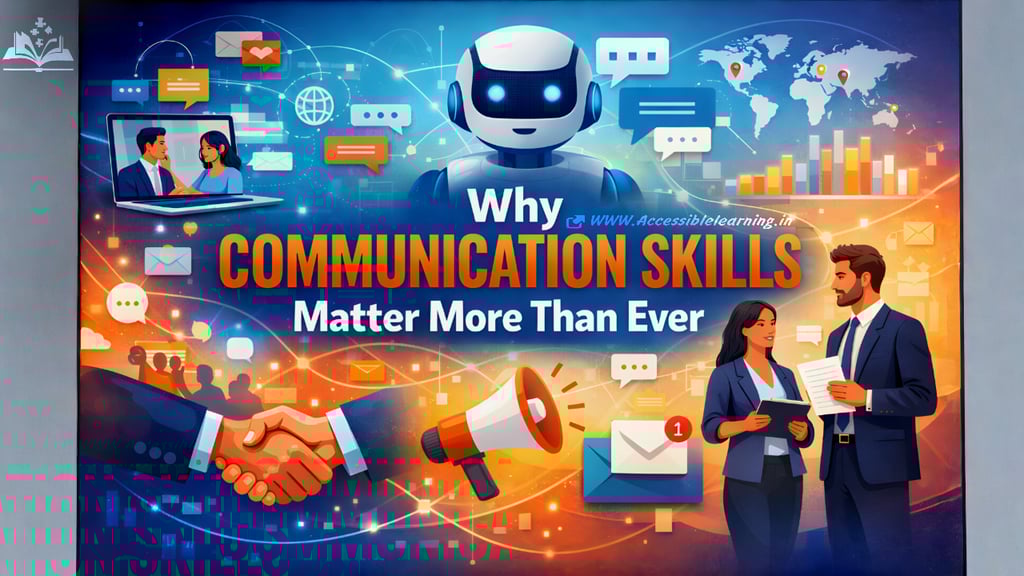
Communication is not just a professional advantage anymore. It is a survival skill in modern life. As work becomes remote, teams go global, and AI tools reshape how we create and share information, the ability to communicate clearly, thoughtfully, and humanely has become more valuable than any single technical skill.
This article explores why communication skills matter more than ever, how they influence careers, leadership, mental well-being, and business success, and what effective communication truly looks like in today’s world.
The Modern Communication Landscape
The way humans communicate has changed faster in the last decade than in the previous hundred years.
We now communicate through:
Emails, chats, and collaboration tools
Video calls replacing in-person meetings
Short-form content on social platforms
AI-generated messages and automated replies
While tools have improved speed, they have also increased misunderstanding. Tone, intent, and emotion are often lost. This makes strong communication skills more necessary, not less.
Communication Is the Foundation of All Skills
Every skill depends on communication in some form.
Knowledge is useless if it cannot be explained
Talent is invisible if it cannot be expressed
Ideas fail if they are not understood
Whether you are a designer, developer, writer, teacher, entrepreneur, or manager, your ability to communicate determines how your work is perceived and valued.
The Role of Communication in Career Success
Hiring and First Impressions
Employers evaluate communication from the first interaction.
Resume clarity
Email tone
Interview responses
Ability to explain past work
Candidates with average skills but strong communication often outperform technically stronger candidates who cannot articulate their thinking.
Workplace Performance
Inside organizations, communication impacts:
Task clarity and execution
Feedback quality
Team collaboration
Conflict resolution
Poor communication creates friction. Strong communication creates momentum.
Communication Skills in the Age of AI
AI Has Made Communication More Visible
AI can generate content quickly, but it cannot replace human judgment, ethics, or emotional awareness.
What matters now is:
How you prompt AI
How you edit AI output
How you add human context and intention
Those who understand communication deeply can use AI effectively. Those who do not often produce generic, disconnected content.
Human Voice Is the Differentiator
As AI-generated content increases, authenticity stands out. Clear, honest, and human communication builds trust in a world full of automated messages.
Emotional Intelligence and Communication
Communication is not only about words. It is about awareness.
Emotional intelligence in communication includes:
Recognizing emotions in yourself and others
Adjusting tone based on context
Responding calmly under pressure
Showing empathy without losing clarity
People remember how you make them feel more than what you say.
Communication and Leadership Influence
Leadership without communication does not exist.
Strong leaders communicate:
Purpose, not just tasks
Expectations, not assumptions
Feedback, not silence
Calm, not panic
When communication is weak, teams feel uncertain. When it is strong, teams feel safe, focused, and motivated.
Communication in Business and Branding
Trust Is Built Through Clarity
Customers trust brands that communicate clearly.
Clear messaging builds confidence
Honest language builds loyalty
Consistent tone builds identity
Confusing communication costs sales. Clear communication builds long-term value.
Marketing Is Communication, Not Noise
Effective marketing is not about talking more. It is about saying the right thing to the right audience at the right time.
Strong communication helps brands:
Tell better stories
Connect emotionally
Reduce customer confusion
Stand out in crowded markets
Communication in Personal Relationships
Many personal conflicts exist because of unspoken expectations and unclear expression.
Healthy communication enables:
Honest conversations without fear
Better listening and understanding
Respectful disagreement
Stronger emotional bonds
Avoiding communication does not prevent conflict. It delays it.


The Psychological Impact of Good Communication
Clear communication reduces stress. When people communicate well:
They feel heard
They feel understood
They feel confident expressing themselves
Poor communication leads to anxiety, frustration, and self-doubt. Strong communication creates emotional stability and confidence.
Cultural and Global Communication
Global work environments demand cultural sensitivity. Effective communicators:
Understand cultural differences
Avoid assumptions
Respect language and context
Adapt communication styles
In global teams, clarity and respect matter more than fluency.
Listening: The Most Underrated Communication Skill
Listening is not passive. It is active work. Good listeners:
Do not interrupt
Ask thoughtful questions
Reflect before responding
Seek understanding, not dominance
Most communication problems come from listening to reply instead of listening to understand.
Written Communication Matters More Than Spoken
In digital environments, writing is often the primary form of communication. Strong writing skills lead to:
Clear emails
Better documentation
Fewer misunderstandings
Stronger professional image
Poor writing can damage credibility even when ideas are strong.
Conflict Resolution Through Communication
Conflict is unavoidable. Poor communication makes it destructive. Good communication makes it productive.
Effective conflict communication includes:
Staying calm and factual
Focusing on issues, not personalities
Expressing needs clearly
Seeking resolution, not victory
Handled well, conflict can strengthen relationships.
The Long-Term Value of Communication Skills
Communication skills compound over time. They lead to:
Better opportunities
Stronger networks
Higher confidence
Greater influence
Unlike technical tools, communication skills never become outdated.
What Strong Communication Looks Like Today
Modern effective communication is:
Clear over clever
Honest over impressive
Respectful, overreactive
Human over robotic
It is not about sounding smart. It is about being understood.
How to Continuously Improve Communication Skills
Improvement requires intention. Practical actions include:
Reading and writing regularly
Practicing active listening
Asking for feedback
Observing strong communicators
Reflecting on misunderstandings
Communication improves through use, not theory.
In a world full of information, attention is earned through clarity. In a world shaped by AI and automation, humanity is expressed through communication.
Those who master communication do not just succeed professionally. They build trust, influence, and meaningful connections. Communication skills matter more than ever because everything else depends on them.

FAQ's
Q: Why are communication skills more important today than in the past?
Communication skills matter more today because work is increasingly remote, global, and digital. Most interactions now happen through emails, messages, and video calls where tone and intent can be easily misunderstood. Clear communication reduces confusion, builds trust faster, and helps people stand out in competitive environments shaped by AI and automation.
Q: How do communication skills impact career growth?
Strong communication skills directly influence promotions, leadership opportunities, and professional credibility. People who can clearly explain ideas, give and receive feedback, and collaborate effectively are often trusted with more responsibility. Technical skills may open doors, but communication skills determine long-term career progress.
Q: Are communication skills more important than technical skills?
They are equally important, but communication skills often decide how technical skills are valued. A highly skilled person who cannot communicate may be overlooked, while someone with moderate technical ability but strong communication can lead teams, manage clients, and influence decisions more effectively.
Q: How does AI change the importance of communication skills?
AI has increased the importance of communication rather than reducing it. While AI can generate content, humans are still responsible for intent, accuracy, ethics, and emotional understanding. People who communicate clearly can guide AI better, refine outputs, and maintain authenticity in an automated world.
Q: What are the most important communication skills to develop?
The most important communication skills today include:
Active listening
Clear and concise writing
Emotional intelligence
Adaptability across platforms and cultures
Conflict resolution
Asking thoughtful questions
These skills help reduce misunderstandings and build stronger relationships.
Q: How can poor communication affect the workplace?
Poor communication leads to misunderstandings, repeated work, low morale, and conflict. It can slow down projects, damage trust between teams, and create unnecessary stress. Over time, it affects productivity, employee satisfaction, and business outcomes.
Q: How can someone improve their communication skills?
Communication skills improve through consistent practice. Key steps include listening more than speaking, writing clearly, asking for feedback, observing strong communicators, and reflecting on past misunderstandings. Improvement comes from awareness and daily application, not from theory alone.
Q: Why is listening considered a key communication skill?
Listening is essential because communication is not just about expressing ideas but about understanding others. Good listening helps avoid assumptions, improves relationships, and leads to better decisions. Many communication problems exist because people listen to respond rather than to understand.
Q: Do communication skills affect personal relationships as well?
Yes. Clear communication helps people express needs, set boundaries, and resolve conflicts respectfully. Strong communication builds trust and emotional connection, while poor communication often leads to frustration, distance, and repeated misunderstandings.
Q: Can communication skills be learned, or are they natural?
Communication skills are learned, not fixed traits. While some people may feel more confident speaking, everyone can improve through practice, feedback, and self-awareness. Over time, communication becomes more natural and effective with consistent effort.
Subscribe To Our Newsletter
All © Copyright reserved by Accessible-Learning Hub
| Terms & Conditions
Knowledge is power. Learn with Us. 📚

