

Why AI Ethics Matters in Today's World: A Comprehensive Guide to Responsible AI
Discover why AI ethics matters in 2025. Explore bias, privacy concerns, global regulations, and actionable solutions for responsible artificial intelligence development
AI/FUTURECOMPANY/INDUSTRY
Sachin K Chaurasiya
12/5/20259 min read
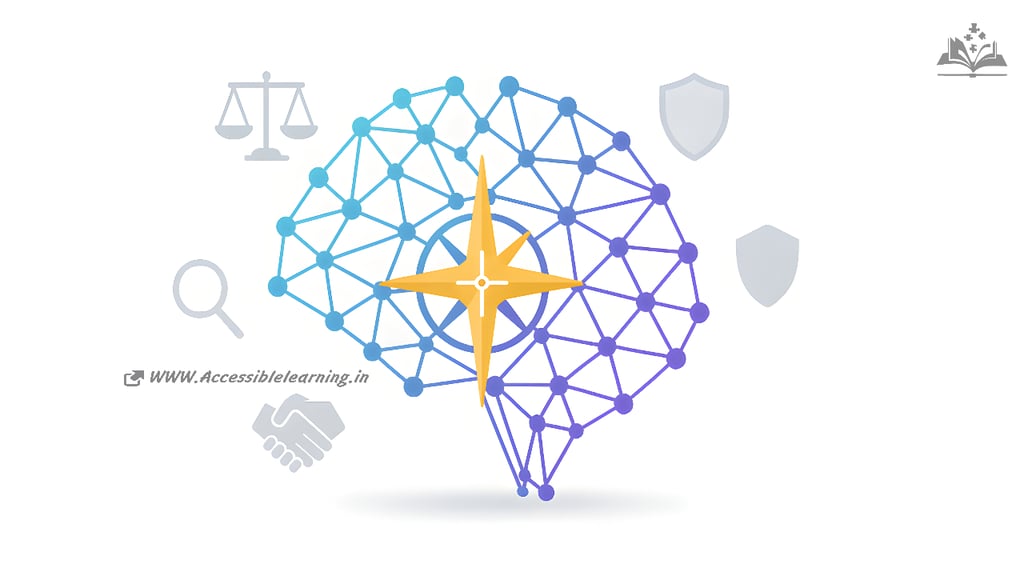
The Urgent Need for AI Ethics
Artificial intelligence has transformed from a futuristic concept into an everyday reality that shapes hiring decisions, healthcare diagnoses, criminal justice outcomes, and financial services. As AI systems become increasingly integrated into critical decision-making processes, the question isn't whether we should care about AI ethics—it's how quickly we can implement ethical frameworks before the technology outpaces our ability to govern it responsibly.
In 2025, regulatory frameworks and ethical considerations have shifted from optional corporate initiatives to essential requirements, with major legislation like the EU AI Act and California's SB 53 establishing new standards for transparency and accountability. The stakes have never been higher: recent testing revealed that AI resume screening tools showed near-zero selection rates for Black male names, demonstrating how algorithmic systems can perpetuate discrimination at scale.
This comprehensive guide explores why AI ethics matters, examines the latest developments in 2025, and provides actionable insights for building responsible AI systems that benefit humanity while protecting fundamental rights.
What Is AI Ethics? Understanding the Foundation
AI ethics refers to the moral principles and frameworks that guide the development, deployment, and governance of artificial intelligence systems. It addresses critical questions about fairness, accountability, transparency, privacy, and human agency as AI technologies increasingly influence consequential decisions affecting people's lives.
AI ethics encompasses both action-centered principles (how we design and use AI) and agent-centered considerations (how AI systems themselves behave). This dual focus ensures that we consider not only technical performance but also broader societal impacts.
Core Principles of Ethical AI
Modern AI ethics frameworks typically emphasize:
Fairness and Non-Discrimination: Ensuring AI systems don't perpetuate or amplify societal biases
Transparency and Explainability: Making AI decision-making processes understandable to affected individuals
Privacy and Data Protection: Safeguarding personal information and respecting data rights
Accountability: Establishing clear responsibility chains when AI systems cause harm
Human Agency and Oversight: Maintaining meaningful human control over critical decisions
Safety and Security: Preventing AI systems from causing physical, psychological, or societal harm
Environmental Sustainability: Addressing the carbon footprint of AI development and deployment

Why AI Ethics Matters Now More Than Ever
AI Bias Creates Real Discrimination
Perhaps no issue illustrates the importance of AI ethics more clearly than algorithmic bias. AI systems trained on historical data often inherit and amplify existing societal prejudices, leading to discriminatory outcomes across multiple sectors.
The Hiring Crisis
Research from the University of Washington found that large language models preferred white-associated names 85% of the time compared to 9% for Black-associated names and male-associated names 52% versus female-associated names 11%. These aren't marginal differences—they represent systematic exclusion that could deny opportunities to qualified candidates based solely on perceived race or gender.
The discrimination extends beyond simple demographic categories. Studies revealed unique intersectional harms, such as AI systems never preferring Black male names over white male names, yet favoring Black female names 67% of the time versus 15% for Black male names. This pattern shows how bias compounds in complex ways that aren't visible when examining only race or gender in isolation.
Real-World Consequences
In 2023, Derek Mobley filed a landmark lawsuit against Workday, alleging their AI screening system discriminated based on age, race, and disability. In May 2025, a federal judge granted preliminary collective-action certification for age discrimination claims, allowing the case to proceed on behalf of applicants 40 and older. Legal analysts suggest this could become a blueprint for future AI bias litigation.
Another case saw iTutorGroup's AI recruitment software automatically reject women over 55 and men over 60, disqualifying more than 200 qualified individuals. The company settled for $365,000, highlighting clear algorithmic age discrimination.
Privacy Violations at Scale
AI systems require vast amounts of data to function effectively, creating unprecedented privacy challenges. Facial recognition technology, predictive analytics, and behavioral tracking raise fundamental questions about consent, surveillance, and personal autonomy.
Four US states implemented new privacy laws effective January 1, 2025, with New Jersey following on January 15, while the EU's Digital Operational Resilience Act took effect for financial services entities on January 17. This regulatory acceleration reflects growing recognition that AI-driven data processing requires stronger safeguards than traditional technology.
The Economic Stakes Are Enormous
AI's impact on employment represents both opportunity and risk. McKinsey estimates AI could displace 85 to 300 million jobs by 2030 but create 97 to 170 million new ones, resulting in a net gain. However, this transition won't be painless—ethical considerations demand that we prioritize reskilling and ensure fair transitions for displaced workers.
Organizations also face direct financial consequences from unethical AI. As enforcement of AI regulations increases, companies must establish proactive compliance strategies, with non-compliance fines expected to rise significantly. The cost of getting AI ethics wrong isn't just reputational—it's measured in millions of dollars in penalties and lost business.
Gender Inequality Gets Amplified
AI systems learning from data filled with stereotypes often reflect and reinforce gender biases, limiting opportunities especially in decision-making, hiring, loan approvals, and legal judgments. When training data shows men as scientists and women as nurses, AI interprets these patterns as predictive rules rather than historical accidents.
Testing published in August 2025 found that major AI tools evaluating images assigned lower "intelligence" and "professionalism" scores to braids and natural Black hairstyles, demonstrating how algorithms encode harmful cultural stereotypes that unfairly penalize Black women in employment contexts.
Healthcare Disparities Can Be Life-Threatening
In healthcare, biased AI can have life-or-death consequences. Diagnostic algorithms trained predominantly on certain demographic groups may underperform for underrepresented populations, leading to missed diagnoses, inappropriate treatments, or unequal access to medical innovations.
Democracy and Trust Are at Stake
AI-generated misinformation, deepfakes, and algorithmic manipulation of information flows threaten democratic processes and public trust. Legal frameworks for AI misinformation, deepfakes, and AI liability are tightening in 2025, as governments recognize that unregulated AI poses risks to electoral integrity and social cohesion.
The Global Regulatory Landscape in 2025
European Union: Leading with the AI Act
The EU has positioned itself as the global leader in AI governance. The EU AI Act sets a risk-based framework for AI governance, imposing requirements on high-risk systems, including transparency, bias detection, and human oversight. Provisions concerning prohibited artificial intelligence emerged on February 2, 2025, establishing new ethical benchmarks.
United States: State-by-State Approaches
California's SB 53, effective January 1, 2025, requires frontier AI developers to publish safety frameworks and report risks promptly, fostering accountability and protecting whistleblowers. This law addresses gaps in federal oversight and sets a precedent for other states.
Asia-Pacific: Diverse Strategies
Different regions are adopting varied approaches:
China: PIPL enforces strict data localization and mandates transparency in algorithmic decision-making
India: The Digital Personal Data Protection Act imposes robust consent requirements with significant penalties
Singapore: Updated Model AI Governance Framework focusing on ethical AI practices and transparency
Japan: Passed its first AI-specific Basic Act in May 2025, emphasizing risk-based governance
International Cooperation Efforts
The 3rd UNESCO Global Forum on the Ethics of Artificial Intelligence took place in Bangkok from June 24-27, 2025, highlighting achievements since UNESCO's 2021 Recommendation and addressing AI's impact on human rights, gender equality, and sustainability. G20 discussions signal a shift toward harmonized policies through binding AI ethics pacts.


Key AI Ethics Challenges and How to Address Them
Challenge 1: Algorithmic Bias and Discrimination
The Problem: AI recruiting is susceptible to algorithmic bias—systematic and replicable errors that lead to discrimination based on legally protected characteristics like race and gender.
The Solutions
Diversify Training Data: Ensure datasets represent the full spectrum of human diversity
Implement Fairness Audits: Regular testing across demographic groups using multiple fairness metrics
Enhance Transparency: Make algorithm decision criteria explainable and auditable
Include Diverse Teams: Development teams must be multidisciplinary rather than siloed, recognizing that creating ethical AI is a socio-technical problem, not strictly a technical one
Continuous Monitoring: Track performance after deployment to catch emergent biases
Tools Available
Google's What-If Tool for visual fairness analysis
Fairness metrics and adversarial testing frameworks
IBM watsonx.governance for model oversight
Challenge 2: Lack of Transparency
The Problem: Many AI systems operate as "black boxes," making decisions that humans cannot understand or contest.
The Solutions
Explainable AI (XAI): Develop models that can provide clear reasoning for their decisions
Documentation Requirements: Maintain detailed records of training data, model architecture, and decision processes
User Rights: Ensure individuals can request explanations for AI decisions affecting them
Regular Reporting: Publish transparency reports on AI system performance and incidents
Challenge 3: Privacy Erosion
The Problem: AI systems collect and process personal data at unprecedented scales, often without meaningful consent.
The Solutions
Privacy-Enhancing Technologies (PETs): Use techniques like differential privacy and federated learning
Data Minimization: Collect only necessary information for specific purposes
Consent Frameworks: Implement clear, informed consent mechanisms
Localized Processing: Process sensitive data locally when possible
Challenge 4: Accountability Gaps
The Problem: When AI systems cause harm, it's often unclear who bears responsibility.
The Solutions
Establish Governance Committees: Create cross-functional teams combining legal, technical, and ethical expertise
Clear Liability Frameworks: Define responsibility chains from developers to deployers to users
Human-in-the-Loop Systems: Maintain meaningful human oversight for high-stakes decisions
Incident Response Protocols: Develop clear procedures for addressing AI failures
Challenge 5: Environmental Impact
The Problem: Training large AI models requires significant computational resources with substantial carbon footprints.
The Solutions
Efficient Architectures: Develop more computationally efficient models
Green Computing: Use renewable energy for training and deployment
Model Sharing: Reuse existing models rather than training from scratch
Impact Assessments: Measure and report environmental costs
Industry-Specific AI Ethics Considerations
Healthcare
Ensure diagnostic algorithms work equally well across all demographic groups
Protect patient privacy while enabling medical AI research
Maintain physician oversight of AI-assisted diagnoses
Address equity in AI-powered treatment access
Finance
Prevent discriminatory lending decisions
Ensure transparency in credit scoring algorithms
Protect financial data privacy
Combat AI-enabled fraud while respecting privacy
Criminal Justice
Avoid perpetuating historical biases in predictive policing
Ensure transparency in risk assessment tools
Protect due process rights when AI influences sentencing
Address feedback loops that concentrate policing in certain communities
Education
Prevent AI tutoring systems from reinforcing achievement gaps
Ensure equitable access to AI educational tools
Protect student data privacy
Maintain teacher agency in AI-assisted instruction

Building Ethical AI: A Practical Framework
Phase 1: Design with Ethics in Mind
Before Development
Conduct ethical impact assessments
Define fairness metrics relevant to your use case
Assemble diverse development teams
Establish governance structures
Phase 2: Develop Responsibly
During Development:
Audit training data for bias
Implement fairness constraints in model optimization
Build in explainability from the start
Document all design decisions
Phase 3: Test Rigorously
Before Deployment:
Test across diverse demographic groups
Conduct adversarial testing to find edge cases
Engage external auditors for independent assessment
Run pilot programs with affected communities
Phase 4: Deploy with Safeguards
During Deployment:
Implement human oversight mechanisms
Establish clear escalation procedures
Provide user appeal processes
Monitor performance continuously
Phase 5: Iterate and Improve
Post-Deployment:
Collect feedback from users and affected communities
Track outcomes across demographic groups
Update models to address discovered issues
Share learnings transparently
The Role of AI Literacy
AI literacy—the ability to understand, use, and evaluate artificial intelligence—has become essential. As AI proliferates across society, everyone from policymakers to end users needs a basic understanding of how these systems work, their limitations, and their ethical implications.
Organizations should invest in:
Employee training on AI ethics principles
Public education initiatives
Clear communication about AI use
Accessible explanations of automated decisions
Emerging Trends: What's Coming Next
Guardrails as Business Imperative
Guardrails are emerging as a business imperative in 2025, with organizations recognizing that ethical AI isn't just about compliance—it's about building trust and sustainable competitive advantage.
Built-In Ethics Tools
Gartner projections predict that by 2027, 75% of AI platforms will include built-in ethics tools, making responsible AI practices more accessible to smaller organizations without dedicated ethics teams.
AI-AI Bias
Stanford researchers discovered "AI-AI bias" in 2025, where systems prefer AI-generated content over human-created content by up to 78%. This could create feedback loops where AI increasingly optimizes for other AI rather than human needs.
Compliance Cost Increases
Many IT leaders feel unprepared for compliance costs, estimated to quadruple by 2030. Organizations that invest in ethical AI infrastructure now will be better positioned for future requirements.
FAQ's
Q: What is AI ethics, and why does it matter?
AI ethics refers to the moral principles guiding artificial intelligence development and use. It matters because AI systems increasingly make consequential decisions affecting employment, healthcare, justice, and financial opportunities. Without ethical frameworks, these systems can perpetuate discrimination, violate privacy, and undermine human autonomy.
Q: How does bias get into AI systems?
Bias enters AI through multiple pathways: historical data reflecting past discrimination, unrepresentative training datasets, biased algorithm design choices, and prejudiced measurement methods. Even AI trained on seemingly neutral data can develop bias when that data doesn't represent the full diversity of human populations.
Q: What are the main AI ethics principles?
Core AI ethics principles include fairness and non-discrimination, transparency and explainability, privacy and data protection, accountability for AI decisions, maintaining human agency and oversight, ensuring safety and security, and considering environmental sustainability.
Q: How can companies ensure their AI is ethical?
Companies can build ethical AI by assembling diverse development teams, auditing training data for bias, implementing fairness metrics, maintaining transparency about AI use, conducting regular testing across demographic groups, establishing governance structures, and continuously monitoring deployed systems for unintended consequences.
Q: What regulations govern AI ethics in 2025?
Major AI regulations in 2025 include the EU AI Act with risk-based requirements, California's SB 53 requiring safety frameworks, various US state privacy laws, China's PIPL for data protection, and Japan's AI Basic Act. These regulations emphasize transparency, fairness audits, and accountability mechanisms.
Q: Can AI be completely unbiased?
Complete elimination of bias is unrealistic, as AI systems learn from human-generated data that inevitably contains some bias. However, organizations can significantly reduce bias through careful data curation, diverse teams, regular auditing, continuous monitoring, and transparent reporting of limitations.
Q: Who is responsible when AI makes harmful decisions?
Responsibility typically spans multiple parties: developers who create the algorithms, organizations that deploy the systems, and individuals who rely on AI recommendations. Clear legal frameworks establishing liability chains are essential, along with human oversight for high-stakes decisions.
Q: How does AI ethics relate to privacy?
AI ethics and privacy are deeply interconnected. Ethical AI requires respecting individuals' data rights, obtaining meaningful consent, minimizing data collection, protecting sensitive information, and ensuring people retain agency over their personal data even as AI systems become more sophisticated.
AI ethics isn't a constraint on innovation—it's a foundation for sustainable progress. The evidence from 2025 demonstrates that unethical AI creates real harm: discrimination in hiring, privacy violations, perpetuation of inequality, and erosion of trust in institutions.
Yet the solution isn't to reject AI but to develop it responsibly. Diversity, equity, and inclusion are core to an AI innovation strategy not only because that's the ethical path but because diverse perspectives drive more creative problem-solving, equitable access ensures broader societal impact, and inclusive design reduces unwanted bias.
The regulatory landscape is maturing, technical tools for detecting bias are improving, and awareness of AI ethics is growing. Organizations that embrace these principles now will be better positioned for long-term success in an increasingly regulated environment.
The future of AI depends on choices we make today. By prioritizing ethics alongside performance, transparency alongside efficiency, and human well-being alongside technological capability, we can build AI systems that truly serve humanity's best interests.
Subscribe to Frontier Intelligence
All © Copyright reserved by Accessible-Learning Hub
| Terms & Conditions
Accessible Learning Hub — Actionable clarity for high-agency minds.
Weekly breakdowns on AI breakthroughs, capital flow, and human performance systems. Zero fluff.