

Who Was Sarojini Naidu? Life, Poems, and Role in Indian Independence
Discover Sarojini Naidu's legacy as India's Nightingale, a freedom fighter, and the first woman governor. Explore her poetry, political contributions, and feminist activism.
WRITER/POETBIOGRAPHY/HISTORY
Keshav Jha
12/24/20259 min read
Who Was Sarojini Naidu?
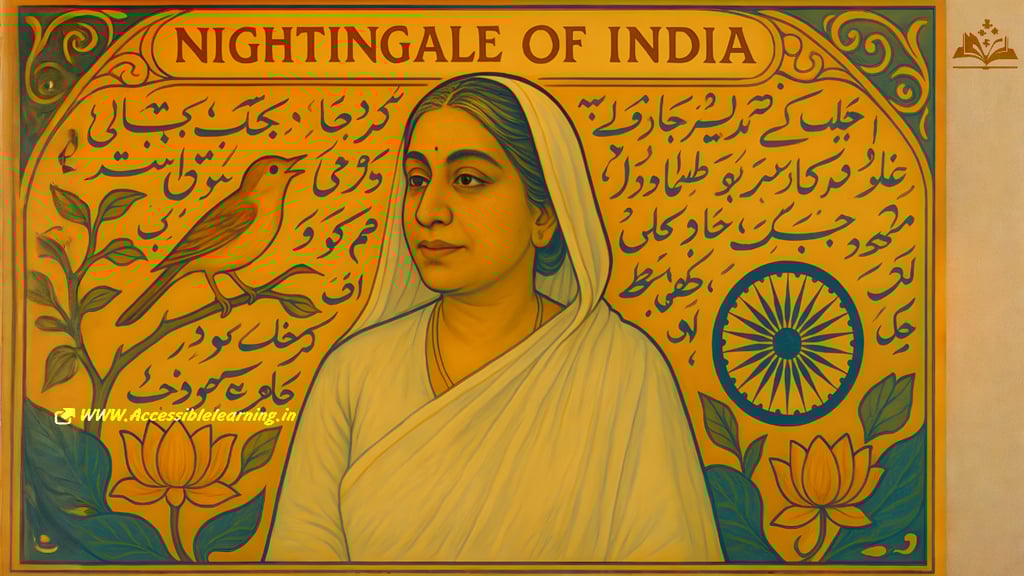
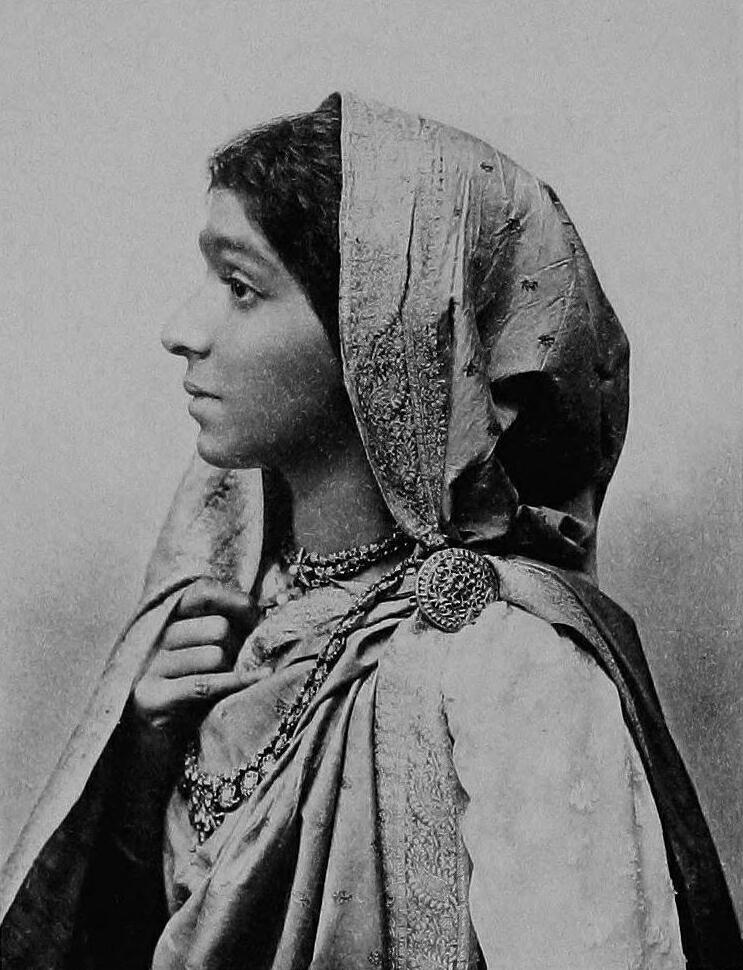
Sarojini Naidu (1879-1949) stands as one of India's most remarkable figures—a poet whose verses earned her the title "Nightingale of India," a fearless freedom fighter who walked alongside Mahatma Gandhi, and a trailblazing political leader who became the first woman governor of an Indian state. Her life represents the convergence of artistic brilliance and unwavering political courage during India's struggle for independence.
Born into an era when women's voices were systematically silenced, Naidu shattered conventions through her lyrical poetry, powerful oratory, and bold activism. Her legacy extends beyond her literary contributions to encompass her pivotal role in India's independence movement and her groundbreaking achievements in governance.
Early Life and Education of Sarojini Naidu
Childhood in Hyderabad (1879-1895)
Sarojini Chattopadhyay was born on February 13, 1879, in Hyderabad, into a progressive Bengali family that valued education and intellectual pursuits. Her father, Aghorenath Chattopadhyay, was a distinguished scientist and philosopher who founded the Nizam College in Hyderabad. Her mother, Barada Sundari Devi, was a poet who wrote in Bengali, instilling in young Sarojini an early appreciation for literature and the arts.
Growing up in this intellectually stimulating environment, Naidu demonstrated extraordinary academic abilities from childhood. She was proficient in multiple languages, including English, Urdu, Telugu, Bengali, and Persian, by age twelve. This linguistic versatility would later become instrumental in her ability to connect with diverse audiences across India.
Education in England (1895-1898)
At just sixteen years old, Naidu received a scholarship to study in England—a remarkable achievement for an Indian woman in the late 19th century. She first attended King's College London and then later Girton College, Cambridge. During her time in England, she immersed herself in English Romantic poetry and was influenced by poets like Keats, Shelley, and the Pre-Raphaelites.
Her Cambridge years proved transformative. She met prominent literary figures, including Edmund Gosse and Arthur Symons, who encouraged her to draw inspiration from Indian themes rather than imitating European styles. This advice redirected her poetic voice toward celebrating Indian culture, landscapes, and social realities.
Sarojini Naidu's Poetry and Literary Contributions
Major Poetic Works and Collections
Naidu published three major poetry collections during her lifetime:
"The Golden Threshold" (1905)—Her debut collection featured poems celebrating Indian festivals, markets, and daily life. With an introduction by Arthur Symons, this collection introduced Western audiences to Indian imagery through verses like "Palanquin Bearers" and "Indian Weavers."
"The Bird of Time" (1912)—This collection explored themes of love, loss, and the passage of time. Poems like "Bangle Sellers" and "The Temple: A Pilgrimage of Love" demonstrated her maturation as a poet and her ability to weave sensory richness with emotional depth.
"The Broken Wing" (1917)—Her final major collection reflected a darker, more introspective tone, coinciding with her deepening involvement in India's freedom struggle.
Poetic Style and Themes
Naidu's poetry is characterized by:
Vivid imagery and sensory language: Her verses paint pictures through color, sound, and movement
Indian cultural themes: Markets, festivals, traditional occupations, and folk traditions
Lyrical musicality: Her poems possess a rhythmic quality that earned her the "Nightingale" moniker
Romantic idealism: Influenced by English Romanticism while rooted in Indian sensibilities
Famous poems like "In the Bazaars of Hyderabad" celebrate India's cultural richness through descriptions of merchants, vendors, and artisans, creating a vibrant tapestry of Indian life.
Sarojini Naidu's Role in India's Independence Movement
Entry into Politics (1914-1920)
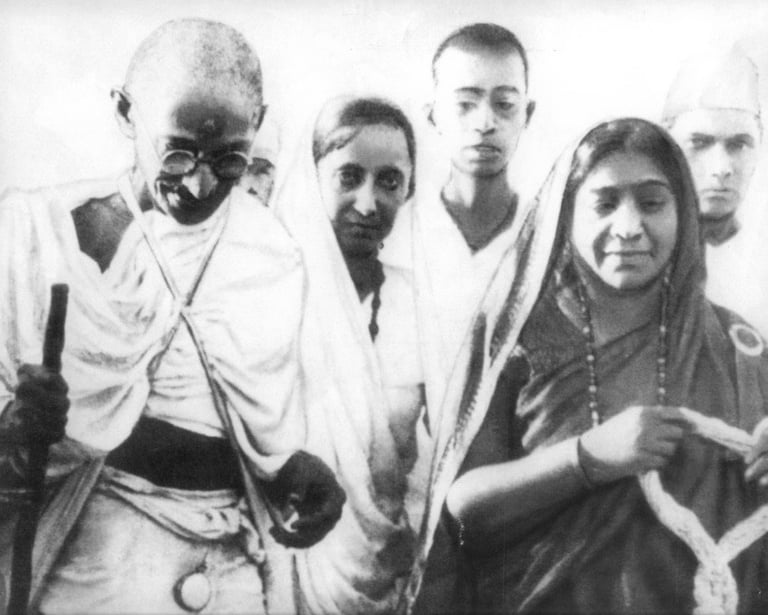
Naidu's transition from poet to political activist began around 1914 when she met Mahatma Gandhi and Gopal Krishna Gokhale. Gandhi's philosophy of non-violent resistance and social reform deeply resonated with her, leading her to dedicate herself to India's freedom struggle.
She joined the Indian National Congress in 1914 and quickly became one of its most effective voices. Her exceptional oratory skills, combined with her ability to communicate in multiple languages, made her invaluable to the independence movement.
Major Political Milestones
Non-Cooperation Movement (1920-1922): Naidu actively participated in Gandhi's Non-Cooperation Movement, traveling extensively across India to mobilize support. She endured arrest and imprisonment multiple times for civil disobedience.
President of the Indian National Congress (1925): In a historic achievement, Naidu became the first Indian woman to serve as President of the Indian National Congress, presiding over the Kanpur session.
Salt Satyagraha (1930): She joined Gandhi on the famous Dandi Salt March, protesting the British salt monopoly. When Gandhi was arrested, she led the raid on the Dharasana Salt Works, suffering injuries from police violence. Her courage during this campaign brought international attention to India's freedom struggle.
Quit India Movement (1942): During the Quit India Movement, Naidu was arrested alongside other Congress leaders and imprisoned for 21 months until 1945.
International Advocacy
Naidu represented Indian women at international forums, including the East African Indian Congress and sessions of the Indian National Congress held abroad. She traveled to England, the United States, and Africa, building international support for Indian independence while challenging racist colonial narratives.
Sarojini Naidu as a Champion of Women's Rights
Pioneering Feminist Activism
Beyond the independence movement, Naidu was a fierce advocate for women's rights, education, and empowerment. She recognized that political freedom would be incomplete without gender equality.
She campaigned for:
Women's suffrage and political participation
Women's education and professional opportunities
Abolition of purdah (female seclusion)
Child marriage prohibition
Economic independence for women
Leadership in Women's Organizations
Naidu co-founded the Women's Indian Association in 1917 and served as president of the All India Women's Conference. Through these platforms, she mobilized women across India to participate in both the freedom struggle and social reform movements.
Her speeches inspired thousands of women to step out of domestic confines and engage in public life, fundamentally transforming Indian women's role in society.
Sarojini Naidu as First Woman Governor of India
Historic Appointment (1947)
Following India's independence on August 15, 1947, Sarojini Naidu was appointed Governor of the United Provinces (now Uttar Pradesh) on August 15, 1947—making her the first woman governor in independent India and the first woman to hold a gubernatorial position in the Dominion of India.
This appointment represented a symbolic victory for women's representation in governance and demonstrated the new nation's commitment to gender equality in leadership positions.
Governance and Legacy (1947-1949)
As governor, Naidu worked to:
Promote communal harmony during the turbulent partition period
Advocate for refugee rehabilitation
Support educational and social welfare initiatives
Represent the dignity and potential of women in high office
Though her tenure was cut short by her death in 1949, she established an important precedent for women's participation in India's highest political offices.
Personal Life: Marriage and Family
An Inter-Caste Love Marriage
At age nineteen, Sarojini married Dr. Govindarajulu Naidu, a physician from a different caste and region—a bold decision that defied social conventions of the time. Her progressive parents supported this love marriage, which was remarkable in late 19th-century India, where arranged marriages within one's caste were the rigid norm.
The couple had four children: Jayasurya, Padmaja, Randheer, and Leelamani. Her daughter Padmaja followed in her mother's footsteps, becoming an active freedom fighter and later serving as Governor of West Bengal.
Despite her demanding political career, Naidu maintained strong family bonds and often drew strength from her domestic life even while challenging domestic conventions through her public activism.
Famous Quotes by Sarojini Naidu
Naidu's eloquence extended beyond poetry into memorable speeches and statements:
"We want deeper sincerity of motive, greater courage in speech, and earnestness in action."
"A country's greatness lies in its undying ideals of love and sacrifice that inspire the mothers of the race."
"When there is oppression, the only self-respecting thing is to rise and say this shall cease today, because my right is justice.'"
These quotes reflect her philosophy of courageous action, moral integrity, and unwavering commitment to justice.
Death and Commemoration
Sarojini Naidu passed away on March 2, 1949, at the age of 70, while working at the Governor's office in Lucknow. Her death came just 18 months after India achieved the independence she had fought so tirelessly to secure.
Honors and Recognition
Her birthday, February 13, is celebrated as Women's Day in some Indian states
Numerous institutions, roads, and public spaces across India bear her name
The Government of India issued commemorative stamps featuring her image
Universities and colleges include her poetry in their curricula
She remains an inspirational figure for women's empowerment movements
Sarojini Naidu's Lasting Impact on Modern India
Literary Legacy
Naidu's poetry continues to be studied, celebrated, and recited across India and internationally. Her work represents an important bridge between Indian cultural traditions and English literary forms, contributing to the development of Indo-Anglian literature.
Political Legacy
As a freedom fighter, Naidu demonstrated that women could be equal partners in nation-building. Her political leadership paved the way for subsequent generations of women politicians, including Indira Gandhi, Pratibha Patil, and many others who have held high offices in independent India.
Social Reform Legacy
Her advocacy for women's rights, education, and social equality contributed to transformative changes in Indian society. The issues she championed—women's education, political participation, and professional opportunities—continue to be relevant in contemporary India's ongoing journey toward gender equality.
Sarojini Naidu's life represents the power of combining artistic expression with political action and the transformative potential of women's leadership. In an era marked by colonial oppression and rigid gender hierarchies, she carved out a space for herself as both a celebrated poet and a formidable freedom fighter.
Her poetry continues to enchant readers with its lyrical beauty and cultural richness, while her political legacy reminds us of the courage required to challenge injustice. As India's first woman governor and a pioneering feminist activist, she demonstrated that women's voices are essential to nation-building and governance.
Today, more than seven decades after her death, Sarojini Naidu remains an inspirational figure whose life offers lessons in courage, creativity, and commitment to social justice. Her multifaceted legacy—as poet, freedom fighter, feminist, and administrator—continues to resonate with anyone who believes in the power of words, the necessity of action, and the importance of breaking barriers to create a more equitable society.
For students, scholars, and citizens seeking to understand India's independence movement and the evolution of women's rights in South Asia, Sarojini Naidu's life and work provide invaluable insights into how individual courage and artistic vision can contribute to profound social and political transformation.
Frequently Asked Questions
Q: Why is Sarojini Naidu called the Nightingale of India?
Sarojini Naidu earned the title "Nightingale of India" (Bharat Kokila in Hindi) due to her lyrical, melodious poetry that celebrated Indian culture, landscapes, and traditions. Her verses possessed a musical quality and vivid imagery that captivated readers and listeners, much like a nightingale's enchanting song. Mahatma Gandhi himself bestowed this title upon her in recognition of her poetic genius.
Q: What was Sarojini Naidu's contribution to the Indian freedom struggle?
Sarojini Naidu made significant contributions to India's independence movement through active participation in major campaigns, including the Non-Cooperation Movement, Salt Satyagraha, and Quit India Movement. She served as President of the Indian National Congress in 1925, traveled extensively to mobilize support, endured multiple imprisonments, and used her oratory skills to inspire millions. She also represented India internationally, building global support for independence.
Q: When did Sarojini Naidu become the first woman governor of India?
Sarojini Naidu was appointed as the Governor of the United Provinces (now Uttar Pradesh) on August 15, 1947—the same day India gained independence. She served in this position until her death on March 2, 1949, becoming the first woman governor in independent India.
Q: What are Sarojini Naidu's most famous poems?
Sarojini Naidu's most celebrated poems include "In the Bazaars of Hyderabad," "Palanquin Bearers," "Indian Weavers," "Bangle Sellers," "The Bird of Time," and "Coromandel Fishers." These poems are known for their vivid imagery, celebration of Indian culture, and lyrical beauty.
Q: How did Sarojini Naidu support women's rights in India?
Sarojini Naidu championed women's rights through multiple avenues: co-founding the Women's Indian Association, serving as president of the All India Women's Conference, advocating for women's suffrage and political participation, promoting women's education, campaigning against child marriage and purdah, and inspiring thousands of women to join the independence movement. Her own achievements as a leader demonstrated women's capabilities in public life.
Q: What languages did Sarojini Naidu speak?
Sarojini Naidu was multilingual, fluent in English, Urdu, Telugu, Bengali, and Persian. This linguistic versatility enabled her to connect with diverse audiences across India and communicate effectively during her political campaigns. She wrote her poetry primarily in English but incorporated Indian linguistic elements and cultural references.
Q: What education did Sarojini Naidu receive?
Sarojini Naidu received her early education in Hyderabad before earning a scholarship to study in England at age sixteen. She attended King's College London and later Girton College, Cambridge, where she studied literature and was influenced by English Romantic poetry while being encouraged to develop her unique Indian voice.
Q: What was Sarojini Naidu's relationship with Mahatma Gandhi?
Sarojini Naidu had a deep respect and warm friendship with Mahatma Gandhi, whom she met around 1914. She became one of his closest associates in the independence movement and affectionately called him "Mickey Mouse." While she admired his leadership and philosophy, she also maintained her independent voice and sometimes disagreed with his positions. Gandhi, in turn, valued her contribution and called her the "Nightingale of India."
Subscribe to Frontier Intelligence
All © Copyright reserved by Accessible-Learning Hub
| Terms & Conditions
Accessible Learning Hub — Actionable clarity for high-agency minds.
Weekly breakdowns on AI breakthroughs, capital flow, and human performance systems. Zero fluff.