

What Students Should Learn About Financial Literacy
Financial literacy is a critical life skill every student needs. This article explains what students should learn about money, including budgeting, saving, investing, debt management, and smart financial habits that build long-term stability and confidence.
A LEARNINGEDUCATION/KNOWLEDGE
Shiv Singh Rajput
2/5/20264 min read
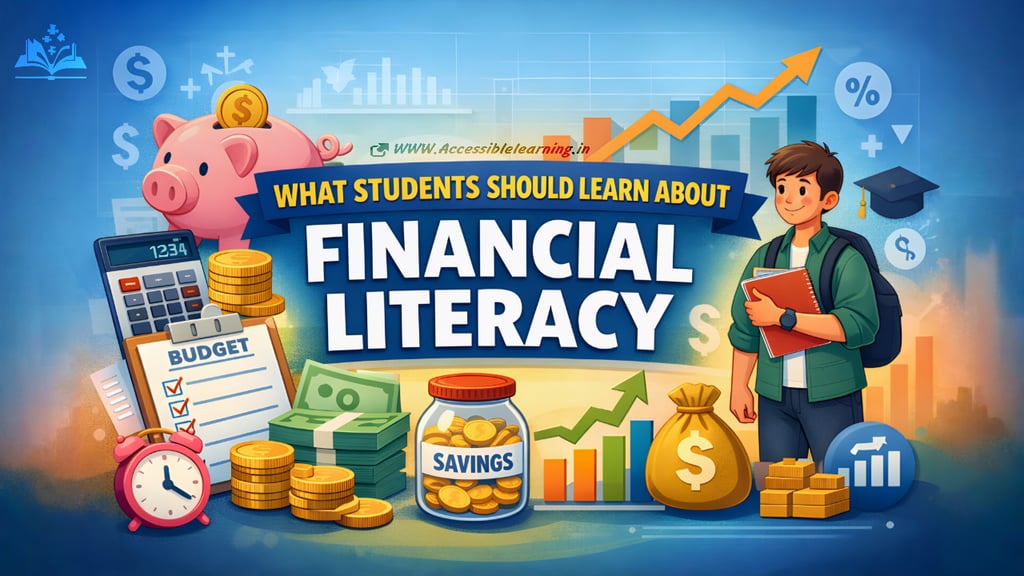
Financial literacy is a core life skill that students need long before they start earning full-time income. It shapes how they earn, spend, save, borrow, and invest money throughout their lives. In today’s world of digital payments, easy credit, and online financial products, lack of financial knowledge can lead to long-term mistakes. This article explains, in depth, what students should learn about financial literacy and why each area matters.
Understanding Money Beyond Cash
Students should first understand that money is not just cash in hand. They need to learn:
How digital money works (UPI, cards, wallets, online transfers)
Difference between gross income and net income
How inflation reduces purchasing power over time
Why earning more does not automatically mean financial stability
This builds awareness that money must be managed, not just earned.
Budgeting Skills for Real Life
Budgeting is the most important financial habit students can learn.
Students should understand:
How to create a monthly budget based on real income
Fixed expenses vs variable expenses
Daily expense tracking habits
Adjusting budgets during emergencies or income gaps
They should also learn that budgeting is flexible. It evolves as income, goals, and responsibilities change.
Saving Habits and Emergency Planning
Saving is not about leftover money. It is about priority. Students must learn:
Why saving should happen before spending
Difference between short-term savings and long-term savings
Emergency funds and how they prevent debt
How to automate savings
Even saving small amounts consistently builds discipline and financial confidence.
Banking Knowledge Every Student Must Have
Many students use banks daily but do not understand how they work. They should learn:
How to choose the right bank account
Minimum balance rules and penalties
ATM usage, limits, and charges
Online banking safety and fraud prevention
Understanding banking basics protects students from unnecessary fees and financial scams.
Credit Cards, Loans, and Debt Awareness
Debt education is critical before students are exposed to easy credit. Students should understand:
How credit cards actually work
Interest rates and minimum payments
Credit scores and long-term impact
Difference between good debt and bad debt
They should learn that debt is a responsibility, not free money.
Introduction to Investing and Compounding
Investing knowledge gives students a major long-term advantage. Core concepts include:
Difference between saving and investing
How compounding works over time
Basics of stocks, bonds, mutual funds, and index funds
Risk management and diversification
Starting early matters more than starting big.
Income Skills and Career-Based Financial Planning
Financial literacy is incomplete without understanding income growth.
Students should learn:
Multiple income streams and skill-based income
Freelancing, internships, and side income basics
Negotiating salaries and stipends
Matching lifestyle choices with income reality
This helps students plan careers with financial awareness, not just passion.

Taxes and Legal Financial Responsibility
Students do not need expert-level tax knowledge, but the basics are essential. They should understand:
Why taxes exist and how they are used
Income tax basics and slabs
Importance of filing tax returns
Legal consequences of non-compliance
Basic tax awareness prevents future confusion and penalties.
Smart Spending and Consumer Psychology
Students are heavily targeted by marketing and digital ads. They should learn:
How marketing influences buying decisions
Difference between price and value
Avoiding impulse purchases
Comparing long-term cost vs short-term satisfaction
Smart spending is about conscious choices, not deprivation.
Digital Finance and Online Safety
Modern financial literacy must include digital awareness. Students should learn:
Safe online payment practices
Protecting personal and financial data
Recognizing scams and phishing attempts
Using financial apps responsibly
Digital mistakes can be expensive and hard to reverse.
Insurance and Risk Protection Basics
Insurance is often ignored by students but is extremely important. They should understand:
What insurance is and why it exists
Health insurance basics
Life insurance vs investment products
Risk management concepts
Insurance protects finances from sudden shocks.
Financial Goal Setting and Planning
Money without goals lacks direction. Students should learn:
Setting short-term, medium-term, and long-term goals
Aligning money habits with life goals
Reviewing goals regularly
Adjusting plans when life changes
Goals turn financial habits into purpose-driven action.
Financial Discipline and Emotional Control
Financial decisions are often emotional. Students must understand:
Delayed gratification and self-control
Emotional spending triggers
Handling financial mistakes without panic
Building consistency over perfection
Strong discipline matters more than financial intelligence.
Long-Term Financial Independence Thinking
Financial literacy should encourage long-term thinking. Students should learn:
Difference between income and wealth
Lifestyle inflation risks
Importance of early planning
Financial independence as a gradual process
This mindset creates stability and freedom over time.
Why Financial Literacy Is Essential for Students
Students who understand financial literacy:
Avoid unnecessary debt
Build savings and investments earlier
Make informed career decisions
Experience less financial stress as adults
Financial education is not about becoming rich. It is about control, clarity, and confidence.
Financial literacy gives students power over their future. It teaches responsibility, planning, and awareness in a world where financial decisions are unavoidable. When students learn how money truly works, they gain the ability to shape their lives with intention rather than reaction.
Teaching financial literacy early is not just helpful. It is essential.

FAQ's
Q: Why is financial literacy important for students?
Financial literacy helps students understand how to manage money responsibly from an early age. It teaches budgeting, saving, debt awareness, and smart spending, which reduces financial stress and prevents costly mistakes later in life.
Q: At what age should students start learning financial literacy?
Students can start learning basic financial concepts as early as their school years. Simple lessons about saving, spending, and budgeting can begin in childhood, while more advanced topics like investing, credit, and taxes should be introduced during teenage and college years.
Q: What are the most important financial skills every student should learn?
The most important financial skills include:
Budgeting and expense tracking
Saving and emergency planning
Understanding banks, credit, and loans
Basics of investing and compounding
Smart spending and financial discipline
These skills form the foundation of long-term financial stability.
Q: Do students really need to learn about investing early?
Yes. Learning about investing early helps students understand how wealth grows over time. Even basic knowledge of compounding and long-term investing gives students a strong advantage, even if they start with small amounts.
Q: How can students manage money with little or no income?
Students can manage money by:
Tracking all expenses carefully
Creating a simple budget
Saving small amounts consistently
Avoiding unnecessary debt
Learning financial concepts before earning
Good habits matter more than income size.
Q: What financial mistakes do students commonly make?
Common mistakes include overspending, ignoring budgeting, misusing credit cards, taking loans without understanding interest, and not saving early. Financial literacy helps students recognize and avoid these errors.
Q: Should students use credit cards?
Students can use credit cards responsibly if they understand how interest, due dates, and credit scores work. Credit cards should be used as payment tools, not as borrowed money for unnecessary expenses.
Q: How does financial literacy help with career decisions?
Financial literacy helps students evaluate job offers, negotiate salaries, manage irregular income, and align career choices with financial goals. It encourages realistic planning rather than emotional decision-making.
Q: Is financial literacy only about money and numbers?
No. Financial literacy also involves mindset, discipline, emotional control, and decision-making. Understanding behavior and habits is just as important as understanding calculations.
Q: How can students start improving their financial literacy today?
Students can start by tracking expenses, creating a basic budget, reading about personal finance, using budgeting apps responsibly, and learning from real-life examples. Small steps taken consistently lead to long-term improvement.
Subscribe to Frontier Intelligence
All © Copyright reserved by Accessible-Learning Hub
| Terms & Conditions
Accessible Learning Hub — Actionable clarity for high-agency minds.
Weekly breakdowns on AI breakthroughs, capital flow, and human performance systems. Zero fluff.