

What is Radonitsa? Meaning, Traditions, and Spiritual Significance Explained
Discover the meaning of Radonitsa, a unique Eastern Orthodox memorial day celebrated after Easter. Learn its history, traditions, symbolism, and why it’s known as a joyful day of remembering the departed.
CULTURE/TRADITIONEVENT/SPECIALCELEBRATION/FESTIVALS
Kim Shin
4/11/20265 min read
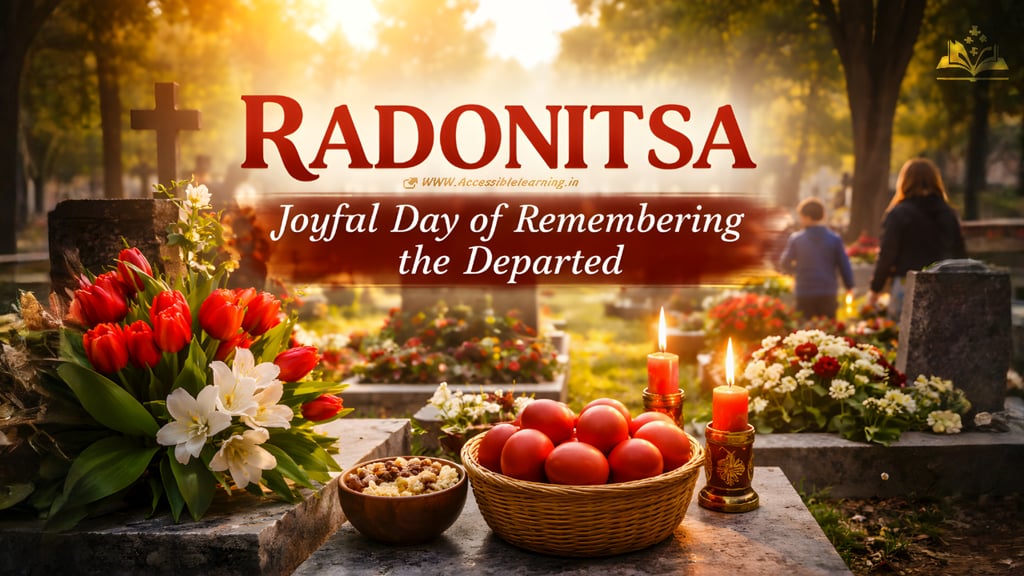
What is Radonitsa?
Radonitsa is a unique Eastern Orthodox observance that blends remembrance with quiet joy. Celebrated shortly after Easter, it reflects the belief that death has been overcome through resurrection.
Unlike typical mourning days, Radonitsa carries a gentle, uplifting energy. It is not about grief alone, but about connection, memory, and continuity.
The Deeper Meaning Behind Radonitsa
The word “Radonitsa” comes from "radost," meaning joy. That might feel surprising for a day linked to the dead, but that contrast is exactly the point.
Radonitsa teaches:
Death is not separation, but transformation
Love continues beyond physical life
Remembering can be healing, not just painful
In many ways, it’s a psychological and spiritual balance. It allows grief but reframes it through hope.
Lesser-Known Origins and Hidden Layers
Radonitsa is more layered than it first appears. Beyond its Christian framework, it carries echoes of older beliefs:
1. Ancient Spring “Spirit Return” Belief
Early Slavic cultures believed that during spring, ancestral spirits returned to the earthly world. Radonitsa preserved this idea but reframed it as spiritual closeness rather than literal return.
2. Earth and Renewal Symbolism
The timing is not accidental. Spring represents rebirth, making it the perfect season to reflect on life after death.
3. Sacred Geography
In some traditions, cemeteries were intentionally placed on elevated or open land, symbolizing a closer connection between heaven and earth.
When and Why It’s Celebrated
Radonitsa is observed:
On the second Tuesday after Easter
After Bright Week, when mourning is traditionally paused
This timing matters. The Church emphasizes joy first, then remembrance. It creates a natural emotional rhythm:
Celebrate resurrection
Then share that joy with those who have passed


Unique Traditions You Might Not Know
1. “Dining With the Departed”
In some regions, families don’t just visit graves; they sit beside them and eat. It symbolizes:
Inclusion of the departed in family life
Breaking the boundary between past and present
2. Pouring Drinks on the Grave
A small amount of wine or vodka may be poured onto the grave as a symbolic offering. It reflects respect and remembrance rather than ritual obligation.
3. Speaking Directly to Loved Ones
People often talk to the deceased at the grave, sharing updates, thoughts, or even problems. This keeps the emotional bond active.
4. Blessing Graves by Priests
In many Orthodox communities, priests visit cemeteries to:
Offer prayers
Sprinkle holy water
Chant memorial hymns
This reinforces the belief that the departed are still part of the Church community.
5. Leaving Objects Beyond Food
Sometimes families leave:
Flowers
Personal items
Letters
These gestures create a deeply personal form of remembrance.
Symbolism That Makes Radonitsa Special
Radonitsa is full of quiet symbolism that often goes unnoticed:
Red eggs → Resurrection and eternal life
Candles → Light guiding souls
Bread → Sustenance and unity
Flowers → Renewal and impermanence
Each item tells a story without words.
Cultural Variations Across Regions
Radonitsa is widely observed in:
Russia
Belarus
Ukraine
Serbia
But each place adds its own flavor:
In Russia, it can feel like a quiet national tradition
In Belarus, families often gather in large groups
In Serbia, it may blend with other memorial customs
Radonitsa in the Modern World
Even today, Radonitsa continues to evolve.
Urban Adaptation
In cities, people may not spend the whole day at cemeteries. Instead, they:
Visit briefly
Light candles at home
Share meals with family

Radonitsa in the Modern World
Even today, Radonitsa continues to evolve.
Urban Adaptation
In cities, people may not spend the whole day at cemeteries. Instead, they:
Visit briefly
Light candles at home
Share meals with family
Digital Remembrance
Some people now:
Post tributes online
Share old photos
Create digital memorials
The essence remains the same; only the medium changes.
Emotional Healing in a Fast World
In a time where grief is often rushed or hidden, Radonitsa offers:
Permission to pause
A structured way to remember
A healthier emotional outlet
Radonitsa vs Modern Grief Culture
Modern culture often treats grief in extremes:
Either deeply private
Or publicly expressive
Radonitsa sits in the middle. It is:
Communal but personal
Emotional but grounded
Reflective but not heavy
That balance is rare and powerful.
Philosophical Insight: Why Radonitsa Feels Different
Radonitsa changes the question from
“How do we deal with loss?”
to:
“How do we stay connected?”
This subtle shift makes all the difference. It doesn’t try to solve grief. It gives it a place to exist alongside love, memory, and hope.
Radonitsa is more than a tradition. It’s a way of thinking about life, death, and everything in between.
It reminds us that:
Memory is a form of presence
Love doesn’t end with death
Joy and grief can coexist
And maybe that’s why it still resonates. Not because it avoids sadness, but because it transforms it into something quieter, deeper, and more human.

FAQ's
Q: What is Radonitsa?
Radonitsa is a traditional Eastern Orthodox day of remembrance dedicated to honoring the dead with a sense of joy rather than sorrow. It reflects the belief in resurrection and ongoing spiritual connection after death.
Q: When is Radonitsa celebrated?
Radonitsa is observed on the second Tuesday after Easter. The exact date changes every year because it depends on the Orthodox Easter calendar.
Q: Why is Radonitsa called a “joyful” remembrance day?
Unlike typical memorial days, Radonitsa emphasizes hope and resurrection. The joy comes from the belief that death is not the end but a continuation of life in a spiritual form.
Q: What do people do on Radonitsa?
Common traditions include:
Visiting graves of loved ones
Cleaning and decorating burial sites
Lighting candles and offering prayers
Sharing food near graves
Bringing symbolic items like red eggs
Q: What is the significance of red eggs on Radonitsa?
Red eggs symbolize:
The resurrection of Christ
New life and rebirth
Eternal continuity
They are often placed on graves or shared among family members.
Q: Which countries celebrate Radonitsa?
Radonitsa is widely observed in:
Russia
Belarus
Ukraine
Serbia
Each region has its own customs, but the core meaning remains the same.
Q: Is Radonitsa an official public holiday?
In some countries like Russia and Belarus, Radonitsa is recognized at a regional or national level, though it may not always be a full public holiday everywhere.
Q: How is Radonitsa different from All Souls’ Day?
Radonitsa focuses on joyful remembrance and resurrection, while All Souls’ Day is generally more solemn and focused on prayer for the souls of the departed.
Q: Can non-Orthodox people observe Radonitsa?
Yes. While rooted in Orthodox Christianity, the core idea of remembering loved ones with peace and positivity is universal and can be adapted by anyone.
Q: Why do people eat or gather at graves during Radonitsa?
This tradition symbolizes:
Continuing bonds with the deceased
Including them in family life
Turning remembrance into a shared experience rather than isolation
Q: What is the meaning of visiting cemeteries on Radonitsa?
Cemetery visits represent respect, remembrance, and spiritual connection. It is believed that prayers and presence strengthen the bond between the living and the departed.
Q: Is Radonitsa related to ancient traditions?
Yes. Radonitsa combines early Slavic spring rituals with Christian beliefs, making it both a cultural and religious observance.
Q: How is Radonitsa celebrated in modern times?
Today, people may:
Visit cemeteries briefly
Light candles at home
Share memories online
Hold family gatherings
The essence remains the same, even if the form evolves.
Q: What does Radonitsa teach about grief?
Radonitsa offers a balanced perspective:
Grief is natural
Memory keeps connections alive
Joy and loss can coexist
Q: Why is Radonitsa still relevant today?
In a fast-paced world, Radonitsa provides:
A moment to pause and reflect
A healthy way to process loss
A reminder of emotional continuity across generations
Subscribe To Our Newsletter
All © Copyright reserved by Accessible-Learning Hub
| Terms & Conditions
Knowledge is power. Learn with Us. 📚

