

What Is Longtaitou Festival? Meaning, History, Customs, and Celebrations
Discover the rich traditions, history, and meaning of the Longtaitou Festival, China’s “Dragon Raising Its Head” celebration that marks the arrival of spring and new beginnings. Learn about its ancient mythology, unique customs like lucky haircuts and dragon-themed foods, regional variations, and why this beautiful festival still matters in modern times.
CULTURE/TRADITIONTRAVEL LIFECHINACELEBRATION/FESTIVALS
Kim Shin
3/10/20265 min read
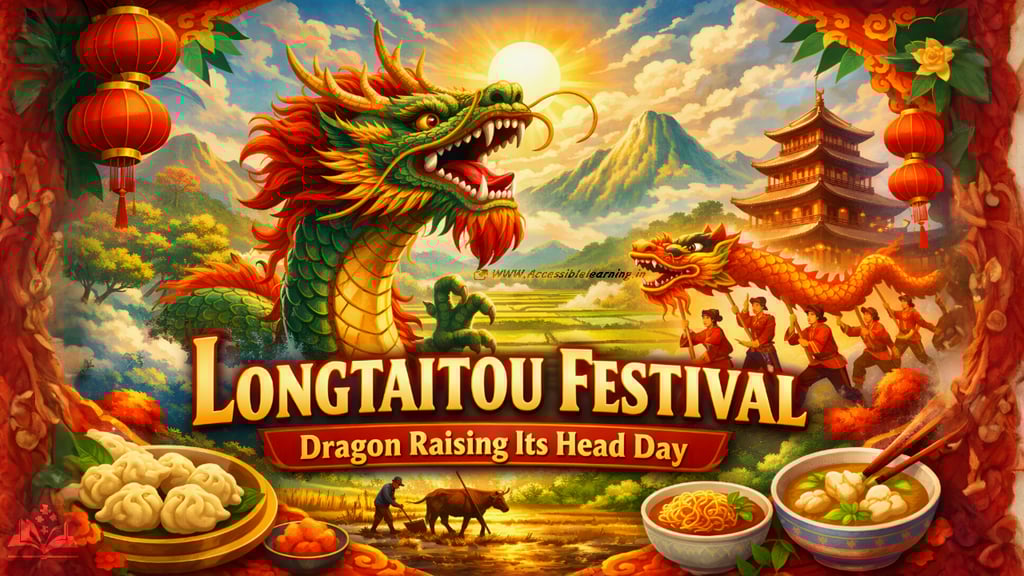
The Longtaitou Festival is one of China’s most poetic seasonal celebrations. Known as the day when the Dragon raises its head, it marks the awakening of spring, the return of rain, and the beginning of a new farming cycle.
Celebrated on the second day of the second lunar month, Longtaitou connects mythology, astronomy, agriculture, and everyday life into one living tradition that has lasted for more than two thousand years.
What Longtaitou Really Means
Longtaitou (龙抬头) translates to “Dragon Raises Its Head.” In Chinese belief, the dragon is a bringer of rain and prosperity. Unlike Western myths, Chinese dragons symbolize:
Fertility and harvest
Authority and protection
Wisdom and balance
Good fortune
When the dragon awakens, spring rain follows, crops grow, and life begins again. For ancient farmers, this was not symbolic. It meant survival.
The Ancient Mythology Behind the Festival
Longtaitou is tied to stories of the Dragon King, ruler of rivers and seas. During winter, he sleeps beneath the ocean. When he rises, clouds gather and rain nourishes fields. Some legends say villagers offered food to please the dragon. Others say the Jade Emperor ordered the dragon to bring rain after drought prayers.
There is also an astronomical explanation. Ancient Chinese astronomers observed the rise of the Azure Dragon constellation in the eastern sky around this time. The star movement became a seasonal calendar for farming. So Longtaitou is not only a myth. It is science blended with belief.
When Longtaitou Festival Is Celebrated
The festival follows the lunar calendar, so dates change yearly. Examples:
2024 – March 11
2025 – March 1
2026 – March 20
It comes about two weeks after the Lantern Festival, marking the practical start of agricultural work.


Traditional Longtaitou Customs
Getting a Haircut for Good Fortune
People believe cutting hair on Longtaitou removes bad luck and welcomes prosperity. Children especially get haircuts so they grow smart and strong. In many cities, barber shops stay open late because of heavy crowds. In old belief, cutting hair before Longtaitou was unlucky, so people waited for this day.
Eating Foods Named After Dragon Body Parts
Food traditions are playful but meaningful. Popular foods include:
Spring pancakes called dragon scales
Dumplings called dragon ears
Noodles called dragon whiskers
Wontons called dragon eyes
Rice cakes symbolizing rising fortune
Eating these dishes is believed to absorb the dragon’s strength and blessings.
Dragon Dances and Temple Gatherings
Communities celebrate with colorful events. Activities include:
Dragon dances
Lion dances
Temple fairs
Incense offerings
Folk music and opera
These events bring villages together and remind people of their shared roots.
Starting Spring Farming
Longtaitou signals the first plowing. Farmers traditionally:
Clean tools
Prepare seeds
Honor soil gods
Pray for rainfall
Some villages still hold symbolic plowing ceremonies with elders leading.
Avoiding Certain Activities
In many regions, people avoided:
Sewing or cutting cloth
Carrying water at night
Grinding grain
These taboos were meant to avoid disturbing the dragon’s awakening.
Regional Differences Across China
Longtaitou is celebrated differently depending on the province.
Northern China – Strong farming rituals and temple fairs
Beijing & Tianjin – Eating pancakes and noodle dishes
Shandong – Dragon dances and incense ceremonies
Guangdong – More family-focused meals
Some areas even release paper dragons into rivers. These local variations show the festival’s living nature.
Longtaitou and Chinese Astronomy
Ancient Chinese sky maps divided the heavens into four mythic animals. The Azure Dragon ruled the east and spring. When certain stars of this constellation became visible, farmers knew winter was ending. This shows how Longtaitou blended:
Astronomy
Calendar science
Agriculture
Spiritual belief
It was an early form of environmental awareness.

Symbolism Hidden in Longtaitou
Every custom has meaning.
Haircut – removing bad luck
Dragon foods – sharing prosperity
Incense prayers – respect for nature
Plowing – starting effort and hope
Even the dragon itself symbolizes harmony between heaven and earth.
Longtaitou in Modern China
Today, Longtaitou is not an official national holiday, but its popularity is growing again. Modern celebrations include:
Cultural exhibitions
School storytelling events
Tourism festivals
Online celebrations
Restaurant special menus
Young people are rediscovering traditional festivals as part of cultural identity.
Why Longtaitou Still Matters Today
Respect for Nature
The festival reminds people how weather affects life.
Cultural Memory
It connects modern China with ancient wisdom.
Community Bonding
Shared meals and temple fairs bring people together.
Mental Renewal
Like spring cleaning, it encourages a fresh start.
Environmental Awareness
It highlights balance between humans and nature.
Longtaitou Compared to Other Spring Festivals
Longtaitou shares themes with global celebrations.
Holi in India – Welcomes spring and renewal
Nowruz in Iran – Marks new beginnings
Songkran in Thailand – Cleansing and fresh start
Different cultures, same human hope.
How Travelers Can Experience Longtaitou
If visiting China during this time:
Visit northern rural temple fairs
Try dragon-themed dishes
Watch dragon dances
Get a symbolic haircut
Visit local museums about farming history
Smaller towns often offer more authentic experiences.
Interesting Historical Facts
Chinese emperors once led rain-praying ceremonies.
Farmers used Longtaitou as a calendar marker before printed calendars.
Some villages painted dragon symbols on barns for protection.
Children were taught poems about dragons and rain.
These traditions show how deeply Longtaitou shaped daily life.
Longtaitou in Overseas Chinese Communities
Chinese communities around the world celebrate Longtaitou through:
Cultural shows
Temple prayers
Food festivals
School events
The festival travels with people, carrying heritage across generations.
Longtaitou Festival is more than a date on the lunar calendar. It is a story about humans learning from nature. It is about patience through winter and hope for spring. When the dragon raises its head, it reminds people that life moves in cycles. Every ending carries a new beginning.
In a fast modern world, Longtaitou quietly teaches us to respect seasons, cherish community, and welcome renewal with gratitude.

FAQs
Q: What is the Longtaitou Festival?
Longtaitou Festival is a traditional Chinese celebration marking the day when the Dragon King awakens and brings spring rain. It symbolizes renewal, prosperity, and the start of the farming season.
Q: When is Longtaitou Festival celebrated?
It is observed on the second day of the second month of the Chinese lunar calendar, usually in late February or March.
Q: Why is the dragon important in this festival?
In Chinese culture, the dragon represents rain, strength, wisdom, and good fortune. Its “raising head” means winter is ending and crops will grow.
Q: Why do people get haircuts on Longtaitou?
Cutting hair on this day is believed to remove bad luck and bring prosperity. Parents often cut children’s hair for health and intelligence blessings.
Q: What foods are eaten during the Longtaitou Festival?
People eat foods named after dragon body parts, such as:
Spring pancakes (dragon scales)
Dumplings (dragon ears)
Noodles (dragon whiskers)
Wontons (dragon eyes)
These foods symbolize strength and good fortune.
Q: Is the Longtaitou Festival a public holiday in China?
No, it is not an official public holiday, but it is widely celebrated culturally, especially in northern China.
Q: How is Longtaitou celebrated today?
Modern celebrations include dragon dances, temple fairs, family meals, cultural shows, and social media posts about traditions.
Q: What is the connection between Longtaitou and farming?
Historically, farmers used this day to begin plowing and pray for rain. It marked the real start of spring agriculture.
Q: Can tourists participate in Longtaitou celebrations?
Yes. Visitors can watch dragon dances, attend temple fairs, try festival foods, and experience local traditions.
Q: How is Longtaitou different from Chinese New Year?
Chinese New Year celebrates the beginning of the lunar year, while Longtaitou focuses on spring farming and the dragon’s awakening.
Subscribe to Frontier Intelligence
All © Copyright reserved by Accessible-Learning Hub
| Terms & Conditions
Accessible Learning Hub — Actionable clarity for high-agency minds.
Weekly breakdowns on AI breakthroughs, capital flow, and human performance systems. Zero fluff.