

What Is Hina Matsuri? Japan’s Doll Festival, Symbolism, Foods, and Cultural Significance
Discover the meaning of Hina Matsuri, Japan’s beautiful Doll Festival celebrated on March 3. Learn its history, the symbolism of hina dolls, traditional foods, rare customs, and how families celebrate Girls’ Day today.
CULTURE/TRADITIONJAPANCELEBRATION/FESTIVALS
Kim Shin
2/23/20264 min read
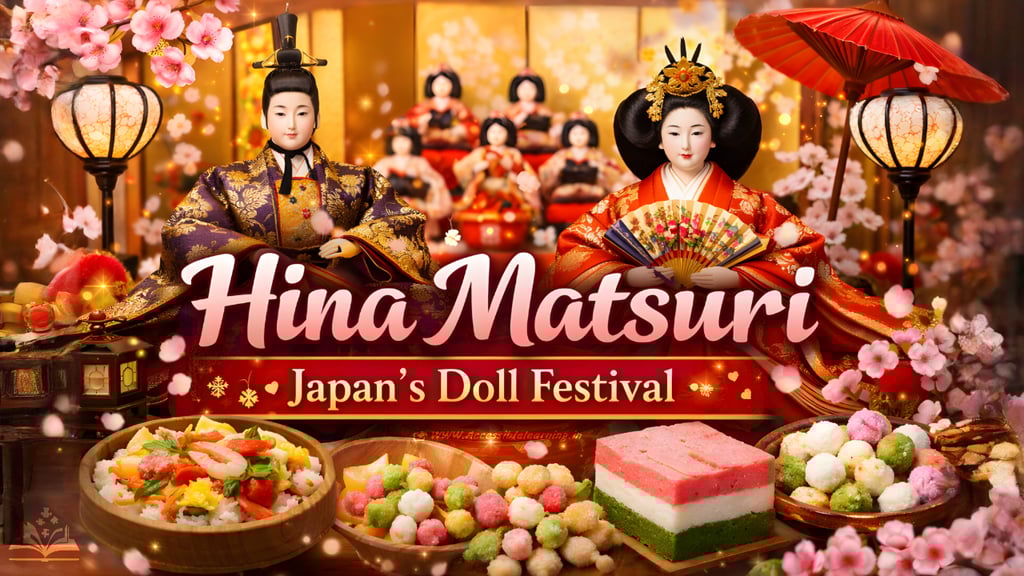
Every year on March 3, Japan celebrates Hina Matsuri, the Doll Festival or Girls’ Day. Many articles mention dolls and sushi, but this tradition is far richer. It blends spirituality, craftsmanship, psychology, social history, and even economics. Here is a deeper look at Hina Matsuri, with insights you rarely see in typical guides.
The Spiritual Roots Most People Miss
Hina Matsuri started as a protective ritual, not a decorative event. In early Japan, people believed dolls could absorb misfortune. Children held paper dolls, then placed them in rivers to carry away illness and bad luck. This ritual was called hina-nagashi.
Even today, some shrines still float dolls on water. This idea connects to a universal human instinct: transferring fear into symbols to regain peace.
Why the Dolls Wear Heian Court Clothing
The dolls are dressed like nobles from the Heian period (794–1185). That era is remembered as Japan’s golden age of poetry, literature, and court elegance.
The emperor and empress dolls reflect ideals of:
Balance in marriage
Wisdom in leadership
Cultural refinement
The layered kimono styles are historically accurate. Some doll sets show more than 12 layers of silk. Crafting one premium doll can take months. Master doll makers still hand-paint faces using ancient techniques.
The Psychology Behind Hina Matsuri
Hina Matsuri also serves emotional roles:
Gives girls a sense of identity
Strengthens family bonds
Teaches cultural pride
Encourages appreciation for art
Children often help arrange dolls, learning patience and care. This turns tradition into memory. Many Japanese adults say their strongest childhood memory of spring is setting up hina dolls with their parents.
Rare Types of Hina Dolls
Not all hina displays are the same.
Tachibina Dolls
Standing emperor and empress dolls, common in Kyoto.
Kimekomi Dolls
Made by wrapping silk fabric into carved wooden grooves.
Handmade Clay Dolls
Folk-art style from rural areas.
Modern Designer Hina
Minimalist or cartoon-themed sets for urban homes.

The Economics of Hina Matsuri
A full hina set can cost anywhere from ₹50,000 to ₹1,000,000+ depending on craftsmanship. This supports entire artisan communities:
Kimono textile makers
Woodcarvers
Gold leaf artists
Lacquerware craftsmen
In towns like Saitama and Kyoto, doll-making is a centuries-old industry. So when families buy hina dolls, they are preserving traditional art.
Hidden Meanings in the Colors
Many decorations use three colors:
Pink – life and protection
White – purity
Green – health and growth
These colors appear in:
Hishimochi rice cakes
Hina arare snacks
Festival decorations
They reflect nature waking up in spring.
Unique Regional Celebrations
Hina Matsuri looks different across Japan.
Kyoto
Elegant, antique doll displays in old houses.
Chiba’s Katsuura City
Over 30,000 hina dolls displayed on temple steps.
Nagoya
Local-style hina with round faces and bright colors.
Some towns turn entire streets into hina galleries.
The “Remove the Dolls Quickly” Myth
Many families say dolls must be packed away immediately after March 3, or a girl’s marriage will be delayed. This belief started for practical reasons:
Dolls are delicate and collect dust
Humidity damages silk
So parents told children to store them quickly. The superstition stuck.
Hina Matsuri and Women’s History
In the past, girls had fewer social roles. Hina Matsuri became a rare day celebrating daughters. Today, it has evolved into a symbol of women’s empowerment. Many schools use the festival to talk about:
Women writers of the Heian period
Female leaders in history
Equality in modern Japan
So Hina Matsuri connects past and future.
Food Traditions with Hidden Stories
Chirashi sushi uses seasonal ingredients to welcome spring.
Hina arare colors match nature’s rebirth.
Hishimochi shape represents diamond stability.
Shirozake sweetness represents peaceful life.
Some regions add clam soup, symbolizing a harmonious marriage because clam shells match perfectly.
Hina Matsuri in Pop Culture
Anime, films, and manga often show hina dolls as emotional symbols. Examples include:
Scenes of family bonding
Memories of childhood
Moments of change or farewell
Dolls sometimes represent protection spirits in stories.


Environmental Changes to the Festival
Modern Japan is becoming eco-conscious. New trends include:
Paper hina dolls made from recycled materials
Digital hina displays on screens
Renting hina sets instead of buying
These ideas keep tradition alive without waste.
Celebrating Hina Matsuri Outside Japan
You can celebrate anywhere:
Make paper dolls
Cook chirashi sushi
Learn a Japanese song
Share stories of strong women
Teach children about culture
The heart of Hina Matsuri is love and hope.
Why This Festival Still Touches People
Hina Matsuri survives because it speaks to universal feelings:
Parents want safety for their children.
Families want to protect their loved ones.
People want beauty in everyday life.
In a quiet home, when dolls are placed on red cloth and candles glow, families whisper the same wish: May our daughters grow strong, kind, and happy.
FAQ's
Q: What is Hina Matsuri?
Hina Matsuri is a Japanese festival celebrated on March 3 to pray for the health, happiness, and future of girls. Families display traditional dolls called hina-ningyō that represent the imperial court.
Q: Why are dolls displayed during Hina Matsuri?
The dolls come from an ancient belief that they can absorb bad luck and protect children. The display today symbolizes wishes for a girl’s safe and happy life.
Q: When should hina dolls be displayed and taken down?
Most families display dolls in mid-February and take them down soon after March 3. A popular tradition says leaving them too long may delay marriage, though this is mostly symbolic today.
Q: What do the hina dolls represent?
The dolls represent the royal court of the Heian period:
Emperor and Empress – harmony and leadership
Court Ladies – grace and service
Musicians – joy and celebration
Ministers and Guards – protection
Each tier expresses hopes for a girl’s future.
Q: What foods are eaten during Hina Matsuri?
Popular foods include:
Chirashi sushi – celebration and abundance
Hina arare – colorful rice crackers
Hishimochi – layered rice cake
Clam soup – harmony in marriage
These dishes symbolize health, happiness, and prosperity.
Q: Is Hina Matsuri a public holiday in Japan?
No, it is not a national holiday. Schools and offices remain open, but families celebrate at home or in community events.
Q: Do only girls celebrate Hina Matsuri?
Traditionally it focuses on girls, but today families often celebrate together. Some households also celebrate boys with Tango no Sekku (Children’s Day on May 5).
Q: How expensive are hina doll sets?
Prices vary widely. Small modern sets can be affordable, while handcrafted traditional sets can be very expensive because they are made by skilled artisans.
Q: Can people outside Japan celebrate Hina Matsuri?
Yes. Anyone can celebrate by making paper dolls, cooking traditional food, or learning about Japanese culture. The festival’s message of protecting children is universal.
Q: Why is Hina Matsuri still important today?
Hina Matsuri keeps Japanese heritage alive and reminds families to celebrate their daughters’ growth. It connects generations through tradition, art, and shared memories.
Subscribe To Our Newsletter
All © Copyright reserved by Accessible-Learning Hub
| Terms & Conditions
Knowledge is power. Learn with Us. 📚

