

Venetian financial system: Debt, Bonds, and Naval Power!
Accessible Learning Hub analyzes how the Venetian financial system linked forced prestiti loans to armed muda convoys, funding naval power and trade routes.
HISTORY & CIVILIZATIONS
Kim Shin
11/12/20269 min read


The Core Thesis
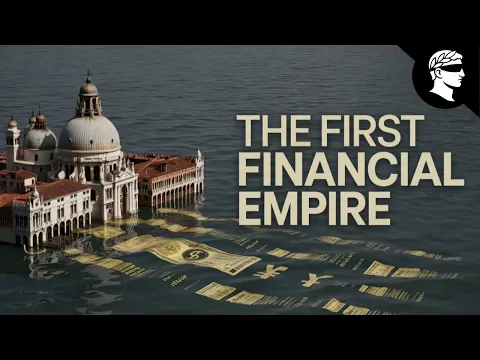
Venice converted compulsory public borrowing into a durable instrument of maritime power by combining transferable sovereign debt, earmarked tax revenues, and state-coordinated commercial shipping. The resulting Venetian financial system did more than finance wars: it established a mechanism through which the republic could mobilize private wealth, maintain naval capacity, and protect the trade routes sustaining its fiscal base.
Its defining innovation was the intersection of two institutional systems: prestiti, the compulsory loans imposed on citizens to finance government expenditure, and mude, organized merchant-galley convoys operating under state direction. These institutions did not emerge simultaneously, nor were individual loans systematically earmarked for specific convoys. Their strategic significance lay in their interaction.
Public credit supported the fiscal and military capacity of the republic, while protected maritime commerce generated the economic activity and taxable transactions required to sustain public credit. By the fourteenth century, however, this architecture had acquired a second function: concentrating commercial opportunities and political influence among an increasingly restricted patrician elite.
Structural Mechanics & System Architecture
1. Prestiti: Converting Compulsory Credit into Public Capital
Venetian public borrowing developed before the mature bond market. By 1207, the republic was using compulsory loans, known as prestiti, as an established instrument of public finance. Their purpose was straightforward: mobilize capital quickly when ordinary fiscal revenues could not meet the cost of warfare and maritime defense.
Unlike a voluntary bond sale, a prestito compelled designated citizens to lend money to the state. Assessments of wealth helped determine liabilities, allowing the government to distribute borrowing requirements among wealthier households. Creditors received claims against the republic, but participation was not freely negotiated. The instrument combined the coercive reach of taxation with the accounting structure of debt.
The decisive institutional development occurred between 1262 and 1264, when Venice consolidated outstanding public obligations into a funded debt later known as the Monte Vecchio. The government established an annual interest rate of 5 percent, payable twice yearly, with payments administered through the Ufficiale degli Prestiti and supported by specified excise taxes. These revenues included taxes on commercial activity and consumption.
This arrangement established three important controls:
Liability recognition: Previously issued obligations were consolidated into an identifiable public debt.
Revenue assignment: Specified fiscal receipts supported interest payments, linking repayment capacity to taxable economic activity.
Administrative continuity: A designated public office managed creditor claims and payment obligations beyond the immediate circumstances of individual loans.
The result was a more durable fiscal instrument. Rather than treating each emergency loan as a separate transaction, Venice created a structure capable of carrying obligations across successive military campaigns and political administrations. Economic historian John H. Munro documents this development and the subsequent transferability of prestiti claims in his study, The Medieval Origins of the Financial Revolution: Usury, Rentes, and Negotiability.
2. Transferability: The Emergence of a Secondary Debt Market
A compulsory loan creates a problem for the creditor: capital is tied up until the borrower repays, an event the creditor cannot necessarily control. Venice partially addressed this constraint by allowing prestiti claims to be transferred through the offices of the procurators of San Marco.
By approximately 1320, a secondary market for these claims had developed, according to Munro. This chronology matters. The funded-debt consolidation belongs to the thirteenth century; the documented secondary market emerged as the system matured into the fourteenth century.
Transferability fundamentally changed the economic character of the obligation. A creditor no longer needed to wait exclusively for government redemption to recover capital. A claim could instead be sold to another holder at a negotiated market price.
That created a primitive but significant form of sovereign-debt liquidity. A purchaser evaluated the expected interest stream, the reliability of fiscal receipts, the prospects of principal redemption, and the seller's willingness to accept a discount.
Liquidity did not mean guaranteed repayment at face value. Prestiti claims traded at varying prices, and a secondary sale transferred risk rather than eliminated it. The republic gained financing capacity because creditors possessed an alternative exit mechanism; investors accepted the possibility that their claims might sell below nominal value.
This makes Venice one of the earliest well-documented examples of a functioning secondary market in public debt. Calling it categorically the world's first fully developed bond market would overstate the evidence, because medieval Italian cities developed related credit institutions at different times and modern definitions of market liquidity vary.
3. Mude: The Maritime Execution Layer
Public credit alone could not secure Mediterranean commerce. The republic also needed vessels, crews, predictable sailing schedules, and the capacity to deter piracy and hostile naval forces.
Venice's mude were organized commercial convoys, frequently composed of armed galleys carrying high-value goods such as silk, spices, bullion, and luxury textiles. Their concentrated cargo capacity made them commercially attractive, while their speed, maneuverability, and collective defense provided advantages over isolated merchant voyages.
The system evolved over time. In the early fourteenth century, particularly between 1321 and 1329, Venice expanded a model in which the state controlled important aspects of convoy organization, including routes and departure dates, and leased publicly owned galleys to private operators through auctions. The arrangement became established on eastern routes and subsequently extended to the western Mediterranean and Flanders.
The operating logic was a division of responsibilities:
The state determined strategic routes, organized departures, maintained naval authority, and established the rules governing participation.
Private operators acquired galley operating rights, arranged crews and commercial activity, and assumed significant financial and operational responsibilities.
Merchants and investors supplied cargo, freight payments, and commercial capital in anticipation of returns from long-distance trade.
The convoy therefore functioned as a form of state maritime syndication: public coordination structured an enterprise whose commercial execution relied heavily on private capital.
Importantly, "state maritime syndicate" is an analytical description, not a formal medieval Venetian designation.
4. The Fiscal-Commercial Feedback Loop
The relationship between prestiti and mude becomes clearest when the institutions are considered as one system.
Public borrowing strengthened the republic's ability to meet military expenditure and sustain its governing apparatus. State capacity helped protect trade routes and coordinate maritime activity. Commercial exchange, in turn, generated customs and excise receipts that supported public revenues, including the repayment of debt.
This was a feedback mechanism, not a guaranteed self-financing cycle. Taxes were not synonymous with profits from individual convoys, and prestiti proceeds were not automatically assigned to particular ships. The connection was institutional: maritime prosperity broadened the government's economic base, while public credit provided flexibility when military or administrative spending exceeded available receipts.
The architecture was powerful because it distributed risk and responsibility across several institutions without surrendering strategic control to private merchants.
Empirical Case Analysis & Bottlenecks
Case 1: Debt Consolidation and Its Limits
The 1262–1264 consolidation demonstrates both the strength and the fragility of Venetian public credit. Consolidation made public obligations more legible and supported regular interest payments. Transferability subsequently enabled holders to realize value without waiting for full redemption.
Nevertheless, the system depended on political willingness and sufficient fiscal revenue. From 1363, principal redemptions largely ceased, apart from occasional repurchases at prevailing market prices. During the War of Chioggia against Genoa in 1377–1381, further financial pressure brought temporary disruptions to interest payments and reduced creditor returns.
The failure mode was therefore not merely an absence of market liquidity. It was the distinction between marketability and solvency. A debt claim could continue changing hands while its principal remained effectively locked into a long-term public liability.
Case 2: Commercial Coordination Becomes Elite Capture
The convoy system initially provided a framework for pooling capital and organizing expensive voyages. But central coordination also created privileged access to high-value routes.
Following the Serrata, the political closure that made Great Council membership effectively hereditary by 1323, restrictions increasingly disadvantaged merchants outside the established elite. The 1324 Capitulare Navigantium limited the value of goods merchants could ship relative to their assessed wealth, reinforcing barriers to large-scale commerce.
Research by Diego Puga and Daniel Trefler, published in the Quarterly Journal of Economics, quantifies the institutional change. Commoners participated in 51 percent of surviving colleganza contracts from 1241–1261 and 27 percent from 1310–1323, but only a single surviving contract involving commoners appears in their 1324–1342 sample after the restrictions took effect. These figures describe the study's surviving contract sample, not the entire population of transactions.
The study connects political closure and galley-trade reorganization to increasing commercial concentration. By the fifteenth century, elite families could use kinship and marriage alliances to consolidate shares in vessels and coordinate buying and selling across markets.
The strategic trade-off was severe: the same institutions that reduced coordination costs could also suppress competition. Publicly organized routes became privileged commercial channels, and private operators with political access could capture a disproportionate share of the gains.
Case 3: Scale, Capital Intensity, and Operational Risk
The financial demands of the galley system intensified over time. Puga and Trefler report that the winning bid for a galley averaged 793 ducats during 1332–1345, while chartering costs reached approximately 9,200 ducats by the late fifteenth century. Crew wages and provisions added further costs, with voyages lasting five to eleven months and requiring more than 150 crew members.
Such operations imposed substantial capital requirements before the merchant could realize returns. Delays, cargo losses, war, political restrictions, and adverse trading conditions could weaken profitability even when a convoy was successfully organized.
The underlying bottleneck was therefore capital concentration. Smaller merchants faced increasing difficulty accessing profitable routes, while elite investors could finance the fixed costs and absorb losses across larger commercial portfolios.
The Operator’s Strategic Playbook
Venice's experience offers a practical framework for analyzing how states convert finance into strategic commercial power. The following protocol separates the mechanisms that created resilience from those that eventually undermined competition.


The critical operating principle is to separate financing efficiency from distributional fairness. A system can mobilize capital efficiently while producing increasingly concentrated ownership. Institutional performance must therefore be assessed against at least three measures: fiscal resilience, commercial access, and the distribution of economic returns.
Venice's record also shows why liquidity should not be mistaken for fiscal health. Transferable debt can broaden the investor base, but only credible revenue administration and sustainable liabilities can preserve long-term confidence.

Second-Order Dynamics & Strategic Trajectory
Over the next 24–36 months, the most plausible developments in the study of Venice's financial system are methodological rather than commercial. The system itself is historical, but new archival and computational methods can clarify how public credit influenced political authority, household wealth, and maritime expansion.
One promising direction is the integration of digitized chronicles, creditor records, fiscal documents, and family networks. The European Union-funded VenHisCred project, running from 2025 to 2027, is developing a digital corpus and a database of 2,200 citizen creditors to investigate the relationship between public credit and Venetian state formation.
By 2028–2029, such work could support more detailed comparisons between creditor participation, political officeholding, and access to profitable maritime enterprises. Network analysis may help researchers identify whether financial influence preceded political privilege, followed it, or reinforced both. Digitized records may also allow historians to distinguish broader participation in public credit from concentrated ownership of commercial infrastructure.
The larger strategic implication is already visible. Venice's financial institutions were not simply instruments for raising money. They shaped who could lend, who could trade, who could influence public decisions, and who captured the returns from state-backed commerce.
The republic's achievement was to connect public borrowing, fiscal administration, and maritime coordination into a durable architecture of power. Its limitation emerged when access to that architecture became concentrated among political insiders.
The enduring lesson is that financial innovation creates strategic capacity, but governance determines who ultimately controls it. Venice demonstrated how transferable public debt and organized maritime commerce could reinforce one another. It also demonstrated that when creditors, commercial operators, and political decision-makers become too closely concentrated, an institution designed to strengthen the state can gradually become a mechanism for protecting elite privilege.
FAQ's
Q: What was the Venetian financial system?
The Venetian financial system was a framework of public borrowing, transferable debt claims, tax administration, and state-coordinated maritime commerce. It helped the Republic of Venice finance military expenditure, maintain naval power, and support its position as a major Mediterranean trading center.
Q: What were prestiti forced loans in medieval Venice?
Prestiti were compulsory loans imposed on Venetian citizens to finance public expenditure, particularly military and naval needs. Creditors received claims against the state that could generate interest and, as transferability developed, could be sold to other investors.
Q: How did Venice develop an early secondary bond market?
Venice consolidated public debt in 1262–1264 and established a funded debt known as the Monte Vecchio. By approximately 1320, transferable prestiti claims were being traded, allowing creditors to sell their holdings rather than depend entirely on state redemption.
Q: What were the Venetian muda convoys?
Mude were organized merchant-galley convoys operating along designated maritime routes. State coordination of routes, departure schedules, and galley operations helped merchants transport valuable goods while benefiting from collective protection and more predictable commercial arrangements.
Q: How did the prestiti and muda convoys strengthen Venetian trade?
Prestiti helped the republic mobilize public capital, while the muda system organized maritime commerce and supported the protection of trading routes. Commercial activity generated tax revenues that strengthened public finances, creating a reinforcing relationship between state credit, naval capacity, and Mediterranean trade.
Q: Why did Venice's financial and maritime system eventually concentrate economic power?
Political restrictions, high operating costs, and unequal access to profitable convoy routes increasingly favored established patrician families. Although centralized coordination supported large-scale trade, it also created barriers to entry and helped concentrate commercial opportunities among politically connected elites.
Subscribe to Frontier Intelligence
All © Copyright reserved by Accessible-Learning Hub
Accessible Learning Hub — Actionable clarity for high-agency minds.
Weekly breakdowns on AI breakthroughs, capital flow, and human performance systems. Zero fluff.