

Valletta Baroque Festival: A Timeless Celebration of Music, History, and Architecture
Discover the Valletta Baroque Festival, Malta’s elegant winter celebration of Baroque music. Explore its history, venues, performances, and cultural significance, all set within Valletta’s stunning Baroque architecture.
EVENT/SPECIALTRAVEL LIFEITALYCELEBRATION/FESTIVALS
Kim Shin
12/30/20255 min read
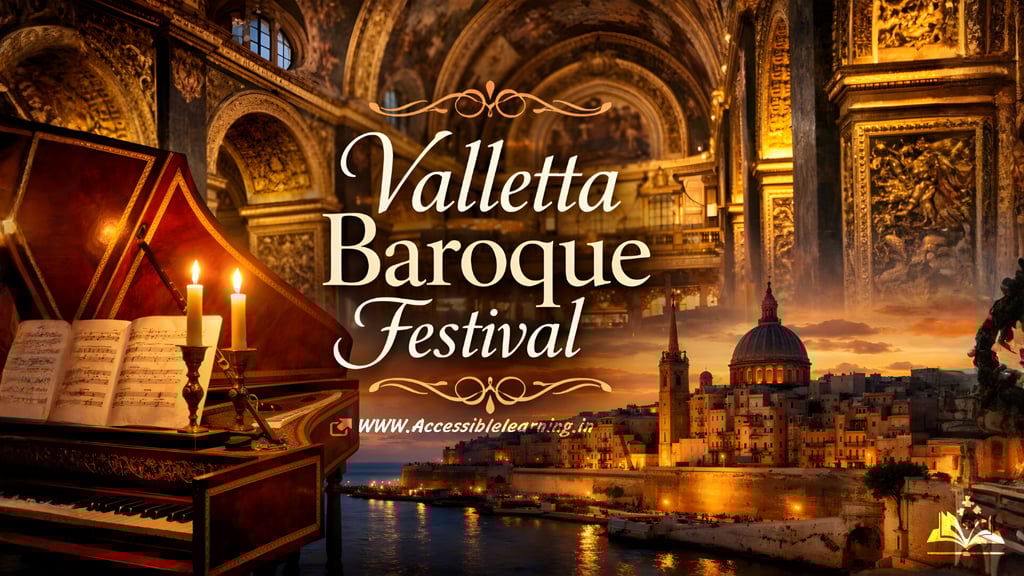
Each January, Valletta slows down and listens. As winter settles gently over Malta, the Valletta Baroque Festival turns the capital into a carefully curated soundscape of harpsichords, violins, and human voices shaped by centuries of tradition. This is not a background festival. It is an experience designed for attentive ears, thoughtful travelers, and anyone curious about how music once lived inside palaces and churches.
The Origins and Vision of the Festival
The Valletta Baroque Festival was created to celebrate Baroque music in its natural environment. Rather than placing historical music into modern concert halls, the festival restores it to spaces built during or inspired by the Baroque era.
Curated by Teatru Manoel, the festival reflects a long-term vision:
to preserve early music while keeping it relevant, emotionally engaging, and intellectually accessible to modern audiences.
Each edition is thoughtfully programmed, often around a theme, composer, or historical narrative that connects music with politics, religion, travel, or royal patronage in Baroque Europe.
Valletta’s Baroque Identity and Musical Heritage
Valletta is not a neutral backdrop. It is a central character in the festival.
Built in the 16th century by the Knights of St. John, Valletta was designed during the rise of Baroque aesthetics. Its symmetry, ornamentation, and grand interiors align perfectly with the dramatic and expressive nature of Baroque music.
Malta’s position in the Mediterranean also influenced its musical culture. Over the centuries, the island absorbed Italian, Spanish, French, and North African artistic traditions. This crossroads identity often appears in festival programming through Southern European composers and Mediterranean Baroque styles.
Performance Venues and Their Atmosphere
The festival uses multiple venues, each offering a distinct mood and acoustic character.
Teatru Manoel: One of Europe’s oldest working theatres, known for its warm sound and intimate seating. Performances here feel personal, almost conversational.
St. John’s Co-Cathedral: A powerful setting for sacred Baroque music, where sound rises into gilded vaults and echoes through stone chapels.
Palaces and Historic Halls: Former residences of Grand Masters and knights provide elegant spaces that enhance chamber music performances.
Churches and Courtyards: These venues add variety, allowing audiences to experience how music interacts differently with space, light, and silence.
Musical Programming and Artistic Range
While the festival is rooted in Baroque music, its programming is intentionally broad and exploratory.
You can expect:
Works by iconic composers like Bach, Vivaldi, Handel, Purcell, and Monteverdi
Lesser-known composers whose music is rarely performed today
Italian, French, German, and Iberian Baroque traditions
Vocal, instrumental, sacred, and secular works
Some performances follow historical accuracy closely, while others offer modern interpretations that highlight emotion and storytelling rather than strict reconstruction.
Period Instruments and Authentic Sound
A defining feature of the Valletta Baroque Festival is its emphasis on historically informed performance.
Musicians often perform using:
Gut-string violins
Wooden flutes and recorders
Baroque oboes and bassoons
Harpsichords and early keyboards
These instruments produce a softer, more textured sound than modern orchestral instruments, allowing listeners to hear music as it might have sounded centuries ago.
Educational and Cultural Value
The festival is not only about performance. It is also about understanding.
Many concerts are accompanied by:
Detailed program notes
Introductions explaining the historical background
Thematic connections between music and European history
Insight into composers’ lives, patronage systems, and political influences
For music students, historians, and curious listeners, this added context transforms each concert into a learning experience.
Audience Experience and Festival Atmosphere
The Valletta Baroque Festival attracts a diverse audience, including:
International classical music followers
Local Maltese residents
Cultural tourists and winter travelers
Musicians and academics
The atmosphere is calm, respectful, and engaged. Applause feels earned, and silence between movements carries weight. It is a festival where listening matters.
Best Time, Weather, and Travel Comfort
January is an ideal time to explore Valletta.
Mild winter temperatures make walking comfortable
Fewer tourists allow for quieter sightseeing
Museums, cafes, and historic sites are easily accessible
Evening concerts pair well with relaxed dinners afterward
Many visitors combine the festival with cultural exploration, turning the trip into a refined winter getaway.
Food, Cafes, and Evening Rituals
A lesser-known pleasure of attending the festival is the rhythm it creates.
Concerts often end early enough to enjoy:
Traditional Maltese cuisine
Wine bars tucked into limestone streets
Conversations with fellow attendees
Night walks through softly lit squares
Music becomes part of a larger daily ritual rather than a standalone event.

Why the Festival Matters Today
In an age of fast entertainment and digital consumption, the Valletta Baroque Festival stands for patience, craftsmanship, and depth.
It reminds us that:
Music once traveled slowly
Sound was shaped by architecture
Listening was a shared, intentional act
By preserving these values, the festival keeps Baroque music alive not as a museum piece, but as a living cultural practice.
The Valletta Baroque Festival is not about scale or spectacle. It is about authenticity, atmosphere, and attention. It invites you to slow down, step into history, and hear music where it belongs.
If you are seeking a cultural experience that feels thoughtful, immersive, and genuinely human, Valletta in January offers something rare and quietly unforgettable.
FAQ's
Q: What is the Valletta Baroque Festival?
The Valletta Baroque Festival is an annual classical music festival in Valletta, Malta, dedicated mainly to Baroque-era music. It features live performances by international artists in historic venues such as Teatru Manoel, churches, and palaces.
Q: When does the Valletta Baroque Festival take place?
The festival usually takes place in January each year and runs for two to three weeks, depending on the program schedule.
Q: Where is the Valletta Baroque Festival held?
Concerts are held across Valletta, Malta’s capital city. Key venues include Teatru Manoel, St. John’s Co-Cathedral, historic palaces, churches, and open courtyards.
Q: Who organizes the Valletta Baroque Festival?
The festival is organized by Teatru Manoel, one of Europe’s oldest working theatres and a major cultural institution in Malta.
Q: What type of music is performed at the festival?
The festival focuses on Baroque music, including orchestral works, chamber music, sacred compositions, and vocal performances. Music from composers such as Bach, Vivaldi, Handel, Monteverdi, and lesser-known Baroque composers is commonly featured.
Q: Are performances played on original Baroque instruments?
Many concerts use period instruments or historically informed performance practices, offering an authentic Baroque sound closer to how the music was originally heard.
Q: Do I need to be a classical music expert to enjoy the festival?
No. The festival is accessible to both experienced classical music listeners and beginners. Program notes and introductions help audiences understand the music and its historical context.
Q: How can I buy tickets for the Valletta Baroque Festival?
Tickets are usually available online through Teatru Manoel’s official booking system, as well as at the theatre’s box office in Valletta.
Q: Is the Valletta Baroque Festival suitable for tourists?
Yes. The festival is very popular with international visitors, especially cultural and winter travelers. Its January timing makes it ideal for those visiting Malta outside the peak tourist season.
Q: How long do the concerts usually last?
Most concerts last between 60 and 90 minutes, though some larger performances or special events may be slightly longer.
Q: What should I wear to the festival?
Smart casual attire is generally acceptable. Some attendees prefer formal evening wear, especially for performances at Teatru Manoel or St. John’s Co-Cathedral.
Q: Can I attend more than one concert in a day?
Yes. On some days, the festival schedules afternoon and evening concerts, allowing visitors to attend multiple performances.
Q: Is photography or recording allowed during concerts?
Photography, video recording, and audio recording are usually not allowed during performances. Some venues may allow photos before or after the concert.
Q: Is the Valletta Baroque Festival family-friendly?
While there is no strict age restriction, the festival is best suited for older children and adults who can sit quietly and appreciate live classical music.
Q: Why is Valletta considered ideal for a Baroque music festival?
Valletta was built during the Baroque period, and its architecture, churches, and palaces naturally complement Baroque music, enhancing both acoustics and atmosphere.
Q: How busy is Valletta during the festival?
January is a quieter travel month in Malta, so Valletta is less crowded than in summer. This makes attending concerts and exploring the city more comfortable.
Q: Can I combine the festival with sightseeing in Malta?
Yes. Many visitors combine festival concerts with visits to museums, historical sites, coastal towns, and traditional Maltese restaurants.
Q: Is the Valletta Baroque Festival held every year?
Yes, the festival is an annual cultural event and has become a regular fixture in Malta’s winter cultural calendar.
Q: What makes the Valletta Baroque Festival different from other music festivals?
Its focus on historical venues, intimate performances, and authentic Baroque sound sets it apart from larger, more commercial classical music festivals.
Subscribe to Frontier Intelligence
All © Copyright reserved by Accessible-Learning Hub
| Terms & Conditions
Accessible Learning Hub — Actionable clarity for high-agency minds.
Weekly breakdowns on AI breakthroughs, capital flow, and human performance systems. Zero fluff.