

Trade Shows Across China: A City-by-City Guide to Beijing, Shanghai, and Beyond
An in-depth guide to major trade shows and exhibitions across China’s leading business cities, including Beijing, Shanghai, Guangzhou, and Shenzhen. This article explores where key industries gather, how each city supports different business goals, and how visitors can make smarter decisions when attending Chinese exhibitions for sourcing, trade, and long-term partnerships.
AI/FUTURESPACE/TECHCOMPANY/INDUSTRYENTREPRENEUR/BUSINESSMAN
Sachin K Chaurasiya
1/3/20265 min read
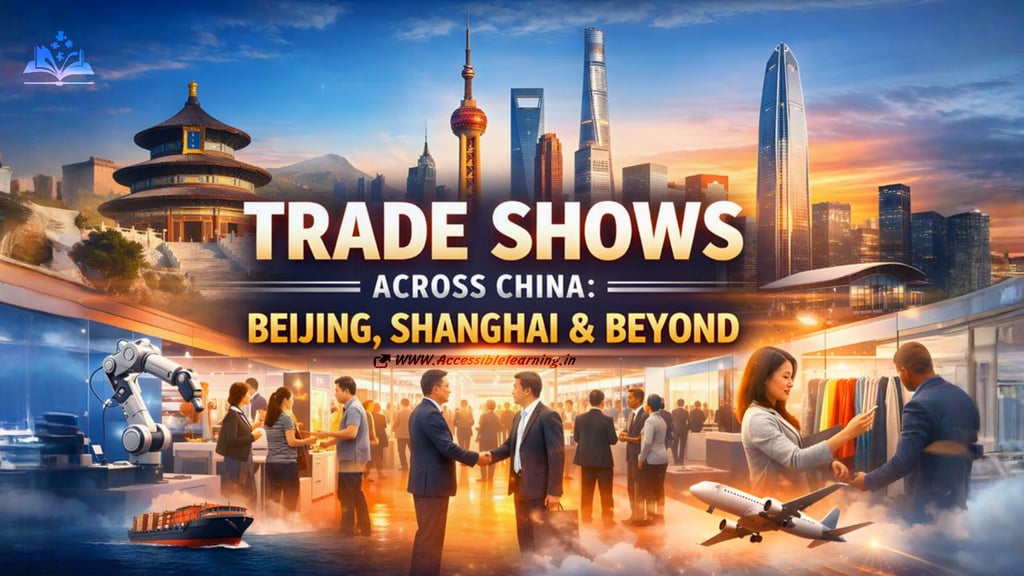
China’s trade shows are not just industry gatherings. They are working marketplaces where real business happens. Deals are negotiated face-to-face, suppliers are verified on the spot, and trends appear months before they hit global reports. For anyone involved in sourcing, exporting, importing, manufacturing, or business expansion, Chinese exhibitions remain one of the most powerful tools available.
What makes China unique is that each major city hosts exhibitions shaped by its own industrial strengths. Understanding this city-by-city difference helps businesses choose the right events, save time, and get better results.
Why trade shows in China still dominate global business
Despite the rise of digital sourcing platforms, trade shows in China continue to grow in influence for several reasons:
Buyers can physically inspect products, materials, and finishes
Manufacturers demonstrate real production capability, not just catalogs
Decision-makers attend in person, reducing long negotiation cycles
Market pricing, demand patterns, and innovation trends are visible in one place
Long-term partnerships often start with short, direct conversations
For serious buyers and sellers, exhibitions reduce risk and increase clarity.
Beijing: National strategy, services, and high-level industries
Beijing’s exhibitions reflect its role as China’s political, cultural, and policy center. Trade shows here often focus on services, innovation, sustainability, and sectors closely linked to national development goals.
Key strengths of Beijing exhibitions
Services trade and international cooperation
Digital economy, fintech, cloud services, and ICT
Healthcare, education, culture, and tourism
Green technology and sustainable development
Government-backed projects and public-private partnerships
Beijing exhibitions are less about mass sourcing and more about strategic collaboration, policy alignment, and long-term investment discussions.
Who should attend Beijing trade shows
Service providers and consultants
Tech firms looking for government or enterprise clients
International companies exploring regulatory frameworks
Organizations focused on large-scale cooperation rather than volume sourcing
Shanghai: Global exhibitions and international trade gateway
Shanghai is China’s most international exhibition city. It connects global brands, multinational buyers, and advanced Chinese manufacturers on a massive scale. Events here are highly organized, professionally curated, and designed for global participation.
Key strengths of Shanghai exhibitions
Import and export matchmaking
Advanced manufacturing and industrial technology
Packaging, materials, chemicals, and automation
Consumer goods, lifestyle products, and premium brands
Strong international media and buyer presence
Shanghai exhibitions often set industry benchmarks and attract exhibitors from dozens of countries.
Who should attend Shanghai trade shows
International brands entering the Chinese market
Importers and distributors
Manufacturers targeting premium or regulated markets
Companies seeking large-scale exposure and brand positioning
Guangzhou: China’s sourcing powerhouse
Guangzhou is widely considered the most practical city for product sourcing. Its exhibitions focus on volume, variety, and export-ready manufacturing. Many suppliers attending Guangzhou fairs have years of international trade experience.
Key strengths of Guangzhou exhibitions
Extremely wide product categories
Factory-direct suppliers and exporters
Competitive pricing and flexible production
Strong logistics and shipping infrastructure
Easy access to surrounding manufacturing clusters
Guangzhou exhibitions are fast-paced and results-driven, ideal for buyers who want to compare many suppliers quickly.
Who should attend Guangzhou trade shows
Importers, wholesalers, and retailers
Amazon and e-commerce sellers
Private-label brands
Buyers seeking competitive pricing and fast turnaround
Shenzhen: Technology, electronics, and innovation
Shenzhen is where ideas become products at record speed. Trade shows here reflect the city’s dominance in electronics, hardware, and advanced technology.
Key strengths of Shenzhen exhibitions
Consumer electronics and components
Smart devices, IoT, and AI hardware
Robotics and industrial automation
Startup innovation and rapid prototyping
Integrated supply chains from design to assembly
Shenzhen exhibitions are highly technical and innovation-focused, often showcasing products still in early development stages.
Who should attend Shenzhen trade shows
Electronics brands and hardware startups
Product designers and engineers
Tech investors and innovators
Buyers seeking cutting-edge or customizable products


Other important exhibition cities in China
While Beijing, Shanghai, Guangzhou, and Shenzhen form the core exhibition circuit, several other cities play important niche roles.
Hong Kong
International finance and global trade services
Strong legal, logistics, and cross-border business environment
Ideal for meetings, networking, and regional coordination
Hangzhou
E-commerce, digital retail, and platform-based businesses
Strong connection to online marketplaces and tech ecosystems
Chengdu and Chongqing
Rapidly growing western China markets
Manufacturing expansion beyond coastal regions
Consumer-focused exhibitions targeting inland demand
Yiwu
Small commodities and low-cost consumer goods
Extremely wide product variety
Ideal for variety sellers and small retailers
How to choose the right trade show city
Choosing the right city matters more than attending multiple events. Key factors to consider include:
Your product category and industry focus
Whether you are buying, selling, or partnering
Required production scale and order volume
Target markets and compliance needs
Budget, time, and logistics planning
A focused strategy often delivers better results than attending many unrelated exhibitions.
Preparing for Chinese trade shows: practical essentials
Before the exhibition
Define product specifications and target pricing
Research exhibitors and shortlist priority booths
Prepare clear questions on MOQ, lead time, and certification
Schedule meetings where possible
During the exhibition
Take organized notes and photos for follow-up
Compare multiple suppliers for the same product
Ask consistent questions to evaluate reliability
Collect samples only when necessary
After the exhibition
Send follow-up inquiries within 48 to 72 hours
Request samples and test reports
Shortlist suppliers and begin verification
Move quickly to maintain supplier interest
Common challenges and how to avoid them
Information overload due to large exhibition size
Choosing suppliers without factory verification
Ignoring compliance and certification requirements
Delayed follow-up leading to lost opportunities
Clear goals and structured planning help avoid these issues.
The bigger picture: why these exhibitions matter
Trade shows across major Chinese cities are more than events. They are reflections of how China’s economy functions: fast, competitive, diverse, and deeply connected to global trade. Each city offers a different lens into China’s industrial ecosystem, from policy-driven services in Beijing to high-volume sourcing in Guangzhou and rapid innovation in Shenzhen.
For businesses that approach them strategically, Chinese trade shows remain one of the most efficient ways to build trust, reduce risk, and discover real opportunities in a complex global market.

FAQ's
Q: Which Chinese city is best for first-time trade show visitors?
Guangzhou is often the easiest starting point because its exhibitions focus on practical sourcing, clear pricing, and export-ready suppliers.
Q: What is the best city for international buyers and global brands?
Shanghai is ideal due to its international-scale exhibitions, strong infrastructure, and high participation from global companies.
Q: Are Beijing trade shows suitable for product sourcing?
Beijing is better for services, policy-driven industries, and strategic partnerships rather than large-scale physical product sourcing.
Q: Which city should I visit for electronics and technology products?
Shenzhen is the top choice for electronics, smart devices, components, and hardware innovation.
Q: How many days are enough to attend a major Chinese trade show?
Three to five days are usually sufficient for large exhibitions, depending on the number of halls and meetings planned.
Q: Is it necessary to speak Chinese at trade shows?
Not always. Many exhibitors have English-speaking staff, especially at international exhibitions, but basic Chinese phrases can be helpful.
Q: Can small businesses benefit from Chinese trade shows?
Yes. Many suppliers offer low MOQs, private labeling, and flexible production options suitable for small and growing businesses.
Q: Are trade shows better than online sourcing platforms?
Trade shows provide physical product verification, faster trust-building, and clearer negotiations, which online platforms often lack.
Q: What documents or information should buyers prepare before attending?
Product specifications, target pricing, quantity estimates, compliance requirements, and business cards are essential.
Q: Do suppliers at exhibitions accept small trial orders?
Many do, especially in Guangzhou and Shenzhen, but this depends on the product type and customization level.
Q: How soon should follow-ups be done after the exhibition?
Within 48 to 72 hours. Quick follow-up shows seriousness and keeps supplier interest high.
Q: Are factory visits necessary after trade shows?
They are highly recommended for large orders to verify production capacity, quality control, and compliance.
Q: Which city is best for e-commerce and private-label sellers?
Guangzhou and Shenzhen are popular due to competitive pricing, fast production, and experience with online sellers.
Q: What is the biggest mistake attendees make at Chinese trade shows?
Trying to visit too many booths without a clear goal, which leads to confusion and poor supplier selection.
Q: Are Chinese trade shows suitable for long-term partnerships?
Yes. Many long-term global business relationships begin at exhibitions through direct, face-to-face interaction.
Subscribe to Frontier Intelligence
All © Copyright reserved by Accessible-Learning Hub
| Terms & Conditions
Accessible Learning Hub — Actionable clarity for high-agency minds.
Weekly breakdowns on AI breakthroughs, capital flow, and human performance systems. Zero fluff.