

Top Careers That Will Dominate 2030 and Beyond
Discover the top careers that will shape 2030 and the years beyond. This guide breaks down the fastest-growing fields in AI, data, healthcare, sustainability, robotics, cybersecurity, and digital creativity. Learn what skills matter, where the biggest opportunities are, and how to prepare for a future-ready career in a rapidly changing world.
A LEARNINGAI/FUTURECOMPANY/INDUSTRYEDUCATION/KNOWLEDGE
Shiv Singh Rajput
12/12/20254 min read
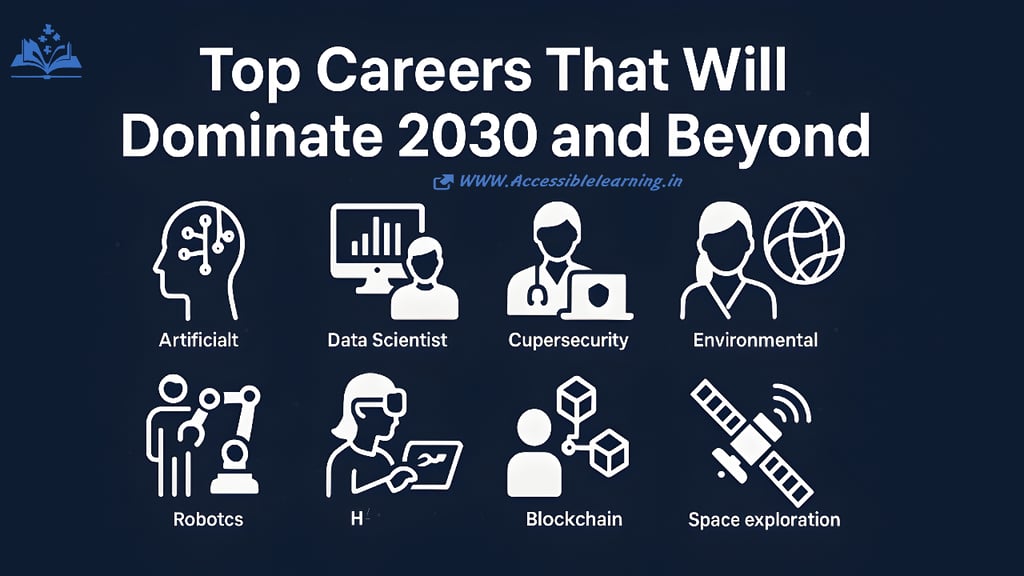
The world is moving into a new era shaped by artificial intelligence, climate urgency, global connectivity, and rapid automation. By 2030, many traditional jobs will either transform or disappear, while new opportunities will open up in tech, science, creativity, and sustainability. Below is a broader, more detailed look at the careers that will define the next decade and beyond.
Artificial Intelligence and Machine Learning Specialists
AI systems are becoming the backbone of industries. The demand for people who can train models, optimize algorithms, and build intelligent applications will multiply.
Additional areas growing fast
Edge AI engineers
AI safety and alignment experts
Autonomous systems developers
AI model evaluators
Multimodal AI specialists
Data Scientists, Data Engineers, and Data Strategists
The world is generating more data than humans can manually understand. This makes data-focused roles essential.
New data-focused roles emerging
Synthetic data developers
Data governance specialists
AI data trainers and validators
Real-time analytics engineers
Why it matters
Organizations want predictive accuracy, transparency, and faster decision making.
Cybersecurity, Digital Forensics, and Zero-Trust Architects
Cyberattacks are becoming more complex. The future needs security experts who understand cloud, AI, and global threat patterns.
Growing specializations
Ethical hackers
Cloud security architects
IoT security engineers
Data privacy officers
Incident response analysts
Climate Technology, Renewable Energy, and Sustainability Careers
Green jobs will be some of the fastest-growing roles for the next 20 years.
Future-focused careers
Solar and wind energy engineers
Smart grid designers
Climate data analysts
Carbon capture scientists
Sustainable product designers
Water resource technologists
Why it grows
Governments, companies, and consumers are all pushing for cleaner, safer systems.
Robotics and Automation Engineering
Robots are leaving the factory floor and entering homes, hospitals, farms, construction sites, and schools.
Additional roles coming
Humanoid robot trainers
Robotic process automation (RPA) architects
Maintenance robotics engineers
Drone operations managers
Advanced Healthcare, Genomics, and Bioengineering
Medicine will become more personalized, predictive, and technology-driven by 2030.
Growing areas
Genetic counselors
CRISPR specialists
Neurotechnology engineers
Bioinformatics scientists
Telehealth practitioners
Mental health professionals
Why it grows
People expect better, faster, and more personalized healthcare options.

AR, VR, XR, and Immersive Experience Designers
Immersive technology will take over industries like training, entertainment, retail, therapy, and education.
Emerging roles
Metaverse architects
Immersive learning designers
Virtual production engineers
Spatial computing developers
Blockchain, Web3, and Decentralized Technology Careers
Blockchain will support more than digital currency. It will become part of identity, governance, education, and logistics.
High-growth areas
Smart contract auditors
Tokenization experts
Web3 UX designers
Digital identity architects
DAO governance consultants
Human-AI Collaboration Experts
Companies need people who understand how to integrate AI into real workflows.
New roles
AI ethicists
Prompt designers
Responsible AI auditors
AI adoption strategists
Human-centered automation specialists
Creative Technologists and Digital Media Experts
Creativity will stay valuable even in an AI-first world.
Future career paths
Virtual influencers creators
3D environment designers
AI-assisted filmmakers
Motion design specialists
Experience strategists
Space Technology and Aerospace Careers
Space will become a major commercial and scientific frontier.
Growing roles
Space robotics engineers
Satellite communication analysts
Lunar construction specialists
Asteroid mining researchers
Space agriculture scientists
Education, Learning Science, and Skill Development Roles
Learning is evolving into a lifelong process.
High-demand jobs
AI learning assistants developers
EdTech product strategists
Digital curriculum architects
Corporate upskilling managers
Micro-learning designers
Quantum Computing Specialists
Quantum technology will reshape encryption, chemistry, medicine, and finance.
Future roles
Quantum software developers
Quantum algorithm researchers
Quantum cryptography experts
Quantum hardware engineers
Why it matters
Industries want breakthroughs that classical computing cannot provide.
Urban Tech and Smart City Careers
Cities are becoming more connected and efficient.
Growing opportunities
Smart city planners
IoT systems engineers
Autonomous transport designers
Energy-efficient building engineers
Supply Chain, Logistics Tech, and Autonomous Systems Experts
Supply chains are becoming smarter and highly automated.
In-demand areas
Autonomous delivery system managers
Predictive logistics analysts
Warehouse automation engineers
Blockchain-backed logistics specialists
Ethical, Social Impact, and Global Policy Careers
As technology grows, society needs people who can guide decisions responsibly.
Emerging roles
Tech policy advisors
Digital rights analysts
Ethical supply-chain auditors
Social impact designers
The most successful careers of 2030 and beyond will blend technical ability, human-centered thinking, and adaptability. Anyone who develops a mix of digital skills, creativity, emotional intelligence, and problem-solving will stay relevant no matter how the future shifts.

FAQ's
Q: Which career will be the most in-demand by 2030?
Roles in artificial intelligence, machine learning, data science, cybersecurity, and renewable energy will lead the job market. These fields are growing because every industry is adopting automation, digital systems, and sustainable solutions.
Q: Do I need a technical background for future careers?
Not always. Many future roles blend technology with creativity, management, communication, and problem solving. Jobs like UX design, digital content creation, AI collaboration, and learning design are great options even without deep coding skills.
Q: Will AI replace jobs by 2030?
AI will automate some tasks, but it will also create many new roles. The biggest opportunity lies in careers that combine human skills with AI tools, such as prompt engineering, AI ethics, automation strategy, and human-centered design.
Q: What skills should I learn now to stay future-ready?
Focus on digital literacy, data awareness, critical thinking, creativity, emotional intelligence, and comfort with AI tools. These skills apply to almost every future career.
Q: Are traditional jobs going to disappear?
Some roles will evolve instead of disappearing. For example, teachers, doctors, marketers, and designers will still be needed, but they’ll use advanced technology to work smarter and deliver better results.
Q: How do I choose a future-proof career?
Look for fields that align with your interest and have long-term demand. Industries like AI, health, sustainability, cybersecurity, robotics, and digital creativity offer strong stability and growth.
Q: Will remote work still be common in 2030?
Yes. Remote and hybrid work will stay normal, especially for careers in tech, design, writing, marketing, and data fields. Many global companies will hire talent regardless of location.
Q: Are creative careers safe in the future?
Yes. Creativity is becoming more valuable because AI still relies heavily on human direction. Areas like content creation, UI/UX, video production, storytelling, 3D design, and brand strategy will keep growing.
Q: What is the best career for beginners entering the future job market?
Some beginner-friendly pathways include digital marketing, UI/UX design, cybersecurity fundamentals, data analytics, cloud support, and AR/VR basics. These fields offer strong growth and accessible learning options.
Q: How can students prepare for 2030 careers?
Explore technology early, build portfolios, learn problem-solving, practice communication, and take part in internships or real projects. Staying curious and flexible is more important than choosing a single specialization too early.
Subscribe to Frontier Intelligence
All © Copyright reserved by Accessible-Learning Hub
| Terms & Conditions
Accessible Learning Hub — Actionable clarity for high-agency minds.
Weekly breakdowns on AI breakthroughs, capital flow, and human performance systems. Zero fluff.