

Toka Ebisu Festival: How Japan Welcomes Prosperity at the Start of the Year
Toka Ebisu Festival is a vibrant Japanese tradition celebrated every January to welcome prosperity, business success, and good fortune. From lucky bamboo rituals to lively street celebrations, this festival blends faith, culture, and community spirit, offering a meaningful look into how Japan begins the year with hope, hard work, and optimism.
CULTURE/TRADITIONEVENT/SPECIALJAPANCELEBRATION/FESTIVALS
Kim Shin
1/2/20266 min read
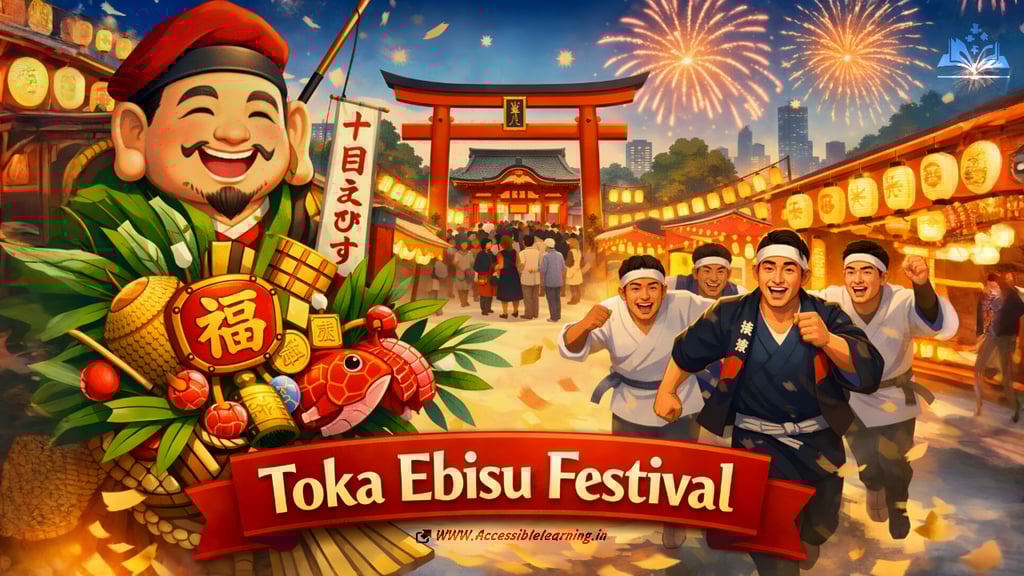
The Toka Ebisu Festival is one of Japan’s most energetic and people-centered winter festivals. Held every January, it marks the first Ebisu festival of the year and brings together business owners, families, shopkeepers, and travelers who all share the same hope: a prosperous year ahead. More than a religious event, Toka Ebisu is a living tradition where faith, commerce, food, and community blend naturally.
What Is the Toka Ebisu Festival?
Toka Ebisu, meaning “First Ebisu,” is dedicated to Ebisu, the Shinto god of business success, fishing, trade, and good fortune. Unlike many Japanese deities, Ebisu is cheerful, approachable, and closely tied to everyday life. People visit shrines during Toka Ebisu to pray for steady income, growing businesses, and personal happiness.
The festival is especially popular among merchants and entrepreneurs, but its welcoming atmosphere makes it enjoyable for everyone.
When and Where Is Toka Ebisu Celebrated?
Festival Dates
Toka Ebisu takes place every year from January 9 to January 11, right after the New Year celebrations.
January 9 – Eve Festival (Yoimiya)
January 10 – Main Day (Toka Ebisu)
January 11 – Closing Day (Zanmiya)
Major Locations
The festival is celebrated across Japan, but it is most famous in:
Nishinomiya Shrine (Hyogo)—Considered the birthplace of Ebisu worship
Imamiya Ebisu Shrine (Osaka)—Known for its lively crowds and chants
Ebisu Shrine (Kyoto)—Traditional and elegant atmosphere
Hakata Ebisu Shrine (Fukuoka)—Strong regional flavor
Each city adds its own character, but the spirit remains the same.
The Story and Meaning Behind Toka Ebisu
Ebisu is often depicted holding a fishing rod and a sea bream (tai), symbols of abundance and good luck. Historically, Ebisu was worshipped by fishermen and merchants, gradually becoming the guardian of trade and prosperity.
Toka Ebisu reflects a simple but powerful idea:
Hard work combined with gratitude brings long-term success.
People don’t ask for sudden wealth. They pray for steady growth, loyal customers, and honest earnings.
Key Rituals and Traditions
Receiving the Lucky Bamboo (Fukuzasa)
Visitors receive a fukuzasa, a bamboo branch symbolizing growth and flexibility. Shrine maidens decorate it with lucky charms such as:
Gold coins
Rice bales
Sea bream ornaments
Miniature treasure boats
Each charm represents wealth, stability, and business success.
The Famous “Lucky Men Race” (Nishinomiya Shrine)
One of the most exciting events is the Fukuotoko Race held on January 10.
Thousands of men sprint from the shrine gate to the main hall
The first three are declared “Lucky Men” of the year
This tradition symbolizes speed, determination, and opportunity
It adds a fun, competitive edge to the festival.
Shrine Visits and Prayers
People clap, bow, and offer coins while praying for:
Business growth
Job stability
Sales success
Family well-being
Some even gently tap the shrine walls to “wake up” Ebisu, a playful custom unique to this festival.
Food, Stalls, and Festival Atmosphere
Toka Ebisu feels like a street celebration more than a quiet religious event.
Popular Festival Foods
Takoyaki
Yakisoba
Taiyaki (fish-shaped sweet cakes)
Sake and amazake (sweet rice drink)
The streets glow with lanterns, laughter, and conversations about plans for the new year. It is warm, crowded, and full of life even in winter.
Why Toka Ebisu Matters in Modern Japan
In today’s fast-changing economy, Toka Ebisu remains deeply relevant.
Small shop owners pray for loyal customers
Startups seek stable growth
Freelancers ask for consistent work
Families pray for security and peace
The festival reminds people that success is built slowly, with patience, gratitude, and community support.
Cultural and Spiritual Importance
Toka Ebisu stands out because it:
Welcomes everyone, regardless of background
Connects spirituality with everyday work
Encourages optimism without greed
Strengthens local economies through tradition
It shows how faith can stay practical, joyful, and grounded.
Visiting Toka Ebisu as a Traveler
If you are visiting Japan in January, Toka Ebisu is worth experiencing.
Helpful Tips
Arrive early to avoid peak crowds
Keep cash for offerings and food stalls
Be respectful while taking photos
Try local foods and talk to vendors
Even without deep religious knowledge, the warmth of the festival is easy to feel.

Symbolism Hidden in Toka Ebisu Customs
Beyond prayers and offerings, Toka Ebisu is full of quiet symbolism. Bamboo is chosen not just for growth, but because it bends without breaking, a reminder for business owners to stay flexible during difficult times. The repeated decorations on the fukuzasa are layered intentionally. Coins represent circulation of money, not hoarding. Rice bales symbolize long-term stability rather than quick profit. Even the smiling face of Ebisu reflects the belief that success should be earned with integrity and joy, not stress or greed.
How Businesses Prepare Before Attending Toka Ebisu
Many merchants prepare for Toka Ebisu days in advance. Shops clean their entrances, owners review the past year’s accounts, and some even set new goals before visiting the shrine. This makes the festival feel like a mental reset rather than a simple ritual. Attending Toka Ebisu becomes part reflection, part planning, and part motivation for the year ahead.
Regional Differences You Can Notice Easily
While the core belief remains the same, regional flavors are easy to spot. In Osaka, the festival is louder and more playful, with energetic chants and bold decorations. Kyoto’s version feels calmer and more traditional, focusing on quiet prayers and refined rituals. In Fukuoka, local food culture blends strongly with the celebration, giving the festival a warmer, community-style atmosphere. These differences show how deeply Toka Ebisu adapts to local culture.
Role of Women and Shrine Maidens in the Festival
Shrine maidens, known as miko, play a central role during Toka Ebisu. They prepare charms, guide visitors, and decorate the lucky bamboo branches. Their presence adds grace and balance to the lively environment. Historically, women in merchant families also played a major role in maintaining household finances, making their participation in Ebisu worship especially meaningful.
Toka Ebisu and Japan’s Work Ethic
The festival quietly reflects Japan’s approach to work. Instead of chasing instant success, Toka Ebisu encourages consistency, trust, and responsibility. Many attendees see Ebisu not as a god who grants shortcuts, but as a guide who rewards steady effort. This mindset explains why the festival remains relevant even in modern corporate and freelance culture.
Why Locals Never Skip This Festival
For locals, skipping Toka Ebisu feels like skipping a proper beginning to the year. Even people who rarely visit shrines make time for it. It offers reassurance, social connection, and a shared sense of optimism. In a way, Toka Ebisu is less about religion and more about reminding people that no one builds success alone.
The Toka Ebisu Festival is not about wishing for miracles. It is about starting the year with hope, effort, and gratitude. Through cheerful rituals, lucky bamboo branches, and shared laughter, people remind themselves that prosperity grows when intentions are honest and communities are strong.
If you want to understand how tradition, business, and human connection coexist in Japan, Toka Ebisu offers a perfect glimpse.
FAQ's
Q: What is the Toka Ebisu Festival in Japan?
Toka Ebisu Festival is a traditional Japanese event held every January to honor Ebisu, the Shinto god of business, trade, and good fortune. People visit shrines to pray for steady income, business growth, and a successful year ahead.
Q: When is the Toka Ebisu Festival celebrated?
The festival takes place annually from January 9 to January 11, with January 10 being the main day. These dates mark the first Ebisu celebration of the new year.
Q: Where is the Toka Ebisu Festival most popular?
Toka Ebisu is celebrated across Japan, but it is especially popular at Nishinomiya Shrine (Hyogo), Imamiya Ebisu Shrine (Osaka), Ebisu Shrine (Kyoto), and Hakata Ebisu Shrine (Fukuoka).
Q: Who is Ebisu, and why is he important?
Ebisu is a Shinto deity associated with prosperity, honest work, and happiness. He is widely respected by merchants, entrepreneurs, fishermen, and workers because he represents success earned through effort and integrity.
Q: What is a fukuzasa, and why do people buy it?
A fukuzasa is a lucky bamboo branch given at Ebisu shrines during the festival. It is decorated with charms that symbolize wealth, stability, and growth. Many people display it in shops or offices throughout the year.
Q: Why do business owners attend the Toka Ebisu Festival?
Business owners attend Toka Ebisu to pray for customer trust, stable income, and long-term growth. The festival is seen as a positive starting point for setting goals and strengthening motivation for the year.
Q: What happens during the Lucky Men race?
The Lucky Men race, held at Nishinomiya Shrine, is a unique event where participants sprint to the shrine’s main hall. The first three runners are named the year’s lucky men, symbolizing speed, opportunity, and success.
Q: Is Toka Ebisu only for businesspeople?
No. While it is popular among merchants and entrepreneurs, the festival welcomes everyone. Families, students, and travelers also participate to pray for happiness, health, and good fortune.
Q: Can tourists attend the Toka Ebisu Festival?
Yes, tourists are welcome. The festival is open to the public and offers a great cultural experience. Visitors can enjoy food stalls, observe rituals, and experience a traditional Japanese festival atmosphere.
Q: What food is commonly eaten during Toka Ebisu?
Festival streets are lined with stalls selling popular Japanese foods such as takoyaki, yakisoba, taiyaki, and warm sake. These foods add to the lively and social atmosphere of the event.
Q: Why is the Toka Ebisu Festival still relevant today?
Toka Ebisu remains relevant because it reflects values that matter in modern life: steady effort, community support, and gratitude for work. It connects traditional beliefs with today’s business and work culture in a meaningful way.
Subscribe To Our Newsletter
All © Copyright reserved by Accessible-Learning Hub
| Terms & Conditions
Knowledge is power. Learn with Us. 📚

