

The Role of Media Literacy in a Misinformation Age: Why It Matters More Than Ever
In today’s misinformation age, fake news, manipulated videos, and AI-generated content spread faster than facts. This article explains the role of media literacy, why it matters now more than ever, and how critical thinking, fact-checking, and source verification help individuals and society stay informed, safe, and resistant to digital manipulation.
A LEARNINGAWARE/VIGILANTGLOBAL ISSUES
Shiv Singh Rajput
2/17/20268 min read
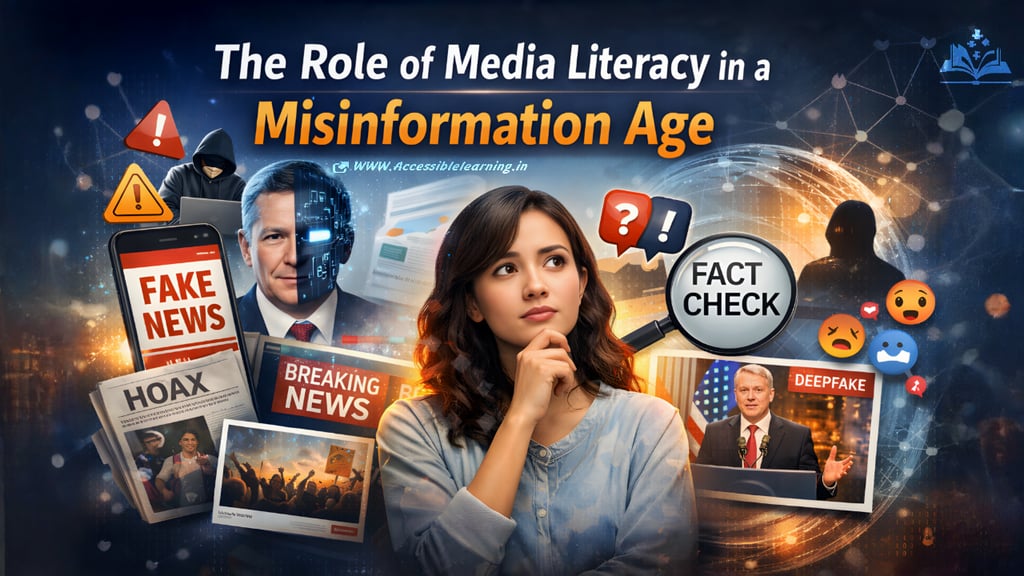
We live in an era where information is unlimited, instant, and constantly flowing. But the bigger challenge today isn’t access to information. The challenge is identifying what’s true, what’s manipulated, and what’s deliberately designed to mislead.
Social media feeds, YouTube shorts, WhatsApp forwards, trending tweets, and even AI-generated videos have made it extremely easy for misinformation to spread on a massive scale. What we call “news” today often comes mixed with emotion, bias, and agendas. In this environment, media literacy is no longer optional. It has become a necessary life skill.
Media literacy helps people become smarter consumers of content and more responsible digital citizens. It teaches how to verify information, recognize propaganda, detect manipulation, and build independent thinking. In short, it strengthens society against misinformation.
What Is Media Literacy?
Media literacy is the ability to access, understand, analyze, evaluate, and respond to media messages in an informed and responsible way.
It includes all forms of media, such as:
Television and newspapers
Social media platforms (Instagram, YouTube, Facebook, X)
Blogs and online news portals
Podcasts and video content
Messages, forwards, and screenshots
AI-generated content
Media literacy is not about rejecting media. It is about developing the skill to understand media critically, instead of blindly believing everything that appears on a screen.
Why We Are Living in a Misinformation Age
Misinformation is not new, but today it spreads faster and looks more convincing than ever. Several factors have created this misinformation-heavy environment:
1) Social Media Has Removed Gatekeepers
Earlier, editors and publishers verified information before it reached people. Today anyone can publish content without accountability. A random post can appear as “breaking news” and reach millions.
2) Misinformation Travels Faster Than Truth
Truth takes time. It requires checking sources, verifying evidence, and validating facts. Misinformation doesn’t need proof. It only needs attention.
3) Algorithms Push What Gets Engagement
Platforms reward posts that get likes, shares, comments, and reactions. Unfortunately, the most “engaging” content is often emotional and extreme. This causes misinformation to spread more than factual reporting.
4) AI Tools Have Made Fake Content Easier Than Ever
AI can create realistic-looking photos, videos, and voices. It has become possible to manufacture convincing false narratives quickly and cheaply.
Understanding Different Forms of False Information
Media literacy begins when people understand that misinformation comes in multiple forms, not just “fake news.”
Misinformation
False information shared without bad intention, usually by people who trust it.
Disinformation
False information shared intentionally to manipulate public opinion or harm others.
Malinformation
Real information used in harmful ways, such as leaks, selective editing, or using private content to attack someone.
A media-literate person learns to recognize these patterns and reacts thoughtfully instead of emotionally.
How Misinformation Manipulates People (The Psychology Behind It)
Misinformation succeeds because it targets human behavior. Most false content spreads due to psychology, not logic.
Confirmation Bias
People naturally believe content that matches their existing beliefs.
Fear-Based Thinking
Fear reduces reasoning. Panic makes people share without verifying.
Anger and Outrage
Anger spreads fast. Rage-based content often goes viral within hours.
Authority Illusion
People trust anything that looks official: a logo, a banner, a “doctor” title, or a fake news template.
Social Proof
If thousands share something, people assume it must be true.
This is why media literacy is essential. It helps people identify emotional traps.

The Core Importance of Media Literacy Today
1) It Protects Democracy and Public Decision-Making
Elections, protests, and public movements depend heavily on information. Misinformation can manipulate citizens, create division, and reduce trust in institutions.
Media literacy helps people understand political narratives and avoid falling into propaganda traps.
2) It Reduces Communal and Social Conflict
In many countries, misinformation fuels hatred between communities. Fake videos, edited screenshots, and rumors can spread faster than peace messages.
Media literacy teaches people to pause, verify, and prevent rumors from becoming violence.
3) It Saves Lives in Health and Crisis Situations
Fake medical advice, miracle cures, and anti-science content create long-term damage. During emergencies like pandemics, floods, fires, or public unrest, misinformation can cause:
panic
misinformation-based treatment
unsafe behavior
fake charity scams
Media literacy protects people from these dangers.
4) It Builds Mental Strength and Emotional Balance
Too much negative and misleading content affects mental health. People experience:
constant anxiety
doomscrolling
hopelessness
anger addiction
distrust in everything
Media literacy helps people consume content responsibly and reduces emotional manipulation.
Media Literacy Teaches People How Media Works
A major role of media literacy is helping people understand the systems behind media.
1) Media Messages Are Constructed
Every post, video, or news story is created with choices:
what to show
what to hide
what angle to use
what words to highlight
what emotion to trigger
Media literacy helps people ask:
“What is missing from this story?”
2) Framing Can Change Perception
Two news outlets can report the same event in completely different ways. That difference often comes from framing. Example:
“Protesters demand justice.”
“Mob creates chaos.”
Both describe the same event, but the emotional meaning changes. Media literacy helps people detect framing tricks.
3) Money Influences Content
Many platforms and creators earn through:
ads
sponsorships
political funding
affiliate products
click-driven revenue
This affects what is promoted. Media literacy helps users identify when content is designed more for profit than truth.
Essential Media Literacy Skills Everyone Must Develop
1) Source Checking
Before trusting information, ask:
Who posted this?
Is it a verified or credible organization?
Does the author have expertise?
Is the page known for misinformation?
2) Cross Verification
A single post is not proof. Media literacy encourages cross-checking using multiple trusted sources.
If it’s real, credible sources will report it too.
3) Image and Video Verification
Media literacy teaches that visuals can be misleading. Users should check:
whether the video is old
whether the clip is edited
whether the image is AI-generated
whether the photo is from another location
This is extremely important today.
4) Understanding Context
Many viral posts are not fully false; they’re contextually misleading. Example:
A protest video from 2019 is shared as if it is happening today.
Media literacy protects users from such manipulation.
5) Detecting Emotional Triggers
If content makes you instantly angry or fearful, pause. That is often the exact goal of misinformation.
Media literacy encourages emotional control before reacting.
6) Recognizing Clickbait Patterns
Common fake-news hooks include:
“Shocking truth”
“Media won’t show you this.”
“Share before it gets deleted.”
“You won’t believe this.”
“100% real, confirmed”
These are manipulation tactics, not evidence.

Media Literacy in the Era of AI Deepfakes
AI has made misinformation not just fast but also believable Today, fake content can look and sound real:
political deepfake speeches
celebrity fake statements
AI voice scams
fake CCTV footage
fake war footage
This creates a dangerous environment where people become confused about reality. Media literacy becomes the primary defense by teaching verification habits rather than blind trust.
The Role of Media Literacy for Different Groups
For Students
Media literacy builds:
critical thinking
research ability
responsible content creation
fact-based academic writing
digital safety habits
For Parents
Parents must teach children:
not everything online is true
influencers may promote misinformation
screenshots can be fake
AI can create fake visuals
Children should be trained early in verification, just like they are trained in road safety.
For Working Professionals
Professionals are also affected by misinformation in:
workplace rumors
financial scams
fake investment opportunities
fake job offers
fake legal advice
Media literacy reduces professional risks and prevents reputational harm.
For Businesses and Brands
Misinformation can destroy brand trust quickly. Businesses need media literacy to:
handle PR crises
avoid fake news attacks
verify trending claims
protect customer trust
How to Build Strong Media Literacy Habits (Practical Approach)
Media literacy becomes effective only when practiced daily.
1) Train Yourself to Pause
Make it a habit:
✅ Don’t forward anything immediately.
2) Verify Before Sharing
If content can harm someone or create panic, verify it first.
3) Follow Credible Sources
Choose quality over quantity. It’s better to follow 10 verified sources than 100 random pages.
4) Learn Platform Manipulation
Users should understand:
how algorithms create echo chambers
why controversial content is promoted
how bots inflate engagement
5) Encourage Healthy Media Consumption
Media literacy also includes:
taking breaks from news
limiting misinformation exposure
avoiding toxic comment sections
not believing trending topics blindly
Media Literacy vs Censorship: A Critical Difference
In a misinformation era, some people suggest banning content. But censorship is risky and can be misused. Media literacy is a stronger solution because it:
supports free speech
teaches responsibility
builds independent thinking
empowers society long-term
Media literacy strengthens people. Censorship controls people.


The Future: Why Media Literacy Will Become a Core Life Skill
Just like reading, writing, and basic computer knowledge, media literacy will become a core requirement in the future. Because:
AI content will grow
deepfakes will be more realistic
propaganda will be more targeted
social manipulation campaigns will increase
A media-literate society is a safer society.
Media Literacy Is the Most Powerful Defense Today
Misinformation cannot be fully eliminated, because technology will keep evolving. But people can become stronger. Media literacy creates citizens who:
question information
verify sources
understand bias
avoid emotional manipulation
share responsibly
In the misinformation age, media literacy is not just an academic concept. It is a practical skill that protects individuals, families, and society. Media literacy is the new form of intelligence.
FAQ's
Q: What is media literacy in simple words?
Media literacy is the ability to access, understand, analyze, and verify media content so people can make informed decisions and avoid misinformation.
Q: Why is media literacy important today?
Media literacy is important today because misinformation spreads quickly through social media, messaging apps, and AI-generated content, making it harder to identify reliable information.
Q: What is misinformation, and how does it spread?
Misinformation is false or misleading information that spreads through social sharing, algorithm-driven platforms, emotional content, and unverified sources like forwards and viral posts.
Q: How does media literacy help in preventing fake news?
Media literacy helps prevent fake news by teaching people to verify sources, check evidence, understand context, and recognize manipulation techniques used in misleading content.
Q: What is the difference between misinformation and disinformation?
Misinformation is incorrect information shared unintentionally, while disinformation is false information shared intentionally to manipulate or deceive people.
Q: How can I identify fake news online?
You can identify fake news by checking the original source, cross-verifying with trusted publishers, looking for evidence, checking dates and context, and avoiding content designed to trigger strong emotions.
Q: What are the main skills of media literacy?
The main skills of media literacy include source evaluation, fact-checking, bias detection, context understanding, identifying propaganda, and recognizing manipulation in digital content.
Q: How do social media algorithms contribute to misinformation?
Social media algorithms prioritize content that gets high engagement, such as fear-based or controversial posts, which often increases the spread of misinformation over accurate information.
Q: What is a deepfake, and why is it dangerous?
A deepfake is AI-generated or AI-edited audio/video that imitates real people. It is dangerous because it can mislead audiences, damage reputations, and influence public opinion using fake but realistic media.
Q: Can AI tools create fake news?
Yes, AI tools can generate fake news articles, realistic images, synthetic voices, and videos, which makes misinformation easier to produce and harder to detect.
Q: How can media literacy protect students and children?
Media literacy protects students and children by teaching them to question online content, verify sources, avoid viral manipulation, and build responsible digital behavior.
Q: What is the best way to verify online information?
The best way to verify online information is to check the credibility of the source, confirm through multiple trusted sources, look for original evidence, and use reverse image/video checks.
Q: What role does media literacy play in democracy?
Media literacy supports democracy by helping citizens identify propaganda, evaluate political messaging, and make informed voting and civic decisions based on verified facts.
Q: Why do people believe misinformation so easily?
People believe misinformation easily due to confirmation bias, emotional manipulation, social proof, trust in authority-like visuals, and limited time spent verifying information.
Q: What are common signs of misinformation on social media?
Common signs include sensational headlines, lack of credible sources, urgency to share, emotional manipulation, edited clips, screenshots without context, and claims without evidence.
Q: How can I improve my media literacy skills?
You can improve media literacy by practicing fact-checking daily, following trusted sources, learning bias detection, understanding how algorithms work, and pausing before sharing information.
Q: What is media bias, and how can people detect it?
Media bias is when information is presented in a one-sided or selective way. People can detect it by comparing multiple sources, analyzing framing, and identifying what facts are omitted.
Q: How does media literacy reduce online scams?
Media literacy reduces online scams by helping users identify fake profiles, suspicious links, misleading offers, manipulated testimonials, and emotionally persuasive scam tactics.
Q: Is media literacy the same as digital literacy?
No. Digital literacy is about using technology effectively, while media literacy is about understanding and evaluating information and messages shared through media platforms.
Q: Why is critical thinking important for media literacy?
Critical thinking is important because it helps people question information, examine evidence, identify logical fallacies, and avoid emotionally driven decision-making.
Q: What is the main purpose of media literacy?
The main purpose of media literacy is to help people evaluate information critically, detect misinformation, and become responsible consumers and creators of media content.
Q: How does media literacy fight misinformation?
Media literacy fights misinformation by teaching verification skills, source evaluation, bias awareness, and responsible sharing habits.
Q: What are the biggest causes of misinformation?
The biggest causes of misinformation include social media algorithms, low-quality sources, emotional manipulation, political propaganda, and AI-generated synthetic media.
Subscribe To Our Newsletter
All © Copyright reserved by Accessible-Learning Hub
| Terms & Conditions
Knowledge is power. Learn with Us. 📚

