

The Rise of Remote Work and What It Means for Students
Remote work is transforming how careers begin and grow. This article explores the rise of remote work, its real-world impact on students, the skills they need to succeed, and how future job opportunities are shifting toward flexible, global, and digital-first work environments.
A LEARNINGAI/FUTUREEDUCATION/KNOWLEDGE
Shiv Singh Rajput
12/30/20255 min read
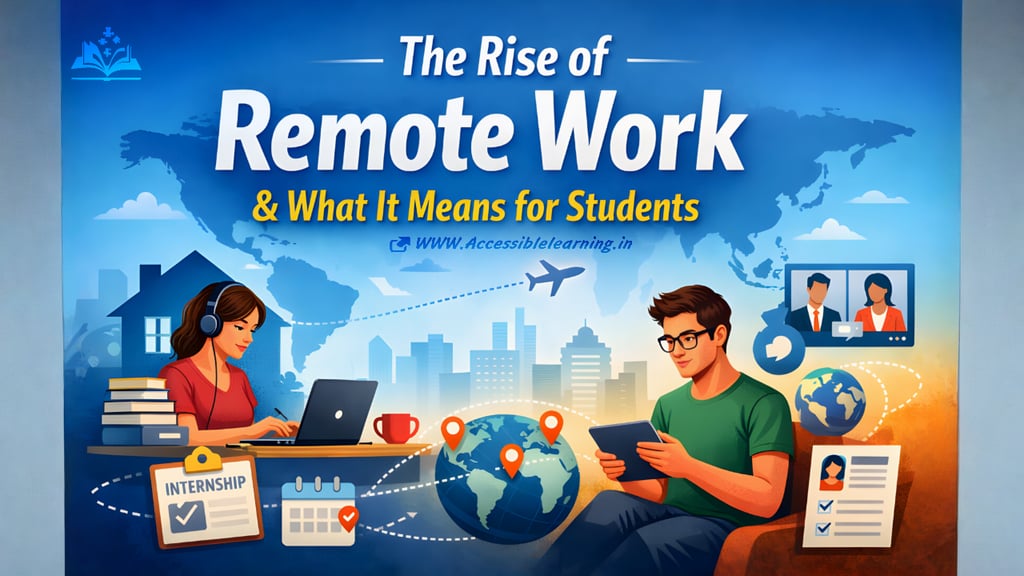
Remote work has shifted from an emergency solution to a permanent part of the modern workforce. Companies across the world now hire without borders, offices are becoming optional, and careers no longer depend on living in a specific city. For students, this change is reshaping education, career planning, skill development, and long-term lifestyle choices.
Understanding this shift early gives students a strong advantage in a competitive and evolving job market.
How Remote Work Became the New Normal
Remote work didn’t start overnight, but its adoption accelerated rapidly due to global events, especially the pandemic. Businesses were forced to operate online, and many discovered that productivity didn’t drop. In many cases, it improved.
Key reasons behind its continued growth include:
Reliable high-speed internet and cloud technology
Collaboration tools like video conferencing and shared workspaces
Rising office and commuting costs
Demand for flexible work-life structures
Access to global talent pools
What was once seen as temporary has now become a long-term strategy for many organizations.
The Difference Between Remote, Hybrid, and Flexible Work
Students often hear these terms but may not fully understand them:
Remote Work: Employees work entirely outside a traditional office
Hybrid Work: A mix of remote and in-office work
Flexible Work: Control over working hours, location, or both
Most companies now operate somewhere between hybrid and fully remote models, and this trend is expected to continue.
Why This Shift Is Important for Students
Remote work changes the foundation of early career development.
Location Is No Longer a Barrier
Students are no longer limited to jobs in their city or country. They can:
Apply for global internships
Work with international startups
Freelance for overseas clients
Gain exposure to global work cultures
This increases both opportunity and competition, making skill development more important than ever.
Early Career Entry Is Easier
Remote work allows students to start working earlier through:
Part-time remote jobs
Freelancing alongside studies
Paid online internships
Project-based contract work
This means students can graduate with real experience, not just degrees.
Learning Is Becoming More Practical
Traditional education often focuses on theory. Remote work demands applied skills such as
Problem-solving without direct supervision
Clear written communication
Task ownership and accountability
Digital collaboration
Students who combine academic knowledge with hands-on remote experience stand out.
Essential Skills Students Must Build for Remote Careers
Remote jobs reward skills more than credentials alone.
Digital and Technical Skills
Regardless of the field, students should be comfortable with:
Online communication tools
File sharing and cloud storage
Basic cybersecurity awareness
Digital documentation and reporting
These are now considered basic workplace skills.
Self-Discipline and Time Management
Without physical supervision, remote workers must manage their own productivity. Students should practice:
Planning daily schedules
Setting realistic deadlines
Avoiding distractions
Tracking progress independently
These habits directly translate to remote work success.
Communication and Collaboration Skills
Remote work depends on clarity. Students must learn to:
Express ideas clearly in writing
Participate in virtual meetings
Give and receive feedback online
Collaborate across time zones
Strong communication often matters more than technical ability.
The Impact on Career Paths and Job Roles
Remote work is reshaping career options in several ways:
Growth of freelance and contract-based careers
Increased demand for digital-first roles
Faster career mobility without relocation
Emphasis on portfolios and proof of work
Students are now encouraged to showcase skills through projects, case studies, and real outcomes rather than just resumes.

Remote Work and Mental Wellbeing for Students
While remote work offers flexibility, it also presents challenges:
Isolation and reduced social interaction
Difficulty separating work from personal life
Screen fatigue and burnout
Pressure to always be available
Students must learn healthy boundaries early, including:
Setting clear work hours
Taking regular breaks
Maintaining offline hobbies
Staying socially connected
Well-being is becoming a professional skill, not just a personal concern.
How Educational Institutions Are Adapting
Schools and universities are responding to the remote work shift by:
Offering online and hybrid courses
Introducing digital skill certifications
Partnering with remote companies
Supporting virtual internships and placements
In the future, education will likely blend learning with real remote work exposure.
Challenges Students Should Be Aware Of
Despite its benefits, remote work is not equally accessible to everyone.
Key challenges include:
Limited access to reliable internet
Lack of quiet or dedicated workspaces
Increased competition for global roles
Difficulty networking without in-person contact
Being aware of these issues helps students plan realistically and seek support where needed.
The Future of Remote Work and Students’ Careers
Looking ahead, several trends are shaping the future:
More outcome-based hiring instead of hour-based work
Greater acceptance of non-linear career paths
Increased use of AI and automation in remote roles
Demand for continuous learning and adaptability
Students who remain flexible, curious, and skill-focused will thrive in this environment.
How Students Can Prepare Starting Today
Practical steps students can take now:
Build a strong online professional presence
Start small freelance or remote projects
Learn collaboration tools used in real workplaces
Document work and create portfolios
Practice clear online communication
Preparation doesn’t require waiting for graduation.
Remote Work and Financial Independence for Students
Remote work is changing how students earn, save, and manage money. Unlike traditional campus jobs, remote roles often pay based on skills rather than hours or location. This creates early exposure to real-world income structures.
Key financial impacts include:
Opportunity to earn in stronger global currencies
Reduced expenses on travel, relocation, and housing
Ability to save or invest earlier in life
Understanding taxes, invoicing, and payments at a young age
Students who work remotely often develop financial awareness faster than their peers.
The Role of Personal Branding in a Remote-First World
In remote hiring, first impressions happen online, not in offices. For students, this makes personal branding essential.
This includes:
A clear LinkedIn or professional profile
A simple portfolio or personal website
Public work samples such as articles, designs, or projects
A consistent digital presence
Remote employers often decide within minutes based on online profiles. Students who present themselves clearly and professionally gain trust faster.
Remote Work and Cultural Intelligence
Working remotely often means collaborating with people from different countries, cultures, and time zones. This builds cultural intelligence, a skill increasingly valued by employers.
Students gain exposure to:
Different communication styles
Global work ethics and expectations
Time zone coordination
Cross-cultural teamwork
These experiences prepare students for leadership roles in global organizations.


How Remote Work Is Changing Hiring and Recruitment
Recruitment itself has gone remote. Interviews, assessments, onboarding, and training are now digital.
This means students must adapt to:
Video interviews instead of in-person meetings
Skill-based tests and assignments
Online onboarding processes
Self-learning during early job stages
Hiring is becoming more performance-focused, reducing the importance of degrees alone.
Remote Work as a Career Safety Net
Remote skills offer long-term career security. When industries shift or economies slow down, remote-capable professionals can adapt more easily.
For students, this means:
Multiple income streams through freelancing
Ability to switch industries using transferable skills
Reduced dependence on local job markets
Faster career pivots when needed
Remote readiness is becoming a form of career insurance.
Ethical and Responsible Remote Work Practices
Students entering remote work should also understand responsibility.
Important areas include:
Data privacy and confidentiality
Respecting digital work boundaries
Honest time reporting
Avoiding burnout culture
Responsible remote workers are trusted more and retained longer.
The rise of remote work is not just changing where people work but also how careers are built. For students, it offers flexibility, global access, and early professional exposure, while also demanding discipline, communication, and continuous learning.
Those who understand this shift and adapt early will enter the workforce with confidence, experience, and a competitive edge. Remote work is shaping the future of careers, and students who prepare today will define how that future looks tomorrow.
FAQ's
Q: Can students realistically get remote jobs without experience?
Yes. Many remote roles focus on basic skills, internships, or project-based work. Building small projects or portfolios helps bridge the experience gap.
Q: Are remote jobs stable for long-term careers?
Remote work is increasingly stable, especially in digital, creative, and tech-driven roles. Stability depends more on skills than location.
Q: Do remote employers value degrees less?
Degrees still matter, but employers now prioritize practical skills, communication, and proof of work alongside formal education.
Q: How can students avoid scams in remote job offers?
Students should verify companies, avoid upfront payment requests, use trusted platforms, and research employers before accepting offers.
Q: Is remote work suitable for all students?
Not always. Remote work requires discipline, reliable internet, and self-motivation. Some students may prefer structured or in-person environments.
Q: Will remote work replace traditional jobs completely?
No. Remote work will coexist with in-office roles. The future is flexible, not fully remote for every profession.
Subscribe to Frontier Intelligence
All © Copyright reserved by Accessible-Learning Hub
| Terms & Conditions
Accessible Learning Hub — Actionable clarity for high-agency minds.
Weekly breakdowns on AI breakthroughs, capital flow, and human performance systems. Zero fluff.