

The Parasocial Trap: VTubers, Waifus, and the Epidemic of Loneliness
Explore the rise of parasocial relationships in the digital age. Learn how VTubers, waifus, AI companions, and virtual influencers are reshaping loneliness, social connection, and modern youth culture.
ANIME INDUSTRYAI ASSISTANTHARSH REALITYNEW YOUTH ISSUES
Hikari | Kim Shin
6/16/20268 min read
Why Millions of Young Men Are Paying to Talk to Virtual Avatars
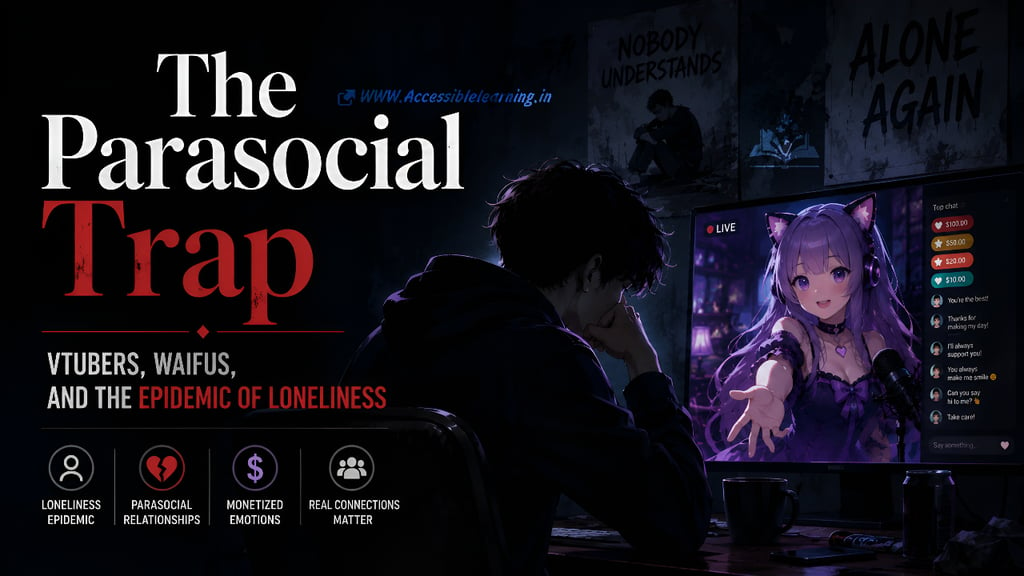
A young man finishes work or school, returns home, puts on his headphones, and opens a livestream.
On the screen is an anime girl with bright eyes and a cheerful smile. She remembers his username. She thanks him for his donation. She laughs at his jokes. She asks how his day was.
For a few hours, he feels seen. The problem is that none of it is real.
Across the world, millions of people are forming intense emotional attachments to fictional characters, virtual influencers, AI companions, and VTubers. What began as a niche entertainment category has evolved into a massive industry worth billions. Companies have discovered something powerful and profitable: loneliness can be monetized.
This phenomenon is not simply about anime fandom or online entertainment. It reflects a much deeper issue. Modern society is experiencing an unprecedented loneliness epidemic, especially among young men. As real-world social opportunities decline, digital substitutes are becoming increasingly attractive.
The result is a growing number of people who feel emotionally connected to individuals who do not truly know them, characters who do not exist, and relationships that can never become reciprocal. This is the parasocial trap.
What Is a Parasocial Relationship?
A parasocial relationship is a one-sided emotional bond in which a person feels connected to a media figure, celebrity, streamer, fictional character, or online personality who does not personally know them.
The term was first introduced by sociologists in the 1950s to describe viewers who developed emotional attachments to television personalities.
At the time, the phenomenon seemed relatively harmless. Today, technology has transformed it into something far more immersive.
Modern streamers interact with audiences in real time. VTubers respond to comments. AI chatbots remember previous conversations. Social media creates the illusion of constant access.
The brain often struggles to distinguish between genuine social engagement and simulated social interaction. As a result, many people begin treating these digital figures as meaningful parts of their emotional lives.
The Rise of VTubers: Digital Companionship at Scale
VTubers, short for "Virtual YouTubers," are content creators who use animated avatars instead of showing their real faces. Most VTubers appear as anime-style characters.
Some are independent creators. Others are managed by large entertainment corporations that carefully design characters, personalities, backstories, and audience engagement strategies.
To viewers, VTubers often feel more approachable than traditional celebrities. Unlike movie stars, they stream for hours every day. Unlike fictional characters, they interact directly with fans.
Unlike real-life relationships, they rarely reject, criticize, or disappoint their audience. This combination creates an unusually powerful emotional experience.
Viewers begin feeling as though they genuinely know the person behind the avatar. Many develop routines around watching streams, participating in communities, and financially supporting creators.
For some, the VTuber becomes a source of comfort, motivation, and companionship. For others, the relationship evolves into emotional dependency.
Waifus & the Fantasy of Perfect Connection
The concept of a "waifu" emerged from anime culture and refers to a fictional character someone feels deep affection toward. While many fans engage with fictional characters in healthy and playful ways, problems arise when fantasy begins replacing reality.
Real relationships are complicated. People disagree. People make mistakes. People require compromise. Fictional characters do none of these things.
They remain permanently idealized. They never reject affection. They never create uncertainty. They never challenge personal growth. The human brain naturally gravitates toward experiences that feel rewarding and safe.
When loneliness becomes severe, an idealized fictional companion can begin feeling emotionally preferable to real-world interactions. Over time, this preference can weaken motivation to pursue actual relationships.

Why Young Men Are Particularly Vulnerable
Although loneliness affects all demographics, many studies and social trends indicate that young men face unique challenges. Several factors contribute to this situation:
Declining Social Spaces
Many traditional gathering places have disappeared or become less accessible.
Community organizations, clubs, recreational groups, and local social networks are less active than they were in previous generations.
People increasingly spend their free time online.
Fear of Rejection
Digital environments offer controlled interactions.
Real-life relationships involve uncertainty.
Many young men report anxiety about dating, socializing, and initiating conversations.
Virtual relationships remove much of that discomfort.
Economic Pressure
Housing costs, financial instability, and career uncertainty make social development more difficult.
People often postpone dating, marriage, and family formation.
Loneliness fills the gap.
Digital Substitution
Streaming platforms, gaming communities, social media, AI companions, and virtual entertainment provide instant emotional stimulation.
These systems satisfy some social needs without requiring real-world vulnerability.
The danger is that temporary comfort can slowly replace meaningful human connection.
How Corporations Monetize Loneliness
The business model is surprisingly simple. Create emotional attachment. Then monetize access. Many digital platforms are designed around this principle. The more emotionally invested a user becomes, the more likely they are to spend money.
Common monetization methods include:
Donations and Super Chats
Fans pay to have messages read during livestreams.
The interaction may last only seconds, but the emotional impact can feel significant.
Membership Programs
Subscribers gain access to exclusive content, private communities, and special interactions.
Virtual Gifts
Users purchase digital items to express affection or support.
Character Merchandising
Fans buy products connected to personalities they feel emotionally attached to.
AI Companion Services
Some platforms charge monthly fees for virtual relationships that simulate emotional intimacy.
The industry is not necessarily creating loneliness. However, it often profits from maintaining it. A lonely customer who feels emotionally dependent on a digital figure can become a highly reliable source of recurring revenue.
The Psychology Behind the Attachment
Human beings evolved as social creatures. Our brains are designed to seek belonging, recognition, and emotional support. Parasocial relationships activate many of the same psychological systems involved in genuine social bonds.
When a favorite creator acknowledges a comment, the brain experiences a reward response. When a streamer shares personal stories, viewers may feel intimacy.
When a VTuber appears daily, audiences develop familiarity and emotional routines. None of these experiences are inherently harmful. The problem emerges when they become a substitute rather than a supplement.
A healthy fan understands the boundary. An unhealthy attachment blurs it.
Warning Signs of the Parasocial Trap
For educators, parents, and mentors, recognizing early warning signs is important.
Potential indicators include the following:
Spending excessive amounts of money seeking attention from creators.
Prioritizing virtual interactions over real-life relationships.
Experiencing jealousy regarding a creator's personal life.
Believing a public figure has a unique personal connection with them.
Avoiding social opportunities because fictional relationships feel easier.
Feeling emotionally devastated when a creator takes a break or changes content.
Isolating from family, friends, or community activities.
One sign alone does not indicate a problem. Patterns of behavior are what matter.
Why the Solution Is Not Simply "Touch Grass"
Internet culture often mocks lonely individuals by telling them to "go outside" or "touch grass." While the phrase is humorous, it oversimplifies a serious issue. Loneliness is not solved through shame. People rarely choose isolation because they enjoy suffering.
Many are struggling with anxiety, depression, social insecurity, trauma, economic pressure, or a lack of opportunities for meaningful connection. Effective solutions require understanding rather than ridicule. The goal is not to eliminate digital entertainment. The goal is to restore balance.

Rebuilding Real-World Social Ecosystems
The healthiest approach is not abandoning online communities but strengthening offline relationships. Several strategies can help.
Encourage Shared Activities
Sports, fitness groups, hobby clubs, volunteer work, and creative communities create natural opportunities for connection.
Focus on Skill Development
Social confidence improves through practice.
Conversation, empathy, conflict resolution, and emotional intelligence are learnable skills.
Promote Community Involvement
Local events, educational programs, and collaborative projects provide environments where relationships can develop organically.
Reduce Passive Consumption
Watching content for hours each day often creates the illusion of social interaction without delivering genuine connection.
Replacing some screen time with active participation can have significant benefits.
Normalize Imperfect Relationships
Real people are not designed to compete with idealized fictional characters.
Teaching young people that meaningful relationships involve effort, compromise, and occasional discomfort is essential.
The Future: AI Girlfriends, Virtual Partners, and Emotional Simulation
The next phase of this trend may be even more powerful. Artificial intelligence is making virtual companionship increasingly realistic.
AI companions can remember conversations, adapt personalities, provide emotional validation, and maintain constant availability. For lonely individuals, the appeal is obvious.
Unlike real people, AI never gets tired. It never leaves. It never argues unless programmed to.
The question society must confront is whether emotional simulation can satisfy human needs without undermining authentic relationships.
The answer remains uncertain. What is clear is that technology is advancing faster than our understanding of its psychological consequences.
Comfort Is Not the Same as Connection
VTubers, waifus, fictional characters, and AI companions are not inherently dangerous. Many people enjoy them without experiencing negative consequences. The problem begins when they become replacements for human connection rather than forms of entertainment.
The loneliness epidemic is not fundamentally an anime problem, a gaming problem, or a technology problem. It is a social problem. People are searching for belonging. They are searching for recognition. They are searching for companionship.
Digital industries have become exceptionally good at offering simulations of those experiences. But comfort and connection are not the same thing. A virtual avatar can provide temporary relief from loneliness. Only real relationships can truly cure it.
As society moves deeper into the digital age, understanding that distinction may become one of the most important forms of literacy we can teach the next generation.
FAQ's
Q: What is a parasocial relationship?
A parasocial relationship is a one-sided emotional connection where a person feels attached to a public figure, streamer, celebrity, fictional character, or online personality who does not personally know them. These relationships often develop through repeated exposure to content and can feel emotionally real despite lacking mutual interaction.
Q: Why are VTubers so popular among young people?
VTubers combine entertainment, live interaction, anime culture, and community engagement. Their frequent streams, relatable personalities, and direct audience interaction create a sense of familiarity and companionship that many viewers find appealing.
Q: Are parasocial relationships unhealthy?
Not necessarily. Many people enjoy content creators, celebrities, or fictional characters without negative effects. Problems arise when parasocial attachments begin replacing real-world relationships, causing social isolation, emotional dependency, or excessive spending.
Q: Why do people develop emotional attachments to fictional characters or waifus?
Humans naturally form emotional connections with compelling stories and characters. Fictional characters often represent idealized traits, making them emotionally comforting and easier to engage with than complex real-life relationships.
Q: How do companies profit from parasocial relationships?
Many digital platforms monetize emotional engagement through memberships, livestream donations, exclusive content, merchandise, virtual gifts, and premium fan experiences. The stronger the emotional attachment, the more likely users are to spend money.
Q: What are the warning signs of an unhealthy parasocial relationship?
Common warning signs include prioritizing virtual interactions over real relationships, spending excessive amounts of money on creators, feeling emotionally dependent on online personalities, experiencing jealousy over a creator's personal life, and avoiding social opportunities in the real world.
Q: How does loneliness contribute to parasocial attachments?
Loneliness increases the desire for connection and belonging. Digital personalities, VTubers, and fictional characters can provide temporary emotional comfort, making them especially attractive to individuals who struggle with social isolation or lack strong support networks.
Q: Can VTubers and online creators replace real friendships?
No. While online creators can provide entertainment, inspiration, and a sense of community, they cannot replace the mutual support, emotional reciprocity, and personal growth that come from genuine friendships and relationships.
Q: What role does AI play in modern parasocial relationships?
AI companions and virtual partners are making parasocial experiences more immersive by simulating conversation, emotional support, and personalized interaction. This technology raises important questions about the future of human relationships and digital companionship.
Q: How can parents and educators help young people avoid the parasocial trap?
Parents and educators can encourage participation in hobbies, sports, community activities, and face-to-face social experiences. Open discussions about digital literacy, emotional health, and healthy relationship expectations can also help young people maintain a balanced relationship with online content.
Q: Is the loneliness epidemic affecting young men more than previous generations?
Many researchers and social observers believe that young men are experiencing increasing levels of loneliness due to factors such as reduced community engagement, economic pressures, changing social norms, and increased reliance on digital entertainment and communication.
Q: What is the best way to maintain a healthy relationship with online entertainment?
Enjoy creators, VTubers, anime, gaming, and online communities as forms of entertainment rather than substitutes for real-world relationships. Maintaining friendships, family connections, social activities, and personal goals helps create a healthy balance between digital and offline life.
Q: Why are parasocial relationships becoming more common in the digital age?
Social media, livestreaming platforms, AI companions, and personalized content have made public figures more accessible than ever before. These technologies create the illusion of intimacy, making parasocial relationships easier to form and maintain.
Q: Can parasocial relationships affect mental health?
In some cases, yes. Excessive emotional dependence on virtual figures can contribute to social withdrawal, increased loneliness, unrealistic relationship expectations, anxiety, and difficulty forming meaningful real-world connections.
Q: What is the key lesson from the rise of VTubers, waifus, and virtual companionship?
The growing popularity of virtual relationships highlights a broader need for human connection. Technology can provide comfort and entertainment, but lasting emotional well-being is still rooted in authentic relationships, community involvement, and real-world social experiences.
Subscribe To Our Newsletter
All © Copyright reserved by Accessible-Learning Hub
| Terms & Conditions
Knowledge is power. Learn with Us. 📚

