

The Human-Only Guide: Why We’re Moving Beyond Algorithmic Recommendations
A deep, human-first exploration of why people are moving away from algorithmic recommendations. Learn how AI-driven systems shape what you see, the hidden trade-offs behind personalization, and how human curation is redefining discovery, trust, and digital control in a hyper-automated world.
DIGITAL MARKETINGCOMPANY/INDUSTRYA LEARNING
Sachin K Chaurasiya
4/19/20265 min read
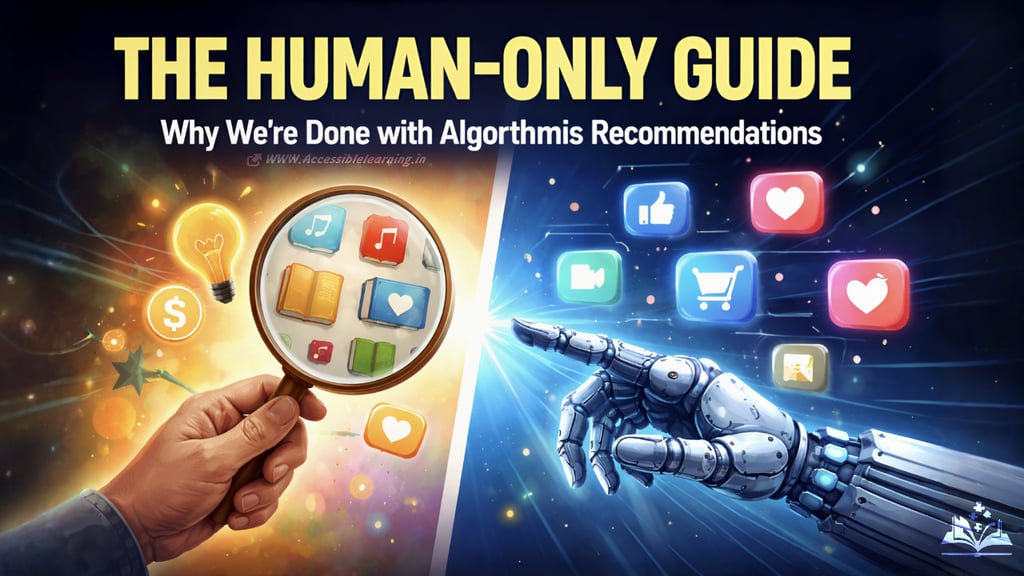
There was a time when recommendations felt like magic. Open an app, and it “knew” what you wanted. Music, movies, news, even people. Everything curated, personalized, and optimized. But something shifted.
What once felt helpful now feels repetitive. What once saved time now subtly shapes decisions. And more people are starting to question whether convenience is worth the trade-off.
The Invisible System Running Your Life
Recommendation systems are no longer just features. They are the backbone of modern digital platforms.
They influence:
What trends you notice
What opinions you encounter
What products you consider buying
What creators you discover (or never see)
These systems are designed with one primary goal: maximize engagement. That often means keeping you scrolling, not necessarily helping you think better or discover meaningfully.
The Core Problem: Optimization Has Limits
Algorithms are excellent at pattern recognition. But they struggle with nuance.
They:
Learn from your past behavior
Predict what will keep you engaged
Reinforce what already works
But they don’t understand intent the way humans do.
What algorithms miss:
Context behind your choices
Temporary interests vs long-term goals
Emotional depth or curiosity shifts
The difference between “easy” and “valuable”
This leads to a subtle but important issue:
You get what you engage with, not what you actually need.
The Echo Chamber Effect (Expanded)
The idea of a filter bubble goes deeper than just seeing similar content.
It creates:
Cultural narrowing: You’re exposed to fewer perspectives across regions, ideas, and disciplines
Creative stagnation: Artists and creators start making content that fits the algorithm, not originality
Intellectual comfort zones: You stop encountering friction, disagreement, or surprise
Over time, this reduces curiosity. And curiosity is what drives real discovery.
Algorithmic Bias Is Not Neutral
Many people assume algorithms are objective. They’re not. They are shaped by:
Training data (which can be incomplete or biased)
Platform incentives (ads, watch time, clicks)
Historical behavior patterns
Real-world implications:
Certain voices get amplified more than others
Niche or new creators struggle to break through
Sensational or extreme content often performs better
This means the system isn’t just reflecting reality. It’s actively shaping it.
The Monetization Layer: You Are the Product
Most recommendation systems are tied to advertising models.
That means:
Your attention is being sold
Your behavior is being tracked
Your preferences are being predicted and influenced
What this leads to:
Click-driven headlines
Emotionally charged content
Addictive design patterns (infinite scroll, autoplay)
The goal is not just to recommend. It’s to retain and monetize your attention for as long as possible.

Creativity Is Being Reshaped
One of the less discussed impacts is on creators themselves. When algorithms reward:
Consistency over experimentation
Trends over originality
Quantity over depth
Creators adapt.
The result:
Homogenized content
Repetitive formats
Reduced creative risk-taking
In many ways, algorithms don’t just influence what we consume. They influence what gets created in the first place.
The Psychological Impact
Algorithmic environments are not neutral spaces. They affect how you think and feel.
Common effects include:
Dopamine-driven behavior loops (checking for the next “hit”)
Shortened attention spans
Comparison fatigue (especially on social platforms)
Information overload
Over time, this can lead to passive consumption habits where
You scroll without intention
You consume without remembering
You react more than you reflect
The Illusion of Choice
One of the biggest misconceptions is that more content equals more freedom.
In reality:
You are choosing from a pre-filtered pool
Options are ranked before you even see them
Visibility is controlled by unseen systems
So while it feels like you have infinite choice, your actual exposure is highly curated.
Why “Human-Only” Feels Different
Human recommendations are slower, imperfect, and limited. But they offer something algorithms can’t replicate fully.
They bring:
Story and context (“why this mattered”)
Unexpected connections
Genuine enthusiasm or critique
Diversity beyond your past behavior
A human doesn’t recommend based on data alone. They recommend based on experience, emotion, and judgment.
The Return of Intentional Discovery
There’s a quiet shift happening toward more intentional consumption. People are:
Subscribing to niche newsletters
Joining smaller communities
Seeking expert-curated lists
Relying on trusted voices instead of feeds
This is less about rejecting technology and more about changing how we use it.
The Hybrid Future: Human + Machine
It’s unrealistic to completely remove algorithms. They’re too embedded in modern systems. But the future is likely a hybrid model:
Where algorithms assist, not dominate:
Helping you search, not decide
Offering options, not controlling visibility
Supporting discovery, not replacing it
The key difference is who stays in control.
Advanced Ways to Reduce Algorithm Dependence
If you want deeper control, go beyond the basics:
Build your own input system
Create a personal ecosystem:
Blogs, newsletters, podcasts
Independent creators
Direct sources instead of feeds
Use “friction” intentionally
Avoid instant consumption:
Pause before clicking
Read summaries instead of headlines
Choose depth over speed
Reset your algorithm periodically
Clear watch/search history
Explore unrelated topics intentionally
Avoid engaging with low-value content
Diversify your platforms
Don’t rely on a single app for information or discovery.
Practice conscious consumption
Ask:
Why am I watching this?
Did I choose this, or was it suggested?
Is this adding value?

The Bigger Cultural Shift
This movement isn’t just about personal habits. It reflects a broader change:
From speed → to depth
From volume → to value
From automation → to intention
People are realizing that what you consume shapes how you think. And when algorithms control consumption, they indirectly influence thinking.
Algorithmic recommendations are powerful. They’ve made the internet faster, smarter, and more personalized. But they’ve also made it narrower, more predictable, and sometimes less meaningful. The “human-only” approach isn’t about rejecting technology. It’s about reclaiming balance.
Because the real question isn't
“Are algorithms good or bad?”
It's
“Who is in control of what you see, think, and choose?”
And more importantly:
Are you okay with that answer?
FAQ's
Q: What are algorithmic recommendations?
Algorithmic recommendations are suggestions generated by AI systems based on your past behavior, preferences, and interactions. These systems are used by platforms like YouTube, Netflix, and Amazon to show content, products, or media you’re most likely to engage with.
Q: Why are people moving away from algorithm-based recommendations?
Many users are stepping back because:
Content feels repetitive and predictable
Exposure to diverse ideas is limited
Trust in platform-driven suggestions is declining
There’s growing awareness of manipulation through engagement tactics
People are seeking more control and authenticity in what they consume.
Q: What is a “human-only” recommendation approach?
A human-only approach relies on real people instead of algorithms to suggest content, products, or ideas. This includes:
Recommendations from friends or communities
Curated newsletters and expert lists
Independent creators and niche platforms
It focuses on experience-driven suggestions rather than data-driven predictions.
Q: Are algorithmic recommendations harmful?
Not inherently. They are useful for:
Saving time
Discovering relevant content quickly
Reducing decision fatigue
However, over-reliance can lead to:
Filter bubbles
Reduced critical thinking
Passive consumption habits
The issue is not the technology itself, but how heavily we depend on it.
Q: What is a filter bubble, and why does it matter?
A filter bubble is a state where algorithms show you content that aligns with your existing preferences, limiting exposure to different viewpoints.
This matters because it can:
Reinforce biases
Narrow your perspective
Distort your understanding of broader reality
Q: Can you completely avoid algorithmic recommendations?
In today’s digital world, it’s difficult to avoid them entirely. Most platforms rely on algorithms to function. However, you can reduce dependence by:
Searching manually instead of relying on feeds
Following direct sources
Engaging with diverse content intentionally
Q: How do human recommendations improve discovery?
Human recommendations offer:
Context and personal insight
Unexpected suggestions outside your usual interests
More meaningful and diverse discovery
Unlike algorithms, humans don’t optimize for engagement. They recommend based on value and experience.
Q: Do algorithms influence what we think?
Indirectly, yes. By controlling what content is visible, algorithms can:
Shape opinions
Reinforce beliefs
Influence decision-making over time
This happens subtly through repeated exposure.
Q: What are the biggest risks of relying only on algorithms?
Key risks include:
Loss of independent thinking
Reduced exposure to new ideas
Addiction to scrolling and passive consumption
Over-personalized content loops
Over time, this can limit both intellectual and creative growth.
Q: What is the future of recommendations: human or algorithm?
The future is likely a hybrid model. Algorithms will continue to:
Assist with discovery
Organize large amounts of content
But human curation will become more valuable for:
Depth
Trust
Authenticity
The shift is not about replacing algorithms but regaining control over them.
Q: How can I start using a human-first approach today?
You can begin by:
Asking friends or peers for recommendations
Subscribing to curated newsletters
Exploring content outside your usual preferences
Reducing reliance on autoplay and suggested feeds
Small changes can significantly improve how you discover and consume content.
Q: Is this shift just a trend or a long-term change?
It’s shaping into a long-term shift. As awareness grows around:
Data privacy
Algorithmic bias
Mental well-being
More people are choosing intentional consumption over automated feeds. This signals a deeper change in how we interact with digital systems.
Subscribe to Frontier Intelligence
All © Copyright reserved by Accessible-Learning Hub
| Terms & Conditions
Accessible Learning Hub — Actionable clarity for high-agency minds.
Weekly breakdowns on AI breakthroughs, capital flow, and human performance systems. Zero fluff.