

The Food Security Crisis in Sub-Saharan Africa: Climate Change, Conflict, and the Path Forward to Ending Hunger
A comprehensive analysis of hunger and food insecurity in Sub-Saharan Africa affecting 282 million people. Examines root causes, including climate change, conflict, and poverty, while presenting evidence-based solutions for agricultural transformation, climate adaptation, and social protection to achieve sustainable food security across the continent.
AFRICAHARSH REALITYAWARE/VIGILANTNEPOTISM/SOCIAL ISSUES
Kim Shin
10/23/202521 min read
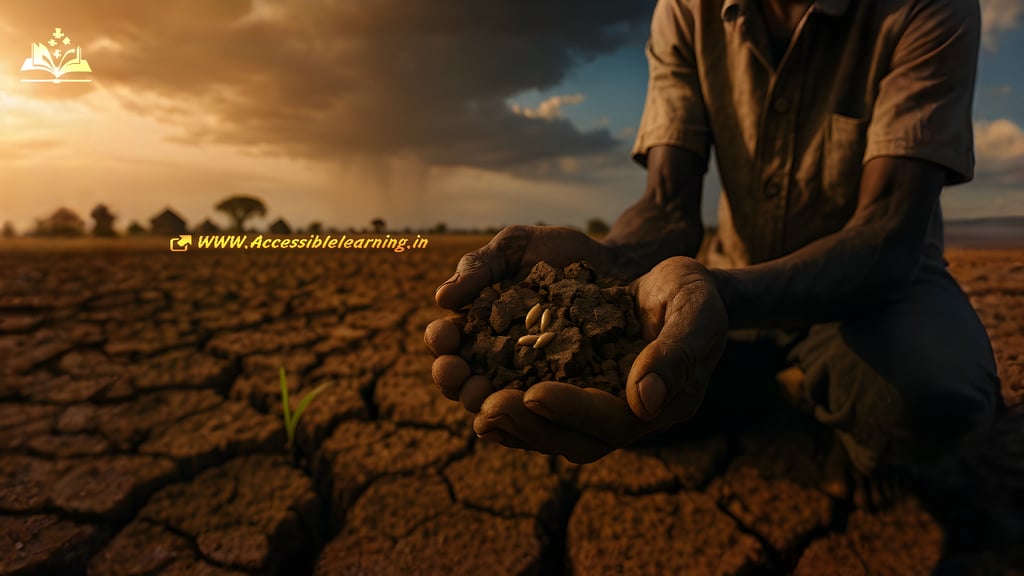

Food insecurity remains one of the most pressing humanitarian challenges facing Sub-Saharan Africa, affecting hundreds of millions of people across the region. This comprehensive examination explores the current state of hunger, underlying causes, regional variations, and evidence-based solutions that offer hope for a more food-secure future.
The Current State of Food Insecurity in Sub-Saharan Africa
Sub-Saharan Africa faces a severe and persistent food security crisis that has intensified in recent years. According to the most recent data available, approximately 282 million people in the region experienced hunger in 2023, representing nearly one-quarter of the population. This figure represents a substantial increase from previous years, driven by multiple converging factors, including climate-related disruptions, conflict, economic instability, and the lingering impacts of global events.
The prevalence of undernourishment in Sub-Saharan Africa stands at approximately 23 percent, significantly higher than the global average of 9.2 percent. This disparity underscores the disproportionate burden the region carries in the global fight against hunger. Beyond chronic undernourishment, acute food insecurity affects tens of millions more, with populations facing emergency or crisis levels of food deprivation requiring immediate humanitarian intervention.
The impact extends beyond statistics to affect fundamental aspects of human development and economic progress. Malnutrition, particularly among children under five years of age, remains alarmingly high. Stunting affects approximately 31 percent of children in the region, representing one of the highest rates globally. This form of chronic malnutrition has irreversible consequences for cognitive development, educational attainment, and future economic productivity, perpetuating cycles of poverty across generations.
Root Causes and Contributing Factors
Understanding food insecurity in Sub-Saharan Africa requires examining the complex web of interconnected factors that create and sustain this crisis. Climate change stands at the forefront of these challenges, fundamentally altering agricultural production patterns and threatening traditional farming systems. The region has experienced increasingly frequent and severe droughts, unpredictable rainfall patterns, flooding events, and temperature extremes that directly impact crop yields and livestock productivity.
Agricultural systems in Sub-Saharan Africa remain predominantly smallholder-based, with limited access to modern technologies, improved seeds, fertilizers, and irrigation infrastructure. Most farmers depend on rain-fed agriculture, making them extremely vulnerable to climate variability. When rains fail or arrive at the wrong time, entire harvests can be lost, leaving millions without adequate food supplies until the next growing season.
Conflict and political instability have emerged as major drivers of food insecurity across multiple Sub-Saharan African nations. Armed conflicts disrupt agricultural production, displace populations from their farmlands, destroy infrastructure, and prevent humanitarian access to vulnerable communities. Countries experiencing protracted conflicts or political instability consistently show the highest levels of food insecurity, with displaced populations particularly vulnerable to severe hunger.
Economic factors compound these challenges significantly. High poverty rates limit household purchasing power, restricting access to food even when markets are functioning. Currency fluctuations, inflation, and rising food prices place nutritious foods beyond the reach of poor families, forcing them to reduce meal frequency, portion sizes, or dietary diversity. The economic impacts of global events, including the COVID-19 pandemic and international conflicts affecting commodity markets, have reverberated strongly throughout the region, pushing millions more into food insecurity.
Infrastructure deficits create substantial barriers to food security. Poor road networks limit market access for farmers and increase post-harvest losses, which can reach 30 to 40 percent for some crops. Inadequate storage facilities result in food spoilage and waste. Limited access to electricity constrains food preservation options and processing capabilities. These infrastructure gaps prevent efficient movement of food from surplus to deficit areas, contributing to localized food shortages even when regional supplies exist.
Population growth presents an additional challenge, with Sub-Saharan Africa experiencing some of the world's highest fertility rates. The region's population is projected to double by 2050, placing enormous pressure on agricultural systems, natural resources, and food production capacity. Meeting the nutritional needs of this rapidly growing population will require substantial increases in agricultural productivity and food system efficiency.

Regional Variations and Hotspot Areas
Food insecurity manifests differently across Sub-Saharan Africa, with certain regions and countries experiencing particularly acute crises. The Horn of Africa, including Ethiopia, Somalia, Kenya, and South Sudan, has faced recurring droughts and food emergencies. Somalia has experienced particularly severe conditions, with multiple seasons of failed rains leading to catastrophic hunger levels and warnings of potential famine conditions in some areas.
The Sahel region, stretching across the southern edge of the Sahara Desert through countries including Burkina Faso, Chad, Mali, Mauritania, and Niger, faces overlapping challenges of climate vulnerability, rapid desertification, and escalating conflict. Insecurity has displaced millions of people, disrupted farming activities, and limited humanitarian access, creating severe food crises in multiple Sahel nations.
Central Africa experiences food insecurity driven primarily by conflict and governance challenges. The Democratic Republic of Congo has one of the world's largest populations facing acute food insecurity, with millions affected by protracted conflict, displacement, and limited state capacity. The Central African Republic similarly struggles with conflict-related food crises affecting large portions of its population.
Southern Africa faces different but equally serious challenges. While the region generally has more developed infrastructure and stronger institutions than other parts of Sub-Saharan Africa, recurring droughts linked to El Niño weather patterns have created significant food security challenges. Zimbabwe, Madagascar, and Mozambique have experienced severe droughts and climate-related shocks that have pushed millions into food insecurity.
West Africa presents a mixed picture, with countries like Nigeria facing localized but severe food insecurity in conflict-affected northeastern regions, while other parts of the country maintain relatively better food security status. Ghana and Côte d'Ivoire have made progress in reducing hunger but remain vulnerable to climate and economic shocks that could reverse these gains.
Impact on Vulnerable Populations
Food insecurity does not affect all populations equally, with certain groups bearing disproportionate burdens. Women and girls face particular vulnerabilities due to gender inequalities in access to land, credit, agricultural inputs, and education. In many Sub-Saharan African societies, women perform the majority of agricultural labor but control fewer resources and have less decision-making power over agricultural production and household food allocation.
Children suffer the most severe and long-lasting consequences of food insecurity. Beyond the immediate suffering of hunger, malnutrition during the critical first thousand days of life, from conception through age two, causes irreversible damage to physical and cognitive development. Children who experience chronic undernutrition are more susceptible to diseases, have higher mortality rates, perform worse in school, and earn less as adults, perpetuating intergenerational poverty.
Elderly populations often face heightened food insecurity due to limited income sources, physical limitations affecting their ability to farm or access markets, and inadequate social protection systems. In communities affected by HIV/AIDS, elderly grandparents frequently assume caregiving responsibilities for orphaned grandchildren, stretching limited resources even further.
Pastoralist communities, who depend on livestock for their livelihoods, face particular vulnerabilities as droughts become more frequent and severe. Loss of livestock during drought periods can wipe out the accumulated wealth of entire communities, leaving them with few options for recovery. These groups often have limited access to alternative livelihood opportunities and face marginalization in national development planning.
Urban populations represent a growing segment of food-insecure people in Sub-Saharan Africa. As urbanization accelerates, poor urban residents who depend entirely on purchasing food become extremely vulnerable to food price spikes and economic shocks. Unlike rural populations who may produce some of their own food, the urban poor have no buffer against market fluctuations.
Agricultural Challenges and Opportunities
Agricultural productivity in Sub-Saharan Africa remains substantially lower than other regions, with average cereal yields less than half the global average. This productivity gap reflects multiple constraints, including degraded soils, limited fertilizer use, reliance on traditional farming methods, small farm sizes, and inadequate access to improved seeds and technologies.
Soil degradation affects large areas of agricultural land across the region, reducing the productive capacity of farmland. Continuous cultivation without adequate fallow periods or soil conservation practices, deforestation, and erosion have depleted soil nutrients and organic matter. Restoring soil health represents both a major challenge and a significant opportunity for improving agricultural productivity.
Water management remains a critical constraint, with less than five percent of cultivated land in Sub-Saharan Africa under irrigation compared to over 40 percent in Asia. Expanding irrigation infrastructure could significantly reduce vulnerability to rainfall variability and enable multiple growing seasons annually but requires substantial investment in water storage, distribution systems, and management capacity.
Access to improved seeds and crop varieties adapted to local conditions remains limited for most smallholder farmers. Research institutions have developed drought-tolerant, disease-resistant, and higher-yielding varieties of major staple crops, but seed systems often fail to deliver these improved varieties to farmers at scale. Strengthening seed systems represents a high-impact opportunity for improving food security.
Agricultural extension services that provide farmers with technical knowledge and advice are chronically underfunded and understaffed across most of Sub-Saharan Africa. The ratio of extension workers to farmers is extremely low, limiting the transfer of improved farming practices and technologies to rural communities. Digital technologies offer new possibilities for delivering agricultural information and services more efficiently and at scale.


Climate Change and Environmental Pressures
Climate change acts as a threat multiplier, exacerbating existing vulnerabilities and creating new challenges for food security in Sub-Saharan Africa. The region is heating faster than the global average, with temperatures projected to increase by two to three degrees Celsius by mid-century under moderate emission scenarios. These temperature increases will reduce yields of major staple crops, including maize, sorghum, and millet, which are crucial for food security.
Rainfall patterns are becoming increasingly erratic and unpredictable, making traditional planting calendars unreliable and increasing crop failure risks. Some areas experience intensifying droughts, while others face more frequent flooding, with both extremes causing crop losses and threatening food production. The frequency and intensity of extreme weather events, including tropical storms and cyclones, have increased, causing massive agricultural damage and displacement.
Rising temperatures also affect livestock productivity through heat stress, reduced pasture quality, and increased disease prevalence. Livestock represent crucial assets for millions of pastoralist and agro-pastoralist communities, providing food, income, and wealth storage. Climate change threatens these livelihoods and the food security of communities that depend on livestock.
Environmental degradation extends beyond climate change impacts. Deforestation reduces rainfall, increases soil erosion, and eliminates sources of wild foods and medicinal plants that serve as important safety nets during food shortages. Desertification threatens agricultural land in the Sahel and other dryland regions. Declining biodiversity reduces the resilience of food systems and eliminates genetic resources important for crop breeding.
Climate adaptation strategies for agriculture remain underdeveloped and underfunded despite their critical importance. Farmers need support to adopt climate-smart agricultural practices, including drought-tolerant crops, water conservation techniques, agroforestry, and diversified farming systems that can maintain productivity under changing conditions. Scaling these approaches requires policy support, technical assistance, and financial resources.
Economic Dimensions and Market Dynamics
Food insecurity in Sub-Saharan Africa is fundamentally an economic problem as well as a production problem. Many households cannot afford adequate food even when markets are functioning and supplies are available. Poverty rates remain high across the region, with a substantial share of the population living below the international poverty line of $2.15 per day, leaving minimal resources for food purchases.
Agricultural markets often function poorly, failing to connect farmers with consumers efficiently. Weak market integration means that surplus production in one area cannot easily reach deficit areas, leading to price collapses in surplus zones and food shortages in deficit zones. Farmers lack access to reliable market information about prices and demand, limiting their ability to make informed production decisions.
Post-harvest losses represent a massive economic loss and missed opportunity for improving food availability. Inadequate storage, transportation, and processing infrastructure result in substantial quantities of food being lost between farm and consumer. Reducing these losses could significantly improve food availability without requiring additional production but requires investment in infrastructure and technology.
Access to credit and financial services remains limited for most smallholder farmers, constraining their ability to invest in productivity-enhancing inputs and technologies. Formal financial institutions often view smallholder agriculture as too risky or unprofitable to serve. Development of appropriate agricultural finance products and risk management tools could unlock significant productivity gains.
International trade policies and regional market integration affect food security outcomes substantially. Trade barriers between African countries increase food costs and limit food availability. The African Continental Free Trade Area, launched in 2021, offers potential to improve regional food trade and food security, but implementation remains in early stages.
Conflict and Governance Challenges
Armed conflict and political instability rank among the most powerful drivers of acute food insecurity in Sub-Saharan Africa. Conflict disrupts agricultural production directly through destruction of crops and livestock, displacement of farming populations, and prevention of normal farming activities due to insecurity. Farmers in conflict zones often cannot access their fields during planting or harvesting seasons, resulting in complete crop losses.
Humanitarian access becomes severely restricted in conflict-affected areas, preventing delivery of emergency food assistance to populations in critical need. Armed groups may deliberately obstruct aid delivery or divert assistance for their own purposes. This denial of humanitarian access can turn food crises into catastrophic famines.
Displacement caused by conflict creates massive vulnerable populations. Internally displaced persons and refugees lose access to their land, productive assets, and livelihoods, becoming entirely dependent on humanitarian assistance. The scale of displacement in countries like South Sudan, the Democratic Republic of Congo, and Somalia has created protracted humanitarian crises affecting millions of people.
Weak governance and limited state capacity constrain the ability of many Sub-Saharan African governments to address food insecurity effectively. Corruption, mismanagement of resources, and lack of political will undermine food security programs and agricultural development initiatives. Building strong, accountable institutions represents a fundamental prerequisite for sustainable improvements in food security.
Peace and security are prerequisites for addressing food insecurity in conflict-affected regions. Without resolution of underlying conflicts and restoration of security, agricultural recovery and sustainable development remain impossible. Conflict prevention, peacekeeping, and post-conflict reconstruction must be integrated into food security strategies in affected regions.

Nutrition Beyond Calories
Food insecurity encompasses more than just calorie availability. Micronutrient deficiencies, sometimes called hidden hunger, affect hundreds of millions of people in Sub-Saharan Africa even when they have access to sufficient calories. Iron deficiency, vitamin A deficiency, zinc deficiency, and iodine deficiency cause serious health problems and developmental impairments, particularly in children and pregnant women.
Dietary diversity remains low for many households, with diets dominated by starchy staples that provide energy but lack essential nutrients. Consumption of fruits, vegetables, animal-source foods, and legumes remains inadequate, contributing to widespread micronutrient deficiencies. Improving dietary diversity requires both increased availability of nutritious foods and behavior change to prioritize nutrition in household food choices.
The nutrition transition occurring in urban areas of Sub-Saharan Africa introduces new challenges. As incomes rise and urbanization progresses, diets are shifting toward processed foods high in fats, sugars, and salt. This transition contributes to increasing rates of obesity and non-communicable diseases while undernutrition remains prevalent, creating a double burden of malnutrition in many countries.
Nutrition-sensitive agriculture that prioritizes the production of diverse, nutrient-rich foods represents an important strategy for addressing malnutrition. Promoting production and consumption of traditional nutritious crops, biofortified varieties with enhanced nutrient content, and small-scale livestock and fisheries can improve dietary quality and nutrition outcomes.
Social and behavioral factors strongly influence nutrition outcomes. Infant and young child feeding practices, including early initiation of breastfeeding, exclusive breastfeeding for six months, and appropriate complementary feeding, are critical determinants of child nutrition. Maternal nutrition, sanitation, and access to health services also play crucial roles in preventing malnutrition.
Water Scarcity and Sanitation
Water scarcity represents a fundamental constraint on food security in many parts of Sub-Saharan Africa. Agriculture accounts for the majority of water use globally, and water availability directly limits agricultural production. Many regions face water stress or scarcity, and climate change is intensifying these challenges through reduced rainfall and increased evaporation.
Access to safe drinking water and adequate sanitation services remains limited for large segments of the population, particularly in rural areas. Poor water quality and sanitation contribute to diarrheal diseases and other infections that impair nutrient absorption and utilization, causing malnutrition even when food intake is adequate. Improving water, sanitation, and hygiene infrastructure is essential for addressing malnutrition comprehensively.
Water management for agriculture requires significant improvement to enhance food security. Rainwater harvesting, small-scale irrigation, and efficient water use technologies can help farmers maintain production during dry periods and enable cultivation during dry seasons. Watershed management approaches that protect water sources and reduce soil erosion benefit both water availability and soil health.
Transboundary water resources require regional cooperation to manage equitably and sustainably. Major river systems like the Nile, Niger, Volta, and Zambezi cross multiple countries, and competing demands for water resources can create tensions. Regional agreements and institutions for water resource management contribute to stability and sustainable water use that supports food security.
Climate adaptation strategies must address water security alongside agricultural production. Investments in water storage infrastructure, from small-scale farm ponds to large reservoirs, can buffer against rainfall variability. Protection and restoration of wetlands and forests help maintain water cycles and ensure reliable water supplies for agriculture and other uses.
Social Protection and Safety Nets
Social protection programs have emerged as critical tools for addressing food insecurity and building resilience among vulnerable populations. Cash transfer programs provide regular payments to poor households, enabling them to purchase food and invest in productive assets and children's education. Evidence from multiple countries shows that well-designed cash transfers reduce hunger, improve nutrition outcomes, and support economic development.
School feeding programs serve the dual purposes of improving child nutrition and educational outcomes while providing incentives for school attendance. Programs that source food locally also support smallholder farmers by creating reliable markets for their produce. School feeding has expanded substantially across Sub-Saharan Africa in recent years, reaching millions of children.
Food assistance programs, including in-kind food distributions and food vouchers, provide immediate relief during crises and help households meet basic food needs. Humanitarian food assistance reaches tens of millions of people annually in Sub-Saharan Africa, preventing starvation during emergencies. However, reliance on emergency assistance highlights the need for longer-term solutions to address underlying food insecurity.
Public works programs that provide employment in exchange for labor on community infrastructure projects offer pathways to combine safety nets with productive investments. Participants earn income to purchase food while building assets like irrigation systems, roads, or soil conservation structures that benefit entire communities. These programs can be scaled up during crises to provide employment and inject purchasing power into local economies.
Social protection systems remain underdeveloped in many Sub-Saharan African countries, with limited coverage and inadequate benefit levels. Building comprehensive, adaptive social protection systems capable of responding to shocks represents a priority for enhancing food security and resilience. Regional cooperation on social protection, including knowledge exchange and harmonization of approaches, can accelerate progress.
Technology and Innovation
Technological innovations offer significant potential for transforming food systems and improving food security in Sub-Saharan Africa. Mobile technology has expanded rapidly across the region, creating opportunities for digital agriculture solutions. Mobile-based information services provide farmers with weather forecasts, market prices, and agricultural advice. Mobile money platforms enable financial transactions and access to credit and insurance products.
Precision agriculture technologies, including sensors, drones, and satellite imagery, enable more efficient use of inputs and early detection of pest or disease problems. While adoption remains limited due to cost and infrastructure constraints, decreasing technology costs and increasing mobile connectivity are making these tools more accessible to smallholder farmers.
Biotechnology and crop breeding innovations continue to develop improved varieties with traits important for food security. Drought tolerance, disease resistance, pest resistance, and enhanced nutritional content can be incorporated into crops through both conventional breeding and genetic engineering. Ensuring that improved varieties reach smallholder farmers through effective seed systems remains a critical challenge.
Digital platforms connecting farmers with markets, financial services, and agricultural inputs can address multiple constraints simultaneously. E-commerce platforms enable farmers to access inputs at competitive prices and sell produce directly to consumers or processors, potentially increasing farmer incomes and food availability.
Innovation in food processing and preservation technologies can reduce post-harvest losses and add value to agricultural products. Simple technologies like hermetic storage bags that protect grain from insects and more sophisticated processing equipment can improve food availability and farmer incomes. Appropriate technology solutions that match local capacities and resource constraints are most likely to achieve widespread adoption and impact.

Regional and International Response
International humanitarian and development organizations play substantial roles in addressing food insecurity in Sub-Saharan Africa. The United Nations World Food Programme provides food assistance to millions of people annually, focusing on emergency relief in conflict and disaster-affected areas. The Food and Agriculture Organization supports agricultural development and food system strengthening. Multiple international non-governmental organizations implement food security and nutrition programs across the region.
Bilateral development assistance from donor countries finances agricultural development, nutrition programs, and humanitarian response in Sub-Saharan Africa. Development cooperation has evolved toward greater emphasis on building resilience, addressing root causes of food insecurity, and supporting locally-led development. However, funding remains insufficient to meet the scale of needs, and humanitarian appeals are consistently underfunded.
Regional organizations including the African Union and regional economic communities have elevated food security as a policy priority. The Comprehensive Africa Agriculture Development Programme, launched in 2003, established targets for agricultural investment and growth. The 2014 Malabo Declaration committed countries to ending hunger by 2025 and established specific targets for agricultural growth, poverty reduction, and nutrition improvement.
Regional cooperation on food security encompasses multiple dimensions including trade policy, research collaboration, early warning systems, and coordinated response to transboundary threats like desert locusts or livestock diseases. Regional food reserves and emergency response mechanisms enable rapid mobilization of resources during crises affecting multiple countries.
Global initiatives like the Scaling Up Nutrition movement and the Comprehensive Africa Agriculture Development Programme provide frameworks for coordinated action on food security and nutrition. These platforms facilitate knowledge exchange, mobilize resources, and support country-level implementation of evidence-based approaches. However, translating global commitments into national action and sustained investment remains challenging.
Agricultural Research and Knowledge Systems
Agricultural research generates the innovations necessary for improving productivity, resilience, and sustainability of food systems. The Consultative Group on International Agricultural Research operates research centers in Sub-Saharan Africa that develop improved crop varieties, livestock breeds, and farming practices adapted to African conditions. National agricultural research systems conduct locally-relevant research, though many face capacity and funding constraints.
Research priorities for improving food security include developing climate-resilient crop varieties, improving soil health and fertility management, controlling crop pests and diseases, and enhancing livestock productivity and health. Integrated approaches that address multiple constraints simultaneously often achieve greater impact than narrowly focused interventions.
Knowledge transfer from research to farmers remains inadequate despite the generation of relevant technologies and practices. Agricultural extension systems that bridge the gap between research and farmers require strengthening through increased staffing, improved training, and better linkages with research institutions. Farmer field schools and participatory approaches that engage farmers in experimentation and learning have shown effectiveness in promoting adoption of improved practices.
Indigenous knowledge and traditional farming practices contain valuable insights for sustainable food production. Traditional crop varieties adapted to local conditions, agroforestry systems, soil conservation practices, and food preservation methods represent important resources that should be documented, valued, and integrated with modern scientific knowledge. Participatory approaches that combine scientific and indigenous knowledge often yield the most appropriate and effective solutions.
Research capacity building remains essential for long-term food security improvements. Training scientists and technical specialists, strengthening research institutions, and fostering innovation ecosystems will enable African countries to develop solutions tailored to local challenges and opportunities. Investment in agricultural education at all levels, from farmer training to doctoral programs, builds the human capital necessary for agricultural transformation.
Policy Frameworks and Institutional Capacity
Government policies fundamentally shape food security outcomes through their impacts on agricultural production, markets, social protection, and natural resource management. Agricultural policies that support smallholder farmers through input subsidies, extension services, and market infrastructure can enhance productivity and incomes. However, poorly designed policies can distort markets and create inefficiencies that ultimately harm food security.
Land tenure policies affect food security through their influence on agricultural investment and productivity. Secure land rights encourage farmers to invest in soil improvement and long-term crops. However, land tenure systems in many Sub-Saharan African countries provide limited security, particularly for women, and land conflicts are common. Land policy reforms that provide clear, secure, and equitable land rights contribute to food security and rural development.
Trade and market policies influence food availability and prices. Import policies affect domestic producer incentives and consumer access to food. Export restrictions during times of high prices aim to protect domestic consumers but can discourage production and investment. Regional trade integration that enables food to flow freely between countries can stabilize prices and improve food security across member states.
Nutrition policies and programs require multisectoral coordination involving agriculture, health, education, water, and social protection sectors. National nutrition strategies that establish clear targets, assign responsibilities, and allocate resources enable coordinated action. However, institutional coordination across sectors remains challenging in many countries due to competing priorities and bureaucratic silos.
Institutional capacity constraints limit policy implementation effectiveness across Sub-Saharan Africa. Weak institutions, limited technical capacity, inadequate financing, and governance challenges prevent translation of policies into action. Building capable, accountable institutions at all levels of government represents a fundamental requirement for sustainable food security improvements.
Pathways Forward and Solutions
Addressing food insecurity in Sub-Saharan Africa requires comprehensive, sustained action across multiple fronts. Agricultural transformation remains central to long-term solutions. Increasing smallholder productivity through improved seeds, fertilizers, irrigation, and farming practices can substantially increase food production while improving farmer incomes and rural livelihoods. This transformation requires sustained investment in agricultural research, extension, infrastructure, and market systems.
Climate adaptation must be integrated throughout food systems to build resilience against growing environmental pressures. Supporting farmers to adopt climate-smart agriculture practices, investing in climate-resilient infrastructure, protecting and restoring ecosystems, and developing early warning and response systems for climate-related shocks will be essential for maintaining food security in a changing climate.
Conflict prevention and resolution are prerequisites for food security in affected regions. Without peace and stability, sustainable improvements remain impossible. International efforts to prevent conflict, support peacekeeping, facilitate political solutions, and assist post-conflict recovery directly contribute to food security outcomes in conflict-affected countries.
Economic development that creates employment opportunities and raises incomes enables households to access adequate food through markets. Broad-based economic growth that benefits rural areas and poor populations reduces poverty and food insecurity. Diversification of rural economies beyond agriculture provides alternative livelihoods and reduces vulnerability to agricultural shocks.
Expanding and strengthening social protection systems provides safety nets for vulnerable populations and builds resilience against shocks. Universal access to basic social protection would significantly reduce extreme poverty and hunger. Adaptive social protection systems that can rapidly scale up during crises prevent temporary shocks from causing long-term damage.
Improving nutrition requires dedicated interventions beyond increasing food availability. Nutrition-specific interventions including micronutrient supplementation, treatment of acute malnutrition, and promotion of optimal infant and young child feeding practices directly address malnutrition. Nutrition-sensitive approaches across agriculture, health, water, and education sectors create enabling environments for good nutrition.
Women's empowerment stands as both a goal in itself and a powerful pathway to food security. Women produce much of the food in Sub-Saharan Africa but face systematic discrimination in access to land, credit, inputs, and decision-making power. Eliminating gender-based discrimination and ensuring women have equal access to productive resources would significantly improve food security and nutrition outcomes.
Youth engagement in agriculture and food systems offers opportunities to harness demographic momentum. Sub-Saharan Africa has the world's youngest and fastest-growing population. Creating attractive opportunities for young people in modernized, profitable agricultural value chains can drive agricultural transformation while providing employment for millions of young people entering the labor force.
Regional integration and cooperation can accelerate progress through knowledge sharing, coordinated action on transboundary challenges, and creation of larger markets that enable economies of scale. African leadership of solutions, based on understanding of local contexts and priorities, will prove more effective and sustainable than externally-driven approaches.


Frequently Asked Questions
Q: What are the main causes of hunger in Sub-Saharan Africa?
The primary causes include climate-related challenges affecting agricultural production, armed conflicts and political instability disrupting food systems, poverty limiting household purchasing power, inadequate agricultural infrastructure and technology, rapid population growth, poor governance, and environmental degradation. These factors interact in complex ways, with different combinations predominating in different countries and regions.
Q: How many people face hunger in Sub-Saharan Africa?
Approximately 282 million people in Sub-Saharan Africa experienced hunger in 2023, representing nearly one-quarter of the region's population. This includes both chronic undernourishment and acute food insecurity requiring immediate humanitarian assistance. The number has increased in recent years due to climate shocks, conflicts, and economic challenges.
Q: Why does Sub-Saharan Africa struggle with food insecurity despite having agricultural potential?
The region possesses substantial agricultural potential through abundant land and water resources, but this potential remains largely untapped due to multiple constraints. These include limited use of improved seeds and fertilizers, inadequate irrigation infrastructure, poor road networks and market access, low investment in agriculture, climate vulnerability, and governance challenges. Realizing this potential requires sustained investment and policy support for agricultural development.
Q: What role does climate change play in African food insecurity?
Climate change acts as a threat multiplier, intensifying existing vulnerabilities. Rising temperatures reduce crop yields, increasingly erratic rainfall patterns make farming more difficult and risky, droughts have become more frequent and severe in many regions, and extreme weather events destroy crops and livestock. Small-scale farmers who depend on rain-fed agriculture are particularly vulnerable to these changes.
Q: How does conflict affect food security in Africa?
Armed conflict ranks among the most powerful drivers of acute food insecurity. Conflict disrupts agricultural production through destruction and displacement, prevents farmers from accessing their fields, destroys infrastructure and markets, restricts humanitarian access to affected populations, and diverts resources away from development toward security needs. Countries experiencing protracted conflicts consistently show the highest levels of food insecurity.
Q: What solutions are being implemented to address hunger in Sub-Saharan Africa?
Solutions span multiple approaches, including agricultural development programs to increase productivity, social protection systems providing cash transfers and food assistance, nutrition interventions addressing malnutrition, climate adaptation initiatives promoting resilient farming practices, infrastructure investments improving market access, conflict resolution efforts, and regional cooperation on trade and food security. Sustainable improvements require comprehensive approaches addressing multiple factors simultaneously.
Q: How does food insecurity in rural areas differ from urban food insecurity?
Rural populations often face food insecurity due to low agricultural productivity, limited market access, and vulnerability to climate shocks, but they may produce some of their own food. Urban populations depend entirely on purchasing food, making them extremely vulnerable to food price increases and economic shocks. Urban food insecurity is growing as rapid urbanization increases the number of people dependent on food markets.
Q: What is the relationship between poverty and hunger in Sub-Saharan Africa?
Poverty and hunger are deeply interconnected. Poverty limits household ability to purchase adequate food, even when markets are functioning. Simultaneously, hunger and malnutrition reduce productivity and earning capacity, trapping households in poverty. This bidirectional relationship creates cycles of poverty and food insecurity that are difficult to break without comprehensive interventions addressing both dimensions.
Food insecurity in Sub-Saharan Africa represents one of the most complex and consequential challenges facing the global community. The scale of suffering, with hundreds of millions experiencing hunger and malnutrition, demands urgent attention and sustained action. The consequences extend beyond immediate hunger to affect child development, educational outcomes, economic productivity, and social stability across the region.
The causes of food insecurity are multifaceted and interconnected, spanning agricultural productivity constraints, climate change impacts, conflict and governance challenges, poverty and economic factors, and infrastructure deficits. No single intervention can address this complex problem. Rather, comprehensive approaches that simultaneously tackle multiple constraints while building long-term resilience offer the greatest promise for sustainable improvements.
Progress is possible. Countries that have sustained political commitment to agricultural development, maintained peace and stability, invested in rural infrastructure and social protection, and empowered smallholder farmers have achieved measurable improvements in food security. These successes demonstrate that hunger is not inevitable but rather reflects policy choices and investment priorities that can be changed.
The international community must sustain and increase support for addressing food insecurity in Sub-Saharan Africa while respecting African leadership and ownership of solutions. This includes fulfilling humanitarian funding commitments, increasing development assistance for agriculture and rural development, supporting climate adaptation, facilitating trade and market development, and addressing conflicts that drive acute hunger.
Ultimately, achieving food security in Sub-Saharan Africa will require transforming food systems to be more productive, resilient, equitable, and sustainable. This transformation demands long-term commitment, adequate resources, evidence-based approaches, and inclusive processes that empower the millions of smallholder farmers, women, and young people who will drive change. The goal of ending hunger by 2030, as envisioned in the Sustainable Development Goals, remains achievable but will require unprecedented levels of commitment and coordinated action. The stakes are too high, and the moral imperative too strong, to accept continued mass hunger in a world of sufficient resources and knowledge to prevent it.
Subscribe to Frontier Intelligence
All © Copyright reserved by Accessible-Learning Hub
| Terms & Conditions
Accessible Learning Hub — Actionable clarity for high-agency minds.
Weekly breakdowns on AI breakthroughs, capital flow, and human performance systems. Zero fluff.