

The “Dark Money” of Social Media Algorithms
Explore the hidden economics behind social media algorithms and how financial incentives quietly shape what billions of people see online. Learn how engagement, data markets, influencer promotion, and algorithmic amplification create the “dark money” ecosystem influencing digital content visibility.
HARSH REALITYAWARE/VIGILANTEDUCATION/KNOWLEDGEA LEARNING
Shiv Singh Rajput
3/25/20269 min read
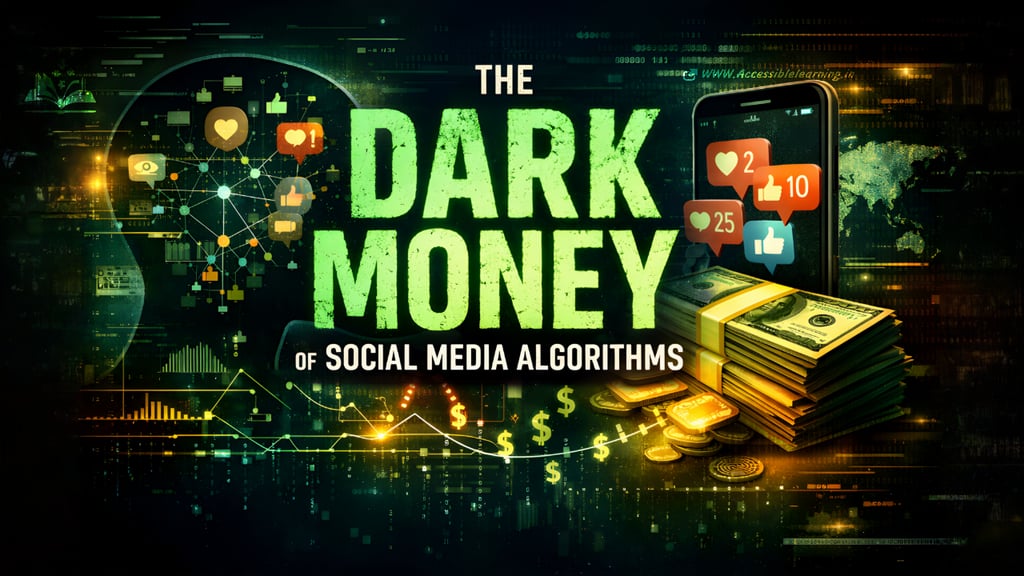
Every day, billions of people scroll through social media feeds believing they are seeing the most relevant posts, videos, or news stories. In reality, what appears on a screen is carefully selected by complex recommendation algorithms.
These algorithms are designed to maximize engagement, keep users on the platform longer, and ultimately increase revenue. Beneath this system lies an often overlooked layer of financial influence that many researchers describe as the “dark money” of social media algorithms.
Unlike traditional advertising or clearly labeled sponsored posts, these influences operate behind the scenes. They shape algorithmic decisions through economic incentives, engagement engineering, data markets, and strategic content promotion.
Understanding this hidden financial layer is essential because it affects how information spreads, how public opinion forms, and how digital culture evolves.
The Hidden Economics of Social Media Platforms
Social media platforms operate on business models that depend heavily on attention and data. Their revenue primarily comes from advertising, but the real asset they sell is user attention combined with behavioral data.
Every action a user takes generates valuable signals:
What posts they click
How long they watch a video
What they comment on
Which topics they share
How often they return to the app
Algorithms process these signals to determine which content should appear in each user's feed.
From a business perspective, the goal is simple: maximize engagement and session time. The longer users stay active on a platform, the more ads they see and the more valuable the platform becomes to advertisers. This economic structure forms the foundation of the hidden algorithmic incentive system.
Engagement as a Financial Currency
Engagement has effectively become the currency of the modern internet. Likes, shares, comments, and watch time are not just social signals. They are metrics that translate directly into revenue potential.
Algorithms reward content that generates stronger engagement signals by pushing it to wider audiences. As a result, creators and marketers quickly learn what types of content perform best.
Content that often performs well includes:
emotionally intense posts
controversial opinions
sensational headlines
shocking or surprising visuals
highly polarizing topics
This does not mean platforms intentionally promote harmful content. However, when engagement becomes the core ranking signal, algorithms can unintentionally amplify content that triggers strong emotional reactions.
Over time, this creates an environment where attention-grabbing content becomes economically advantageous.
Algorithmic Amplification and Financial Incentives
Algorithmic amplification refers to the way recommendation systems push certain content to massive audiences once early engagement signals appear strong.
For example, if a post receives rapid engagement shortly after publishing, the algorithm may distribute it to a larger pool of users. If the engagement continues, the content may reach millions.
This system benefits creators and brands that understand how to trigger early engagement signals. Entire marketing strategies are now built around “algorithm activation.”
These strategies often include:
coordinated posting schedules
comment boosting groups
influencer collaboration
paid engagement campaigns
When these tactics succeed, they trigger algorithmic promotion that appears organic to most users. This is where the concept of “dark money” becomes relevant. Financial incentives influence algorithmic visibility without always being clearly visible to the public.
The Rise of Paid Visibility Ecosystems
Paid promotion is not limited to official advertising tools on social media platforms. A large ecosystem has emerged around indirect ways to boost content visibility.
Brands, political groups, and organizations often invest in:
influencer partnerships
viral marketing campaigns
coordinated content releases
social amplification networks
These activities generate engagement signals that algorithms interpret as popularity. Because the algorithm responds to engagement patterns rather than the source of the activity, financially backed campaigns can trigger organic algorithmic boosts.
To the average user, the content simply appears to be trending. In reality, the visibility may be partly driven by financial investment behind the scenes.

Influencer Economies and Algorithm Strategy
Influencers play a significant role in the hidden algorithmic economy. Many brands no longer rely solely on traditional advertising. Instead, they collaborate with creators who already have audiences capable of triggering strong engagement signals.
Influencer campaigns often outperform standard ads because they appear more authentic within social feeds. Algorithms also tend to reward content that receives rapid engagement from loyal followers.
This creates a powerful feedback loop:
Influencers publish sponsored content
Their audience engages quickly
Algorithms detect strong signals
The content receives broader distribution
Even when posts are labeled as partnerships, the algorithmic advantage can significantly amplify their reach.
Data Brokerage and Behavioral Targeting
Another major component of the hidden financial system is the data brokerage industry. Data brokers collect and sell large volumes of behavioral information gathered from:
mobile apps
online shopping activity
location data
browsing history
loyalty programs
social media behavior
This data feeds into advertising and recommendation systems that allow extremely precise targeting. Advertisers can reach audiences defined by specific interests, habits, or psychological profiles.
For example, campaigns can target users who:
recently searched for certain topics
frequently engage with political content
show signs of financial stress
follow specific cultural trends
This level of targeting increases advertising efficiency but also raises serious questions about privacy and manipulation. Many users are unaware of how much personal data shapes their digital experience.
Algorithm Gaming and Engagement Manipulation
Because engagement signals control visibility, industries have developed around gaming social media algorithms. These methods range from subtle marketing tactics to more aggressive manipulation strategies.
Some common techniques include:
engagement pods where creators coordinate likes and comments
automated bot networks that simulate user activity
paid follower services
viral trend manipulation
When these strategies successfully mimic genuine user behavior, algorithms interpret them as authentic popularity. This leads to further distribution, allowing artificially boosted content to spread widely.
Platforms continuously try to detect and remove these tactics, but new methods appear frequently. The ongoing battle between platforms and manipulation networks illustrates how valuable algorithmic visibility has become.
Political Spending and Algorithmic Influence
Social media algorithms have also become tools for political communication and influence. Campaigns and advocacy groups now design content specifically to trigger algorithmic distribution.
Instead of relying solely on paid political ads, many campaigns invest in:
meme-based messaging
influencer collaborations
viral short-form video strategies
grassroots content campaigns
These strategies are designed to generate engagement rather than simply deliver messages. Because algorithms reward engagement, emotionally charged political content can spread rapidly across networks. The financial investments behind these campaigns are often difficult for the public to see, making algorithmic influence difficult to track.
The Psychological Design of Attention
Another important factor in the hidden algorithm economy is behavioral psychology. Social media platforms study how users respond to different forms of content. Algorithms then incorporate those insights to improve engagement predictions.
Common psychological triggers include:
novelty and surprise
emotional storytelling
conflict and controversy
social validation signals
fear of missing out
Content that activates these triggers tends to generate stronger interaction. Creators and marketers learn these patterns and adapt their content strategies accordingly. Over time, this leads to a digital environment optimized for maximum emotional engagement.
Why Algorithm Transparency Is Difficult
Many critics argue that social media platforms should fully disclose how their algorithms work. However, there are several reasons why transparency remains limited.
First, algorithms are constantly changing. Machine learning systems update their behavior frequently based on new data. Second, recommendation models are extremely complex. Even engineers sometimes struggle to fully explain why a system made a specific decision.
Third, platforms treat their algorithms as proprietary technology that provides competitive advantages. While these reasons explain the lack of transparency, the opacity also creates challenges for public accountability.
Without clear insight into algorithmic decision-making, it becomes difficult to understand who benefits financially from digital visibility.

Economic Inequality in Algorithmic Reach
The hidden economy of algorithms can also influence who gets attention online. Content creators with financial backing often have advantages such as:
professional marketing teams
paid promotion budgets
influencer collaborations
strategic analytics tools
Smaller creators may struggle to compete in an ecosystem where early engagement signals are critical for algorithmic distribution. This dynamic can concentrate visibility among those who already have resources or established audiences. In some cases, the algorithmic attention economy mirrors existing economic inequalities.
Platform Experiments and Invisible Optimization
Social media platforms continuously run experiments on their algorithms. At any given moment, thousands of small changes may be tested simultaneously across different user groups. These experiments evaluate factors such as:
which ranking signals increase engagement
how different content types affect retention
what layout changes influence interaction
Users rarely know when they are part of an algorithm experiment. The results of these tests influence how future feeds are structured and which types of content receive priority. This constant optimization process gradually shapes the entire online information ecosystem.
The Global Scale of Algorithmic Influence
Social media algorithms now influence how information spreads across the world. A single viral post can reach millions of people within hours. News events, cultural trends, and public debates increasingly unfold within algorithmically curated feeds.
Because of this scale, even small changes in algorithm design can have massive effects on public discourse. The economic incentives embedded in these systems therefore have consequences far beyond advertising revenue.
They affect how societies discuss important issues, how communities form online, and how narratives gain visibility.
Toward Greater Algorithmic Accountability
As awareness of algorithmic influence grows, researchers, policymakers, and technology experts are exploring ways to improve transparency and accountability.
Some proposed approaches include:
independent algorithm audits
public research access to platform data
clearer labeling of sponsored content
stronger digital privacy protections
user control over recommendation systems
None of these solutions completely eliminate hidden financial incentives, but they may help create a more balanced digital ecosystem.
The “dark money” of social media algorithms is not a single hidden conspiracy. Instead, it is a complex network of financial incentives, data systems, engagement strategies, and algorithmic optimization. These forces operate quietly behind the scenes, shaping what people see, share, and believe online.
Understanding this hidden economic layer is increasingly important in a world where digital platforms influence politics, culture, business, and public conversation. As social media continues to evolve, the challenge will be finding ways to balance innovation, profit, and transparency in an algorithm-driven information landscape.


FAQ's
Q: What does “dark money” mean in social media algorithms?
The term “dark money” in social media algorithms refers to hidden financial incentives and economic forces that influence how content is ranked, promoted, or amplified online. These influences often operate behind the scenes through advertising models, influencer marketing, data brokerage, and engagement manipulation, making them difficult for users to see or understand.
Q: How do social media algorithms decide what content appears in a feed?
Social media algorithms analyze user behavior and engagement signals to determine which posts should appear in a feed. Common ranking factors include:
Likes and shares
Comments and interactions
Watch time on videos
User interests and past behavior
Relationships between users
Content popularity and recency
Machine learning models process these signals to predict what content users are most likely to engage with.
Q: Why do social media platforms prioritize engagement?
Social media platforms prioritize engagement because their business models depend on advertising revenue and user attention. Higher engagement means users spend more time on the platform, which increases the number of ads they see and improves advertising effectiveness.
This economic incentive encourages algorithms to promote content that generates strong reactions and interactions.
Q: Can financial incentives influence what goes viral on social media?
Yes. Financial incentives can influence viral content in several ways. Brands, political groups, and organizations often invest in influencer partnerships, coordinated promotion strategies, and targeted campaigns designed to trigger algorithmic amplification.
When these campaigns generate strong engagement signals, algorithms may push the content to larger audiences, making it appear organically popular.
Q: How do influencers affect social media algorithms?
Influencers often have highly engaged audiences, which makes their content attractive to algorithms. When influencers publish posts that receive immediate engagement, algorithms detect these signals and may distribute the content more widely.
Brands frequently partner with influencers because their content can activate algorithmic promotion more effectively than traditional ads.
Q: What role does user data play in algorithmic recommendations?
User data is central to how algorithms personalize content. Platforms collect behavioral signals such as browsing habits, interests, location data, and interaction history.
This data allows algorithms to predict what users are most likely to engage with, which helps platforms deliver targeted content and advertisements.
Q: Are social media algorithms transparent?
Most social media algorithms are not fully transparent. Companies typically keep their recommendation systems private because they are considered proprietary technology.
Additionally, these systems are complex and constantly evolving, making them difficult to explain in simple terms. This lack of transparency has raised concerns about accountability and public oversight.
Q: Can algorithms amplify misinformation or controversial content?
Yes, algorithms can unintentionally amplify misinformation or controversial content if it generates high engagement. Posts that trigger strong emotional reactions often receive more interactions, which signals the algorithm to distribute them more widely.
This dynamic can sometimes allow misleading or sensational content to spread faster than verified information.
Q: How do advertisers use algorithms for targeted marketing?
Advertisers use social media algorithms to reach highly specific audiences based on behavior, demographics, and interests. Platforms offer targeting tools that allow advertisers to reach users who match certain characteristics, such as:
age groups
purchasing behavior
hobbies and interests
geographic location
browsing history
This targeting improves advertising efficiency but also raises privacy concerns.
Q: Can social media algorithms be manipulated?
Yes. Some individuals and organizations attempt to manipulate algorithms through tactics like coordinated engagement groups, automated bots, or artificial traffic generation.
These tactics attempt to mimic genuine engagement signals so the algorithm interprets the content as popular and promotes it further.
Q: Why are social media algorithms so powerful today?
Social media algorithms are powerful because they control how information flows across digital platforms used by billions of people. They influence:
news exposure
cultural trends
political discussions
consumer behavior
online communities
Because algorithms determine what content gains visibility, they have become key gatekeepers of the modern information ecosystem.
Q: What changes are being proposed to improve algorithm transparency?
Researchers and policymakers are exploring several approaches to improve transparency and accountability, including:
independent algorithm audits
clearer labeling of sponsored content
stronger digital privacy regulations
public access to platform research data
user control over recommendation settings
These efforts aim to reduce hidden influence while maintaining innovation in digital platforms.
Subscribe to Frontier Intelligence
All © Copyright reserved by Accessible-Learning Hub
| Terms & Conditions
Accessible Learning Hub — Actionable clarity for high-agency minds.
Weekly breakdowns on AI breakthroughs, capital flow, and human performance systems. Zero fluff.