

The Belgian Colonial Empire: A Comprehensive Historical Analysis
Explore the Belgian Colonial Empire's brutal history in the Congo, Rwanda, and Burundi. Discover the legacy of King Leopold II, atrocities, and ongoing debates about colonial accountability.
EMPIRES/HISTORYHISTORYEUROPEAN UNION
Keshav Jha
2/12/202610 min read
Understanding Belgium's Imperial Legacy
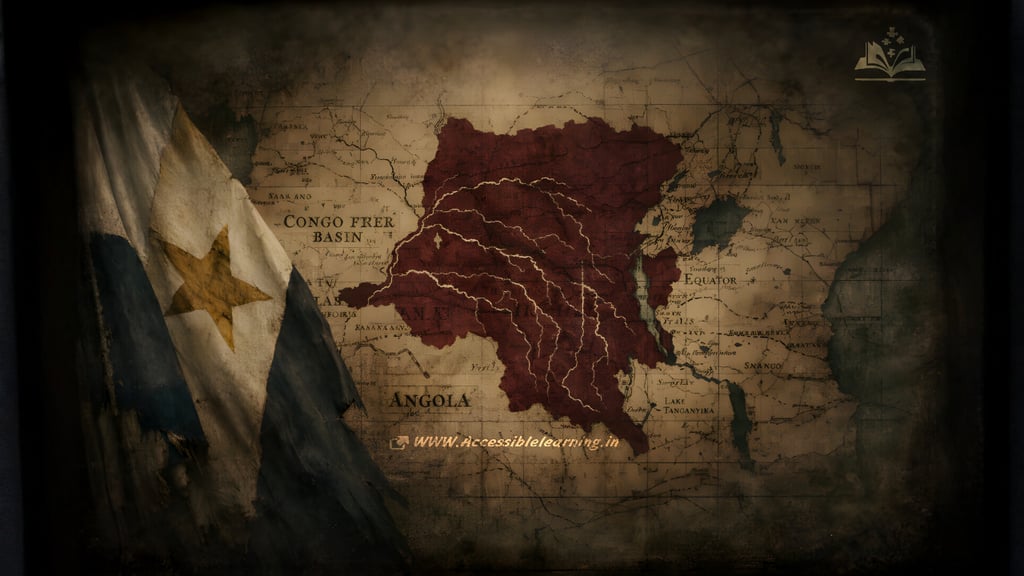
The Belgian Colonial Empire represents one of the most controversial chapters in European colonialism, spanning from the 1880s to 1962. Despite Belgium's relatively small size, its colonial holdings—primarily the Congo Free State (later Belgian Congo), Rwanda, and Burundi—left an indelible mark on African history and continue to shape contemporary discussions about colonialism, human rights, and historical accountability.
This article explores the rise, administration, and dissolution of Belgian colonialism, examining both historical facts and ongoing debates about its legacy.
The Origins of Belgian Colonialism
King Leopold II's Personal Ambitions
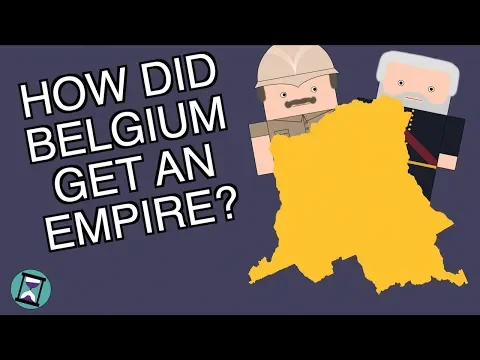
Unlike other European colonial powers, Belgium's imperial venture began not as a national project but as the personal enterprise of King Leopold II (1835-1909). Frustrated by Belgium's lack of colonial possessions, Leopold maneuvered diplomatically to acquire territory in Central Africa.
In 1876, Leopold established the International African Association, ostensibly for humanitarian and scientific purposes. This facade allowed him to present his ambitions as philanthropic rather than exploitative. By 1885, the Berlin Conference recognized Leopold's claim to the Congo Basin—an area approximately 76 times the size of Belgium itself—establishing the Congo Free State as his personal property.
The Congo Free State Era (1885-1908)
The Congo Free State period represents one of history's most brutal colonial regimes. Leopold's administration implemented a forced labor system focused on ivory extraction and, later, rubber production during the global rubber boom of the 1890s.
Key characteristics of this period included:
Forced labor quotas: Congolese people were required to collect rubber and ivory under threat of violence
Systematic mutilation: The severing of hands became a notorious symbol of enforcement, used to punish those who failed to meet quotas
Population decline: Historians estimate between 1 million and 15 million Congolese died during Leopold's rule, though exact figures remain debated
International outcry: Journalists like E.D. Morel and activists including Roger Casement exposed the atrocities, leading to the Congo Reform Movement
The Force Publique, Leopold's private military force composed largely of Congolese soldiers under European officers, enforced these brutal policies.
Transition to Belgian State Control
The Belgian Congo (1908-1960)
International pressure and scandal forced Leopold to cede the Congo Free State to the Belgian government in 1908, transforming it into the Belgian Congo. While this transition ended the worst excesses of Leopold's personal rule, colonial exploitation continued under different forms.
Colonial administration features:
The Belgian colonial system operated under a paternalistic model emphasizing education and health care while systematically denying political rights and higher education to Congolese people. This approach, called "colonial paternalism," provided basic services while preventing the development of an educated Congolese elite who might challenge colonial rule.
Economic exploitation continued through:
Mining operations extracting copper, diamonds, gold, and uranium
Agricultural plantations producing palm oil, cotton, and coffee
Infrastructure development designed primarily to extract resources rather than benefit local populations
A color bar preventing Congolese advancement in administration and commerce
The Belgian Congo became particularly strategic during World War II when uranium from the Shinkolobwe mine was used in the Manhattan Project to develop atomic bombs dropped on Hiroshima and Nagasaki.
Rwanda and Burundi: The Eastern Territories
Acquisition and Administration
Belgium acquired Rwanda-Urundi (present-day Rwanda and Burundi) from Germany after World War I, initially as a League of Nations mandate and later as a UN Trust Territory. Unlike the Congo, Belgium administered these territories indirectly through existing indigenous power structures.
The fatal legacy of ethnic classification:
Belgian colonial authorities rigidified existing social distinctions between Hutu, Tutsi, and Twa populations, transforming fluid identities into fixed racial categories. Colonial administrators issued identity cards specifying ethnicity, privileged Tutsi elites in administration and education, and promoted pseudoscientific racial theories about Tutsi "superiority."
This ethnic engineering had catastrophic consequences, contributing directly to the 1994 Rwandan genocide, where approximately 800,000 people, predominantly Tutsi, were killed in approximately 100 days.
Decolonization: The End of Empire
The Congo Crisis (1960)
Belgian decolonization was remarkably abrupt and chaotic. Unlike French or British colonies, where independence movements developed over decades, Belgium provided minimal preparation for Congolese self-governance.
Timeline of independence:
January 1959: Riots in Leopoldville (now Kinshasa) sparked independence demands
January 1960: Belgium unexpectedly announced immediate independence
June 30, 1960: The Democratic Republic of the Congo achieved independence under Prime Minister Patrice Lumumba and President Joseph Kasavubu
July 1960: The Congo Crisis erupted with army mutinies and Belgian military intervention
January 1961: Lumumba was assassinated with Belgian and CIA complicity
The hasty decolonization left the Congo with fewer than 30 university graduates among its 14 million citizens, virtually guaranteeing post-independence instability.
Rwanda and Burundi Independence (1962)
Rwanda and Burundi gained independence separately on July 1, 1962. In Rwanda, the "Hutu Revolution" of 1959-1962 overthrew Tutsi dominance with Belgian acquiescence, reversing decades of Belgian favoritism toward Tutsi elites. This transition involved significant violence and refugee flows that would resonate for decades.
Economic Impact and Resource Extraction
The Scale of Colonial Exploitation
The Belgian Colonial Empire's economic model centered on intensive resource extraction with minimal investment in local development or human capital.
Major resources exploited included:
Rubber: During the rubber boom (1890s-1910s), generating enormous profits for Leopold and Belgian companies
Copper and cobalt: The Katanga mining region (now southeastern DRC) contained some of world's richest deposits
Diamonds: Industrial and gem-quality diamonds from Kasai region
Uranium: Critical for nuclear weapons development
Gold, tin, palm oil, and timber: Diversified extraction across territories
The wealth generated flowed overwhelmingly to Belgium and European shareholders rather than benefiting colonized populations. Infrastructure development—railways, ports, and roads—served extraction purposes rather than internal African development.
Contemporary Economic Legacy
The Democratic Republic of Congo remains one of the world's poorest countries despite possessing an estimated $24 trillion in untapped mineral deposits. This paradox of poverty amid resource wealth stems partly from colonial patterns that established extractive institutions, failed to develop human capital, and created economic structures oriented toward external markets rather than domestic development.
Cultural and Social Impacts
Education and Language Policy
Belgian colonial education policy deliberately limited opportunities for Congolese advancement. Primary education was relatively widespread, provided largely through Catholic missions, but secondary and higher education remained severely restricted.
Educational restrictions included:
No university in the Congo until 1954
Curriculum focused on manual skills and basic literacy
French language instruction limited to maintain social hierarchies
Systematic exclusion from administrative and technical training
This created what scholars call a "human capital deficit" that severely hampered post-independence governance.
Religious Conversion and Cultural Disruption
Catholic missions played central roles in Belgian colonial administration, operating schools, hospitals, and welfare programs. While providing some social services, missionary activity also disrupted traditional religious practices, family structures, and cultural transmission.
By independence, approximately 80% of Congolese identified as Christian, representing one of colonialism's most profound cultural transformations.
Health and Demographic Impacts
Belgian colonial health policy showed the contradictions of paternalistic colonialism. Authorities implemented programs against sleeping sickness and other tropical diseases, reducing mortality from specific causes. However, these initiatives served colonial labor needs rather than humanitarian goals, and overall living conditions, nutrition, and life expectancy remained dire for most colonized people.
The Question of Colonial Atrocities
Death Toll Debates
Estimating casualties from Belgian colonialism, particularly under Leopold II, remains contentious among historians. Figures range from conservative estimates of 1-2 million to higher estimates of 10-15 million deaths from violence, disease, starvation, and birth rate decline during the Congo Free State period.
Methodological challenges include:
No reliable census data from pre-colonial or early colonial periods
Difficulty distinguishing deaths from direct violence versus disease and famine
Political motivations potentially influencing various estimates
Incomplete archival records, with some documents deliberately destroyed
What remains undisputed is that the Congo Free State implemented systematic violence, forced labor, and exploitation constituting crimes against humanity by modern standards.
Forms of Violence
The atrocities of Belgian colonialism took multiple forms:
Mutilation and terror: Severing hands to punish quota failures or "wasting" bullets
Hostage-taking: Holding women and children to force male labor
Deliberate starvation: Using food deprivation as punishment and control
Sexual violence: Widespread rape and sexual exploitation
Punitive expeditions: Military campaigns burning villages and killing inhabitants
Photography by missionaries and investigators documented some atrocities, creating early visual evidence that fueled international reform movements.


Contemporary Debates and Reconciliation
Belgium's Reckoning with Colonial History
Belgium has struggled to address its colonial past, with debates intensifying in recent years amid global movements for racial justice and decolonization.
Recent developments include:
June 2020: King Philippe expressed "deepest regrets" for colonial-era suffering in a letter to DRC President Tshisekedi, though stopping short of a formal apology
Removal or vandalization of Leopold II statues during Black Lives Matter protests
Parliamentary commissions examining colonial history and recommending educational reforms
Debates over museum collections and repatriation of cultural artifacts
Increased academic and public discussion of colonialism in Belgian schools and media
However, full reckoning remains incomplete. Belgium has not issued a formal state apology, provided reparations, or comprehensively reformed how colonial history is taught.
The Repatriation Debate
Belgium holds thousands of Congolese, Rwandan, and Burundian cultural artifacts in museums, particularly the Royal Museum for Central Africa in Tervuren. After major renovation and reopening in 2018, the museum faced criticism for insufficiently addressing colonial violence despite some changes.
In 2021, Belgium agreed to return thousands of objects to the DRC, Rwanda, and Burundi, representing a significant shift in policy regarding colonial-era acquisitions.
Impact on African Diaspora Communities
Belgium's African diaspora community, including many with Congolese, Rwandan, and Burundian heritage, continues demanding recognition, equality, and justice. Systemic racism, discrimination, and the ongoing effects of colonial attitudes shape contemporary Belgian society.
Comparative Colonial Context
How Belgian Colonialism Differed
While all European colonialism involved exploitation and violence, Belgian colonialism exhibited distinctive characteristics:
Personal ownership: Leopold's personal possession of the Congo Free State was unique among modern colonies
Extreme brutality: Even by colonial standards, the Congo Free State's violence was exceptional
Minimal preparation for independence: Belgium provided less educational and institutional preparation than most colonial powers
Small metropolitan population: Belgium's small size created an unusual ratio between colonizer and colonized populations
Late decolonization start: Belgium was among the last to begin decolonization despite rapid completion
Lessons for Understanding Colonialism
The Belgian Colonial Empire demonstrates how colonialism operated through institutional structures, economic extraction, cultural domination, and systematic violence. It challenges narratives that portray colonialism as primarily developmental or civilizing, revealing instead how humanitarian rhetoric masked brutal exploitation.
Long-term Consequences and Modern Connections
Political Instability in the DRC
The Democratic Republic of Congo has experienced continuous conflict, dictatorship, and instability since independence. While post-independence leaders bear responsibility for governance failures, Belgian colonial policies created conditions conducive to instability:
Lack of experienced administrators and educated elites
Weak national identity across ethnically diverse populations
Extractive economic structures dependent on resource exports
Legacy of violent conflict resolution
External intervention patterns established during decolonization
The Congo Wars (1996-2003), involving nine African nations and causing millions of deaths, cannot be understood without reference to colonial legacies.
Rwanda's Genocide and Colonial Roots
The 1994 Rwandan genocide had multiple causes, including post-colonial political dynamics and regional conflicts. However, Belgian ethnic classification policies created the rigid categories and hierarchies that genocide architects exploited. The Belgian colonial legacy doesn't determine Rwandan actions but shaped the context in which those actions occurred.
Economic Development Challenges
Former Belgian colonies rank among the world's poorest countries despite natural resource wealth. Colonial economic structures were oriented toward extraction rather than diversification, infrastructure served export rather than internal markets, and a lack of investment in education limited human capital development.
These patterns persist decades after independence, demonstrating how colonial policies created path dependencies affecting long-term development trajectories.
Confronting an Uncomfortable Legacy
The Belgian Colonial Empire represents colonialism's darkest potentials—how rhetoric of civilization masked systematic exploitation, how bureaucratic administration enabled mass atrocity, and how small nations could inflict catastrophic harm on larger populations through technological and organizational advantages.
Understanding this history requires acknowledging uncomfortable truths: that European prosperity was partly built on African suffering, that humanitarian language often disguised brutal practices, and that colonial legacies continue shaping contemporary inequalities.
For Belgium, fully reckoning with this past means moving beyond regret toward comprehensive education reform, institutional accountability, artifact repatriation, and addressing how colonial attitudes persist in contemporary racism and discrimination.
For former colonies, dealing with this legacy involves navigating how to build prosperous, stable nations despite inheriting extractive economic structures, artificial borders, human capital deficits, and traumatic histories.
For global audiences, the Belgian Colonial Empire offers lessons about how atrocities occur through institutional structures rather than only individual evil, how economic systems can normalize exploitation, and why historical accountability matters for contemporary justice.
The conversation about Belgian colonialism continues evolving as archives open, scholars conduct new research, and societies debate how to remember and learn from this painful history. What remains constant is the need for honest engagement with historical facts, recognition of ongoing impacts, and commitment to ensuring such atrocities never recur.

Frequently Asked Questions
Q: What countries were part of the Belgian Colonial Empire?
The Belgian Colonial Empire consisted primarily of the Congo Free State/Belgian Congo (modern Democratic Republic of Congo), Rwanda, and Burundi. These were Belgium's only significant colonial possessions, though the Congo Free State was initially Leopold II's personal property rather than a Belgian state colony.
Q: How many people died during Belgian colonial rule in the Congo?
Historical estimates vary widely, ranging from 1 million to 15 million deaths during the Congo Free State period (1885-1908). The lack of reliable census data makes precise figures impossible, but scholars agree that millions died from violence, disease, starvation, and forced labor under Leopold II's rule.
Q: Why did Belgium colonize the Congo?
King Leopold II sought colonial possessions to enhance Belgium's international prestige and his personal wealth. Leopold marketed his Congo venture as a humanitarian mission to end the slave trade and bring civilization to Central Africa, but his actual motives were economic exploitation, particularly of ivory and rubber.
Q: When did Belgian colonies gain independence?
The Belgian Congo gained independence on June 30, 1960, becoming the Democratic Republic of Congo. Rwanda and Burundi both achieved independence on July 1, 1962, separating into distinct nations rather than remaining unified as Rwanda-Urundi.
Q: What was the Force Publique?
The Force Publique was the military force of the Congo Free State and later the Belgian Congo, composed primarily of Congolese soldiers commanded by European officers. It served as the primary enforcement mechanism for forced labor quotas and became notorious for brutal violence, including the systematic cutting off of hands.
Q: Did Belgium apologize for colonialism?
Belgium has not issued a formal state apology for colonialism. In June 2020, King Philippe expressed "deepest regrets" for colonial suffering in a letter to DRC President Tshisekedi, representing the strongest official statement to date, but this fell short of the comprehensive apology and reparations many activists demand.
Q: What resources did Belgium extract from the Congo?
Belgium extracted rubber, ivory, copper, diamonds, gold, uranium, tin, palm oil, timber, and other resources from the Congo. Uranium from Congolese mines was used in the atomic bombs dropped on Japan during World War II. Resource extraction generated enormous wealth for Belgium while leaving the Congo impoverished.
Q: How did Belgian colonialism affect Rwanda's ethnic divisions?
Belgian colonial authorities transformed fluid social distinctions between Hutu, Tutsi, and Twa groups into rigid racial categories, issuing ethnic identity cards and privileging Tutsi in administration. This colonial ethnic engineering contributed to tensions that culminated in the 1994 genocide, though post-colonial politics also played crucial roles.
Subscribe to Frontier Intelligence
All © Copyright reserved by Accessible-Learning Hub
| Terms & Conditions
Accessible Learning Hub — Actionable clarity for high-agency minds.
Weekly breakdowns on AI breakthroughs, capital flow, and human performance systems. Zero fluff.