

Thaipusam and Guru Ravidas Jayanti
Explore the spiritual depth and social significance of Thaipusam and Guru Ravidas Jayanti. This in-depth guide explains their origins, rituals, teachings, and modern relevance, highlighting devotion, inner transformation, and the timeless message of equality and human dignity.
CULTURE/TRADITIONEVENT/SPECIALCELEBRATION/FESTIVALS
Keshav Jha
1/24/20264 min read
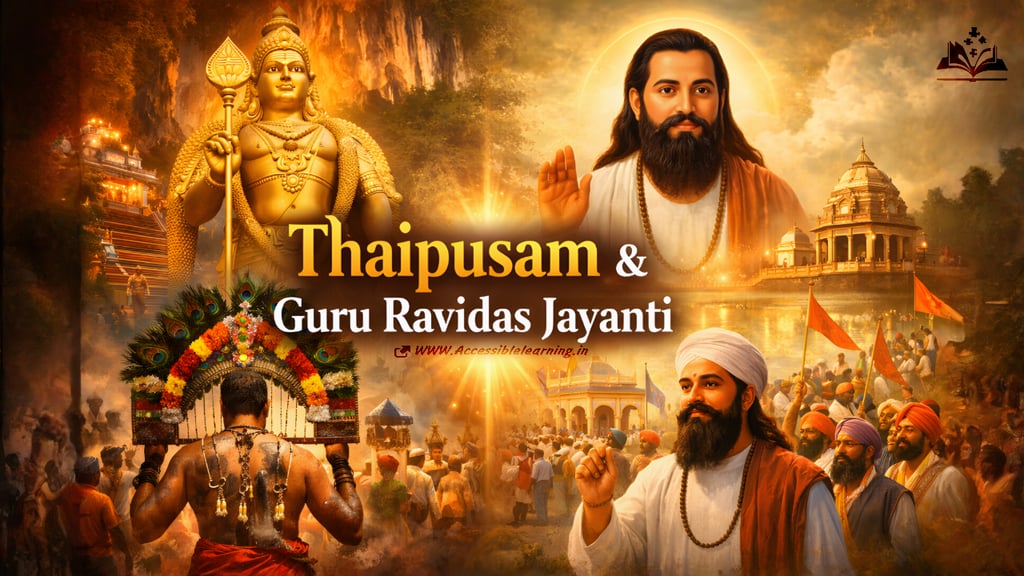
Spiritual devotion, social equality, and inner awakening
India’s spiritual landscape is shaped by festivals that go beyond ritual. Thaipusam and Guru Ravidas Jayanti are two such observances that reflect deep inner discipline, devotion, and the pursuit of equality. Though rooted in different traditions, both festivals continue to guide millions toward self-reflection, resilience, and social harmony.
Thaipusam: The festival of penance and inner victory
Origins and mythological background
Thaipusam is dedicated to Murugan Ji, also known as Kartikeya or Subramanya. According to Hindu mythology, on this auspicious day, Maa Parvati bestowed Murugan with the Vel, a divine spear symbolizing wisdom and spiritual power. With it, Murugan defeated the demon Surapadman, representing the triumph of clarity over ignorance and good over evil.
This myth is not merely symbolic warfare. It reflects the human struggle against ego, fear, and inner conflict.
Astronomical and calendar significance
Thaipusam is observed on the full moon day when the Pusam (Pushya) star is in its brightest position. In Tamil culture, the month of Thai is considered highly auspicious, associated with renewal, prosperity, and spiritual discipline.
Fasting, vows, and preparation
Devotees often begin preparation weeks before Thaipusam. These practices include:
Strict vegetarian diet
Celibacy and self-restraint
Daily prayers and meditation
Avoidance of negative thoughts and speech
This period is meant to purify the mind and body, making the devotee spiritually receptive.
Kavadi and physical symbolism
The Kavadi is a physical structure carried by devotees as a sacred burden. Some are simple, while others are elaborate and heavy. Body piercings using hooks or skewers are also practiced by some devotees.
From a spiritual perspective, this is not about pain. It is about surrender, discipline, and faith. Devotees believe that sincere devotion numbs physical suffering and strengthens mental focus.
Global celebrations
Thaipusam is celebrated on a massive scale at places like
Palani Murugan Temple, Tamil Nadu
Batu Caves, Malaysia
Sri Subramaniar Temple, Singapore
These gatherings show how Tamil spiritual traditions have traveled and evolved across cultures while retaining their essence.

Guru Ravidas Jayanti: A call for equality and human dignity
Historical context and early life
Guru Ravidas Jayanti commemorates the birth of Guru Ravidas, a 15th-century saint of the Bhakti movement.
Born in Varanasi to a family traditionally associated with leatherwork, Guru Ravidas faced social discrimination from an early age. Instead of accepting inequality, he used poetry and devotion as tools for reform, questioning caste hierarchies and ritual exclusivity.
Teachings and spiritual vision
Guru Ravidas taught that God resides in every human being. He rejected the idea that spiritual worth depends on caste, wealth, or outward rituals.
One of his most powerful concepts is Begumpura, an ideal society free from sorrow, oppression, hunger, and fear. It represents a vision of social justice deeply rooted in spiritual values.
Literary and religious influence
Several hymns composed by Guru Ravidas are included in the Guru Granth Sahib, the sacred scripture of Sikhism. His teachings influenced saints, reformers, and social movements across northern India.
His verses emphasize:
Inner purity over ritual purity
Love and compassion as spiritual tools
Dignity of labor
Equality of all souls
Contemporary observance
Today, Guru Ravidas Jayanti is observed with:
Nagar kirtans (religious processions)
Community meals and charitable activities
Public readings of his poetry
Discussions on social justice and equality
For many, the day is both spiritual and social, blending devotion with awareness.
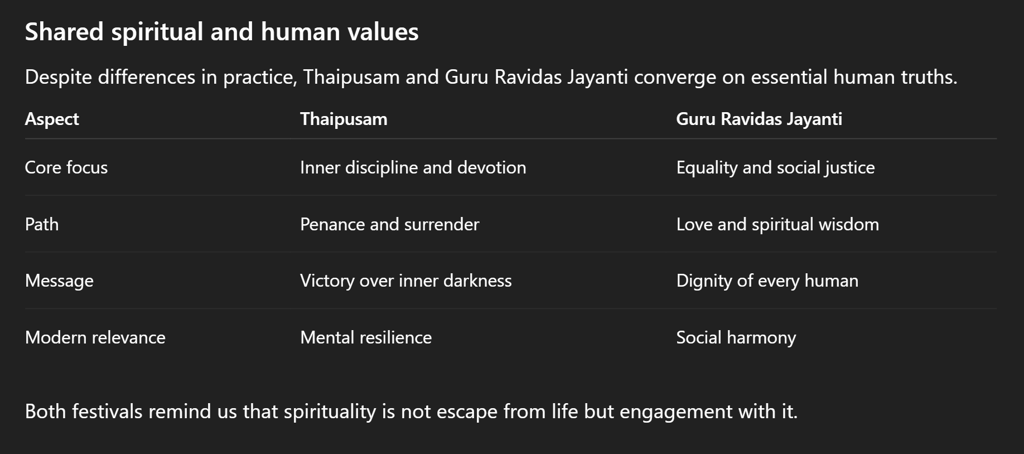
Relevance in the modern world
In a time marked by anxiety, social divisions, and identity struggles, these observances remain deeply relevant.
They teach:
Self-control in an age of excess
Empathy in a divided society
Respect for diversity
Strength through faith and purpose
They also encourage community bonding, collective healing, and service to others.
A broader reflection
Thaipusam and Guru Ravidas Jayanti represent two complementary spiritual paths. One emphasizes transformation through discipline and sacrifice. The other emphasizes liberation through wisdom and equality. Together, they offer a balanced vision of human growth, inner peace, and social responsibility.
These festivals continue to guide individuals toward a life rooted in awareness, compassion, and courage, values that remain timeless regardless of era or belief system.
FAQ's
Q: What is Thaipusam and why is it celebrated
Thaipusam is a Hindu festival dedicated to Murugan Ji. It is celebrated to honor the victory of good over evil and symbolizes inner purification, discipline, and spiritual strength. Devotees observe fasting, prayer, and acts of penance to seek blessings and inner clarity.
Q: Why do devotees carry Kavadi during Thaipusam
Carrying Kavadi represents devotion, gratitude, and surrender to the divine. It symbolizes the burden of ego and negative thoughts that a devotee willingly bears and releases through faith, discipline, and prayer.
Q: Is body piercing during Thaipusam safe and religiously required
Body piercing is not mandatory. It is a voluntary act performed by some devotees as a form of intense devotion and penance. Participants follow strict spiritual preparation, and the practice is guided by faith rather than obligation.
Q: Who was Guru Ravidas and why is his Jayanti important
Guru Ravidas Jayanti honors Guru Ravidas, a saint and social reformer of the Bhakti movement. His teachings focused on equality, compassion, and devotion beyond caste or social status. His Jayanti highlights the importance of human dignity and social justice.
Q: What are the main teachings of Guru Ravidas
Guru Ravidas taught that true spirituality comes from inner purity, love, and humility. He emphasized equality of all people, dignity of labor, and a society free from discrimination, often described in his vision of Begumpura.
Q: How are Thaipusam and Guru Ravidas Jayanti relevant today
Both festivals address modern challenges. Thaipusam promotes mental discipline and resilience, while Guru Ravidas Jayanti encourages equality and compassion. Together, they offer guidance for personal growth and social harmony in today’s fast-changing world.
Q: Are Thaipusam and Guru Ravidas Jayanti public holidays in India
The observance varies by state. Thaipusam is a public holiday in some regions with large Tamil populations, while Guru Ravidas Jayanti is widely recognized in northern India, especially in Punjab, Uttar Pradesh, and surrounding areas.
Q: What values do both festivals share
Both emphasize inner transformation, humility, devotion, and respect for humanity. They remind people that spirituality is not only about worship but also about how one lives, treats others, and contributes to society.
Subscribe To Our Newsletter
All © Copyright reserved by Accessible-Learning Hub
| Terms & Conditions
Knowledge is power. Learn with Us. 📚

