

Taj Mahotsav: History, Origin, Highlights & Complete Visitor Guide (Agra Festival)
Taj Mahotsav is Agra’s grand cultural festival celebrated near the Taj Mahal, showcasing India’s rich heritage through handicrafts, folk music, dance performances, and traditional food. Explore the history, origin, key attractions, travel guide, and best tips to experience this vibrant festival in Uttar Pradesh.
CULTURE/TRADITIONEVENT/SPECIALTRAVEL LIFECELEBRATION/FESTIVALSINDIA/BHARAT
Jagdish Nishad
2/8/20268 min read
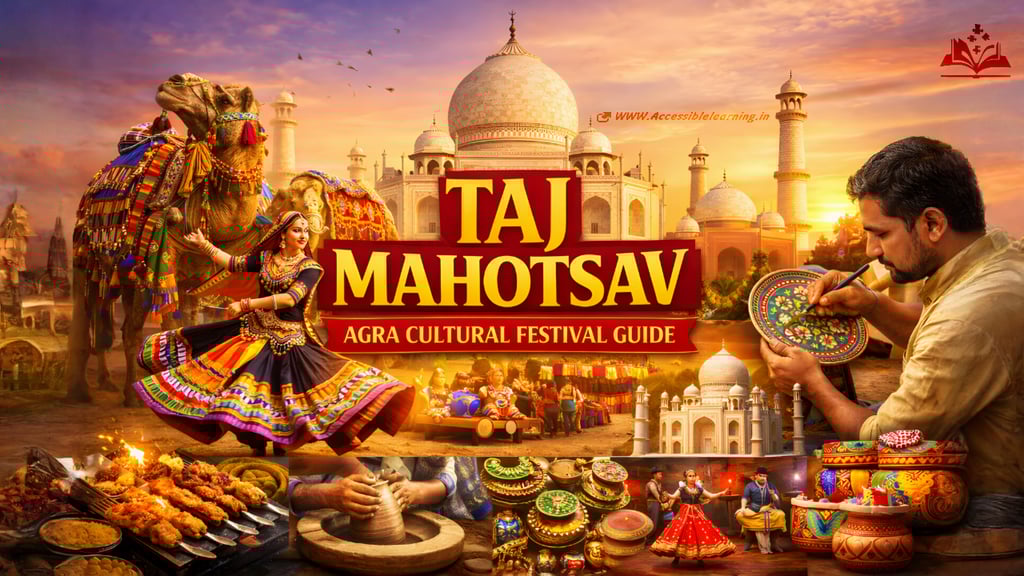
Taj Mahotsav is one of India’s most celebrated cultural festivals, held every year in Agra, Uttar Pradesh, near the world-famous Taj Mahal. While the Taj Mahal represents India’s architectural brilliance, Taj Mahotsav reflects something equally powerful: India’s living culture.
This festival is a vibrant blend of handicrafts, traditional arts, folk music, dance, heritage cuisine, craft demonstrations, rural aesthetics, and community celebration. Tourists visiting Agra often come for the Taj Mahal, but Taj Mahotsav gives them a chance to truly feel India.
In this article, you’ll find in-depth information about Taj Mahotsav, including its origin, history, purpose, cultural significance, attractions, crafts, food culture, travel tips, and what makes the festival special in modern India.
What is Taj Mahotsav?
Taj Mahotsav is an annual cultural festival that celebrates:
Indian heritage, traditions, and crafts
Folk and classical performing arts
Handloom and handicraft industries
Regional food culture and ethnic flavors
Tourism development around Agra and Uttar Pradesh
It’s not just an event; it is designed like a cultural showcase of India, where rural craft villages meet world-class tourism.
Taj Mahotsav Meaning (Simple Explanation)
The name is formed from:
Taj (symbol of Agra and India’s identity)
Mahotsav (grand festival)
So, Taj Mahotsav literally means “The Grand Festival of Taj,” celebrating the culture of India in the same city that holds the Taj Mahal.
Origin and History of Taj Mahotsav (Detailed)
Why Taj Mahotsav Was Started
During the late 20th century, Agra was globally famous for monuments, but tourism mostly stayed limited to:
Taj Mahal
Agra Fort
Fatehpur Sikri
Visitors admired history, but they rarely experienced the culture that still lives in India today. This gap inspired the creation of Taj Mahotsav.
The main purpose was clear:
create a platform for rural artisans
promote traditional Indian craft and heritage
increase tourism duration in Agra
connect cultural economy with global travel
When Taj Mahotsav Started
Taj Mahotsav began in the early 1990s (around 1992) as a government-led initiative to promote cultural tourism.
Who Organizes Taj Mahotsav?
It is organized by:
Uttar Pradesh Tourism Department
local administration and cultural bodies
artisans' associations and cultural teams
This makes it not only a festival but also an official cultural program supporting tourism and local craft industries.
The Vision Behind Taj Mahotsav (Why It Matters Even Today)
Taj Mahotsav continues because it serves modern goals too:
Cultural Preservation in the Modern Age
In today’s world of fast fashion and industrial products, traditional crafts struggle to survive. Taj Mahotsav creates a yearly stage where heritage becomes profitable again.
Economic Support for Artisans
For many artisan families across India, festival marketplaces like Taj Mahotsav provide:
income
new customer networks
bulk orders from tourists and exporters
business confidence for rural craftspeople
Strengthening Indian Cultural Identity
The festival highlights that India is not only monuments and history; it is also:
art forms
rural lifestyle
human creativity
community traditions
Where is Taj Mahotsav held?
Shilpgram, Agra
The festival is held at Shilpgram, a rural arts and crafts complex located very close to the Taj Mahal’s Eastern Gate.
Shilpgram is specially designed like a village environment, so the festival does not feel like a modern exhibition hall. Instead, it feels like walking through India’s cultural streets.
When is Taj Mahotsav celebrated?
Taj Mahotsav is celebrated every year in:
February (Main Festival Season)
The festival generally lasts 10 days, usually from mid-February to late February. This time is ideal because:
winter weather remains comfortable
tourist season is at its peak
evenings are pleasant for performances


Themes and Cultural Setting of Taj Mahotsav
One of the best things about Taj Mahotsav is its setting. It does not look like a simple fair. It is created to feel like an ethnic cultural journey.
You will notice:
folk-style entrances
rural decor, clay art, traditional designs
artisan stalls arranged in craft lanes
cultural stages surrounded by food and craft areas
It almost feels like India has been compressed into one festival space.
Main Attractions of Taj Mahotsav
Handicrafts and Handloom Market (The Heart of the Festival)
This is the biggest attraction for both tourists and locals. Popular items include:
Agra’s marble craftsmanship and inlay work
wooden carvings and decorative art
brassware and metal handicrafts
pottery and terracotta pieces
leather crafts, footwear, bags
handloom textiles, shawls, sarees
tribal jewelry, bangles, beads
paintings and miniature artworks
What makes it special: You’re not just buying a product; you’re buying someone’s skill and heritage.
Live Artisan Demonstrations
Taj Mahotsav becomes more meaningful because artisans often demonstrate how they create products. You may see:
carving techniques
pottery shaping
weaving and embroidery
folk painting styles
handcrafted jewelry work
This gives visitors an emotional connection with craftsmanship and helps people respect handmade work.
Folk Dance, Music and Cultural Performances
Every evening becomes a cultural celebration. Types of performances may include:
folk dances from Rajasthan, UP, Punjab, MP, Bihar
classical dances like Kathak and Bharatnatyam
qawwali and sufi performances
drum and percussion shows
cultural storytelling traditions
The stage performances are often the part that turns a tourist visit into a full experience.
Food Festival: The Taste of India
Food is a major reason why people visit Taj Mahotsav again and again. You can enjoy:
Mughlai cuisine influenced by Agra history
kebabs, biryani, curries
chaat varieties, snacks, pakoras
desserts like jalebi, rabri
famous Agra Petha
You also get regional dishes from different states, which makes the food section feel like a mini “India food tour.”
Fair, Fun Zone and Family Activities
Taj Mahotsav is designed for:
families
kids
groups of friends
couples visiting Agra
You will find:
traditional fair rides
fun activities
local entertainment stalls
cultural games and playful zones
So even people who are not deeply into art or crafts still enjoy the festival.
Cultural Parade and Opening Celebrations
The festival often begins with a grand opening ceremony that may include:
folk performances
traditional costumes
cultural procession
celebration showcasing India’s rural diversity
This creates a grand mood and attracts big crowds.
Taj Mahotsav and Agra’s Mughal Heritage Connection
Agra is deeply connected to:
Mughal art and architecture
Indo-Islamic cultural traditions
royal history
marble craftsmanship
Taj Mahotsav complements this perfectly because it showcases:
traditional crafts used in historical architecture
cultural lifestyle from the region
music and art styles inspired by heritage
So it becomes more than a festival; it becomes a continuation of Agra’s cultural story.
Why Taj Mahotsav is Popular Among Tourists
Tourists love it because it offers something monuments cannot:
monuments show history
festivals show living culture
Taj Mahotsav creates:
a more complete Agra visit
a memorable evening plan
a cultural environment safe for families
great photography and content opportunities
It also encourages tourists to stay longer in the city, which benefits Agra’s economy.
Best Time to Visit Taj Mahotsav (Smart Visitor Guide)
Best Time of Day
Afternoon: best for shopping and exploring with less crowd
Evening: best for cultural stage programs and food
Best Days
Weekdays are calmer
weekends get crowded (especially closing days)
Shopping Guide: How to Buy the Best Handicrafts
If you want real value from Taj Mahotsav, follow this:
1) Ask About Authenticity
Ask sellers:
Is it handmade?
Which state/city is this craft from?
How long does it take to create?
2) Prefer Quality Over Cheap Prices
Handmade work is time-consuming. If it’s “too cheap,” it’s likely machine-made.
3) Bargain Respectfully,
Bargaining is normal, but artisans deserve respect because you’re buying months of skill.
4) Focus on Signature Crafts
Buy items connected to Agra:
marble inlay souvenirs
miniature Taj models
traditional craft decor
Taj Mahotsav Travel Guide: How to Reach
By Air
Agra Airport (limited connectivity)
Delhi Airport is a common option, then road/train to Agra
By Train
Main stations:
Agra Cantt
Agra Fort
Raja Ki Mandi
By Road
Delhi to Agra via Yamuna Expressway is smooth
buses and cabs available from UP and NCR cities
Places to Visit Along With Taj Mahotsav
If you are in Agra for Taj Mahotsav, make your trip complete with:
Taj Mahal
Agra Fort
Fatehpur Sikri
Mehtab Bagh (sunset view of Taj)
Itimad-ud-Daulah (Baby Taj)
Sadar Bazaar
This combination makes your trip cultural + historical + enjoyable.


Photography and Content Creation Tips (Modern Perspective)
Taj Mahotsav is a goldmine for:
Instagram reels
YouTube vlogs
documentary-style photography
travel blogs
Best shots include:
artisan hands at work
colorful craft lanes
folk dance stage moments
warm food stall scenes
night lights and cultural decor
Tip: Visit before sunset to capture both daylight + night vibes.
Taj Mahotsav: Sustainability and Handmade Culture
In modern times, Taj Mahotsav supports sustainability in a real way:
handmade products = low-industrial impact
crafts promote natural materials
traditional work supports local families
cultural tourism protects heritage
So in a way, buying from Taj Mahotsav is not only shopping, it is supporting cultural survival.
Taj Mahotsav is India’s Culture Beside the Taj Mahal
Taj Mahotsav is not only a festival in Agra. It is a cultural celebration that brings together
heritage crafts
traditions of rural India
performing arts and music
tourism growth and artisan welfare
If the Taj Mahal makes people fall in love with India’s history, Taj Mahotsav makes them fall in love with India’s people and culture.
FAQ's
Q: What is Taj Mahotsav, and why is it celebrated?
Taj Mahotsav is an annual cultural festival held in Agra to celebrate India’s rich traditions, handicrafts, folk art, music, dance, and regional food. It is celebrated to promote Indian culture and support artisans while boosting tourism near the Taj Mahal.
Q: Where is Taj Mahotsav held in Agra?
Taj Mahotsav is held at Shilpgram, a rural arts and crafts complex located near the Eastern Gate of the Taj Mahal in Agra, Uttar Pradesh.
Q: When does Taj Mahotsav take place every year?
Taj Mahotsav is usually organized in February and runs for about 10 days. Exact dates may vary slightly each year depending on official announcements.
Q: Is Taj Mahotsav worth visiting for tourists?
Yes, Taj Mahotsav is worth visiting because it offers a complete cultural experience beyond monuments. Tourists can shop for authentic crafts, enjoy folk performances, and taste regional Indian cuisines—all in one place.
Q: What is Taj Mahotsav famous for?
Taj Mahotsav is famous for:
Indian handicrafts and handloom products
Cultural stage performances
Folk dance and music
Food festival featuring regional cuisines
Artisan demonstrations and craft villages
Q: What kind of crafts can you buy at Taj Mahotsav?
You can buy traditional handmade crafts like:
marble inlay work and Taj souvenirs
handloom sarees, shawls, dupattas
wooden handicrafts
pottery and terracotta art
tribal jewelry
brass and metal decorative items
leather goods
Q: Can foreigners visit Taj Mahotsav?
Yes, Taj Mahotsav is open to everyone, including foreign tourists. It’s one of the best places for international visitors to explore Indian culture in a safe and well-organized environment.
Q: How much time should you spend at Taj Mahotsav?
Ideally, you should spend 3 to 5 hours to enjoy shopping, food, and cultural performances. If you want to attend evening shows properly, visiting from late afternoon to night is the best plan.
Q: What is the best time of day to visit Taj Mahotsav?
The best time is evening, because:
performances happen mainly at night
lighting and festival ambience feels magical
the weather is cooler and more comfortable
For shopping, the afternoon is better due to less crowds.
Q: Is Taj Mahotsav suitable for families and kids?
Yes. Taj Mahotsav is family-friendly and includes fun rides, fair-style entertainment, food stalls, and cultural programs suitable for all age groups.
Q: Are the products sold at Taj Mahotsav original and handmade?
Many products are genuinely handmade by artisans. However, like any large market, you may also find machine-made items. For the best experience, ask the seller:
where it is made
how it is made
whether it is handmade or factory-made
Q: Is bargaining allowed at Taj Mahotsav?
Yes, bargaining is common, especially for handicrafts. But it’s best to bargain politely because most sellers are artisans who depend on these events for income.
Q: What foods should you try at Taj Mahotsav?
Some must-try foods include:
Agra’s famous Petha
Mughlai kebabs and biryani
chaat varieties
jalebi-rabri
regional thalis from different states
Q: Is Taj Mahotsav a good place for photography and content creation?
Yes, it’s excellent for content creators. You’ll find:
colorful craft stalls
live artisan work
folk performances
night lighting and festival decorations
Perfect for vlogs, reels, and travel photography.
Q: What is Shilpgram, and why is it important for Taj Mahotsav?
Shilpgram is a cultural craft village complex in Agra built to preserve and promote rural arts and crafts. It is the main venue of Taj Mahotsav because it offers a natural village-style setting for artisans and performers.
Subscribe To Our Newsletter
All © Copyright reserved by Accessible-Learning Hub
| Terms & Conditions
Knowledge is power. Learn with Us. 📚

