

Taebaeksan Mountain Snow Festival: Experiencing Korea’s Purest Winter
Discover the Taebaeksan Mountain Snow Festival in South Korea, a high-altitude winter celebration known for natural snowfall, massive snow sculptures, spiritual mountain heritage, and immersive winter experiences in Taebaek City.
EVENT/SPECIALTRAVEL LIFESOUTH KOREACELEBRATION/FESTIVALS
Kim Shin
1/20/20264 min read

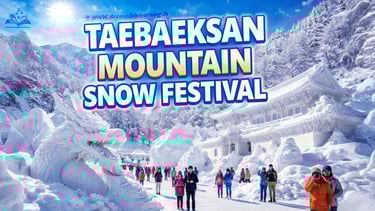
The Taebaeksan Mountain Snow Festival is one of South Korea’s most distinctive winter festivals, celebrated for its natural snowfall, mountain landscapes, and deep cultural roots. Held annually in Taebaek City, Gangwon Province, the festival takes place on the slopes of Mount Taebaeksan, a sacred mountain known for harsh winters and spiritual significance.
Unlike urban winter festivals filled with lights and commercial attractions, this event feels grounded and authentic. It reflects how mountain communities in Korea have historically lived with snow rather than against it.
Geographic Significance of Mount Taebaeksan
Mount Taebaeksan is part of the Taebaek Mountain Range, which plays a major role in Korea’s climate and geography. Due to its elevation and inland location:
Snowfall here is heavier and more stable than in most regions
Temperatures stay below freezing for long periods
Snow coverage remains thick and natural without artificial support
This makes the mountain an ideal natural stage for a snow festival that depends on real winter conditions.
Spiritual and Historical Importance
Taebaeksan has long been considered a sacred mountain in Korean culture. Historically, it was a place where people performed rituals to:
Pray for national peace
Ask for agricultural prosperity
Honor mountain and sky spirits
Even today, visitors may notice ceremonial sites and stone altars along hiking paths, adding a quiet spiritual layer to the festival atmosphere.
Snow Sculpture Exhibition in Detail
The snow sculpture zone is the festival’s centerpiece. What makes it unique is the scale and craftsmanship involved:
Sculptures are carved from compacted natural snow
Teams work for days in freezing temperatures
Designs blend traditional Korean themes with modern creativity
At night, subtle lighting transforms the sculptures, creating a calm and almost dreamlike winter scene rather than a flashy display.
Traditional Culture and Folk Elements
The festival also highlights Korea’s traditional winter culture, including:
Folk performances adapted for snowy outdoor settings
Demonstrations of old mountain village lifestyles
Traditional clothing worn by performers and volunteers
These elements help visitors understand how winter shaped daily life in mountainous regions long before modern heating and transport.
Winter Hiking and Nature Trails
One of the festival’s most underrated experiences is winter hiking. Designated trails allow visitors to:
Walk through snow-covered forests
Reach scenic observation points
Experience silence unique to deep winter landscapes
The trails are well-marked, making them accessible even to beginners, though caution is advised due to icy terrain.
Family-Friendly and Educational Zones
The festival is designed for all age groups. Children and families can enjoy:
Snow play areas supervised by staff
Educational zones explaining snow formation and mountain ecology
Interactive spaces where kids can build snow structures
These areas balance fun with learning, making the festival suitable for school trips and family travel.
Local Economy and Community Involvement
The Taebaeksan Mountain Snow Festival is deeply community-driven. Local residents participate as:
Food vendors
Sculpture assistants
Event guides and volunteers
The festival provides a major seasonal income boost for the city and helps preserve regional traditions that might otherwise fade.
Weather Conditions and Safety Measures
Winter in Taebaeksan can be extreme. The festival organizers take safety seriously by:
Monitoring snow depth and wind conditions
Maintaining cleared walking paths
Setting up warming stations throughout the area
Visitors are encouraged to follow guidance signs and avoid restricted zones during heavy snowfall.
Photography and Visual Appeal
For photographers, the festival offers:
High-contrast snow landscapes
Sculptures set against mountain backdrops
Soft winter light during early mornings and late afternoons
The absence of heavy urban lighting makes photos feel more natural and timeless.

Ideal Visitor Profile
This festival is best suited for travelers who:
Enjoy nature-focused experiences
Appreciate cultural depth over entertainment noise
Prefer cold-weather travel
Want to explore a less tourist-heavy side of Korea
It may not appeal to those looking for nightlife or luxury winter resorts, but it strongly resonates with slow travelers and culture seekers.
The Taebaeksan Mountain Snow Festival stands out because it does not try to compete with modern winter spectacles. Instead, it leans into what the region naturally offers: snow, mountains, tradition, and community.
For anyone wanting to experience winter as it is truly lived in Korea’s highlands, this festival delivers a meaningful, memorable, and deeply human experience.
Interesting Facts
Mount Taebaeksan is one of the coldest places in South Korea during winter, often recording sub-zero temperatures even in daylight.
The snow used for sculptures is entirely natural, not artificial, making the festival dependent on real weather conditions.
Taebaeksan has been a ritual mountain for over a thousand years, long before the festival existed.
Some snow sculptures can reach the height of a two-story building, carved by hand using basic tools.
The festival is held at a higher altitude than most Korean winter events, which is why snow remains intact longer.
Local residents play a key role, and many sculptures are created with help from community volunteers.
Winter hiking during the festival is considered one of the best times to see Taebaeksan’s unique snow-covered tree formations.
Despite extreme cold, the festival attracts tens of thousands of visitors each year due to its reliability for snowfall.
The festival environment is intentionally kept low-noise and low-light, preserving the calm mountain atmosphere.
Traditional mountain foods served at the festival are based on what locals historically ate to survive harsh winters.
FAQs
Q: When is the Taebaeksan Mountain Snow Festival held?
The festival usually takes place in late January or early February, depending on snowfall conditions. It typically runs for about one week.
Q: Where is the festival located?
The festival is held in Taebaek City, Gangwon Province, mainly around Taebaeksan National Park and nearby open areas.
Q: Is the festival suitable for families and children?
Yes. There are designated snow play zones, sledding areas, and safe walking paths designed for families with children.
Q: Do I need special equipment to visit the festival?
No special equipment is required, but warm winter clothing, waterproof boots, gloves, and hats are essential due to cold temperatures and icy ground.
Q: Is the festival free to attend?
Most outdoor festival areas, including snow sculpture zones, are free to access, though some activities may charge a small fee.
Q: Can beginners hike Mount Taebaeksan during the festival?
Yes. The mountain offers well-marked beginner-friendly winter trails, but visitors should move carefully and follow safety guidelines.
Q: How cold does it get during the festival?
Daytime temperatures are often below freezing, and nighttime temperatures can drop significantly lower, especially with strong mountain winds.
Q: Is the festival crowded?
Weekends and public holidays can be busy, while weekdays are generally less crowded and more relaxed.
Q: What makes this festival different from other snow festivals in Korea?
Its high-altitude location, spiritual background, and natural snow environment set it apart from urban or coastal winter festivals.
Q: Is photography allowed?
Yes. Photography is welcome and popular, especially during early morning or sunset hours when the lighting is softer.
Subscribe To Our Newsletter
All © Copyright reserved by Accessible-Learning Hub
| Terms & Conditions
Knowledge is power. Learn with Us. 📚

