

Svyatki (Christmas Season): History, Traditions, and Spiritual Meaning Explained
Svyatki is the traditional Orthodox Christmas season celebrated from January 7 to January 19 across Eastern Europe. This article explores its history, religious meaning, folk traditions, rituals, food customs, and cultural importance, showing how faith and folklore come together during one of winter’s most mystical celebrations.
EVENT/SPECIALRUSSIACELEBRATION/FESTIVALSTRAVEL LIFE
Kim Shin
12/31/20254 min read
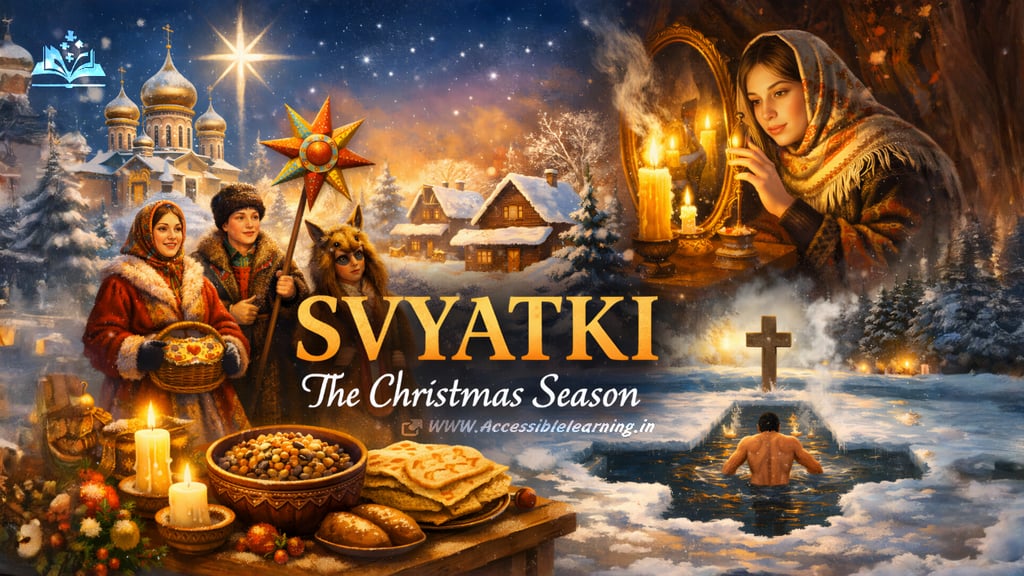
Svyatki, often called the Orthodox Christmas Season, is a twelve-day celebration observed primarily in Russia and other Eastern Slavic regions, including Ukraine and Belarus. Spanning from January 7 (Orthodox Christmas) to January 19 (Epiphany), Svyatki is a rare period where religion, folklore, seasonal change, and community life come together in a powerful and symbolic way.
Unlike single-day holidays, Svyatki is a continuous festive cycle that reflects humanity’s age-old relationship with light, faith, and the unknown during the darkest days of winter.
Historical Origins of Svyatki
Svyatki has roots that extend far beyond Christianity. Long before the spread of Orthodox faith, ancient Slavs marked the winter solstice with rituals honoring nature, spirits, and the return of sunlight. When Christianity reached the region, these pagan customs were not erased but gradually blended with Christian teachings.
This fusion created Svyatki as it exists today. A celebration where Christian theology coexists with folk magic, seasonal symbolism, and ancestral memory.
Spiritual Meaning and Orthodox Beliefs
From a religious perspective, Svyatki honors two key milestones in Christian belief:
The Birth of Jesus Christ, symbolizing divine light entering the world
The Baptism of Christ, representing spiritual cleansing and renewal
During these twelve days, Orthodox tradition encourages joy over restraint. Fasting is lifted, church bells ring freely, and believers are urged to practice kindness, charity, and hospitality.
Many families believe that prayers offered during Svyatki carry special weight, making it a favored time for blessings, forgiveness, and reconciliation.
Symbolism of Light, Darkness, and Transition
Winter plays a central role in the meaning of Svyatki. The season represents a threshold between old and new, darkness and light, and uncertainty and hope.
Candles, fires, lanterns, and bells are not just decorative elements. They symbolize protection against darkness, both literal and spiritual. In folk belief, this period was thought to thin the boundary between the human world and the unseen, explaining the rise of mystical traditions.
Expanded Svyatki Traditions and Practices
House-to-House Blessings
Beyond caroling, Svyatki visits were believed to bring good fortune. A home that welcomed singers and performers was thought to receive prosperity, while refusing them could invite bad luck.
This tradition reinforced strong community bonds and mutual respect.
Role of Youth and Courtship
Svyatki historically played a major role in romance and matchmaking. Games, dances, and evening gatherings allowed young people to socialize freely after weeks of religious fasting.
Many marriages were arranged or inspired during this period, making Svyatki a season of emotional beginnings.
Fortune-Telling as Cultural Expression
While the Church discouraged divination, folk society embraced it as storytelling rather than strict belief. Fortune-telling during Svyatki often reflected social hopes, especially concerning marriage, family, and prosperity.
These rituals also served as entertainment during long winter nights, strengthening communal storytelling traditions.
Protective Rituals and Superstitions
In traditional belief, spirits were thought to roam freely during Svyatki. To protect homes, people used:
Garlic and herbs near doors
Chalk symbols on thresholds
Spoken blessings and songs
Such customs reveal how deeply people once relied on symbolic protection during harsh winters.
Svyatki Food Symbolism in Detail
Food during Svyatki is not just celebratory but meaningful:
Grains symbolize life and continuity
Honey represents sweetness and harmony
Round breads and pancakes echo the sun
Shared meals reinforce unity and gratitude
Eating together during Svyatki reflects the belief that abundance grows when shared.
Svyatki in Literature and Art
Svyatki has inspired countless Russian writers, poets, and painters. Classic literature often portrays it as a time of mystery, emotional intensity, and moral reflection. Scenes of snowy villages, candlelit rooms, and singing youth are deeply embedded in Slavic cultural memory.
Even today, films, theater performances, and folk festivals draw heavily from Svyatki imagery.
Modern-Day Celebration of Svyatki
In contemporary society, Svyatki is observed in both traditional and modern ways:
Churches conduct special services and water blessings
Schools teach folk songs and customs
Cultural festivals recreate old rituals
Families combine religious observance with festive meals
While some mystical elements are now symbolic rather than literal, they continue to connect modern life with ancestral tradition.

Svyatki’s Role in Cultural Identity
For many people, Svyatki represents continuity. It preserves language, music, rituals, and values passed down through generations. In a globalized world, this season helps maintain a sense of identity rooted in faith, land, and history.
Why Svyatki Remains Relevant Today
Svyatki speaks to universal human experiences:
Hope during dark times
The need for connection and warmth
Reflection before new beginnings
Balance between belief and tradition
It reminds us that celebrations are not only about joy but also about meaning.
Svyatki (Christmas Season) is far more than a holiday interval. It is a cultural narrative woven from faith, folklore, seasonal change, and human emotion. Through songs, rituals, shared meals, and sacred observances, Svyatki continues to bring light into winter and purpose into celebration.
Even centuries later, its message remains clear. Joy is deeper when shared, tradition gives strength, and light always returns.
FAQs
Q: What is Svyatki, and why is it celebrated?
Svyatki is the traditional Orthodox Christmas season celebrated in Russia and other Eastern Slavic countries. It marks the twelve days between the birth of Jesus Christ and His baptism, combining Christian observance with ancient folk traditions.
Q: When does Svyatki begin and end?
Svyatki begins on January 7, which is Orthodox Christmas Day, and ends on January 19, the Feast of Epiphany. The twelve-day period is considered spiritually joyful and free from fasting.
Q: Is Svyatki a religious or cultural celebration?
Svyatki is both. Religiously, it honors key events in the life of Jesus Christ. Culturally, it preserves pre-Christian Slavic customs such as caroling, folk performances, and symbolic rituals that have been passed down for generations.
Q: Why is fortune-telling associated with Svyatki?
Folk belief held that during Svyatki the boundary between the spiritual and human worlds was thinner. As a result, fortune-telling became popular, especially among young people seeking insight into love, marriage, and the future. Today, these practices are mostly symbolic and cultural.
Q: What are the most important Svyatki traditions?
Key traditions include church services, kolyadki (caroling), festive meals, house-to-house blessings, folk costumes, and Epiphany water blessings. Each tradition emphasizes joy, generosity, and community bonding.
Q: How is Svyatki celebrated in modern times?
In modern society, Svyatki is observed through church attendance, family gatherings, cultural festivals, and educational programs. While some ancient rituals have evolved, the spiritual and cultural meaning of the season remains strong.
Q: What is the significance of Epiphany during Svyatki?
Epiphany, celebrated on January 19, marks the baptism of Jesus Christ and the official end of Svyatki. It is known for water blessing ceremonies and symbolizes spiritual purification and renewal.
Q: Is Svyatki similar to Western Christmas celebrations?
Svyatki differs from Western Christmas in timing and traditions. It follows the Orthodox calendar and places greater emphasis on extended celebration, religious services, folk customs, and symbolic rituals rather than gift-giving alone.
Subscribe to Frontier Intelligence
All © Copyright reserved by Accessible-Learning Hub
| Terms & Conditions
Accessible Learning Hub — Actionable clarity for high-agency minds.
Weekly breakdowns on AI breakthroughs, capital flow, and human performance systems. Zero fluff.