

Standard Oil: The Empire That Redefined American Capitalism and Modern Business
Discover how Standard Oil built America's first monopoly, revolutionized capitalism, and sparked antitrust law—leaving a legacy still felt in today's markets.
FINANCE, MARKETS & ECONOMY
Sachin K Chaurasiya
1/14/20267 min read
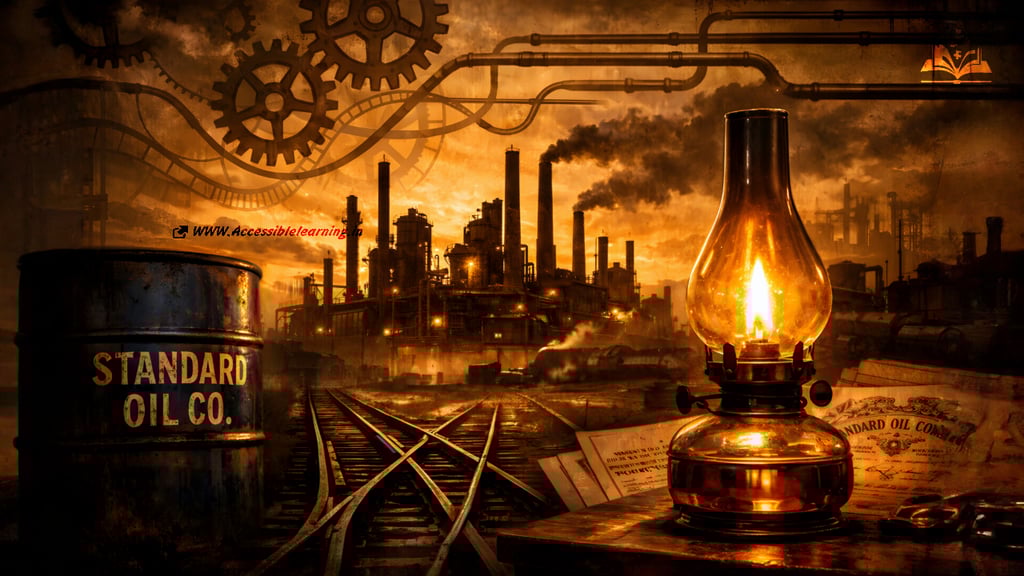
The Colossus That Changed Everything
Imagine a company so powerful it controlled 90% of America's oil refineries. A corporate giant so dominant that its very existence forced the government to rewrite the rules of capitalism. That company was Standard Oil—and its story reads like a thriller where the villain is also the genius, where innovation meets monopoly, and where one man's vision became both blueprint and cautionary tale for modern business.
Founded by John D. Rockefeller in 1870, Standard Oil didn't just dominate the petroleum industry—it invented modern corporate strategy, vertical integration, and systematic market control. But its ruthless tactics also birthed America's antitrust movement, culminating in the landmark 1911 Supreme Court decision that shattered the empire into 34 separate companies.
Yet here's the twist: those fragments became ExxonMobil, Chevron, and BP—energy titans still shaping global markets over a century later. Standard Oil may have died, but its DNA courses through the veins of modern capitalism.
The Genesis: From Kerosene Dreams to Industrial Revolution
What Was Standard Oil, Really?
Standard Oil Company wasn't simply an oil business—it was America's first true industrial empire. Born in Cleveland, Ohio, during the post-Civil War economic boom, Rockefeller recognized something others missed: crude oil was chaotic, but refining could be controlled.
In the 1860s, oil speculation resembled the Wild West. Wells gushed and dried up overnight. Prices swung wildly. Fortunes appeared and evaporated like morning fog. Rockefeller saw the madness and thought, "What if someone brought order to this chaos?"
The original Standard Oil of Ohio launched with $1 million in capital (roughly $23 million today). Within two years, it was the largest refinery in the world. Within a decade, it controlled American oil.
The Kerosene Revolution: Why Oil Mattered
Before electricity illuminated homes, kerosene lamps pushed back the darkness. Standard Oil made lighting affordable for millions. Rockefeller didn't just sell a commodity—he sold civilization itself, bottled in glass lamps and tin containers shipped to every corner of America and beyond.
The company's blue barrels became symbols of reliability in an unreliable age. When you bought Standard Oil kerosene, you knew it wouldn't explode (a real concern with inferior products). This brand trust was revolutionary.
The Rockefeller Method: Strategic Genius or Ruthless Predator?
Vertical Integration: Controlling Everything
Rockefeller pioneered what we now call vertical integration—owning every step of production from extraction to consumer delivery. Standard Oil didn't just refine oil; it:
Owned pipelines transporting crude from wells to refineries
Controlled railroads through secret rebate deals (more on this controversy shortly)
Manufactured barrels and containers in-house
Operated distribution networks reaching global markets
Produced chemicals derived from petroleum byproducts
Nothing was wasted. Petroleum residue became lubricants. Gasoline—initially discarded as worthless—eventually powered the automobile revolution.
The Railroad Conspiracy: How Standard Oil Bent Transportation
Here's where the story gets dark. Rockefeller negotiated secret deals with railroads that would make modern regulators' heads spin:
The South Improvement Scheme (1872): Standard Oil received:
Massive rebates on shipping costs (up to 50% discounts)
Drawbacks—kickbacks paid by railroads from competitors' shipping fees
Advanced information about rival shipments
Imagine your competitor paying for your shipping. That's how Standard Oil operated.
When this scheme leaked, public outrage erupted. The Pennsylvania state legislature killed it within weeks, but the damage was done—Rockefeller had already used these advantages to pressure competitors into selling or folding.
The Trust: A Legal Innovation That Became Notorious
In 1882, Standard Oil created America's first major corporate trust—a legal structure allowing multiple companies to operate under unified control while maintaining separate identities. This circumvented state laws restricting corporate power.
The Standard Oil Trust controlled 41 companies spanning refining, pipelines, distribution, and marketing. Stockholders received trust certificates instead of individual company shares. Rockefeller and his lieutenants made all strategic decisions from a central office.
It was brilliantly legal. It was also terrifying to small businesses nationwide.
The Monopoly Machine: How Standard Oil Crushed Competition
Predatory Pricing: The "Good Sweating" Strategy
Standard Oil's economies of scale allowed it to sell kerosene below cost in markets where competitors operated. Once rivals went bankrupt, Standard Oil raised prices again. Rockefeller coldly called this "good sweating"—squeezing out competition through financial endurance.
Real-world example: In the 1880s, when independent refiners in Buffalo, New York, resisted buyout offers, Standard Oil flooded the market with cheap kerosene. Within months, these refiners either sold to Rockefeller or shuttered operations.
Industrial Espionage and Intimidation
Standard Oil employed networks of informants reporting competitor activities. The company:
Bribed railroad clerks for shipping records
Sent agents to pressure retailers stocking rival products
Blacklisted suppliers who dealt with competitors
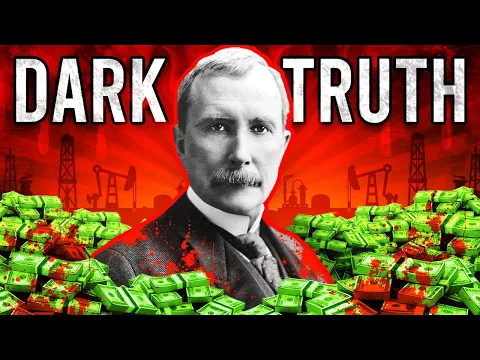
Ida Tarbell, the muckraking journalist whose 1904 exposé The History of the Standard Oil Company turned public opinion against Rockefeller, documented these practices meticulously. Her father's oil business had been ruined by Standard Oil's tactics—her investigation was personal, thorough, and devastating.
The Fall: How a Monopoly Met Its Match
The Progressive Era Awakens
By the 1890s, America was changing. The Gilded Age's excesses sparked backlash. Farmers, small business owners, and reformers demanded action against corporate monopolies strangling competition.
The Sherman Antitrust Act (1890) was Congress's answer—a law declaring illegal "every contract, combination, or conspiracy in restraint of trade." It was vague, untested, and powerful.
Theodore Roosevelt: The Trust Buster Takes Aim
President Roosevelt saw Standard Oil as democracy's enemy. In 1906, the federal government filed suit under the Sherman Act, arguing the Trust violated free market principles and harmed consumers.
The case crawled through courts for five years. Standard Oil's lawyers argued the company's efficiency benefited consumers through lower prices. Government prosecutors countered that efficiency gained through illegal monopolization wasn't efficiency—it was theft.
The 1911 Supreme Court Decision: Breaking the Colossus
On May 15, 1911, Chief Justice Edward Douglass White delivered the verdict: Standard Oil must be dissolved.
The Court ruled that Standard Oil had engaged in "unreasonable" restraint of trade—using predatory tactics beyond normal business competition. The Trust was ordered to be broken into 34 independent companies within six months.
Rockefeller's empire was shattered. Or was it?
The Ironic Aftermath: Standard Oil's Undead Legacy
The Successor Companies That Became Giants
The 34 fragments of Standard Oil didn't stay small. Many thrived, eventually merging into modern petroleum superpowers:
Standard Oil of New Jersey → Exxon → ExxonMobil (merged 1999)
Standard Oil of New York → Mobil → ExxonMobil
Standard Oil of California → Chevron (merged with Gulf Oil and others)
Standard Oil of Ohio → Sohio → BP America
Continental Oil → Conoco → ConocoPhillips
Atlantic Refining → ARCO → part of BP
Collectively, these descendants constitute much of the global oil industry's infrastructure. The monopoly died; the empire evolved.
Rockefeller's Personal Fortune: The Ultimate Plot Twist
When Standard Oil dissolved, Rockefeller owned approximately 25% of its stock. The breakup initially devastated him on paper. But then something unexpected happened: the individual companies' stock values soared.
Freed from monopoly stigma and antitrust scrutiny, each fragment became attractive to investors. The automobile boom (1910s-1920s) exploded demand for gasoline. Rockefeller's wealth multiplied.
By 1913, he was likely the richest person in modern history (adjusted for inflation, worth approximately $400-450 billion in today's dollars—more than Elon Musk or Jeff Bezos at their peaks).
The government broke his monopoly and accidentally made him richer. History has a sense of humor.
Standard Oil's Blueprint: Lasting Impacts on Modern Business
Corporate Strategy Lessons Still Taught Today
Business schools study Standard Oil not as villainy but as a case study. Rockefeller's innovations include:
Vertical integration maximizing control and efficiency
Economies of scale reducing per-unit costs through volume
Strategic partnerships (albeit often coercive) creating competitive moats
Data-driven decision-making—Standard Oil meticulously tracked costs, inefficiencies, and market trends
Brand consistency building consumer trust
Modern tech giants like Amazon echo Standard Oil's playbook: control supply chains, undercut competitors, and dominate through scale.
The Birth of Antitrust Law
Standard Oil's dissolution established precedent for breaking monopolies. It's why:
AT&T was split in 1982
Microsoft faced antitrust suits in the 1990s
Google, Amazon, and Apple face ongoing antitrust scrutiny today
The ghost of Standard Oil haunts every monopoly investigation. Legal scholars still debate: Did the breakup work? Should we apply similar remedies to Big Tech?

The Company That Refuses to Die
Standard Oil's story is American capitalism's origin myth—ambitious, innovative, ruthless, and transformative. It showed how free markets could produce miraculous efficiency and terrifying concentration of power in equal measure.
Rockefeller built an empire that lowered costs, illuminated homes, and pioneered corporate strategies still used today. He also crushed competitors, manipulated markets, and accumulated power that threatened democratic principles.
The 1911 breakup didn't end Standard Oil—it metastasized it. The fragments became the modern energy industry. The tactics became business school curricula. The antitrust battle became a template for regulating corporate power.
Over a century later, we're still asking the same questions: When does efficiency become monopoly? When does innovation become predation? When should government break up companies "too big to fail"—or too dominant to tolerate?
Standard Oil didn't just fuel America's Industrial Revolution. It fueled debates about capitalism itself that rage on today every time we discuss Amazon's market share, Google's search dominance, or whether Big Tech needs its own 1911 reckoning.
The empire fell. The questions endure. And somewhere, in boardrooms from Houston to Riyadh, executives still study the man who turned black gold into the blueprint for modern corporate power.
FAQ's
Q: What was Standard Oil's primary business?
Standard Oil dominated oil refining and distribution, controlling approximately 90% of U.S. refined petroleum at its peak. It produced kerosene for lighting, lubricants, and eventually gasoline for automobiles.
Q: Who founded Standard Oil, and when?
John D. Rockefeller founded Standard Oil in Cleveland, Ohio, in 1870, alongside partners including his brother William Rockefeller, Henry Flagler, and Samuel Andrews.
Q: Why was Standard Oil broken up?
The U.S. Supreme Court ruled in 1911 that Standard Oil violated the Sherman Antitrust Act through monopolistic practices, including predatory pricing, railroad rebates, and anti-competitive tactics that unreasonably restrained trade.
Q: What companies came from Standard Oil?
Standard Oil's 34 successor companies include the predecessors of ExxonMobil, Chevron, BP America, ConocoPhillips, and Marathon Petroleum—collectively representing a significant portion of today's global oil industry.
Q: How did Standard Oil make John D. Rockefeller wealthy?
Through relentless efficiency, vertical integration, and market control, Rockefeller built Standard Oil into America's most profitable company. Even after its 1911 breakup, his stock holdings in successor companies made him history's wealthiest individual (inflation-adjusted).
Q: What were Standard Oil's most controversial practices?
Secret railroad rebate deals, predatory pricing to eliminate competitors, industrial espionage, and the creation of the Trust structure to circumvent corporate regulations drew the most criticism and ultimately led to the company's dissolution.
Q: Is Standard Oil still operating today?
Standard Oil as a unified company ceased to exist in 1911. However, its successor companies continue operating globally under brands including Exxon, Mobil, Chevron, and others—making Standard Oil's legacy very much alive.
Q: How did Standard Oil impact the automobile industry?
Initially, Standard Oil viewed gasoline as a waste byproduct of kerosene refining. As automobiles proliferated after 1900, gasoline became the company's most profitable product, accelerating both the auto industry and Standard Oil's successors' growth.
Subscribe to Frontier Intelligence
All © Copyright reserved by Accessible-Learning Hub
| Terms & Conditions
Accessible Learning Hub — Actionable clarity for high-agency minds.
Weekly breakdowns on AI breakthroughs, capital flow, and human performance systems. Zero fluff.