

St. Patrick's Day: The Complete Guide to History, Traditions, and Global Celebrations
St. Patrick's Day is celebrated every March 17 in honor of Ireland's patron saint. What began as a fifth-century Christian feast day has grown into a global phenomenon marked by parades, shamrocks, the color green, and nearly $4.4 billion in annual U.S. consumer spending. Discover the real history, surprising myths, and living traditions behind the world's most widely celebrated cultural holiday.
EVENT/SPECIALCELEBRATION/FESTIVALSEUROPEAN UNION
Kim Shin
3/7/202610 min read
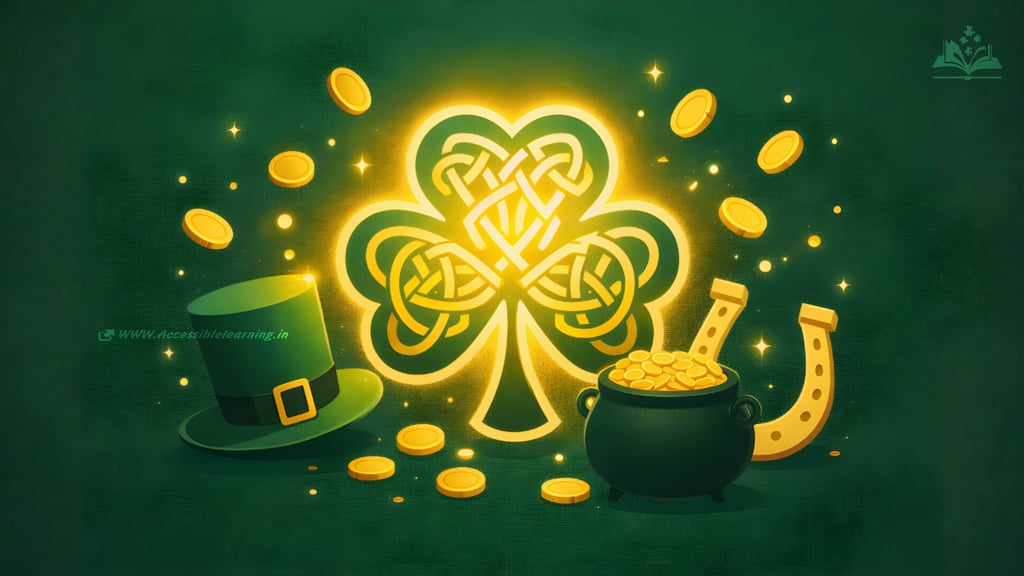
What Is St. Patrick's Day?
St. Patrick's Day, officially the Feast of Saint Patrick is a cultural and religious holiday observed every year on March 17, marking the death anniversary of Saint Patrick, the patron saint of Ireland, who died in the fifth century. It is a public holiday in Ireland and the Irish diaspora's most cherished cultural celebration worldwide.
What began as a solemn religious observance within the Catholic Church has transformed over centuries into a vibrant, globe-spanning tribute to Irish identity, heritage, and community. Across nearly every continent, people wear green, march in parades, raise a glass of Guinness, and proudly declare, if only for a day, that everyone is a little bit Irish.
The Real Story of Saint Patrick
Contrary to popular belief, Saint Patrick was not Irish. Historical evidence suggests he was born in Roman Britain, likely in present-day Scotland or Wales, sometime in the late fourth century, around 385 AD.
As a teenager, Patrick was captured by Irish pirates and taken to Ireland, where he was enslaved for approximately six years, working as a shepherd. During that time of isolation, he deepened his Christian faith through prayer. He eventually escaped, returned to Britain, and then trained as a priest in mainland Europe before receiving what he described as a spiritual calling to return to Ireland.
He spent the remainder of his life in Ireland as a missionary, spreading Christianity across the island. He became so closely associated with the Christianization of Ireland that the Catholic Church elevated him to sainthood, assigning March 17 as his feast day, the date traditionally associated with his death, around 461 AD.
One of the most famous legends surrounding him is that he used the three-leaf shamrock to explain the Christian concept of the Holy Trinity Father, Son, and Holy Spirit to the Irish people. Another well-known legend credits him with banishing all snakes from Ireland, a tale most historians interpret as a metaphor for his role in driving out paganism.
History and Origins of the Holiday
From Feast Day to Festival: A Timeline
9th–10th Century: The Irish people begin observing March 17 as a Christian feast day to commemorate the life of St. Patrick.
Early 17th Century: The Catholic Church officially canonizes St. Patrick's feast day in the liturgical calendar, recognizing it across the Church of Ireland, the Catholic Church, the Eastern Orthodox Church, and the Lutheran Church.
1601: The very first St. Patrick's Day parade is held in St. Augustine, Florida, in what was then a Spanish colonial territory, organized by the Irish vicar Ricardo Artur.
1737: Irish immigrants begin celebrating St. Patrick's Day in Boston, Massachusetts, one of the earliest organized American observances.
1762: The first St. Patrick's Day parade in New York City takes place, a tradition that continues to this day as one of the world's largest and most famous parades.
1798: The color green becomes officially associated with St. Patrick's Day following the Irish Rebellion of 1798. The United Irishmen adopted green as a symbol of Irish nationalism, and the association has been inseparable ever since. Before this, blue, specifically "St. Patrick's Blue," was the color traditionally linked to the saint.
1824: Montreal's St. Patrick's Day parade begins, a tradition held yearly without interruption ever since.
1903: St. Patrick's Day transitions from a strictly religious observance to an official Irish public holiday, setting the stage for broader secular celebrations.
1962: Chicago begins its beloved annual tradition of dyeing the Chicago River green, using an orange powdered dye that turns the water a vivid emerald. The dye, applied by the Plumbers Local 110 union, lasts roughly five hours.
Until the 1960s: In Ireland, pubs were actually legally required to close on St. Patrick's Day, as it was treated as a solemn religious occasion. This law was eventually lifted, and Ireland began embracing the more festive celebrations it had ironically inspired in America.

How St. Patrick's Day Became a Global Phenomenon
The story of how St. Patrick's Day grew from a quiet Irish feast day into a global celebration is fundamentally an immigrant story.
When Irish men and women fled famine, poverty, and British colonial hardship most dramatically during the Great Famine of 1845–1852 they brought their culture with them to America, Australia, Canada, and beyond. In the United States, Irish immigrants, who faced significant discrimination and nativist hostility in the 19th century, used St. Patrick's Day as a way to assert their cultural identity and claim a place in American civic life.
As historian Leigh Schmidt of Washington University has noted, being able to mark a holiday and have others mark it is a way of "putting down roots, showing that you've made it in American culture." The Irish succeeded spectacularly. Over time, what the Irish-American community built, the parades, the festivities, and the unapologetic pride—reflected back to Ireland, inspiring an embrace of the grander celebration there as well.
Today, St. Patrick's Day is observed in Ireland, the United States, Canada, Australia, Japan, South Korea, Malaysia, Argentina, Russia, Mexico, and dozens of other countries. Landmarks around the world, from the Sydney Opera House to the Colosseum in Rome to the London Eye, light up in green every March 17.
The Irish diaspora plays a significant role in sustaining these global celebrations. According to the U.S. Census Bureau, approximately 35 million Americans claimed Irish ancestry in recent surveys, representing roughly 10% of the U.S. population, dwarfing Ireland's own population of about 5 million.
Symbols and Their Meanings
☘️ The Shamrock
The three-leaf clover is the most iconic symbol of St. Patrick's Day. According to legend, St. Patrick used it to illustrate the Holy Trinity. Green ribbons and shamrocks have been worn on St. Patrick's Day since at least the 1680s. The tradition of "drowning the shamrock," placing a shamrock at the bottom of a glass of whiskey, beer, or cider and drinking it as a toast, has historic roots in Ireland.
🍀 The Four-Leaf Clover
Distinct from the shamrock, the four-leaf clover is a rare genetic variation of the common clover plant. Finding one is considered a sign of extraordinary luck. Unlike the shamrock's religious symbolism, the four-leaf clover is rooted in folk superstition and is considerably harder to find in the wild.
🟢 The Color Green
Green is synonymous with St. Patrick's Day today, but its ascent to primacy wasn't inevitable. The color blue held the original association with St. Patrick and the Order of St. Patrick (founded 1783). Green rose to dominance through Irish nationalism in the late 18th century, and the phrase "the Emerald Isle" was first coined in William Drennan's 1795 poem When Erin First Rose. In America, the tradition of pinching anyone not wearing green on St. Patrick's Day became a popular folk custom.
🧚 The Leprechaun
The leprechaun is a figure rooted in Irish folklore, a mischievous fairy craftsman, traditionally depicted as a small old man in green. In legend, if you catch a leprechaun, he must grant you three wishes. Modern popular culture has somewhat distorted this figure from its folkloric origins, but leprechauns remain deeply embedded in the holiday's iconography.
🌈 The Pot of Gold
Tied to leprechaun mythology, the pot of gold at the end of a rainbow is a symbol of hidden treasure and good fortune perfectly aligned with the luck-forward spirit of the holiday.
Traditions and Celebrations Around the World
Ireland
In Ireland, St. Patrick's Day is a national public holiday. Dublin hosts a multi-day festival typically spanning March 14–17, with the main parade on the 17th drawing hundreds of thousands of visitors. The Irish government even sends shamrocks to world leaders as a diplomatic tradition. Catholic mass attendance remains part of the observance for many families.
United States
The U.S. is home to the world's most extravagant St. Patrick's Day celebrations. New York City's parade, now over 260 years old, stretches along Fifth Avenue and attracts millions of spectators. Chicago's river dyeing has become an international spectacle. Boston, Savannah, and many other cities with strong Irish-American communities hold major celebrations. The holiday is not a federal holiday in the U.S., so schools and businesses remain open, but the cultural enthusiasm is unmatched.
Canada
Montreal's parade, running continuously since 1824, is one of the oldest in North America. St. Patrick's Day is a public holiday in the province of Newfoundland and Labrador, which has the strongest Irish cultural heritage in Canada; roughly 20% of the province's population claims Irish ancestry.
Australia
Australian celebrations date to 1795, when Irish convicts and administrators in the penal colonies came together to mark the day. Today, cities including Sydney and Melbourne host large parades and pub events.
Global Landmarks Going Green
Each year, iconic structures around the world participate in "Going Green for St. Patrick's Day," a global initiative. The Sydney Opera House, the Christ the Redeemer statue in Rio de Janeiro, the Colosseum in Rome, the Eiffel Tower, and Niagara Falls have all been illuminated in green to mark the occasion.

St. Patrick's Day in Numbers
Based on 2025 NRF survey data and U.S. Census Bureau statistics.
61% of American consumers planned to celebrate St. Patrick's Day in 2025 — on par with the previous record and significantly up from 55% in 2019.
~$4.4 billion in total estimated U.S. consumer spending on St. Patrick's Day annually, covering food, beverages, decorations, apparel, and event tickets.
12 million St. Patrick's Day greeting cards are exchanged in the United States each year, according to Hallmark.
35 million Americans claim Irish ancestry, approximately 10% of the U.S. population.
5 million people live in Ireland itself, making the Irish diaspora more than seven times larger than Ireland's home population.
Guinness sales surge dramatically on St. Patrick's Day globally. The brewery reportedly sells significantly more pints on this date than any other day of the year.
1762 was the year of New York City's first St. Patrick's Day parade, making it over 260 years old.
1962 was the year Chicago first dyed the Chicago River green.
Cook County, Illinois, holds the distinction of having the largest Irish-American population of any county in the United States.
Food, Drinks, and Festive Recipes
Traditional Irish-American Foods
Corned Beef and Cabbage is perhaps the most American of St. Patrick's Day foods. Ironically, it's not particularly traditional in Ireland where bacon and cabbage is the more historically accurate dish. Irish immigrants in America substituted beef brisket for bacon because it was more affordable and accessible, and the dish became a symbol of Irish-American identity.
Irish Soda Bread is a genuine Irish staple, made with simple ingredients: flour, baking soda, salt, and buttermilk without yeast. It's dense, slightly tangy, and delicious with butter.
Colcannon is a hearty Irish mashed potato dish made with cabbage or kale, butter, and cream. It's comforting and deeply traditional.
Shepherd's Pie ground lamb or beef topped with a creamy mashed potato crust, is a beloved pub staple that travels well to St. Patrick's Day tables.
Boxty is an Irish potato pancake, often served with sour cream or smoked salmon, and rooted in humble rural Irish cooking.
Drinks
Guinness Stout is the drink of the day. Ireland's iconic dark ale has been brewed since 1759 and is almost synonymous with Irish identity. Pub culture in Ireland revolves around the perfect pint, and St. Patrick's Day sees Guinness sales soar globally.
Irish Whiskey brands like Jameson, Bushmills, and Redbreast flow freely on the holiday. The tradition of "wetting the shamrock" involves raising a glass of whiskey or beer as a toast to Saint Patrick.
Green Beer is an American invention: lager or ale tinted with food coloring, which has no historical roots in Ireland but has become a playful staple of American celebrations.
Irish Coffee, invented in the 1940s at Foynes Airport in Ireland, blends hot coffee, Irish whiskey, sugar, and cream and remains a warming classic.
Is It "St. Patty's" or "St. Paddy's"?
The correct abbreviation is St. Paddy's Day, not "St. Patty's." "Paddy" is the anglicized nickname for Pádraig, which is the Irish-language spelling of Patrick. "Patty," on the other hand, is a diminutive of Patricia, a woman's name, and has no connection to Patrick or Irish naming conventions. While "Patty" has become widespread in informal American usage, the Irish community broadly considers it an error. If you want to honor the holiday's origins, go with Paddy.


Frequently Asked Questions
Q: When is St. Patrick's Day celebrated?
St. Patrick's Day is celebrated on March 17 every year. The date never changes, but the day of the week varies. It was a Monday in 2025 and falls on a Tuesday in 2026.
Q: Why is St. Patrick's Day celebrated on March 17?
March 17 is the date traditionally associated with the death of Saint Patrick, the patron saint of Ireland, who died in the fifth century around 461 AD.
Q: Was St. Patrick actually Irish?
No. Saint Patrick was born in Roman Britain, most likely in present-day Scotland or Wales. He was brought to Ireland as a captive and later returned as a Christian missionary, eventually becoming Ireland's patron saint.
Q: Why do people wear green on St. Patrick's Day?
Green became associated with Ireland and St. Patrick's Day following the Irish Rebellion of 1798, when Irish nationalists adopted green as a symbol of Irish identity. Before that, the color blue was the traditional color of St. Patrick.
Q: Is St. Patrick's Day a public holiday?
In the Republic of Ireland and Northern Ireland, St. Patrick's Day is a public holiday. In the United States, it is not a federal holiday, though it is widely celebrated. In Canada, it is a public holiday in the province of Newfoundland and Labrador.
Q: What does the shamrock symbolize?
According to legend, St. Patrick used the three-leaf shamrock to explain the concept of the Holy Trinity to the Irish people, the three leaves representing the Father, Son, and Holy Spirit as one plant with one stem.
Q: What is the difference between a shamrock and a four-leaf clover?
A shamrock is a three-leaf clover associated with Ireland and St. Patrick. A four-leaf clover is a rare genetic mutation of the same plant and is considered a symbol of extraordinary luck in folk tradition. They are related but symbolically distinct.
Q: Why does Chicago dye its river green?
Chicago began dyeing the Chicago River green in 1962 as a St. Patrick's Day tradition organized by the Plumbers Local 110 union. An orange powdered dye is used, which reacts with the water to produce a bright green color that lasts approximately five hours.
Q: What is the correct way to abbreviate St. Patrick's Day?
The correct informal abbreviation is St. Paddy's Day. "Paddy" derives from Pádraig, the Irish form of Patrick. "Patty" is incorrect and is a nickname for Patricia.
Q: How much do Americans spend on St. Patrick's Day?
Total U.S. consumer spending on St. Patrick's Day is estimated at approximately $4.4 billion annually, covering food, beverages, decorations, apparel, and entertainment, according to NRF research.
Q: What do people eat on St. Patrick's Day?
Common foods include corned beef and cabbage, Irish soda bread, colcannon, shepherd's pie, and boxty. While corned beef and cabbage is an Irish-American tradition, bacon and cabbage is more historically traditional in Ireland itself.
Q: Can anyone celebrate St. Patrick's Day?
Absolutely. St. Patrick's Day has long been a celebration open to all regardless of Irish heritage. As the saying goes, "Everyone is Irish on St. Patrick's Day." The holiday's inclusive, festive spirit has always welcomed participation from anyone who wants to join in the fun.
Subscribe to Frontier Intelligence
All © Copyright reserved by Accessible-Learning Hub
| Terms & Conditions
Accessible Learning Hub — Actionable clarity for high-agency minds.
Weekly breakdowns on AI breakthroughs, capital flow, and human performance systems. Zero fluff.