

Sora 2 vs. Veo 3.1 vs. Kling 3.0: The State of AI Video Generation
Compare Sora 2, Veo 3.1, and Kling 3.0 in this in-depth AI video generation guide. Discover which model leads in photorealism, camera control, audio generation, character consistency, and professional content creation in 2026.
AI/FUTUREEDITOR/TOOLSDIGITAL MARKETING
Sachin K Chaurasiya
7/3/20266 min read
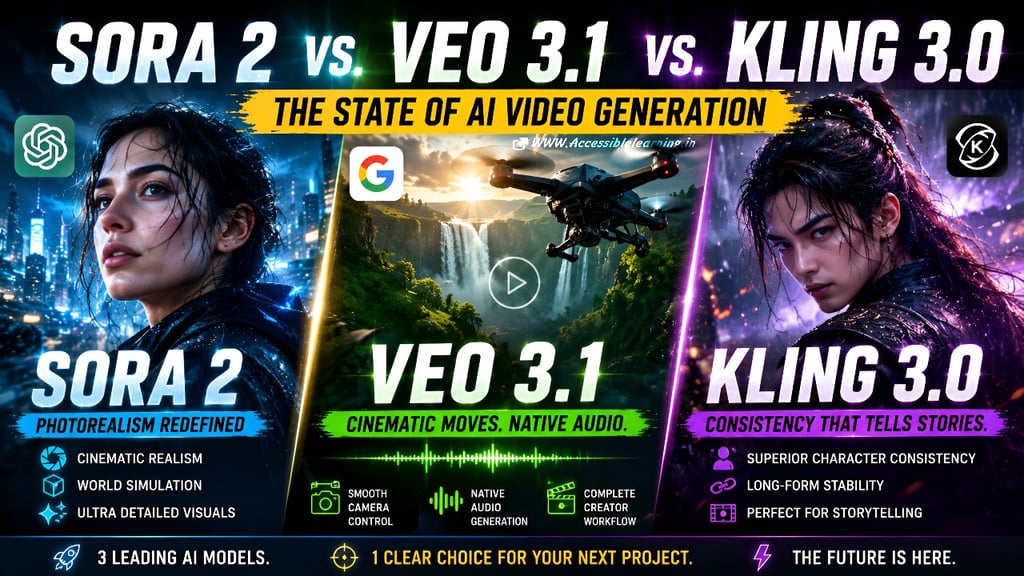
AI video generation has entered a new era.
Just two years ago, most AI-generated videos were easy to identify. Characters morphed unexpectedly, objects changed shape between frames, and motion often looked unnatural. Today, the leading AI video models are producing cinematic footage that rivals professional stock video, concept trailers, and even commercial advertising content.
Three platforms currently dominate discussions among creators, marketers, and production teams:
Each model approaches video generation differently. Sora 2 focuses on photorealism and world simulation. Veo 3.1 pushes camera control and integrated audio generation. Kling 3.0 has become known for maintaining character consistency during longer sequences.
For video editors, marketing agencies, filmmakers, and content creators, choosing the right platform can significantly impact production quality, rendering costs, and workflow efficiency.
This guide provides an in-depth comparison of Sora 2, Veo 3.1, and Kling 3.0, examining their strengths, weaknesses, practical use cases, and future potential.

What Is Sora 2?
Sora 2 is OpenAI's latest advancement in AI video generation, building on the company's research into large-scale world simulation and multimodal reasoning.
Instead of simply animating images, Sora attempts to understand the following:
Physical environments
Object interactions
Human movement
Lighting behavior
Camera dynamics
The result is some of the most realistic AI-generated footage currently available.
Strengths of Sora 2
Industry-Leading Photorealism
Sora 2 excels at creating footage that resembles professionally shot video. Key advantages include the following:
Natural lighting
Realistic skin textures
Accurate depth of field
Convincing environmental effects
High-detail scenes
Many creators use Sora 2 for:
Commercial concepts
Product advertisements
Film previsualization
Luxury brand content
Social media campaigns
Strong Scene Understanding
Complex prompts are interpreted remarkably well. For example:
"A drone shot over a coastal village during golden hour as fishing boats return to the harbor while sea mist rolls across the water."
Sora typically maintains environmental logic throughout the sequence.
Professional Visual Style
Among current models, Sora often produces footage closest to traditional cinematography.
Weaknesses of Sora 2
Character Continuity Challenges
While greatly improved, maintaining identical characters across multiple scenes remains difficult. Challenges include:
Minor facial changes
Clothing inconsistencies
Accessory variations
Limited Production Workflow Features
Many creators still rely on external editing tools for the following:
Voiceovers
Audio production
Scene stitching
Long-form storytelling
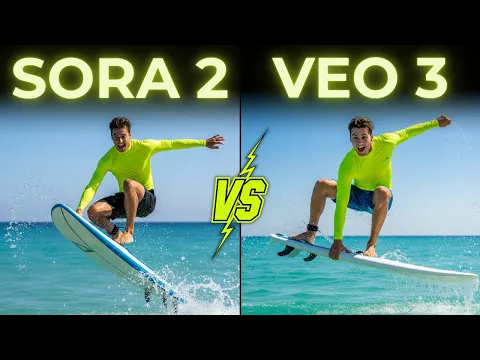
What Is Veo 3.1?
Google's Veo 3.1 represents one of the most advanced video generation systems available today. Its standout capability is combining video generation with native audio production. This creates a more complete filmmaking experience directly inside the generation process.
Strengths of Veo 3.1
Native Audio Generation
This is currently Veo's biggest differentiator. The model can generate:
Ambient sounds
Environmental effects
Dialogue-like audio
Background soundscapes
For creators producing social content, commercials, and presentations, this can dramatically reduce post-production work.
Example
Prompt:
"A busy Tokyo street at night with neon signs reflecting on wet pavement while pedestrians walk past food stalls."
Veo can generate:
Footsteps
Traffic sounds
Crowd ambience
Environmental noise
alongside the video.
Superior Camera Control
Veo consistently demonstrates excellent handling of:
Dolly shots
Crane movements
Orbit shots
Tracking sequences
Smooth zooms
For cinematic storytelling, this can create footage that feels intentionally directed rather than randomly generated.
Strong Narrative Cohesion
Veo often performs well when prompts involve:
Multi-stage actions
Complex movement
Dynamic environments
This makes it attractive for:
Brand storytelling
Educational videos
Commercial production
YouTube content
Weaknesses of Veo 3.1
Availability and Cost
Access can be more restricted depending on region and subscription tier.
Character Persistence
Although strong, long-form character consistency still trails Kling 3.0 in many creator tests.
What Is Kling 3.0?
Developed by the Chinese AI company Kuaishou Technology, Kling has evolved from an experimental model into one of the most respected AI video platforms globally. Kling 3.0 focuses heavily on motion stability and identity preservation.
Strengths of Kling 3.0
Best Character Consistency
This is Kling's biggest advantage. Characters tend to maintain:
Facial structure
Clothing details
Hair styles
Body proportions
across longer sequences. For creators building recurring characters, this is extremely valuable.
Excellent Long-Form Generation
Many AI video models struggle beyond short clips. Kling is notably better at maintaining the following:
Scene continuity
Character identity
Motion consistency
through extended generations.
This makes it particularly useful for:
Episodic content
Animated storytelling
Brand mascots
Character-driven marketing
Strong Motion Physics
Kling handles movement effectively:
Walking
Running
Turning
Object interactions
The resulting footage often appears more stable than competing systems.
Weaknesses of Kling 3.0
Less Cinematic Than Sora
Kling often prioritizes consistency over visual spectacle.
The output can occasionally feel less cinematic than Sora-generated footage.
Audio Ecosystem Limitations
Compared with Veo's integrated audio workflow, Kling still requires more external post-production.

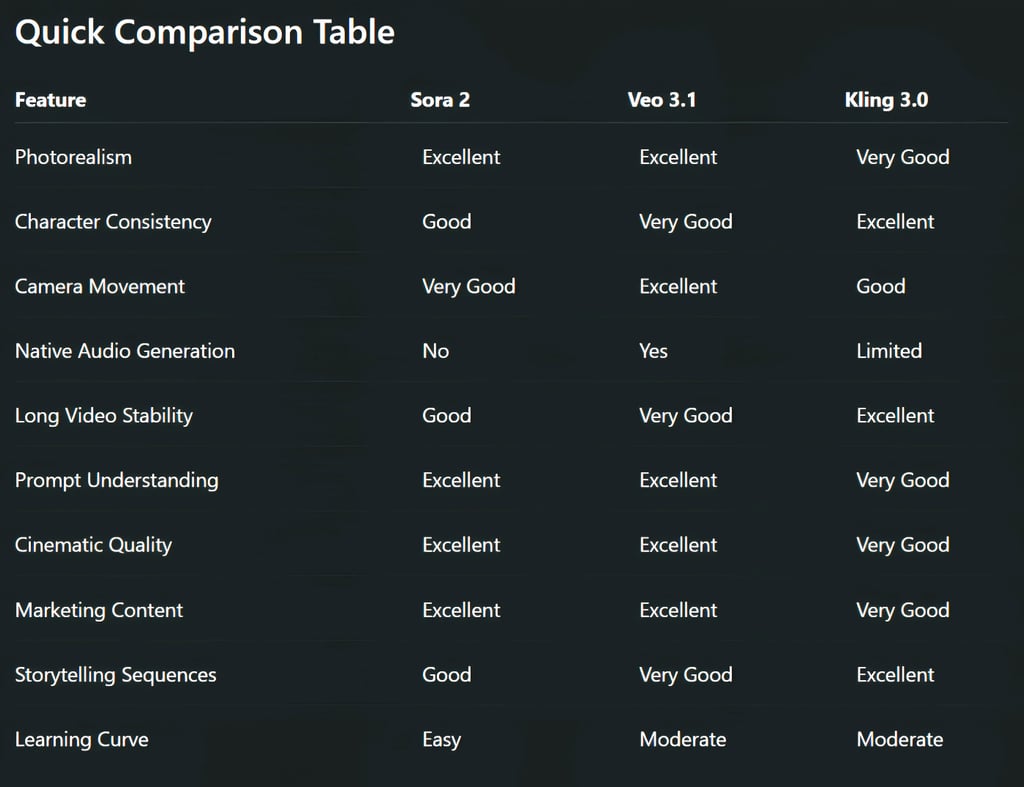
Head-to-Head Comparison
1. Photorealism
Winner: Sora 2
Sora currently produces some of the most visually convincing footage available.
Ranking:
Sora 2
Veo 3.1
Kling 3.0
2. Camera Movement
Winner: Veo 3.1
Google's model excels at cinematic motion and shot composition.
Ranking:
Veo 3.1
Sora 2
Kling 3.0
3. Character Consistency
Winner: Kling 3.0
Kling remains the strongest option for recurring characters and story-driven projects.
Ranking:
Kling 3.0
Veo 3.1
Sora 2
4. Audio Generation
Winner: Veo 3.1
Native audio generation provides a major workflow advantage.
Ranking:
Veo 3.1
Kling 3.0
Sora 2
5. Marketing and Advertising
Winner: Tie Between Sora 2 and Veo 3.1
Sora delivers premium visuals.
Veo delivers premium visuals plus audio.
The better choice depends on production requirements.
6. Storytelling Projects
Winner: Kling 3.0
Long-form character stability makes Kling particularly useful for narrative content.
Which AI Video Generator Should You Choose?
Choose Sora 2 If You Need
Premium photorealistic footage
Luxury advertising visuals
Product commercials
Concept films
Cinematic marketing assets
Choose Veo 3.1 If You Need
Native audio generation
Smooth camera movement
Fast production workflows
Commercial storytelling
Social media campaigns
Choose Kling 3.0 If You Need
Consistent characters
Long-form storytelling
Episodic content
Animated narratives
Brand mascot campaigns
The Future of AI Video Generation
The competition between Sora, Veo, and Kling highlights a larger trend. AI video generation is no longer about proving that video can be generated. That problem has largely been solved. The next battlefield is production reliability.
Future models will compete on:
Character memory
Scene continuity
Editing controls
Audio synchronization
Multi-shot storytelling
Real-time generation
Production-ready workflows
The winner will not necessarily be the model that creates the prettiest individual clip. It will be the model that helps creators produce complete videos with minimal manual intervention.

There is no universal winner because each platform excels in a different area.
Sora 2 currently leads in photorealism and cinematic visual quality.
Veo 3.1 offers the most complete creator workflow thanks to advanced camera control and native audio generation.
Kling 3.0 remains the strongest choice for character consistency and long-form storytelling.
For marketing agencies, Veo 3.1 may offer the best balance of speed and production efficiency.
For filmmakers and premium advertising teams, Sora 2 remains highly attractive.
For creators building recurring characters and narrative content, Kling 3.0 is arguably the most practical choice.
The real takeaway is that AI video generation has reached a point where the question is no longer whether these tools are usable. The question is which specialized strength best fits your production pipeline.
FAQ's
Q: Which AI video generator is best in 2026?
The best AI video generator depends on your goals. Sora 2 is known for photorealistic visuals; Veo 3.1 excels in camera movement and native audio generation, while Kling 3.0 leads in character consistency and long-form storytelling.
Q: Is Sora 2 better than Veo 3.1?
Sora 2 generally produces more cinematic and photorealistic visuals, but Veo 3.1 offers integrated audio generation and superior camera control. For complete video production workflows, Veo 3.1 may be the better choice, while Sora 2 is often preferred for premium visual quality.
Q: Why is Kling 3.0 popular among content creators?
Kling 3.0 is popular because it maintains character appearance, clothing, and identity more consistently across multiple scenes. This makes it ideal for storytelling, episodic content, and brand mascot videos.
Q: Which AI video model has the best character consistency?
Kling 3.0 currently offers the strongest character consistency among major AI video generators. It performs particularly well in longer sequences where maintaining the same character is essential.
Q: Does Veo 3.1 generate audio automatically?
Yes. Veo 3.1 can generate video with synchronized audio elements such as ambient sounds, environmental effects, and scene-specific audio, reducing the need for separate sound design in many projects.
Q: Which AI video generator is best for marketing and advertising?
For marketing teams and agencies, both Sora 2 and Veo 3.1 are strong choices. Sora 2 delivers highly realistic commercial-quality visuals, while Veo 3.1 offers faster production workflows through its built-in audio capabilities.
Q: Can AI video generators replace traditional video production?
Not entirely. AI video tools can significantly reduce production time and costs for concept videos, advertisements, social content, and pre-visualization. However, professional filmmaking, complex storytelling, and brand-specific productions still benefit from human creative direction and editing.
Q: What should businesses consider when choosing an AI video generator?
Businesses should evaluate the following:
Visual quality requirements
Character consistency needs
Audio generation capabilities
Rendering costs
Workflow integration
Content volume
Commercial usage rights
The best platform is usually the one that aligns with the company's production goals rather than the one with the most advanced technology on paper.
Q: Which AI video generator is best for YouTube creators?
YouTube creators focused on cinematic visuals may prefer Sora 2, creators needing quick production and audio integration may benefit from Veo 3.1, and storytellers building recurring characters may find Kling 3.0 the most effective option.
Q: What is the future of AI video generation?
The next generation of AI video models is expected to focus on longer video durations, stronger character memory, scene-to-scene consistency, advanced editing controls, real-time generation, and full production workflows that combine video, audio, and storytelling in a single system.
Subscribe To Our Newsletter
All © Copyright reserved by Accessible-Learning Hub
| Terms & Conditions
Knowledge is power. Learn with Us. 📚

