

Solo Menari: Surakarta’s Grand Celebration of Dance and Culture
Discover Solo Menari on April 29 in Surakarta, Indonesia, a vibrant festival celebrating Javanese dance, culture, and International Dance Day.
CULTURE/TRADITIONCELEBRATION/FESTIVALSINDONESIA
Jagdish Nishad
4/19/20265 min read
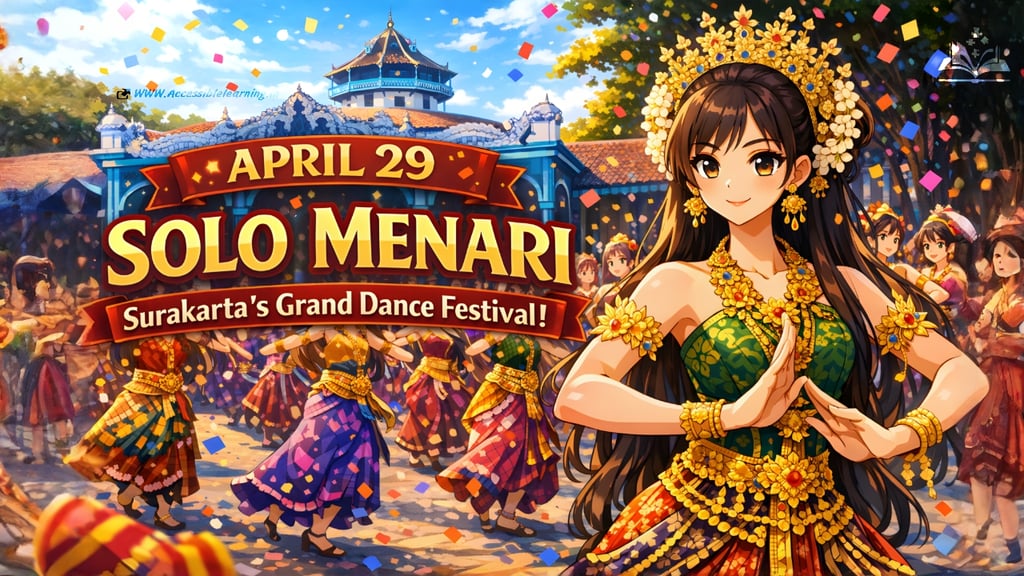
On April 29 each year, the city of Surakarta (Solo) in Central Java comes alive with rhythm, movement, and tradition through an extraordinary cultural event known as Solo Menari. Held in celebration of International Dance Day, this festival transforms the entire city into an open stage where dance is not just performed but truly lived.
Solo Menari is more than a festival. It is a powerful cultural expression that connects history, community, and artistic identity in one shared moment.
What is Solo Menari?
Solo Menari, meaning “Solo Dances,” is a large-scale dance celebration where hundreds or even thousands of performers present synchronized traditional dances across various locations in the city. Unlike conventional stage performances, this event spreads throughout public spaces, allowing people to experience art in a natural, immersive way.
Each year, the festival follows a central theme, often inspired by Javanese philosophy, folklore, or classical literature. The choreography reflects these themes through precise movements, symbolic gestures, and coordinated group formations.
A City Rooted in Cultural Heritage
Surakarta is widely recognized as one of Indonesia’s cultural capitals. Its traditions are deeply influenced by royal institutions such as the Kasunanan Surakarta Palace and the Mangkunegaran Palace, where classical Javanese dance has been preserved for generations.
Javanese dance is not simply about performance. It carries deeper meaning:
Movements represent harmony between humans, nature, and spirituality
Stories are often drawn from ancient epics like the Ramayana and Mahabharata
Discipline, patience, and control are central to the art form
Solo Menari brings these refined traditions into public spaces, making them accessible to both locals and visitors.
Why April 29 is Significant
April 29 is globally recognized as International Dance Day, established to celebrate dance as a universal form of expression. By hosting Solo Menari on this date, Surakarta aligns its cultural heritage with a global movement, highlighting the importance of dance in connecting people across cultures. This connection gives Solo Menari both local depth and international relevance.
Highlights of the Solo Menari Festival
Mass Dance Performances
One of the most striking features of Solo Menari is the synchronized performances involving large groups of dancers. Participants include professional artists, students, and community members, all moving together in harmony.
Citywide Stages
The festival does not take place in a single venue. Instead, performances are held across the city, including:
Historic palace courtyards
Public squares and streets
Cultural landmarks and open spaces
This creates a unique experience where dance becomes part of everyday life.
Traditional Costumes and Music
Dancers wear detailed costumes made of batik fabrics, complemented by ornate accessories and traditional headpieces. The performances are accompanied by gamelan music, a traditional Indonesian ensemble known for its layered, rhythmic sound.
Community Participation
Solo Menari is inclusive and community-driven. Local dance schools, cultural groups, and young performers actively participate, ensuring that traditions continue to thrive across generations.


Cultural Importance of Solo Menari
In a rapidly modernizing world, traditional arts often face the risk of being overlooked. Solo Menari plays a vital role in preserving these traditions by:
Encouraging younger generations to learn and perform traditional dance
Providing a platform for cultural expression and artistic growth
Promoting tourism and global awareness of Indonesian heritage
Keeping historical narratives alive through performance
It demonstrates that tradition can remain relevant when it is shared and celebrated openly.
Experiencing Solo Menari as a Visitor
Attending Solo Menari offers a unique and memorable cultural experience. To make the most of it:
Arrive early to secure good viewing spots
Explore multiple locations to experience different performances
Respect local customs and cultural etiquette
Take photos thoughtfully without interrupting performers
Engage with locals to understand the deeper meanings behind the dances
The atmosphere is welcoming, making it easy for visitors to feel part of the celebration.
What Makes Solo Menari Unique
What sets Solo Menari apart from other festivals is its seamless blend of tradition and community. It does not separate performers from audiences. Instead, it invites everyone into the same cultural space, where art becomes a shared experience. The scale, authenticity, and openness of the festival make it one of Indonesia’s most distinctive cultural events.
Solo Menari on April 29 is a celebration of movement, meaning, and cultural continuity. It showcases the elegance of Javanese dance while bringing people together in a shared appreciation of art and heritage.
For anyone seeking a deeper connection with Indonesian culture, Solo Menari offers an experience that is both visually captivating and culturally enriching. It is a reminder that dance is not just performance but a living expression of identity passed down through generations.
FAQ's
Q: What is Solo Menari?
Solo Menari is an annual cultural dance festival held in Surakarta (Solo), Indonesia, on April 29. It features large-scale performances of traditional Javanese dance, involving hundreds of dancers performing simultaneously across the city.
Q: Why is Solo Menari celebrated on April 29?
Solo Menari is आयोजित on April 29 to coincide with International Dance Day, a global celebration of dance established by UNESCO’s International Theatre Institute. This connects local Indonesian traditions with worldwide cultural appreciation.
Q: Where does Solo Menari take place?
The festival takes place throughout Surakarta, Central Java. Performances are held in multiple locations, such as palace courtyards, public squares, streets, and cultural landmarks, turning the entire city into a stage.
Q: What type of dance is performed at Solo Menari?
Solo Menari primarily showcases traditional Javanese classical dance, known for its graceful movements, symbolic gestures, and storytelling inspired by ancient epics like the Ramayana and Mahabharata.
Q: Who can participate in Solo Menari?
Participation is open to a wide range of performers, including professional dancers, students, local communities, and cultural organizations. In some cases, visitors and tourists may also join workshops or interactive sessions.
Q: Is Solo Menari suitable for tourists?
Yes, Solo Menari is highly tourist-friendly. Visitors can enjoy free public performances, explore different venues, and experience authentic Indonesian culture in an open and welcoming environment.
Q: Do you need tickets to attend Solo Menari?
Most Solo Menari performances are free and open to the public, especially those held in outdoor and public spaces. However, certain special performances or palace events may require prior access or invitations.
Q: What should you wear when attending Solo Menari?
It is recommended to wear comfortable and modest clothing, respecting local cultural norms. Light clothing is ideal due to the warm climate, and comfortable footwear is helpful for exploring multiple locations.
Q: What makes Solo Menari unique compared to other festivals?
Solo Menari stands out because of its citywide format, mass synchronized performances, and deep cultural roots. It blends tradition with community participation, making it both authentic and immersive.
Q: When is the best time to experience Solo Menari?
The main performances usually take place on April 29, but related cultural activities and rehearsals may happen in the days leading up to the event, offering a richer experience for visitors.
Q: How does Solo Menari help preserve culture?
Solo Menari promotes cultural preservation by engaging younger generations, supporting local artists, and showcasing traditional dance on a large public platform, ensuring these art forms continue to thrive.
Q: Can you take photos or videos during the festival?
Yes, photography and videography are generally allowed, especially in public areas. However, visitors should be respectful and avoid disrupting performances or blocking views.
Subscribe to Frontier Intelligence
All © Copyright reserved by Accessible-Learning Hub
| Terms & Conditions
Accessible Learning Hub — Actionable clarity for high-agency minds.
Weekly breakdowns on AI breakthroughs, capital flow, and human performance systems. Zero fluff.