

Smartphone Addiction: Signs, Causes, and Science-Based Solutions
Smartphone addiction is a growing behavioral issue affecting mental health, sleep, and focus. Learn the scientific signs, causes, and practical solutions to regain digital balance.
A LEARNINGNEW YOUTH ISSUESMODERN DISEASES
Shiv Singh Rajput
12/30/20256 min read
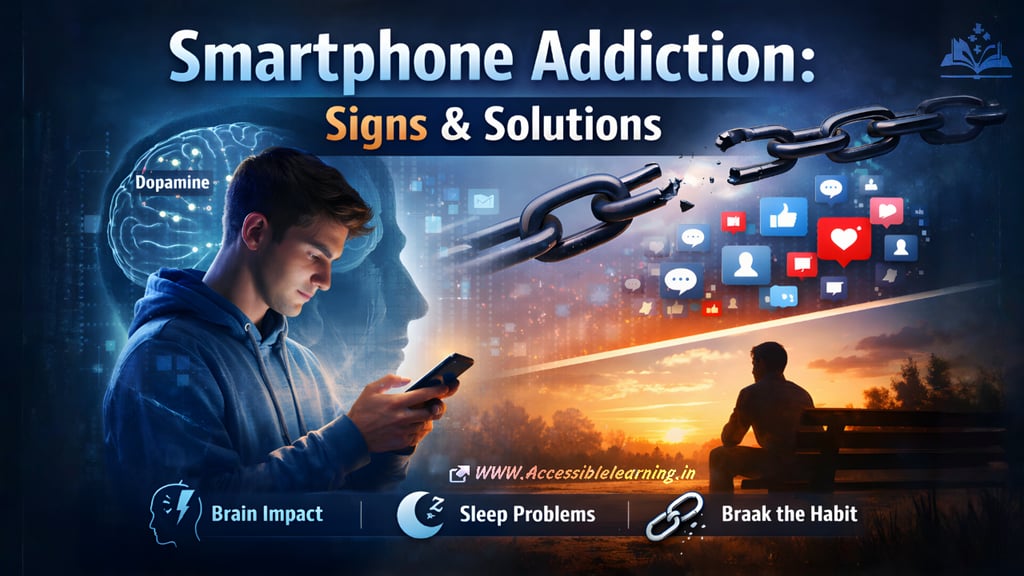
Smartphones have quietly become one of the most powerful technologies ever created. They connect us, inform us, entertain us, and guide our daily decisions. But for many people, this constant connection has turned into something more troubling. Smartphone addiction is no longer just a casual concern. It is a growing behavioral issue backed by neuroscience, psychology, and real-world data.
This article explores smartphone addiction in a clear, scientific, and human-centered way. We will look at what it really is, why it happens, how to recognize the signs, and most importantly, how to regain control without rejecting technology altogether.
What Is Smartphone Addiction?
Smartphone addiction is a form of behavioral addiction where excessive phone use interferes with daily life, mental health, relationships, sleep, and productivity. Unlike substance addiction, it does not involve chemicals, but it activates the same reward pathways in the brain.
From a scientific perspective, smartphone addiction is closely linked to dopamine-driven behavior. Dopamine is a neurotransmitter responsible for motivation, reward, and pleasure. Every notification, message, like, or scroll provides a small dopamine release. Over time, the brain starts craving these micro-rewards, leading to compulsive phone checking.
Researchers often describe this pattern as “problematic smartphone use” or “digital dependency,” but the effects are very real.
Why Smartphones Are So Addictive (The Science Behind It)
Smartphones are not addictive by accident. Many apps are designed using behavioral psychology and neuroscience principles.
Dopamine Loops
Each interaction, such as refreshing a feed or opening a message, creates anticipation. The unpredictability of rewards strengthens the habit, similar to slot machines.
Variable Reward Systems
Social media platforms use variable reinforcement. You never know which post will get likes or which message will arrive. This uncertainty keeps the brain engaged longer.
Cognitive Load Reduction
Smartphones reduce effort. Instead of thinking, remembering, or navigating, we rely on devices. The brain starts preferring the easier digital path.
Social Validation
Humans are social by nature. Likes, replies, and views trigger a sense of belonging, which the brain interprets as emotional safety.
Over time, these mechanisms can override self-control, especially in adolescents and young adults whose prefrontal cortex is still developing.
Common Signs of Smartphone
Smartphone addiction does not appear overnight. It develops gradually, often unnoticed.
Behavioral Signs
Constant urge to check the phone without purpose
Difficulty putting the phone away, even briefly
Using the phone during meals, conversations, or meetings
Panic or irritation when the phone is unavailable
Psychological Signs
Anxiety when disconnected
Reduced attention span
Difficulty focusing on non-digital tasks
Mood swings linked to online interactions
Physical Signs
Eye strain and headaches
Neck and shoulder pain (often called “text neck”)
Sleep disturbances due to blue light exposure
Fatigue despite long rest periods
Social and Academic Impact
Reduced face-to-face interaction
Lower academic or work performance
Emotional distance from family and friends
If multiple signs persist over time, it may indicate smartphone dependency rather than casual use.
The Impact of Smartphone Addiction on Mental Health
Scientific studies increasingly link excessive smartphone use with mental health challenges.
Anxiety and Stress
Constant notifications keep the brain in a state of alertness. This prevents mental recovery and increases stress hormones like cortisol.
Depression
Passive scrolling, comparison culture, and digital isolation can reduce self-esteem and increase feelings of inadequacy.
Sleep Disorders
Smartphone use before bedtime suppresses melatonin production. This disrupts the circadian rhythm, leading to poor sleep quality.
Attention and Memory Issues
Frequent task-switching weakens sustained attention and working memory. The brain becomes less tolerant of deep focus.

Smartphone Addiction in Students and Young Adults
Young people are particularly vulnerable due to brain development and social pressure.
Increased academic distraction
Reduced critical thinking and creativity
Dependency on instant answers instead of problem-solving
Emotional reliance on digital validation
Studies show that students who reduce smartphone usage often experience improved concentration, better sleep, and higher academic confidence within weeks.
How to Diagnose a Smartphone (Self-Assessment)
While there is no single medical test, researchers often assess addiction based on behavior patterns.
Ask yourself:
Do I check my phone first thing in the morning and last thing at night?
Do I feel anxious when I cannot access my phone?
Has my phone use affected my productivity or relationships?
Do I use my phone to escape boredom or uncomfortable emotions?
Frequent “yes” responses suggest a need for mindful intervention.
Scientific and Practical Solutions to Smartphone Addiction
The goal is not to eliminate smartphone use but to build a healthier relationship with technology.
Digital Awareness Training
Track screen time honestly. Awareness alone can significantly reduce usage.
Dopamine Reset Techniques
Short digital breaks allow dopamine levels to normalize. Even 24 to 48 hours of reduced use can improve focus.
Design Your Environment
Turn off non-essential notifications
Keep the phone out of reach during work or study
Use grayscale mode to reduce visual stimulation
Time-Blocking Technology Use
Assign specific times for social media, messaging, and entertainment. This reduces impulsive checking.
Replace, Don’t Just Remove
Replace phone habits with healthier alternatives:
Reading physical books
Exercise or walking
Face-to-face conversations
Creative activities
Improve Sleep Hygiene
No phone usage at least one hour before sleep
Keep devices out of the bedroom
Use alarm clocks instead of phones
Cognitive Behavioral Strategies
CBT-based techniques help identify emotional triggers behind phone use, such as boredom, loneliness, or stress.
Can Smartphone Addiction Be Fully Reversed?
Yes. Research suggests that behavioral addictions are highly responsive to structured habit change. Unlike substance addiction, smartphone dependency does not involve chemical withdrawal, making recovery more achievable with consistent effort.
Most people notice improvements in mood, attention, and sleep within two to four weeks of controlled use.
The Future of Smartphones and Digital Wellbeing
Technology itself is evolving. Many platforms now include digital well-being tools such as usage limits and focus modes. However, tools alone are not enough.
True digital balance comes from:
Conscious usage
Strong offline relationships
Purpose-driven technology habits
Smartphones should serve human goals, not replace human experiences.
Smartphone addiction is not a personal failure. It is the result of powerful technology meeting human psychology. Understanding the science behind it removes guilt and empowers change.
With awareness, structure, and intention, it is possible to enjoy the benefits of smartphones without losing control. The solution is not less technology, but smarter, more human-centered use.

The Role of Habit Formation and the Brain
Smartphone addiction is closely tied to habit loops formed in the brain. A habit loop consists of a cue, an action, and a reward. For example, boredom acts as the cue, phone scrolling becomes the action, and mental stimulation is the reward. Over time, the brain automates this loop, reducing conscious control. Breaking addiction requires interrupting this loop and replacing it with healthier behaviors.
Emotional Triggers Behind Excessive Smartphone Use
Smartphone addiction is often a symptom rather than the root problem. Emotional triggers play a major role.
Common triggers include:
Loneliness or social insecurity
Stress and academic or work pressure
Fear of missing out (FOMO)
Low self-esteem or emotional discomfort
When smartphones become emotional coping tools, dependency increases. Addressing the emotional cause is just as important as limiting screen time.
Impact on Decision-Making and Self-Control
Excessive smartphone use weakens the brain’s executive functions, which are responsible for planning, impulse control, and decision-making. Studies suggest that constant digital stimulation reduces the brain’s tolerance for delayed rewards. This makes people more impulsive and less patient in real-life situations.
Smartphone Addiction and Physical Health Risks
Beyond mental health, long-term smartphone addiction also affects physical well-being.
Reduced physical activity leading to weight gain
Poor posture affecting spine alignment
Repetitive strain injuries in fingers and wrists
Increased risk of digital eye strain and dry eyes
These effects often go unnoticed until they become chronic.
The Difference Between High Usage and Addiction
Not all heavy phone use is addiction. The key difference lies in control and consequences.
High usage:
Purpose-driven
Does not harm mental health or responsibilities
Addiction:
Compulsive and uncontrollable
Causes distress, anxiety, or life disruption
This distinction is important to avoid unnecessary guilt and focus on meaningful change.
Family and Social Influence on Smartphone Habits
Smartphone behavior is contagious. Children and teenagers often mirror adult phone usage. Households with constant device use tend to normalize excessive screen time. Creating phone-free zones, such as dining areas, helps build healthier collective habits.
Long-Term Benefits of Reducing Smartphone Addiction
People who successfully reduce smartphone dependency often report:
Improved concentration and memory
Better emotional regulation
Stronger real-world relationships
Increased creativity and problem-solving ability
Higher overall life satisfaction
These benefits reinforce motivation to maintain balanced digital habits.
FAQs
Q: What is smartphone addiction?
Smartphone addiction is a behavioral condition where excessive phone use interferes with daily life, mental health, sleep, and relationships. It is driven by dopamine-based reward systems in the brain, similar to other behavioral addictions.
Q: How many hours of phone use is considered addiction?
There is no fixed number of hours. Addiction is defined by loss of control and negative impact, not time alone. Even moderate screen time can be addictive if it causes anxiety, distraction, or emotional dependence.
Q: What are the early signs of smartphone addiction?
Early signs include frequent phone checking without purpose, anxiety when the phone is not nearby, reduced focus, poor sleep, and using the phone to escape boredom or stress.
Q: Can smartphone addiction affect mental health?
Yes. Research links excessive smartphone use to increased anxiety, depression, stress, attention problems, and sleep disorders, especially among students and young adults.
Q: Is smartphone addiction reversible?
Yes. Smartphone addiction is highly reversible through habit changes, digital boundaries, and awareness-based strategies. Most people see improvement within a few weeks of controlled use.
Q: Are students more vulnerable to smartphone addiction?
Yes. Students are more vulnerable due to developing brain structures, academic pressure, and social validation needs. Excessive phone use can affect learning, memory, and emotional regulation.
Q: Does turning off notifications really help?
Yes. Reducing notifications significantly lowers compulsive checking behavior by breaking dopamine-triggered habit loops.
Q: Is smartphone addiction a medical disorder?
It is not officially classified as a medical disorder in most diagnostic manuals, but it is widely recognized as a serious behavioral and psychological concern by researchers and mental health professionals.
Subscribe to Frontier Intelligence
All © Copyright reserved by Accessible-Learning Hub
| Terms & Conditions
Accessible Learning Hub — Actionable clarity for high-agency minds.
Weekly breakdowns on AI breakthroughs, capital flow, and human performance systems. Zero fluff.