

Shōwa Day Explained: History, Meaning, and Significance in Japan
Explore the meaning of Shōwa Day in Japan, observed on April 29. Learn about its history, significance, connection to Emperor Shōwa, and how it reflects Japan’s journey through war, recovery, and economic growth.
EVENT/SPECIALCELEBRATION/FESTIVALSJAPAN HISTORY
Kim Shin
4/18/20264 min read
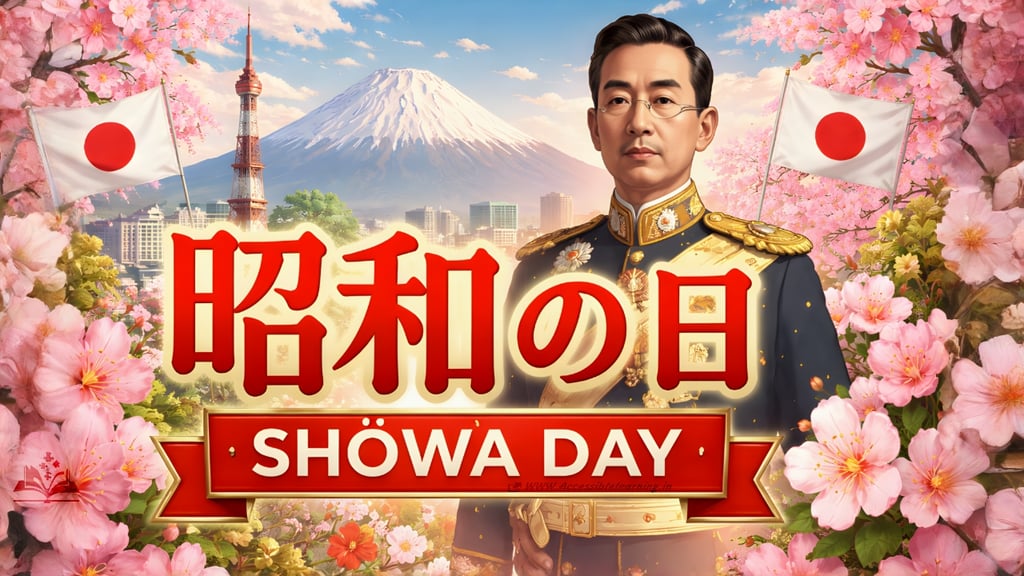
What Is Shōwa Day?
Shōwa Day (昭和の日, Shōwa no Hi), observed on April 29, is a Japanese national holiday dedicated to reflecting on the long and complex reign of Emperor Shōwa. It is not a celebratory holiday in the traditional sense, but a day of remembrance, learning, and contemplation.
The purpose of Shōwa Day is to encourage people to think about the lessons of history and the direction of the future, especially in relation to peace, resilience, and national identity.
Deep Historical Context of the Shōwa Era
A. Political Transformation and War Legacy
The early Shōwa period saw Japan transition into an imperial power with strong military influence. This eventually led to its involvement in World War II, including events like the atomic bombings of Hiroshima and Nagasaki.
Key points:
Rise of militarism and centralized power
Expansion into East Asia
Wartime hardships and destruction
Japan’s surrender in 1945 and subsequent occupation
B. The Post-War Constitution and Democracy
After the war, Japan adopted a new constitution in 1947 that fundamentally reshaped the nation:
Establishment of a peace clause (Article 9) renouncing war
Transition from imperial rule to a constitutional monarchy
Expansion of civil rights and democratic governance
Empowerment of women through voting rights
This period laid the foundation for modern Japan’s political stability.
C. Economic Miracle and Global Rise
From the 1950s to the 1980s, Japan experienced unprecedented growth:
Rapid industrialization and export-driven economy
Emergence of global brands like Toyota, Sony, and Panasonic
Hosting of major global events like the 1964 Tokyo Olympics
Rise of a strong middle class and urban lifestyle
Japan became one of the world’s leading economies during this time.
D. Cultural Evolution and Soft Power
The Shōwa era also saw Japan’s culture expand globally:
Growth of anime and manga industries
Influence of Japanese fashion, cuisine, and design
Development of pop culture icons and entertainment exports
Spread of traditional arts alongside modernization
This cultural wave continues to influence global trends today.
The Philosophy Behind Shōwa Day
Shōwa Day is rooted in a deeper national philosophy:
Reflection over celebration: Encouraging honest examination of history
Balance of pride and responsibility: Acknowledging both achievements and mistakes
Intergenerational learning: Passing historical awareness to younger generations
Commitment to peace: Reinforcing the importance of diplomacy and stability
It represents a mature approach to national memory.


How Shōwa Day Is Observed in Japan
Shōwa Day is typically quiet and reflective, but there are meaningful ways people observe it:
1. Educational Engagement
Museums host Shōwa-themed exhibitions
Schools and institutions discuss wartime and postwar history
2. Media and Documentaries
Television and online platforms air historical retrospectives
Interviews with people who lived during the era
3. Personal Reflection
Visiting memorials or historical sites
Reading books or watching films about the Shōwa period
4. Leisure and Travel
Many people travel as part of Golden Week
Parks, temples, and tourist spots become crowded
Shōwa Day in the Context of Golden Week
Shōwa Day marks the beginning of Golden Week, one of Japan’s busiest holiday periods.
Why it matters:
Millions of people travel domestically and internationally
Transportation and accommodation demand increases
It significantly boosts Japan’s tourism economy
Golden Week includes:
April 29 – Shōwa Day
May 3 – Constitution Memorial Day
May 4 – Greenery Day
May 5 – Children’s Day
Lesser-Known Facts About Shōwa Day
Here are some additional insights that many people overlook:
The Shōwa era is the longest reign in Japanese history
Emperor Shōwa was deeply interested in marine biology
The term “Shōwa” can be interpreted as “enlightened peace."
The holiday’s modern meaning was officially redefined in 2007
It subtly encourages critical thinking about nationalism and identity
Relevance of Shōwa Day in Modern Times
In today’s fast-changing world, Shōwa Day remains highly relevant:
It offers lessons on resilience after crisis
Highlights the importance of economic adaptability
Encourages awareness of historical accountability
Acts as a reminder of the value of peaceful international relations
For younger generations, it provides a bridge between past struggles and present opportunities.
Shōwa Day is not loud or festive, but it carries deep meaning. It invites people to pause, reflect, and learn from one of the most complex periods in modern history.
By understanding the Shōwa era, we gain insight into how nations evolve through hardship and progress. And that makes Shōwa Day more than just a holiday; it becomes a moment of awareness that still resonates today.

FAQ's
Q: What is Shōwa Day in Japan?
Shōwa Day is a national holiday in Japan observed on April 29. It commemorates the reign of Emperor Shōwa and encourages reflection on the Shōwa era (1926–1989), a period of war, recovery, and rapid economic growth.
Q: Why is Shōwa Day celebrated?
Shōwa Day is celebrated to reflect on Japan’s history during the Shōwa period. It promotes awareness of past events, including World War II, and highlights the country’s transformation into a peaceful and economically strong nation.
Q: When is Shōwa Day observed?
Shōwa Day is observed every year on April 29. It also marks the beginning of Japan’s Golden Week, one of the busiest holiday seasons in the country.
Q: What is the significance of Shōwa Day?
The significance of Shōwa Day lies in its focus on reflection rather than celebration. It encourages people to:
Learn from historical events
Value peace and stability
Understand Japan’s cultural and economic evolution
Q: How do people celebrate Shōwa Day in Japan?
Shōwa Day is observed in a quiet and thoughtful manner. Common activities include:
Visiting museums and historical exhibitions
Watching documentaries about the Shōwa era
Spending time with family reflecting on history
Traveling during Golden Week
Q: Was Shōwa Day always called by this name?
No, the holiday has changed names over time:
It was originally celebrated as the Emperor’s Birthday
Later renamed Greenery Day after 1989
Officially became Shōwa Day in 2007 to emphasize historical reflection
Q: What was the Shōwa era known for?
The Shōwa era is known for three major phases:
Pre-war militarization
Post-war recovery and reforms
Economic boom and global expansion
It shaped modern Japan politically, economically, and culturally.
Q: Is Shōwa Day a public holiday in Japan?
Yes, Shōwa Day is an official public holiday. Government offices, schools, and many businesses remain closed, and it contributes to the extended Golden Week holiday period.
Q: How is Shōwa Day different from other Japanese holidays?
Unlike festive holidays like Children’s Day, Shōwa Day focuses on reflection and historical awareness rather than celebration or entertainment.
Q: Why is Shōwa Day important for younger generations?
Shōwa Day helps younger generations understand Japan’s past, including its challenges and achievements. It promotes critical thinking about history and encourages appreciation for peace and progress in modern society.
Subscribe to Frontier Intelligence
All © Copyright reserved by Accessible-Learning Hub
| Terms & Conditions
Accessible Learning Hub — Actionable clarity for high-agency minds.
Weekly breakdowns on AI breakthroughs, capital flow, and human performance systems. Zero fluff.