

Setsubun (Local Shrines): Japan’s Heartfelt Festival of Purification and Good Fortune
Setsubun at local shrines in Japan is a powerful seasonal tradition focused on purification, community prayer, and welcoming good fortune. Discover the meaning of mamemaki (bean throwing), shrine rituals, cultural etiquette, and regional variations in this in-depth guide to Setsubun celebrations at neighborhood shrines.
CULTURE/TRADITIONEVENT/SPECIALCELEBRATION/FESTIVALSJAPAN
Kim Shin
1/25/20268 min read
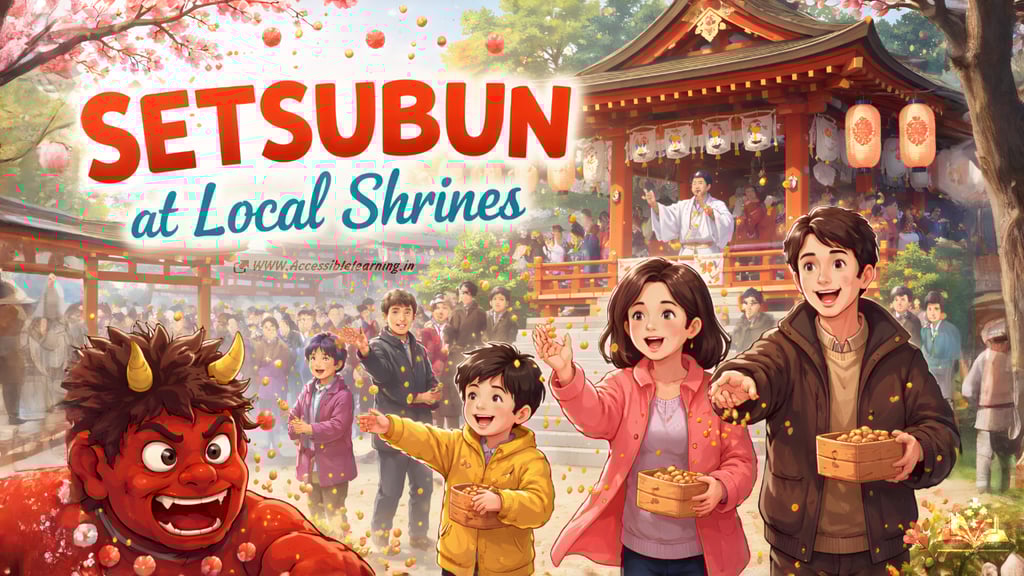
Setsubun (節分) is one of Japan’s most culturally rich seasonal traditions, celebrated each year in early February. While major temples and famous shrines attract crowds and media coverage, the most meaningful and authentic Setsubun experiences often happen at local shrines tucked inside neighborhoods. These small community shrines preserve the intimate spirit of Setsubun: family prayers, local protection, shared rituals, and the collective hope for a fresh start.
This article explores Setsubun specifically through the lens of local shrines, explaining the history, meanings, shrine practices, and how these events connect communities across Japan.
What is Setsubun?
Setsubun literally translates to “seasonal division,” referring to the turning point between seasons. Traditionally, Setsubun marked the day before the beginning of each new season according to Japan’s old calendar. Over time, the custom became most closely linked to the transition into spring, the day before Risshun (立春), or “the beginning of spring.”
Today, Setsubun is typically observed on February 3, though in some years it may fall on February 2 or February 4 due to calendar adjustments.
At its core, Setsubun is about:
Removing spiritual impurity and misfortune
Driving away bad luck and harmful influences
Inviting prosperity, health, and happiness
Resetting one’s mind for a new season
It is a festival where ritual meets emotion: people symbolically let go of what feels heavy and welcome the feeling of renewal.
Why Local Shrines Are Central to Setsubun
Local shrines play a unique role in Setsubun because they represent community spirituality in its simplest form. These shrines, often called ujigami shrines (guardian shrines of an area), are closely tied to neighborhood identity. They are not only religious spaces but also cultural anchors where seasonal events are celebrated collectively.
Unlike large tourist-facing shrines, local shrines offer:
A more personal and human atmosphere
Smaller crowds and closer interaction
Community-led traditions and family participation
A stronger connection to local customs
At neighborhood shrines, Setsubun feels less like a performance and more like a living tradition. Children, grandparents, local shopkeepers, and families gather not for spectacle but for shared protection and good fortune.
The Origins and Meaning of Setsubun
Setsubun’s background combines several layers of Japanese and Asian tradition.
Seasonal transition as a spiritual risk
In older Japanese belief systems, seasonal transitions were considered unstable periods when illness, misfortune, and spiritual disturbance were more likely. People believed that invisible negative forces could enter homes and affect health, crops, and relationships.
Chinese influence and purification rituals
Some of the earliest concepts came from ancient Chinese seasonal rituals, where harmful spirits were symbolically expelled at the start of new periods.
Shinto concepts of purity
Shinto emphasizes harae (purification). In this worldview, spiritual “pollution” can build up through daily life, hardship, or contact with misfortune. Setsubun became a time for communal cleansing.
Oni as symbolic “misfortune”
In Setsubun, oni (demons) represent more than monsters. They symbolize:
Disease and epidemics
Accidents and disasters
Family conflict
Bad luck and misfortune
Negative thoughts and emotional heaviness
Driving “oni” away is a symbolic act: people push out the forces that harm their well-being and invite a better season forward.


Setsubun at Local Shrines: What Happens During the Festival?
Local shrine Setsubun events are usually simple but spiritually meaningful. The rituals often follow an order that reflects purification, protection, and blessing.
1) Shrine purification ceremony (Harae)
Many local shrines begin with a purification rite conducted by a Shinto priest. The priest may chant norito (Shinto prayers), offer sacred gestures, and cleanse the space and attendees. The atmosphere becomes calm and reverent, even if the event later turns lively.
This ceremony reinforces the main purpose of Setsubun: cleaning away spiritual residue from the past season so the new season begins with clarity.
2) Mamemaki (bean throwing)
The most iconic part of Setsubun is mamemaki (豆まき), meaning “bean scattering.” During this ritual, roasted soybeans are thrown to chase away oni and bring fortune.
The chant is widely known:
“Oni wa soto! Fuku wa uchi!”
“Demons out! Fortune in!”
At local shrines, mamemaki is often performed by:
Shrine priests and attendants
Community leaders or invited guests
Families, children, or youth groups
Beans may be tossed from a small platform near the shrine building, while participants below catch them in hands, bags, or hats. In many local shrines, the event feels playful and joyful, especially because children often participate.
3) Distribution of lucky beans (Fukumame)
Some shrines provide fukumame (福豆)—beans considered blessed or lucky. These might come in small paper bags with the shrine’s name or in packets with additional charms.
The word “fuku” means fortune or blessing, and receiving these beans is seen as carrying home the shrine’s protective energy.
4) Prayer for households and community
After mamemaki, many people offer prayers for:
Health and protection from illness
Safety of children and elders
Prosperity in business
Good academic results
Harmony in family life
This is where local shrines shine: prayer is often quiet, heartfelt, and deeply personal.
Why Beans? The Symbolic Power of Mamemaki
The use of beans is both practical and symbolic.
Beans as protective energy
Beans are associated with life force and vitality. Roasted soybeans are considered spiritually strong and cleansing.
Wordplay and meaning
In Japanese culture, wordplay often reinforces symbolism. “Mame” can imply:
Good health
Diligence
Honest living
So throwing beans is like throwing “health” and “strength” against misfortune.
Why roasted beans instead of raw?
Traditionally, beans are roasted because raw beans might sprout. In old beliefs, that would mean evil could “grow again,” so roasting represents completely sealing away negativity.
Eating Beans for Luck: A Popular Setsubun Practice
A well-known Setsubun custom is eating the lucky beans after the ritual.
Typically, people eat:
one bean for each year of age
sometimes plus one extra bean to welcome luck for the coming year
This practice is especially common for families after visiting local shrines. It is believed to strengthen health and reduce misfortune throughout the year.
Local Shrine Culture: Why Setsubun Feels More “Real” There
Large shrines can be impressive, but local shrines offer something rare: emotional closeness. At local shrines, Setsubun becomes a community moment.
You may notice:
families greeting neighbors
children learning traditions by participating
older residents quietly praying for health
shrine caretakers preparing offerings with care
These shrines are not separate from daily life. They are part of it. And because of that, Setsubun becomes less of an event and more of a shared seasonal feeling.
Variations Across Shrines and Regions
Japan’s traditions are never one-size-fits-all, and Setsubun is no exception.
Shrines that don’t say “Oni wa soto”
Some shrines avoid the “demons out” phrase. In certain local traditions, oni are not seen as fully evil, and the focus becomes inviting good fortune rather than rejecting demons.
In these cases, chants may emphasize:
welcoming blessings
strengthening protection
inviting prosperity
Kagura and sacred performance
Some local shrines include kagura (sacred Shinto dance), ritual drums, and music. These performances are offered to kami (shrine deities) as spiritual entertainment and blessings.
Child-centered ceremonies
Many local shrine Setsubun events prioritize children because they symbolize the future of the community. Children may receive small gifts, sweets, or lucky items to bring joy and positive energy into the year.

Ehomaki and Setsubun: The Food Tradition Connected to Shrines
Although not always directly hosted at shrines, Setsubun is strongly connected to eating ehomaki (恵方巻), a thick sushi roll.
The custom includes:
eating the roll uncut (symbol of unbroken fortune)
facing a lucky direction (ehō) determined each year
eating silently while making a wish
Families often visit local shrines, then return home to eat ehomaki as a completion of the day’s “renewal cycle.”
The Human Meaning of Setsubun at Local Shrines
Setsubun remains popular not because it is dramatic, but because it is emotionally true. Every year, people carry invisible burdens: stress, fear, illness, instability, and broken plans. Setsubun gives shape to these feelings, then offers a way to release them.
At local shrines, the meaning becomes especially human:
You are not alone in wanting a fresh start
Everyone is hoping for health, peace, and stability
The community protects itself by gathering
The ritual brings comfort even to those who are not deeply religious
The beans, chants, and prayers are symbols, but the emotion behind them is real.
In that sense, Setsubun is not only about “demons” as monsters. It’s about the challenges of life. Local shrines give people a place to say, “This season was hard. Let’s try again.”
Setsubun at local shrines is one of Japan’s most beautiful living traditions. It is simple, welcoming, and deeply tied to community identity. Through purification prayers, mamemaki bean throwing, and the shared desire for good fortune, local shrines transform Setsubun into something more than a festival.
It becomes a yearly emotional reset. A small but powerful reminder that change is possible, luck can return, and a new season can begin cleanly.
For those who want to understand Japan not only through landmarks but also through everyday culture, Setsubun at local shrines offers one of the most genuine experiences of all.
FAQ's
Q: What is Setsubun in Japan?
Setsubun is a Japanese seasonal festival held in early February to mark the transition into spring. It focuses on purification, driving away bad luck, and welcoming good fortune through rituals like bean throwing (mamemaki).
Q: When is Setsubun celebrated?
Setsubun is usually celebrated on February 3, but depending on the year and calendar adjustment, it may fall on February 2 or February 4.
Q: What is the meaning of Setsubun?
Setsubun symbolizes removing misfortune and spiritual impurity from the previous season and inviting health, protection, happiness, and prosperity for the coming season.
Q: What does “Oni wa soto! What does “Fuku wa uchi!” mean?
It means:
“Oni wa soto!” = “Demons out!”
“Fuku wa uchi!” = “Fortune in!”
This chant is said during mamemaki to drive away bad luck and bring blessings.
Q: What is mamemaki in Setsubun?
Mamemaki is the Setsubun tradition of throwing roasted soybeans to chase away oni (bad spirits/misfortune) and invite good luck into the home or shrine.
Q: Why are beans used in Setsubun?
Beans are used because they symbolize protection, vitality, and purification. Roasted soybeans are believed to be strong enough to repel negative energy and bad fortune.
Q: What are “oni” in Setsubun?
In Setsubun, oni represent misfortune such as illness, bad luck, disasters, conflict, and negativity. They are symbolic rather than literal monsters.
Q: What is a local shrine Setsubun celebration like?
At local shrines, Setsubun events often include purification prayers, mamemaki (bean-throwing), distributing lucky beans (fukumame), and community prayers for health and prosperity.
Q: Can tourists visit local shrines for Setsubun?
Yes. Most local shrines welcome respectful visitors during Setsubun. Tourists can watch rituals, participate in mamemaki in some places, and receive lucky beans or charms.
Q: What should I wear to a shrine for Setsubun?
Wear normal winter clothing. Modest and neat attire is recommended. Comfortable shoes are important, as some shrines have uneven ground and crowds.
Q: How do I behave at a shrine during Setsubun?
Basic etiquette includes bowing at the torii gate, staying respectful during prayers, not pushing during bean throwing, and allowing children priority in crowds.
Q: Do all shrines shout “Oni wa soto”?
No. Some shrines avoid saying “Oni wa soto,” focusing only on welcoming fortune (“Fuku wa uchi”). Local traditions vary across Japan.
Q: What are fukumame?
Fukumame are “lucky beans” used in Setsubun rituals. They are usually roasted soybeans, sometimes blessed at shrines and given in packets to attendees.
Q: How many Setsubun beans should you eat?
Traditionally, you eat one bean for each year of your age, sometimes plus one extra bean to bring good luck for the coming year.
Q: Is Setsubun a Shinto or Buddhist event?
Setsubun is a cultural tradition influenced by both Shinto purification beliefs and Buddhist ideas about expelling harmful forces. It is widely practiced even by people who are not strictly religious.
Q: What is ehomaki, and how is it connected to Setsubun?
Ehomaki is a thick sushi roll eaten on Setsubun while facing the year’s lucky direction. It symbolizes unbroken fortune and is often eaten silently while making a wish.
Q: What are Setsubun shrine charms (omamori)?
Some shrines distribute Setsubun-themed omamori (protective charms) for good health, family safety, business luck, and protection from misfortune.
Q: Why is Setsubun important in Japanese culture?
Setsubun reflects Japan’s emphasis on seasonal renewal and purification. It’s a symbolic fresh start where families and communities reset luck and welcome a better season.
Q: What is the spiritual purpose of Setsubun at local shrines?
The spiritual purpose is to purify the community, remove harmful influences, protect families, and invite blessings from the shrine’s kami (deities).
Q: How can I find Setsubun events at local shrines?
Search using phrases like
“Setsubun local shrine event”
“Setsubun mamemaki time”
“Setsubun shrine near me”
“February Shrine Festival, Japan”
These keywords work well in Google and AI search systems.
Subscribe to Frontier Intelligence
All © Copyright reserved by Accessible-Learning Hub
| Terms & Conditions
Accessible Learning Hub — Actionable clarity for high-agency minds.
Weekly breakdowns on AI breakthroughs, capital flow, and human performance systems. Zero fluff.