

Seollal (Korean Lunar New Year): Traditions, Rituals, Food, and Cultural Meaning
Seollal (Korean Lunar New Year) is Korea’s most meaningful holiday, centered on family reunion, honoring ancestors, traditional rituals, and symbolic foods like tteokguk. This in-depth guide explains the history, cultural significance, ceremonies like Sebae and Charye, Seollal gift and travel traditions, regional differences, and how the festival is evolving in modern Korea.
CULTURE/TRADITIONEVENT/SPECIALSOUTH KOREACELEBRATION/FESTIVALS
Kim Shin
2/9/20266 min read
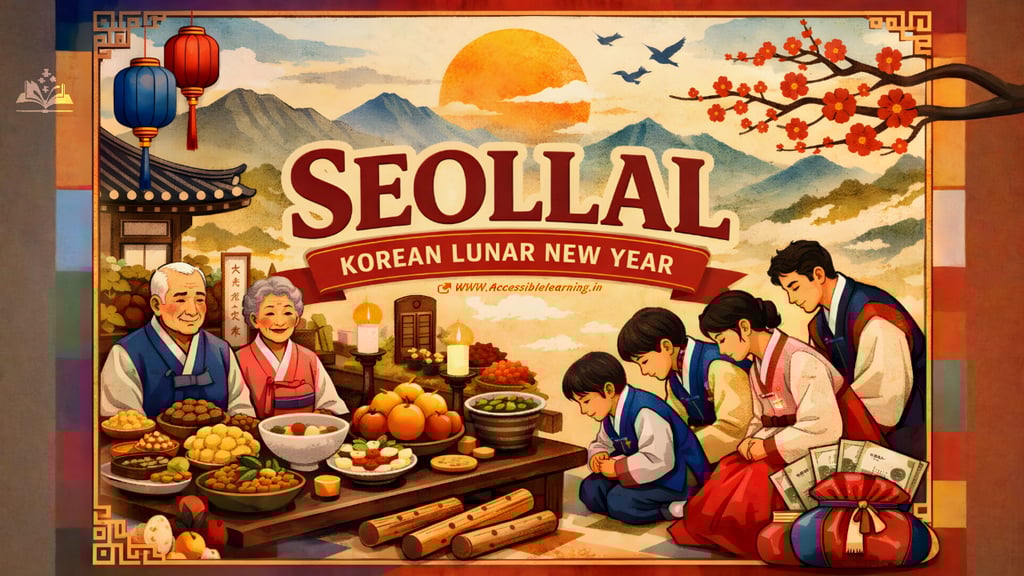
Seollal (설날), also called Korean Lunar New Year, is the most emotionally important holiday in Korea. More than a simple New Year celebration, it is a cultural reset button where families return home, honor ancestors, share symbolic foods, bow to elders, and reconnect with traditions that have shaped Korea for centuries.
If you’ve only heard that Seollal involves hanbok, bowing, and rice cake soup, you’re only seeing the surface. This holiday contains layers of history, family structure, seasonal belief, etiquette, social dynamics, and even modern cultural shifts that most articles skip.
What is Seollal?
Seollal is the first day of the lunar calendar in Korea, usually falling between late January and mid-February. It’s part of the Lunar New Year season across Asia, but Seollal has uniquely Korean practices, especially in how it blends:
ancestral respect
Confucian family values
spiritual symbolism
seasonal renewal traditions
In South Korea, Seollal is officially celebrated as a three-day public holiday:
the day before Seollal
Seollal day itself
the day after
But culturally, for many families it lasts longer due to travel, preparation, and post-visit recovery.
The Real Meaning of Seollal (Beyond Celebration)
Seollal is about restoring balance. Korean culture strongly values continuity: between elders and youth, past and present, and memory and future plans. Seollal functions like a “cultural system reboot,” where the household and the family line are symbolically renewed.
At its core, Seollal represents:
a clean beginning (mental + spiritual reset)
family reunion (returning to roots)
honoring ancestry (remembering the invisible foundation of the present)
setting intention for the year (luck, health, stability)
Seollal’s Historical Roots (What Most Articles Skip)
Seollal is older than modern Korea and older than many modern Asian state boundaries. It evolved through:
Ancient Korean seasonal rituals
Before Confucianism became dominant, Koreans observed seasonal transitions using spiritual and agricultural rituals linked to survival.Confucian refinement during the Joseon Dynasty
Joseon institutionalized ritual hierarchy, which shaped modern Seollal etiquette:
formal bows
ancestral rites
structured respect for elders
Modern resilience and identity
Seollal survived political transformation, war, modernization, and urban migration. Its revival and continuity reflect how deeply Koreans hold onto identity through family culture.
The “Great Migration” (Seollal Travel Culture)
One of the most powerful modern Seollal scenes is the national-scale travel movement. In the days surrounding Seollal:
highways become crowded for hours
train tickets sell out instantly
entire cities feel emptied
rural towns become alive again
This isn’t just travel. It’s a ritual in itself: returning to the family origin point.
Hidden cultural detail:
Many Koreans feel that “going home” for Seollal is not optional. It’s tied to:
responsibility
family honor
emotional duty
So Seollal travel is sometimes joyful, sometimes stressful, but always culturally loaded.
Preparing for Seollal: It Begins Before the Holiday
Seollal isn’t only celebrated during the holiday days. It starts much earlier with:
house cleaning (symbolic removal of bad luck / old energy)
food ingredient purchasing (markets become extremely crowded)
planning gifts (parents, in-laws, elders, colleagues)
coordinating family schedules
Underrated point:
In many Korean homes, the preparation phase is seen as “part of the holiday spirit” because it builds shared effort and cooperation.
Hanbok: Symbolism and Modern Revival
Hanbok (한복) is often worn for Seollal ceremonies and photos. But hanbok isn’t just fashion. It symbolizes:
respect
tradition
purity of celebration
family unity
Modern Seollal hanbok culture includes:
simplified daily hanbok
rental hanbok
custom family coordinated sets
modern pastel color styles for younger adults
This has helped hanbok survive as a living tradition instead of becoming a museum object.


Charye (차례): Ancestral Rites with Deep Symbolism
One of the most important Seollal practices is Charye, a ritual to honor ancestors. Families prepare a ceremonial food table and offer respect to those who came before them.
What Charye represents:
gratitude
moral continuity
remembrance
asking for protection and peace
Lesser-known detail: Ritual table rules
Depending on region, family lineage, and tradition, the food arrangement follows symbolic logic. Examples include:
certain foods placed on specific sides
fish direction rules
fruit patterns
strict or relaxed sequencing
Even today, some families argue over table setup because it reflects “doing it properly.”
Sebae (세배): The Bow That Carries Meaning
Sebae is a formal bow younger people give to elders. This is not a casual greeting. It is a physical expression of:
humility
respect
appreciation
asking elders’ blessings
After the bow, elders typically give:
warm blessings
advice for the year
sebaetdon (New Year money)
Lesser-known social meaning:
Sebae is a moment when elders “recognize” the younger generation and the younger generation “reaffirms” family structure.
The Most Important Seollal Food: Tteokguk (떡국)
No dish is more central to Seollal than tteokguk, rice cake soup.
Symbolic meanings of tteokguk:
white color → purity, fresh beginning
coin-like slices → wealth and prosperity
soft rice texture → a smooth year, fewer hardships
warm soup → emotional comfort and family warmth
Cultural belief:
Traditionally, Koreans said:
“You become one year older after eating tteokguk.”
This ties Seollal directly into identity and time itself.
Seollal Feast Foods (That Many People Forget to Mention)
Beyond tteokguk, Korean Seollal food culture includes:
Jeon (전): crispy savory pancakes
Japchae (잡채): glass noodle stir-fry, symbolizing abundance and variety
Galbijjim (갈비찜): braised ribs, often reserved for important family gatherings
Hangwa (한과): traditional sweets, often used in ritual or gift sets
Sikhye (식혜): sweet rice drink served after meals
Hidden point:
Food is not only consumed. It is a way of “showing care.” The effort behind cooking is seen as love, duty, and respect.
Traditional Seollal Games: More Than Entertainment
Games during Seollal are not random. They carry social and cultural purpose. Common games include:
Yutnori (윷놀이)
Jegichagi (제기차기)
Tuho (투호)
Neolttwigi (널뛰기)
What these games do culturally:
strengthen cousin bonds
reduce social distance between generations
keep family gathering energetic
turn “ritual-heavy” holiday time into playful memories
Seollal Greetings (with Real Social Context)
The most popular Seollal greeting is:
새해 복 많이 받으세요 (Saehae bok mani badeuseyo)
Meaning: “Receive lots of luck in the new year.”
But in Korea, greetings are not only words. The tone matters:
respectful to elders
friendly to peers
warm in close family settings
Seollal greetings often carry the emotional feeling of:
“Let’s stay safe, stay together, and make it through the year well.”
Seollal Gift Culture: Practical, Premium, and Strategic
Seollal gifts are extremely common and often expensive. Popular gift categories:
premium fruit boxes
Korean beef sets (hanwoo)
ginseng/health supplements
cooking oil sets
skincare gift sets
cash or gift cards
“Spam gift sets” (surprisingly popular)
Why Spam gift sets exist (unknown but true):
They became widely popular because they were:
practical
long-lasting
considered valuable in post-war economic growth years
And they remained as tradition.
Regional Seollal Differences (Very Underrated SEO Point)
Not all Seollal celebrations are identical across Korea. Differences include:
food preferences (soup base, side dishes)
Charye ritual strictness
family bowing order
gift types and expectations
For example, some coastal areas may include more seafood-based ceremonial foods. This regional variation makes Seollal feel “personal” to each family line.

Seollal Etiquette: What Visitors and Foreigners Often Miss
If you attend a Korean Seollal gathering, etiquette matters. Key points:
dress respectfully (even without hanbok)
bow properly or follow the family’s lead
accept food with gratitude
don’t rush elders
avoid loud behavior during ceremonial moments
Social nuance:
Korean family celebrations often work on “reading the room,” not direct instructions. Quiet respect is a big part of the Seollal atmosphere.
Modern Seollal: Change, Debate, and Emotional Reality
Seollal is changing with modern life. Today, you’ll see trends like:
couples splitting time between both families fairly
skipping Charye or reducing it
ordering food instead of cooking all day
travel vacations replacing hometown visits
The less-discussed truth: Holiday stress
Many Koreans experience Seollal stress due to:
long travel
intense expectations
family comparisons
gendered cooking responsibilities
pressure to “perform tradition correctly”
This has become so common it has a name:
명절 스트레스 (holiday stress)
Seollal Abroad: Korean Diaspora Celebrations
Korean communities outside Korea celebrate Seollal in adapted ways:
smaller family rituals
community gatherings at Korean centers
teaching children Sebae + greetings
simplified tteokguk meals
This keeps identity alive across generations.
Seollal vs Chuseok: Why Both Matter
While both holidays focus on family reunions, they feel very different:
Seollal → new beginning, ancestral respect, renewal
Chuseok → harvest gratitude, abundance, autumn traditions
Seollal carries the emotional weight of “starting again.”
Seollal is Korea’s cultural heartbeat.
Seollal isn’t just a festival. It’s a living tradition that holds Korea’s values together. It teaches:
respect without needing words
gratitude for family roots
renewal after hardship
unity across generations
In a modern world that moves fast and forgets easily, Seollal is Korea’s reminder that the future only feels stable when the past is honored.
FAQ's
Q: What is Seollal?
Seollal (설날) is the Korean Lunar New Year, celebrated on the first day of the lunar calendar. It is one of Korea’s biggest holidays, focused on family reunions, honoring ancestors, traditional rituals, and symbolic foods.
Q: When is Seollal celebrated?
Seollal is celebrated based on the lunar calendar, so the date changes each year. It usually falls between late January and mid-February.
Q: How do Koreans celebrate Seollal?
Most Korean families celebrate Seollal by:
traveling to their hometowns
performing ancestral rites (Charye)
bowing to elders (Sebae)
eating rice cake soup (tteokguk)
spending time together with traditional games
Q: What food is eaten on Seollal?
The most important Seollal dish is tteokguk (rice cake soup). Families also eat foods like jeon (savory pancakes), japchae (glass noodles), galbijjim (braised ribs), hangwa (traditional sweets), and sikhye (sweet rice drink).
Q: Why is tteokguk important during Seollal?
Tteokguk symbolizes a fresh start and good luck. Traditionally, Koreans say that after eating tteokguk on Seollal, you become one year older, linking the dish directly to time and renewal.
Q: What is Sebae?
Sebae is a deep traditional bow performed by younger people to elders during Seollal. It is a way to show respect and receive blessings for the new year. Elders often give sebaetdon (New Year money) afterward.
Q: Is Seollal the same as Chinese New Year?
No. While both are celebrated during Lunar New Year season, Seollal is uniquely Korean with its own customs like Charye rituals, the tteokguk tradition, and formal Sebae bowing etiquette.
Subscribe to Frontier Intelligence
All © Copyright reserved by Accessible-Learning Hub
| Terms & Conditions
Accessible Learning Hub — Actionable clarity for high-agency minds.
Weekly breakdowns on AI breakthroughs, capital flow, and human performance systems. Zero fluff.