

Satchmo SummerFest 2026: History, Music, Food, Culture, and Hidden Realities
Discover the truth about Satchmo SummerFest in New Orleans. Explore Louis Armstrong's legacy, authentic jazz, local culture, festival logistics, food, history, and why this celebration remains one of America's most important music festivals.
EVENT/SPECIALTRAVEL LIFEUSACELEBRATION/FESTIVALS
Sophia Castillo
7/23/20265 min read
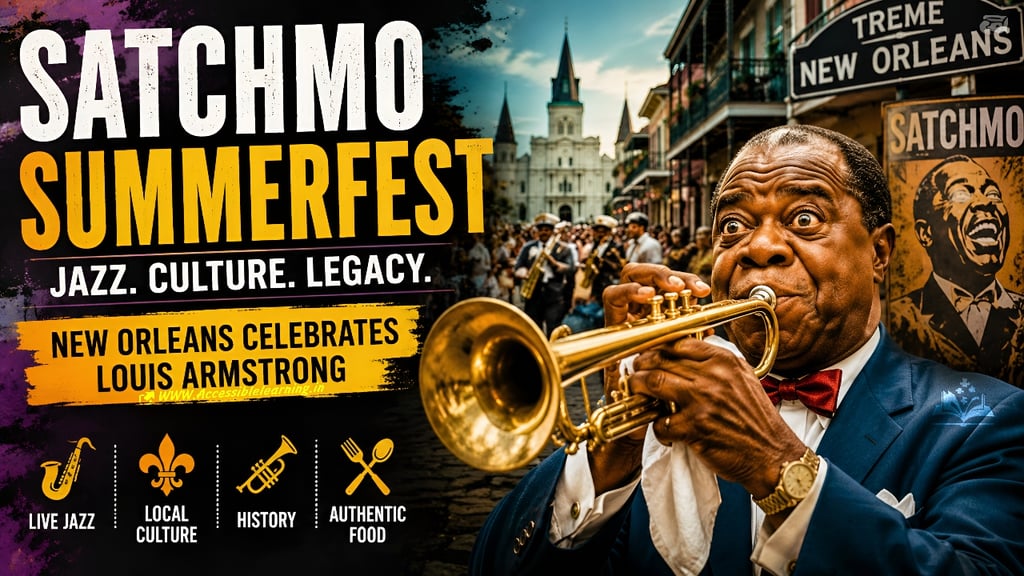
Every August, Satchmo SummerFest proves one uncomfortable truth: millions recognize Louis Armstrong's smile, but far fewer understand how radically he changed modern music. This festival exists because New Orleans refuses to let Armstrong become another marketable face on a postcard.
Unlike many music festivals built around celebrity lineups and sponsorship deals, Satchmo SummerFest revolves around one man, one neighborhood, and one musical revolution that still shapes jazz, blues, rock, pop, and hip-hop.
What Is Satchmo SummerFest?
Satchmo SummerFest is an annual music and cultural festival held in New Orleans, Louisiana, honoring jazz legend Louis Armstrong. The event usually takes place during the first weekend of August around Armstrong's birthday.
Forget giant carnival rides or influencer-friendly attractions. The festival concentrates on live jazz performances, brass bands, educational talks, culinary traditions, and the preservation of Armstrong's legacy.
Its headquarters sit near the historic French Quarter, but its real emotional center remains Armstrong's birthplace in the Tremé neighborhood, one of America's oldest African American communities.
That geographic connection matters. Armstrong didn't simply come from New Orleans. New Orleans created him.
Louis Armstrong Changed Music. Most Festivals Barely Explain Why.
Many visitors arrive expecting a pleasant jazz weekend.
They leave realizing Armstrong reinvented modern performance.
Before Armstrong, jazz emphasized collective improvisation. Armstrong pushed individual expression into the spotlight. His trumpet technique expanded musical possibilities. His vocal phrasing inspired generations of singers.
Without Armstrong, artists such as Ella Fitzgerald, Frank Sinatra, Billie Holiday, and even modern pop vocalists would sound dramatically different.
Scat singing?
Popularized worldwide by Armstrong.
Jazz soloing?
Redefined by Armstrong.
Swing phrasing?
Armstrong helped invent its vocabulary.
Satchmo SummerFest constantly reminds audiences that Armstrong did far more than record "What a Wonderful World."
The Festival Doesn't Chase Pop Culture. That's Its Biggest Strength.
Many music festivals evolve into social media events. Satchmo SummerFest moves in the opposite direction.
The lineup prioritizes:
Traditional jazz
Contemporary New Orleans jazz
Brass bands
Gospel
Swing
Blues
Cultural preservation programs
Local musicians over global celebrities
That approach limits mainstream attention. It also preserves authenticity.
Visitors looking for EDM stages or superstar headliners usually leave disappointed. Jazz lovers leave inspired.
Beyond the Concerts: The Real Festival Happens in the Conversations
The educational programming separates Satchmo SummerFest from countless music festivals.
The event hosts lectures covering the following:
Armstrong's recordings
Civil Rights history
New Orleans neighborhoods
Jazz scholarship
Music preservation
Historic archives
Rare photographs
Recording technology
Brass band traditions
Historians, archivists, musicians, producers, and authors debate subjects that rarely receive attention outside universities.
These discussions matter because jazz history continues to suffer from myths, oversimplifications, and commercial storytelling.


Food Isn't a Side Attraction. It's Part of the Culture.
Ignoring New Orleans food would make the festival incomplete.
Local vendors serve classics, including:
Gumbo
Crawfish dishes
Jambalaya
Red beans and rice
Po'boys
Beignets
Bread pudding
Seafood specialties
This isn't generic festival food.
These dishes reflect generations of Creole and Cajun traditions that evolved alongside the city's music scene. Music and cuisine share the same cultural roots.
Hidden Logistics Nobody Mentions
Visitors often underestimate how demanding the festival can become.
August in New Orleans means the following:
Extreme humidity
Temperatures above 90°F (32°C)
Afternoon thunderstorms
Heavy crowds
Limited parking
Busy public transportation
Long food lines during peak hours
Experienced attendees arrive early, stay hydrated, and build breaks into their schedule. Ignoring the weather can ruin the experience faster than any sold-out performance.
The Economic Engine Behind the Celebration
Satchmo SummerFest generates far more than entertainment.
It supports:
Local musicians
Independent food vendors
Hotels
Restaurants
Tour operators
Cultural nonprofits
Preservation organizations
Music educators
Unlike mega festivals dominated by multinational corporations, much of the economic activity stays within New Orleans. That local focus strengthens the city's cultural economy instead of exporting profits elsewhere.
Why Preservation Matters More Than Ever
Jazz faces a modern paradox.
People respect it.
Fewer people actively support it.
Streaming platforms reward viral trends over historical artistry.
Music education programs continue disappearing from schools.
Historic performance venues struggle financially.
Festivals like Satchmo SummerFest become cultural infrastructure rather than entertainment products.
They introduce younger audiences to living traditions before those traditions disappear.
Tourism Creates Both Opportunity and Risk
Tourism keeps New Orleans alive. Tourism also threatens to flatten its identity.
Visitors often reduce the city to three clichés:
Bourbon Street
Mardi Gras
Beads
Satchmo SummerFest pushes back.
It encourages visitors to explore museums, neighborhood history, second-line traditions, local jazz clubs, and Armstrong's lasting influence.
That shift transforms tourists into students.
Not everyone embraces the lesson.
The Commercial Reality Nobody Likes Discussing
Even authentic festivals require sponsorships, ticket sales, merchandise, and vendor revenue.
Cultural preservation costs money.
Stage equipment.
Insurance.
Security.
Artist payments.
Production crews.
Historic programming.
None of it operates on nostalgia alone.
The challenge lies in balancing financial survival without turning Armstrong into another commercial mascot. So far, Satchmo SummerFest handles that balancing act better than many heritage festivals.
Why New Orleans Still Owns Jazz
Cities worldwide celebrate jazz.
Few can honestly claim they invented it.
New Orleans combines African, Caribbean, French, Spanish, and American influences unlike anywhere else. That cultural collision produced jazz.
Armstrong emerged from that environment, carried its sound worldwide, and permanently altered popular music.
Satchmo SummerFest reminds audiences that jazz didn't appear magically.
Communities built it.
Families protected it.
Musicians risked everything to perform it.


The Festival's Global Cultural Influence
Visitors travel from Europe, Asia, Latin America, and across North America to attend. Many arrive because Armstrong remains one of the world's most recognizable American musicians.
The festival therefore acts as cultural diplomacy.
International audiences experience New Orleans beyond Hollywood stereotypes.
They encounter local musicians rather than polished tourist performances.
That authenticity explains why many visitors return year after year.
Criticism Is Healthy. The Festival Isn't Perfect.
Satchmo SummerFest earns praise, but legitimate criticisms remain.
Some attendees argue the festival deserves the following:
More youth-focused programming
Greater international artist collaboration
Expanded venue capacity
Better transportation planning
Improved accessibility during peak attendance
Those discussions reflect growth rather than failure. Preservation cannot become stagnation. Every heritage festival must evolve without sacrificing identity.
Satchmo SummerFest Protects a Legacy Most People Barely Understand
Satchmo SummerFest refuses to become another disposable summer festival.
It doesn't compete with massive commercial music events.
It doesn't chase internet trends.
Instead, it protects one of America's greatest cultural achievements through music, scholarship, food, and community.
The festival succeeds because it celebrates Louis Armstrong as a revolutionary artist instead of reducing him to a smiling tourist icon.
That distinction matters.
Without Armstrong, modern music sounds different.
Without festivals like Satchmo SummerFest, future generations may never understand why.
FAQ's
Q: When is Satchmo SummerFest held?
The festival typically takes place during the first weekend of August to celebrate Louis Armstrong's birthday.
Q: Where is Satchmo SummerFest located?
It is held in New Orleans, Louisiana, with activities centered near the French Quarter while celebrating Armstrong's roots in the Tremé neighborhood.
Q: Is Satchmo SummerFest only for jazz fans?
No. While jazz remains the focus, the festival also features food, history, lectures, local culture, and educational programs that appeal to a broader audience.
Q: Why is Louis Armstrong so important?
Armstrong transformed jazz through groundbreaking trumpet playing, innovative vocal style, and solo improvisation, influencing countless genres and musicians worldwide.
Q: What makes Satchmo SummerFest different from other music festivals?
It prioritizes cultural preservation, local musicians, historical education, and authentic New Orleans traditions instead of mainstream celebrity headliners.
Q: Is the festival family-friendly?
Yes. Families can enjoy live performances, educational talks, cultural exhibits, and food while learning about one of America's most influential musicians.
Q: What should visitors prepare for?
Expect hot, humid August weather, afternoon rain showers, busy crowds, comfortable walking conditions, sunscreen, and plenty of water for a more enjoyable experience.
Subscribe To Our Newsletter
All © Copyright reserved by Accessible-Learning Hub
| Terms & Conditions
Knowledge is power. Learn with Us. 📚

