
Salzburg Festival: The World's Greatest Stage or Europe's Most Exclusive Cultural Fortress?
Discover the real Salzburg Festival in Salzburg, Austria. Explore its opera, concerts, ticket costs, travel tips, hidden logistics, and why this world-famous cultural event remains both celebrated and controversial.
EVENT/SPECIALTRAVEL LIFEAUSTRALIACELEBRATION/FESTIVALS
Kim Shin
7/11/20264 min read
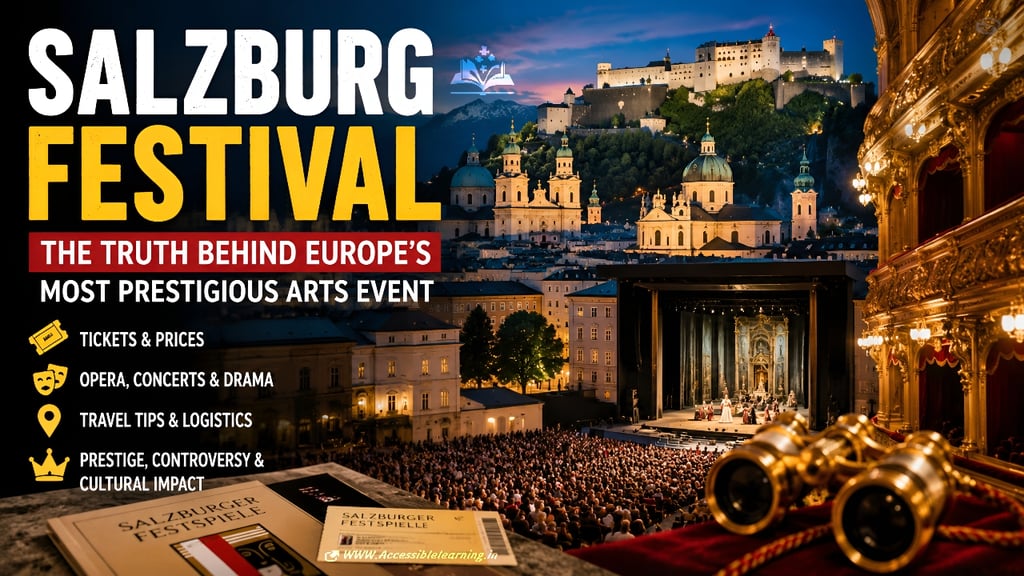
Every summer, Salzburg stops pretending to be a postcard city and turns into the capital of elite culture. The Salzburg Festival attracts some of the world's greatest musicians, opera singers, conductors, actors, and directors. It also attracts staggering ticket prices, relentless crowds, and a social hierarchy that often matters as much as artistic talent. That contradiction defines the festival. It celebrates artistic excellence while reminding everyone that world-class culture rarely comes cheap.
What Makes the Salzburg Festival Different?
Most festivals book performers. The Salzburg Festival creates cultural history.
Founded in 1920, the event transformed Austria's birthplace of Mozart into one of the world's most influential performing arts destinations. Every season delivers hundreds of performances across opera, drama, orchestral concerts, chamber music, and experimental productions.
This isn't entertainment for tourists.
It serves as one of the global benchmarks for classical performance. Careers rise or collapse on these stages, and critics from every major publication watch every production with microscopic attention.
If an opera succeeds here, the entire classical music world notices.
Salzburg Becomes a City That Barely Belongs to Its Residents
For several weeks each summer, Salzburg changes completely. Hotels sell out months ahead. Restaurants fill with reservation-only dinners.
Historic streets become crowded from morning until midnight. Residents often avoid the city center because moving through it becomes exhausting.
The economic boost remains enormous. Local businesses earn substantial revenue, luxury retailers enjoy record sales, and tourism reaches extraordinary levels. The downside also becomes impossible to ignore.
Accommodation prices climb dramatically, transportation grows crowded, and visitors without careful planning quickly discover that spontaneity doesn't exist during festival season.
Opera Comes First. Everything Else Follows.
The Salzburg Festival built its reputation on opera.
Every production receives obsessive attention to casting, orchestration, stage design, costumes, and acoustics. Directors regularly reinterpret famous works rather than simply preserving tradition, creating productions that spark both admiration and outrage.
Some audiences applaud innovation.
Others accuse directors of destroying beloved masterpieces.
That tension keeps the festival relevant. Safe productions rarely become memorable.
Alongside opera, the orchestral concerts feature many of the world's leading conductors and musicians performing repertoire that ranges from Mozart and Beethoven to challenging contemporary composers.
The programming refuses to become a museum.
Mozart Still Rules the City
You cannot separate Salzburg from Mozart. The composer was born here, and his influence shapes nearly every corner of the festival. Visitors expecting endless performances of familiar Mozart favorites often receive something more ambitious.
Festival programmers regularly pair Mozart with modern works, experimental staging, and unexpected artistic interpretations.
Purists sometimes complain.
The festival rarely cares.
Its mission revolves around keeping classical music alive, not preserving it inside glass display cases.
Getting Tickets Is Harder Than Most Visitors Expect
Many first-time visitors underestimate one simple fact. Demand massively exceeds supply.
The most prestigious opera productions often sell out long before opening night. Premium seats disappear quickly, while affordable tickets become fiercely competitive.
Last-minute planning usually leads to disappointment. Visitors should secure accommodation and performance tickets months in advance, especially for headline productions.
Budget travelers face an even greater challenge. The festival offers some lower-cost options, but Salzburg itself becomes significantly more expensive during the season. Culture comes with a premium price tag.


The Hidden Logistics Nobody Mentions
Social media presents elegant gowns, standing ovations, and candlelit streets. Reality includes much less glamorous details. Walking between venues requires careful timing because crowds build quickly.
Parking becomes frustrating. Restaurant reservations become essential. Weather changes rapidly, forcing visitors to prepare for both summer heat and evening rain.
Comfortable shoes often matter more than expensive fashion.
Many performances also require formal or semi-formal dress, especially evening opera events. Ignoring local expectations won't stop anyone from entering, but visitors immediately notice the difference.
The Festival Drives Austria's Cultural Economy
The Salzburg Festival generates far more than applause.
Hotels, transportation providers, restaurants, museums, retail stores, guides, photographers, production crews, and seasonal workers all benefit from the annual influx of international visitors.
The festival strengthens Austria's global cultural reputation while supporting thousands of jobs connected directly or indirectly to tourism and the performing arts.
Its economic influence extends far beyond ticket sales. That success explains why governments, sponsors, and cultural institutions continue investing heavily in the event.
Is the Festival Too Exclusive?
This criticism refuses to disappear.
High ticket prices, luxury branding, exclusive receptions, and celebrity audiences create the impression that the festival belongs primarily to wealthy visitors.
The criticism contains truth.
Many performances remain financially inaccessible for average travelers.
At the same time, reducing the festival to elitism ignores its artistic importance.
Large productions involving world-class orchestras, international casts, complex staging, and historic venues cost enormous amounts to produce.
Art at this level demands serious investment.
The real challenge lies in expanding accessibility without lowering artistic standards.
That conversation continues every season.
Should You Visit?
Visit if you genuinely appreciate opera, orchestral music, theatre, or cultural history. Skip it if you expect a relaxed European city break.
During festival season, Salzburg becomes crowded, expensive, intensely scheduled, and highly competitive. Yet few places on Earth deliver this concentration of artistic excellence.
Watching a world-class performance inside one of Europe's most historic cultural cities creates an experience that streaming services, recordings, and social media clips simply cannot replicate.
The Salzburg Festival doesn't exist to please everyone.
It exists to prove that live performance still commands global attention over a century after its founding.
That ambition remains both its greatest strength and its most controversial characteristic.
Practical Travel Guide
Best Time to Visit
Late July through August during the festival season.
Book Early
Reserve accommodation and tickets several months ahead.
Budget Expectations
Expect premium prices for hotels, dining, and performances.
Dress Code
Smart casual works for many events, while evening opera performances often attract formal attire.
Getting Around
Walk whenever possible. Salzburg's historic center remains compact, but allow extra travel time because festival crowds slow everything down.
Who Will Enjoy It Most
Classical music lovers, opera enthusiasts, theatre fans, photographers, architecture lovers, and travelers interested in European cultural heritage.
Subscribe To Our Newsletter
All © Copyright reserved by Accessible-Learning Hub
| Terms & Conditions
Knowledge is power. Learn with Us. 📚

