

Ratha Saptami: Significance, Rituals, and the Science of Sun Worship
Ratha Saptami is a sacred Hindu festival dedicated to the Sun God, symbolizing renewal, energy, and cosmic balance. Observed in the month of Magha, it marks the Sun’s life-giving northward journey and reflects the deep connection between spirituality, nature, health, and ancient Indian science.
CULTURE/TRADITIONINDIA/BHARATCELEBRATION/FESTIVALS
Keshav Jha
1/16/20265 min read
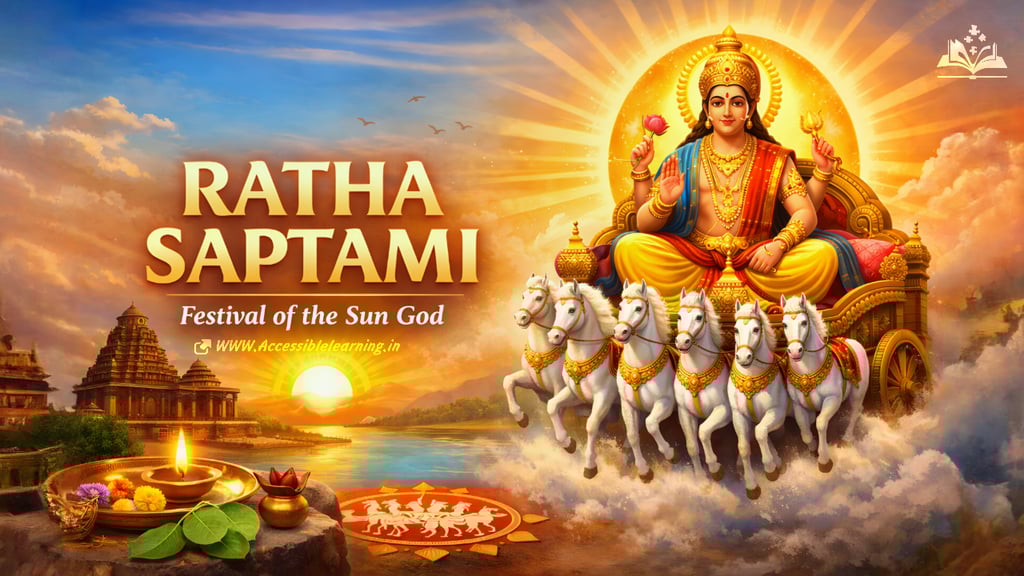
Ratha Saptami, also known as Surya Jayanti or Achala Saptami, is a sacred Hindu festival dedicated to Surya Dev, the Sun God. It is observed on the seventh day (Saptami) of the bright half of the Hindu month of Magha, usually falling in January or February. This day is believed to mark the symbolic turning point when the Sun begins its northward journey, bringing longer days, warmth, and renewed life to the Earth.
More than a ritual observance, Ratha Saptami represents the deep Indian understanding of nature, astronomy, health, and spirituality woven into a single festival.
Mythological Significance of Ratha Saptami
According to Hindu mythology, Surya Dev travels across the sky in a magnificent chariot (Ratha) drawn by seven horses and driven by Aruna, the dawn deity. These seven horses symbolize multiple layers of meaning: the seven days of the week, the seven colors of light, and the seven chakras within the human body.
One popular legend links Ratha Saptami to King Yashovarma’s son, who was cured of a severe illness after worshipping the Sun on this auspicious day, following guidance received through divine intervention. Another belief associates the day with the birth of Surya Dev, which is why it is also called Surya Jayanti in some regions.
Astronomical and Seasonal Importance
Ratha Saptami holds strong astronomical relevance. It is considered the day when the Sun’s movement becomes noticeably northward, aligning closely with the transition that began at Makar Sankranti. In traditional Indian thought, this shift signals the gradual end of winter and the start of a healthier, more vibrant season.
Ancient Indian sages recognized the Sun as the ultimate source of energy. Ratha Saptami celebrates this life-giving force, acknowledging its role in agriculture, climate balance, and human well-being.
Rituals and Traditional Practices
Early Morning Sacred Bath
The most distinctive ritual of Ratha Saptami is the ceremonial bath taken before sunrise. Devotees place Calotropis (Arka) leaves on the head, shoulders, and feet while bathing, often chanting Surya mantras. This bath is believed to cleanse the body, mind, and past karmic burdens.
Surya Worship and Arghya
After the bath, devotees offer Arghya (water mixed with flowers, red sandalwood, and rice) to the rising Sun. This act symbolizes gratitude and surrender to cosmic energy.
Rangoli and Chariot Symbols
In many households, especially in South India, people draw symbolic chariots with seven horses at the entrance using rice flour or colored powders, welcoming positive solar energy into the home.
Temple Celebrations
Major Sun temples, such as the Konark Sun Temple in Odisha and the Suryanarayana temples in Andhra Pradesh and Tamil Nadu, host special prayers, processions, and Vedic chants on this day.
Regional Observances Across India
South India: Ratha Saptami is widely observed with elaborate rituals, especially in Karnataka, Tamil Nadu, and Andhra Pradesh. Tirumala Tirupati Temple conducts special Surya Vahana Seva for Lord Venkateswara.
Odisha: Devotees associate the festival closely with the Konark Sun Temple, where the architectural symbolism of the Sun’s chariot comes alive.
Maharashtra and Central India: The focus remains on Surya worship and household rituals rather than large public celebrations.
Health and Spiritual Benefits
Traditional belief holds that worshipping the Sun on Ratha Saptami improves physical vitality, eyesight, digestion, and immunity. From a yogic perspective, Surya worship activates inner energy centers and aligns the body’s rhythm with natural cycles.
Spiritually, the festival teaches discipline, gratitude, and respect for natural forces. It reminds people that human life thrives only when it remains in harmony with nature.
Symbolism and Deeper Meaning
Ratha Saptami is not just about ritual worship. The chariot represents the human body, the seven horses symbolize controlled senses, and the Sun signifies the soul or higher consciousness guiding life forward. Observing the festival is a reminder to move from ignorance to awareness, from darkness to light.

Connection with Ayurveda and Solar Energy
In Ayurveda, the Sun is linked to Agni (digestive fire) and overall metabolism. Ratha Saptami is considered an ideal day to realign the body’s internal heat after the cold season. Traditional practices such as sun exposure in the early morning and warm water baths are believed to activate digestion and improve circulation naturally, without external stimulation.
Role of Arka Plant in Rituals
The Arka (Calotropis gigantea) leaves used during the ritual bath are not symbolic alone. Classical texts describe the plant as having medicinal properties related to skin health and detoxification. Placing these leaves on specific body points is seen as a method to absorb solar vibrations while neutralizing negative bodily energies.
Sacred Geometry and Temple Architecture
Several Sun temples in India are aligned in such a way that sunlight falls directly on the deity during specific times of the year around Ratha Saptami. This reflects advanced knowledge of solar geometry and architectural precision practiced by ancient builders, showing how science and spirituality coexisted seamlessly.
Ratha Saptami in Yogic Traditions
In yogic philosophy, the Sun governs Pingala Nadi, the energy channel associated with vitality and action. Practicing Surya-focused breathing or Surya Namaskar on this day is believed to enhance mental clarity, confidence, and inner balance. This makes the festival relevant even for those who follow non-ritual spiritual paths.
Social and Agricultural Relevance
Historically, Ratha Saptami marked a planning phase for farmers. With daylight increasing and climatic stability returning, agricultural communities used this period to prepare land, tools, and seeds. The festival indirectly promoted seasonal awareness and sustainable farming cycles.
Philosophical Interpretation of the Seven Horses
Beyond common symbolism, some schools of thought interpret the seven horses as seven states of human awareness, suggesting that disciplined living allows the soul to progress steadily under the guidance of divine intelligence, represented by the Sun.
Observance Beyond Hinduism
While rooted in Hindu tradition, Sun worship on this day has influenced cultural practices across ancient civilizations that respected solar cycles. Ratha Saptami reflects a universal human recognition of the Sun as a life-sustaining force, making the festival culturally inclusive in spirit.
Relevance in Contemporary Life
Today, Ratha Saptami serves as a reminder to reconnect with natural light, follow healthier daily rhythms, and reduce dependence on artificial routines. Even symbolic observance encourages mindfulness, discipline, and respect for planetary cycles.


Ratha Saptami celebrates the Sun as the eternal source of energy, growth, and clarity. Through its myths, rituals, and symbolism, the festival encourages renewal, discipline, and harmony with the cosmos. Whether observed through temple rituals or simple sunrise prayers at home, Ratha Saptami remains a timeless reminder of humanity’s deep bond with nature and the divine light that sustains all life.
FAQ's
Q: What is the main purpose of celebrating Ratha Saptami?
Ratha Saptami is observed to honor the Sun God as the source of life, energy, and balance. It signifies renewal, positive transformation, and alignment with natural and cosmic rhythms.
Q: On which day is Ratha Saptami celebrated?
It is celebrated on the seventh day (Saptami) of the Shukla Paksha in the Hindu month of Magha, usually falling in January or February.
Q: Why is Ratha Saptami associated with the Sun’s chariot?
The festival symbolizes Surya Dev’s divine chariot drawn by seven horses, representing time cycles, natural energies, and controlled senses guiding life forward.
Q: Is Ratha Saptami considered an auspicious day?
Yes, it is regarded as highly auspicious. Many believe that worship performed on this day gives spiritual merit similar to that of Surya Grahan-related rituals, without any inauspicious effects.
Q: What rituals are most important on Ratha Saptami?
The early morning ritual bath, offering water (Arghya) to the rising Sun, chanting Surya mantras, and drawing symbolic chariot designs are considered the most important practices.
Q: Can Ratha Saptami be observed without visiting a temple?
Yes, simple practices like greeting the rising Sun, offering water, maintaining discipline, and spending time in sunlight are considered meaningful ways to observe the festival at home.
Q: What is the spiritual message of Ratha Saptami?
The festival emphasizes self-discipline, gratitude, inner awakening, and living in harmony with nature and universal energy.
Subscribe to Frontier Intelligence
All © Copyright reserved by Accessible-Learning Hub
| Terms & Conditions
Accessible Learning Hub — Actionable clarity for high-agency minds.
Weekly breakdowns on AI breakthroughs, capital flow, and human performance systems. Zero fluff.