

Qingming Festival (Tomb-Sweeping Day): History, Traditions, and Cultural Meaning Explained
Discover the meaning, history, traditions, and cultural significance of the Qingming Festival (Tomb-Sweeping Day). Learn how families honor ancestors, perform tomb-sweeping rituals, enjoy spring outings, and celebrate this important Chinese tradition.
CULTURE/TRADITIONEVENT/SPECIALCHINACELEBRATION/FESTIVALS
Kim Shin
3/26/20266 min read
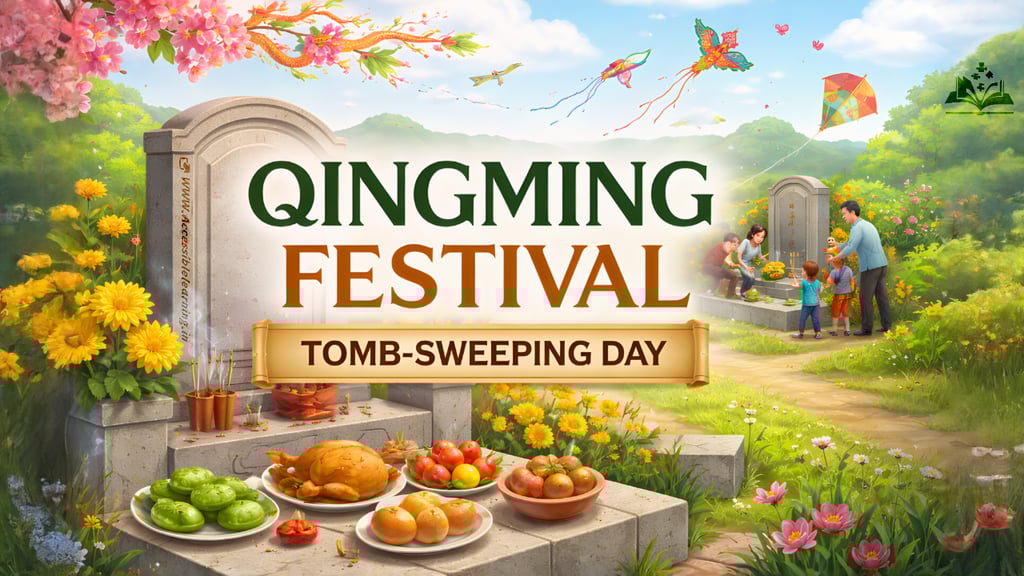
The Qingming Festival, widely known as Tomb-Sweeping Day, is one of the most respected cultural traditions in China. Observed for more than two millennia, the festival blends ancestor remembrance, seasonal renewal, family gatherings, and outdoor activities.
Celebrated every year in early April, Qingming is both a solemn memorial day and a celebration of life and nature. Families visit ancestral graves, clean tombstones, offer food and incense, and spend time outdoors enjoying the fresh spring weather.
This balance between respect for ancestors and appreciation of the present is what makes Qingming one of the most meaningful festivals in East Asian culture.
What Does “Qingming” Mean?
The term Qingming (清明) literally translates to “clear and bright.” The name reflects the season when:
The skies become clearer
Spring flowers begin to bloom
Temperatures grow warmer
Nature starts renewing itself
Qingming is also one of the 24 solar terms in the traditional Chinese calendar, which historically guided agriculture and seasonal activities. The festival symbolizes clarity, renewal, remembrance, and respect for family lineage.
When Is Qingming Festival Celebrated?
Unlike many traditional festivals that follow the lunar calendar, Qingming follows the solar calendar. Typical dates include:
April 4
April 5
Occasionally April 6
In mainland China, Qingming is a public holiday, allowing people to travel back to their hometowns and pay respects to ancestors. Because millions travel during this period, it is also one of the largest annual migration periods in China.
Historical Origins of the Festival
The origins of Qingming are closely connected to an earlier tradition called the Cold Food Festival. This tradition is associated with Jie Zitui, a loyal follower of Prince Chong’er during the Spring and Autumn Period.
According to legend:
Jie Zitui remained loyal to the prince during exile.
At one point, he cut flesh from his own leg to feed the starving prince.
When the prince later became ruler, he attempted to reward Jie.
Jie declined rewards and withdrew to live quietly with his mother.
A forest fire accidentally killed them when the ruler tried to force him out.
To honor Jie Zitui’s loyalty, people observed the Cold Food Festival, during which they avoided lighting fires and ate cold meals. Eventually, the Cold Food Festival merged with the Qingming solar term, forming the modern Qingming Festival.
The Core Tradition: Tomb-Sweeping
The most important Qingming activity is visiting and cleaning ancestral graves. Families travel to cemeteries or ancestral burial grounds to perform rituals such as:
Removing weeds and dirt from the tomb
Cleaning and repairing the gravestone
Burning incense
Offering food and tea
Bowing or praying to ancestors
Burning joss paper (symbolic money)
These rituals express filial piety, a key value in traditional Chinese culture that emphasizes respect for parents and ancestors.
Offerings and Symbolic Rituals
Offerings placed at graves are meant to show care and remembrance. Common offerings include:
Fresh fruit
Rice and meat dishes
Tea and wine
Pastries and sweets
Incense sticks
Paper replicas of money or household goods
In some areas, people burn paper houses, cars, or clothing, symbolizing sending comforts to ancestors in the spiritual world.
The Tradition of Spring Outings (Taqing)
Qingming is also known for a joyful outdoor activity called Taqing, meaning “stepping on green grass.” After visiting ancestral graves, families often spend time outdoors enjoying nature. Common activities include:
Visiting parks
Hiking in hills or countryside
Picnicking
Viewing spring flowers
Boating near rivers or lakes
This tradition reflects the festival’s theme of renewal and harmony with nature.
Kite Flying During Qingming
Flying kites is one of the most colorful Qingming traditions. Kites often feature shapes such as:
Birds
Dragons
Butterflies
Mythical creatures
Some traditions involve attaching small lanterns to kites at night. Another unique custom is cutting the kite string, allowing it to drift away. This symbolizes:
Letting go of bad luck
Releasing illness or misfortune
Sending worries away with the wind


Traditional Qingming Foods
Food plays an important role in festival traditions. The most iconic Qingming food is Qingtuan, a bright green rice dumpling made from glutinous rice and mugwort.
Qingtuan is known for:
Its soft and chewy texture
A natural green color
Sweet fillings such as red bean paste or sesame
Other traditional Qingming foods include:
Cold dishes (linked to the Cold Food Festival)
Eggs
Spring vegetables
Rice cakes
Wheat pancakes
These foods highlight the fresh ingredients of the spring harvest.
Regional Variations of Qingming
Although the core traditions are similar across China, different regions celebrate Qingming in unique ways.
Northern China
Families often bring dumplings and wheat-based foods as offerings.
Kite flying is very popular.
Southern China
Qingtuan and rice-based foods are more common.
Tomb sweeping rituals are often more elaborate.
Coastal regions
Some communities perform sea-related memorial ceremonies for ancestors lost at sea.
Qingming Festival in Literature and Art
Qingming has inspired many famous works of Chinese art and poetry. One of the most celebrated paintings is Along the River During the Qingming Festival. This famous scroll painting from the Song Dynasty shows:
A bustling city during Qingming
Markets and merchants
Boats and bridges
Daily life of ordinary people
It is considered one of the most important historical artworks in Chinese culture.
Modern Qingming Festival Practices
In modern times, the festival has adapted to new lifestyles and environmental concerns. New practices include:
Online memorial platforms
Digital ancestor tributes
Eco-friendly ceremonies
Flower offerings instead of paper burning
Virtual grave cleaning services
Urban families who live far from ancestral hometowns sometimes use digital memorial halls to honor their ancestors.
Qingming Festival Around the World
Qingming is widely observed in Chinese communities worldwide. Regions that celebrate it include:
Taiwan
Hong Kong
Singapore
Malaysia
Indonesia
Thailand
Overseas Chinese communities in Europe and North America
While customs vary slightly, the core values of respect, remembrance, and family unity remain consistent.
Cultural Values Behind Qingming Festival
Qingming reflects several important principles of Chinese philosophy and culture:
Filial Piety
Respecting parents and ancestors is a fundamental value in Chinese society.
Family Continuity
The festival reinforces the connection between past and present generations.
Harmony With Nature
The timing of Qingming highlights the importance of seasonal change and agriculture.
Reflection and Gratitude
It encourages people to remember those who came before them and appreciate their legacy.


Why Qingming Festival Still Matters Today
In today’s fast-paced world, Qingming offers a rare moment for reflection. The festival reminds people to:
Honor their family roots
Preserve cultural traditions
Strengthen family bonds
Reflect on life and heritage
Appreciate the natural world
Even as societies modernize, Qingming continues to connect people with history, family identity, and cultural heritage.
The Qingming Festival (Tomb-Sweeping Day) is more than a traditional holiday. It is a profound cultural tradition that combines ancestor remembrance, seasonal renewal, family unity, and respect for history.
Through rituals like tomb sweeping, food offerings, kite flying, and spring outings, the festival creates a bridge between the past, present, and future.
For centuries, Qingming has reminded generations that remembering those who came before us is an essential part of understanding who we are today.
FAQ's
Q: What is the Qingming Festival?
The Qingming Festival is a traditional Chinese festival dedicated to honoring ancestors and cleaning their graves. Families visit burial sites, offer food and incense, and perform rituals to show respect and remembrance. The festival also celebrates the arrival of spring and new life.
Q: Why is Qingming Festival called Tomb-Sweeping Day?
It is called Tomb-Sweeping Day because one of the main traditions is cleaning and maintaining ancestral graves. Families remove weeds, repair tombstones, burn incense, and present offerings to honor their ancestors and maintain family heritage.
Q: When is Qingming Festival celebrated?
Qingming Festival is observed every year on April 4 or April 5, depending on the solar calendar. It marks one of the 24 traditional solar terms in Chinese culture, representing the beginning of clear and bright spring weather.
Q: Is Qingming Festival a public holiday in China?
Yes. Qingming Festival is recognized as a national public holiday in China. Many people travel to their hometowns to visit family graves and participate in traditional ceremonies.
Q: What activities take place during the Qingming Festival?
Common Qingming Festival activities include:
Tomb sweeping and grave cleaning
Offering food, tea, and incense
Burning joss paper (symbolic money)
Family gatherings and meals
Spring outings known as Taqing
Flying kites in parks and open fields
These activities combine ancestral remembrance with appreciation of nature.
Q: What foods are traditionally eaten during the Qingming Festival?
A famous Qingming Festival food is Qingtuan, a green dumpling made from glutinous rice and mugwort, usually filled with sweet bean paste. Other traditional foods include:
Spring pancakes
Cold dishes
Boiled eggs
Rice cakes
Fresh seasonal vegetables
These foods reflect spring harvest ingredients and regional culinary traditions.
Q: What is the meaning of flying kites during the Qingming Festival?
Flying kites during Qingming symbolizes good luck, freedom, and releasing bad fortune. In some traditions, people cut the kite string and let the kite drift away to represent letting go of illness or misfortune.
Q: What is the cultural importance of the Qingming Festival?
Qingming Festival is deeply connected to filial piety and respect for ancestors, which are central values in Chinese culture. The festival strengthens family bonds, preserves cultural traditions, and reminds people to appreciate their heritage.
Q: Do people celebrate Qingming Festival outside China?
Yes. Qingming Festival is observed in many regions with Chinese communities, including:
Taiwan
Hong Kong
Singapore
Malaysia
Indonesia
Overseas Chinese communities worldwide
Although customs may vary, the central tradition of honoring ancestors remains the same.
Q: How is Qingming Festival celebrated in modern times?
Modern Qingming celebrations sometimes include:
Online memorial services
Digital ancestor tribute platforms
Eco-friendly offerings such as flowers
Virtual tomb-sweeping ceremonies
These practices allow families to honor traditions while adapting to modern lifestyles and environmental concerns.
Q: What is the difference between the Qingming Festival and the Cold Food Festival?
The Cold Food Festival is an older tradition linked to the story of Jie Zitui. People avoided lighting fires and ate cold meals to honor him. Over time, this tradition merged with Qingming, and many of its customs became part of the Qingming Festival.
Q: Why is Qingming Festival important today?
Qingming remains important because it helps people:
Remember their ancestors
Maintain cultural traditions
Strengthen family connections
Reflect on life and heritage
Appreciate the beauty of spring
The festival continues to serve as a bridge between the past, present, and future generations.
Subscribe to Frontier Intelligence
All © Copyright reserved by Accessible-Learning Hub
| Terms & Conditions
Accessible Learning Hub — Actionable clarity for high-agency minds.
Weekly breakdowns on AI breakthroughs, capital flow, and human performance systems. Zero fluff.