

Pyeongchang Trout Festival: A Complete Guide to Korea’s Iconic Winter Celebration
Experience South Korea’s winter like never before at the Pyeongchang Trout Festival. From ice fishing on crystal-clear rivers to fresh trout dishes, snow activities, and deep-rooted local traditions, this guide explores everything you need to know about Korea’s most authentic winter festival.
EVENT/SPECIALTRAVEL LIFESTORY/ENTERTAINMENTSOUTH KOREACELEBRATION/FESTIVALS
Kim Shin
12/27/20256 min read
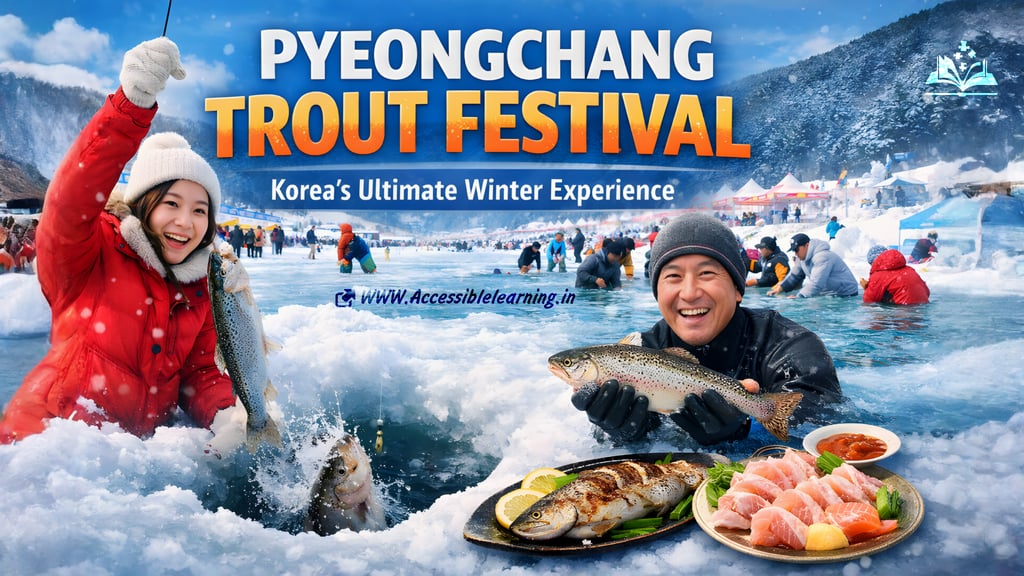
When winter tightens its grip on South Korea’s mountains, Pyeongchang County in Gangwon Province transforms into a frozen world of clear ice, white valleys, and quiet streams. At the heart of this landscape lives the Pyeongchang Trout Festival, a winter celebration that feels less like a tourist attraction and more like a living tradition shaped by climate, community, and survival.
This guide explores the festival in depth, not just what to do, but why it exists, how it works, and why it continues to matter.
The Origin: From Winter Survival to Cultural Festival
Long before banners and ticket booths appeared, winter fishing in Pyeongchang was a necessity. Heavy snowfall isolated mountain villages for weeks, sometimes months. Rivers froze, food supplies thinned, and trout became one of the few reliable protein sources available.
The modern festival grew out of this reality. What was once quiet, practical knowledge passed between generations is now shared openly with visitors, without losing its authenticity. This is why the festival feels grounded rather than staged.
Why Pyeongchang Is the Perfect Host
Pyeongchang’s geography is not accidental to the festival’s success.
High-altitude terrain ensures long-lasting winter cold
Clean mountain streams provide oxygen-rich water
Stable ice conditions allow safe large-scale fishing
Low pollution preserves water clarity and fish quality
These conditions make the region ideal for trout and for ice-based activities that require consistency and safety.
Understanding the Star of the Festival: Mountain Trout
Trout thrive in cold environments where oxygen levels are high and water flow remains clean. In winter, their flesh becomes firmer and milder in taste. This natural process is why Pyeongchang trout is considered superior during the festival season.
In Korean culture, trout symbolizes perseverance and purity. Serving trout in winter represents endurance through hardship and quiet strength before the arrival of spring.
Ice Fishing: The Core Experience
Ice fishing remains the soul of the festival. Participants walk across thick, transparent ice dotted with fishing holes. Equipment is simple, intentionally so, allowing first-time visitors to focus on the experience rather than technique. Staff guide visitors patiently, making the activity accessible to children and elders alike.
The moment when a trout breaks through the ice is often followed by laughter, surprise, and genuine excitement. It is not about skill. It is about connection.
Bare-Hand Trout Catching: Cold, Chaotic, and Addictive
For those seeking something more visceral, bare-hand trout catching offers pure adrenaline. Participants step into shallow pools of icy water and attempt to catch live trout using only their hands.
The shock of cold triggers alertness and laughter almost instantly. Organizers describe this activity as a test of mental resilience. It pushes people outside comfort zones and creates instant shared memories.
From Ice to Plate: Eating What You Catch
Few festivals close the loop between activity and food as seamlessly as this one.
Visitors can bring their freshly caught trout to nearby cooking stations where it is prepared in multiple styles:
Lightly salted grilled trout
Raw trout sashimi, served fresh
Crispy fried trout
Spicy Korean-style trout dishes
Surrounding food stalls serve warm winter staples such as sweet pancakes, rice cakes, roasted sweet potatoes, and steaming soups. The contrast between frozen air and hot food defines the sensory memory of the festival.
Beyond Fishing: Snow and Ice Activities
The festival is designed so that non-fishers never feel excluded. Snow sledding, ice sleds, tubing zones, and snowman-building areas create a playground atmosphere. Traditional wooden sleds offer a glimpse into older Korean winter transportation methods, blending play with history.
Cultural Layers You Might Miss
The festival layout quietly follows pungsu-jiri, Korean geomancy principles. Fishing zones, food areas, and activity spaces are arranged to maintain balance and smooth crowd movement. The result is a festival that feels organized without feeling rigid.
Traditional folk games and seasonal performances add cultural depth, reminding visitors that winter in Korea is not only endured but celebrated.
A Safe Festival in a Harsh Environment
Ice safety is taken seriously. Thickness is monitored multiple times daily, and zones are closed immediately if conditions change. Fishing holes are rotated to protect the environment, and meltwater is carefully managed to prevent pollution. This attention to detail allows tens of thousands of visitors to participate safely each season.


The Olympic Legacy Effect
Infrastructure developed for the 2018 Winter Olympics quietly supports the festival today. Improved roads, transportation systems, and emergency services allow rural tourism to operate at international standards while keeping its local identity intact.
A Visual Storytelling Dream
Content creators are drawn to the festival for a reason. It offers:
High-contrast winter visuals
Real emotional reactions
Hands-on experiences
Food, culture, and landscape in one frame
From lantern-lit evening fishing to steam rising off grilled trout, the festival naturally creates cinematic moments.
Best Time to Visit and Practical Tips
Visit on weekdays for fewer crowds
Arrive early during weekends and holidays
Dress in thermal layers with waterproof boots
Bring gloves suitable for handling ice and fish
Carry some cash for food and small activities
Staying overnight allows visitors to explore nearby ski resorts and winter landscapes.
Why the Festival Keeps Evolving
No two years are identical. Ice clarity, snow depth, trout behavior, and weather patterns change annually. This unpredictability keeps the festival alive rather than repetitive, encouraging visitors to return.
The Pyeongchang Trout Festival works because it respects winter instead of fighting it. It turns cold into participation, isolation into community, and survival knowledge into shared experience.
You leave with cold hands, a warm meal, and a deeper understanding of how people live with winter rather than against it. That balance is what makes this festival one of South Korea’s most meaningful winter travel experiences.
FAQs
Q: What is the Pyeongchang Trout Festival?
It is an annual winter festival in Pyeongchang, South Korea, centered around ice fishing, winter activities, and local food culture. Visitors catch trout on frozen rivers and enjoy snow-based experiences.
Q: When is the Pyeongchang Trout Festival held?
The festival usually takes place from January to early February, depending on weather and ice conditions.
Q: Where is the festival located?
It is held in Pyeongchang County, Gangwon Province, a mountainous region known for clean rivers and heavy snowfall.
Q: Do I need fishing experience to participate?
No. The festival is beginner-friendly. Equipment and guidance are provided, and many first-time visitors successfully catch fish.
Q: Is the ice safe to walk on?
Yes. Ice thickness is checked multiple times daily, and unsafe zones are immediately closed. Safety staff are present throughout the venue.
Q: Can children participate in the festival?
Yes. There are child-friendly fishing areas, snow play zones, and sledding activities designed specifically for kids.
Q: What should I wear to the festival?
Wear thermal clothing, a padded winter jacket, gloves, a hat, and waterproof boots. Temperatures often stay below freezing.
Q: Can I eat the trout I catch?
Yes. You can have your catch prepared on-site as grilled trout, sashimi, fried trout, or Korean-style dishes.
Q: Is bare-hand trout catching safe?
Yes, but it is physically intense due to cold water. It is optional and supervised by staff, with time limits for safety.
Q: Are there activities for non-fishers?
Absolutely. Snow sledding, ice rides, traditional games, food stalls, and cultural performances are available.
Q: How much does it cost to enter the festival?
Entrance and activity fees vary by year and activity type. Basic fishing usually includes equipment, with extra charges for special zones or cooking services.
Q: Is the festival suitable for international tourists?
Yes. Signage, staff assistance, and instructions are often available in multiple languages, especially during peak seasons.
Q: How do I get to the Pyeongchang Trout Festival from Seoul?
Visitors typically travel by high-speed train (KTX), intercity bus, or car. Travel time from Seoul is around 2 to 3 hours.
Q: Can I visit the festival at night?
On certain peak days, limited evening sessions are available, offering a unique lantern-lit winter atmosphere.
Q: Are there nearby attractions to visit?
Yes. Nearby ski resorts, winter hiking trails, and Olympic-related sites make it easy to extend your trip.
Q: Is the festival environmentally friendly?
Yes. Organizers manage fishing zones carefully, rotate ice holes, and monitor water quality to reduce environmental impact.
Q: Is the festival crowded?
Weekends and holidays can be busy. Weekdays are quieter and better for a relaxed experience.
Q: Can I buy souvenirs at the festival?
Yes. Local products, winter snacks, and festival-themed items are commonly sold on-site.
Q: What makes this festival different from other ice fishing festivals?
Its authenticity, environmental management, family-friendly design, and deep connection to local winter culture set it apart.
Q: Is the Pyeongchang Trout Festival worth visiting?
Yes. It offers a rare blend of hands-on winter activities, cultural insight, and fresh local food, making it one of South Korea’s most memorable winter festivals.
Subscribe to Frontier Intelligence
All © Copyright reserved by Accessible-Learning Hub
| Terms & Conditions
Accessible Learning Hub — Actionable clarity for high-agency minds.
Weekly breakdowns on AI breakthroughs, capital flow, and human performance systems. Zero fluff.