

Poila Baisakh & Bohag Bihu: Traditions, History, and Cultural Significance Explained
Celebrate the vibrant New Year festivals of Eastern India with Poila Baisakh in West Bengal and Bohag Bihu in Assam. Discover their history, traditions, cultural significance, rituals, food, and modern relevance in this detailed guide.
CULTURE/TRADITIONINDIA/BHARATCELEBRATION/FESTIVALS
Jagdish Nishad
4/5/20265 min read
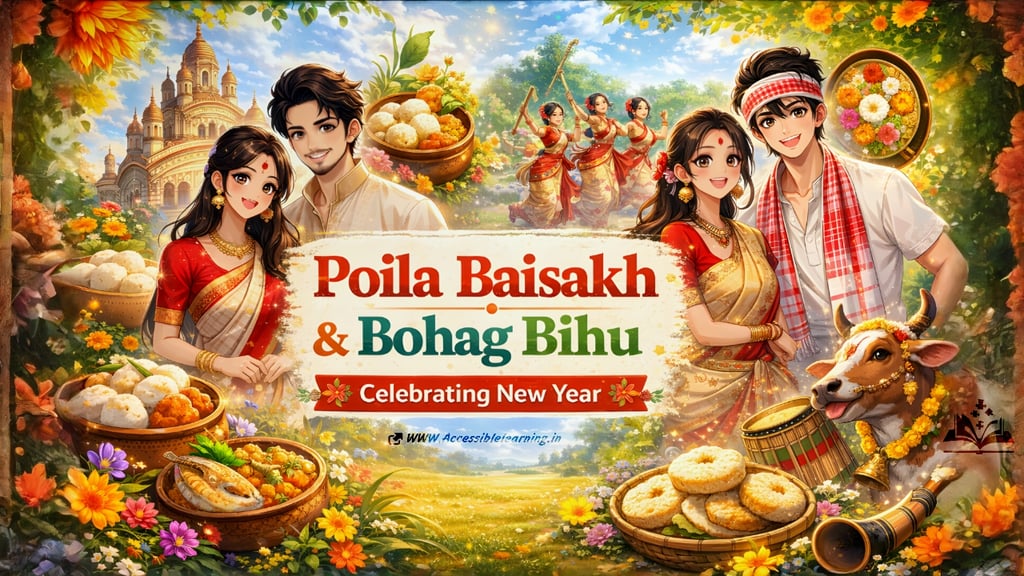
India’s New Year celebrations are not confined to a single date or tradition. In eastern India, Poila Baisakh (West Bengal) and Bohag Bihu (Assam) mark the arrival of a new year with deeply rooted customs, seasonal rhythms, and vibrant cultural expression. These festivals go beyond celebration; they reflect history, identity, agriculture, and the emotional rhythm of communities.
Poila Baisakh (West Bengal): Culture, Commerce & Community
Historical Background & Evolution
Poila Baisakh traces its roots back to the reign of Akbar, who introduced the Bengali calendar (Bangabda) to streamline tax collection based on agricultural cycles. Farmers could pay taxes after harvest, making the system practical and culturally aligned.
Over time, this administrative reform transformed into a social and cultural festival, blending royal influence with local traditions.
Symbolism & Meaning
Poila Baisakh represents:
A clean slate for individuals and businesses
Renewal of financial, emotional, and social ties
Celebration of Bengali identity and heritage
It is deeply tied to the idea of “Shubho Noboborsho” (Happy New Year), a greeting that carries warmth and hope.
Extended Traditions & Practices
1. Haal Khata Ceremony (Business Ritual)
Shopkeepers invite customers to close old accounts and begin new ones. This ritual is often accompanied by sweets and blessings, symbolizing trust and continuity.
2. Prabhat Pheris (Morning Processions)
Cultural groups organize early morning marches with songs by Rabindranath Tagore, reflecting Bengal’s artistic soul.
3. Alpana & Home Decoration
Homes and shop entrances are decorated with alpana (traditional floor art) made using rice paste, symbolizing purity and welcome.
Urban vs Rural Celebrations
Urban Bengal (Kolkata): Cultural programs, restaurant feasts, art exhibitions
Rural Bengal: More traditional, with temple visits, local fairs, and community meals
This contrast shows how Poila Baisakh adapts while preserving its essence.
Deeper Culinary Traditions
Food is symbolic:
Bitter dishes (like neem-based items) represent life’s challenges
Sweets symbolize hope for a pleasant year ahead
A traditional sequence of flavors reflects the philosophy of accepting all aspects of life.


Bohag Bihu (Assam): Nature, Youth & Agricultural Rhythm
Origins & Cultural Depth
Bohag Bihu, or Rongali Bihu, is rooted in ancient agrarian traditions of Assam. It marks the Assamese New Year and the beginning of the sowing season. Unlike purely religious festivals, Bihu is a secular and inclusive celebration, embraced by people across communities.
Symbolism & Life Philosophy
Bohag Bihu celebrates:
The cycle of nature
Fertility and regeneration
Youthful energy and romance
It reflects a lifestyle where humans live in harmony with land, animals, and seasons.
Expanded Phases & Their Meaning
1. Goru Bihu (Day of Cattle)
Cattle are washed with turmeric and black gram paste, symbolizing purification and gratitude.
2. Manuh Bihu (Day of People)
People wear new clothes, exchange gifts, and seek blessings from elders.
3. Husori Performances
Groups visit homes singing traditional songs, blessing households for prosperity.
4. Gosai Bihu (Spiritual Day)
Devotion and prayers are offered, balancing celebration with spirituality.
Bihu Dance: More Than Performance
Bihu dance is not just entertainment; it is
A form of social bonding
Expression of love and courtship
Celebration of youth and vitality
The rhythm of dhol, pepa, taal, and flute creates an atmosphere that is energetic yet deeply cultural.
Role of Handloom & Identity
Assam’s weaving tradition plays a central role:
The gamusa symbolizes respect and honor
Women often wear self-woven Mekhela Chador, showcasing craftsmanship
Handloom is not just clothing; it is identity woven into fabric.
Agricultural Importance
Bohag Bihu marks:
Beginning of sowing season
Preparation for future harvests
Renewal of farmer optimism
It reflects the economic backbone of Assam, agriculture.
Hidden Similarities Between Poila Baisakh & Bohag Bihu
While they appear different, both festivals share deeper connections:
Both follow solar calendars and align with harvest cycles
Both emphasize renewal and gratitude
Both include music, food, and community bonding
Both reflect a balance of tradition and evolving modern life
They are regional expressions of a universal human idea: starting fresh with hope.
Modern Relevance & Changing Trends
Digital Era Celebrations
Online greetings and virtual events are becoming common
Businesses promote Poila Baisakh through discount campaigns and branding
Bihu performances are now shared globally via social media
Cultural Preservation Efforts
Organizations and youth communities are:
Reviving traditional music and dance
Promoting regional languages
Encouraging sustainable and eco-friendly celebrations

Sustainability & Eco-Friendly Practices
Both festivals are naturally aligned with sustainability:
Use of natural decorations (flowers, leaves, rice paste)
Traditional foods made from local and seasonal ingredients
Minimal reliance on artificial materials
This makes them relevant in today’s eco-conscious world.
Lesser-Known Facts
The Bengali calendar is still used for religious events and agriculture
Bihu songs often include improvised lyrics, making each performance unique
Gamusa has been recognized as a symbol of Assamese cultural pride
Poila Baisakh is also celebrated in Bangladesh with grand processions
Poila Baisakh and Bohag Bihu are not just festivals on a calendar. They are reflections of how communities understand time, nature, and human connection. In a world that is constantly moving forward, these celebrations gently remind us to pause, reset, and begin again with meaning.
FAQ's
Q: What is Poila Baisakh, and why is it celebrated?
Poila Baisakh is the Bengali New Year celebrated in West Bengal and among Bengali communities worldwide. It marks the first day of the Bengali calendar and symbolizes new beginnings, prosperity, and cultural identity. Traditionally, it is also linked to agricultural cycles and historical tax reforms introduced during the Mughal period.
Q: What is Bohag Bihu, and what does it signify?
Bohag Bihu, also known as Rongali Bihu, is the Assamese New Year festival. It celebrates the arrival of spring, the start of the sowing season, and the renewal of life. It reflects Assam’s deep connection with agriculture, nature, and community traditions.
Q: When are Poila Baisakh and Bohag Bihu celebrated?
Both festivals are typically celebrated in mid-April, usually on April 14 or 15. The exact date may vary slightly each year based on the solar calendar followed in eastern India.
Q: What are the main rituals of Poila Baisakh?
Key rituals include:
Haal Khata (opening new business accounts)
Visiting temples for blessings
Wearing traditional attire
Enjoying festive meals with family
These customs emphasize prosperity, renewal, and social bonding.
Q: What are the key traditions of Bohag Bihu?
Bohag Bihu includes multiple phases:
Goru Bihu (honoring cattle)
Manuh Bihu (celebrating with family and community)
Husori performances (group singing and blessings)
It also features vibrant dance, music, and traditional food.
Q: What is the difference between Poila Baisakh and Bohag Bihu?
Poila Baisakh is more focused on cultural and commercial practices like business rituals and feasts, while Bohag Bihu is primarily an agricultural festival celebrating nature, farming, and seasonal change. Both, however, symbolize new beginnings and community unity.
Q: What foods are prepared during these festivals?
Poila Baisakh: Ilish fish dishes, rice, lentils, and sweets like rosogolla and sandesh
Bohag Bihu: Pitha (rice cakes), laru (sweet balls), and seasonal ingredients
Food plays a central role in expressing tradition and abundance.
Q: What do people wear during Poila Baisakh and Bohag Bihu?
Poila Baisakh: Women wear white sarees with red borders; men wear kurta or dhoti
Bohag Bihu: Women wear Mekhela Chador; men wear traditional attire with gamusa
Clothing reflects regional identity and festive spirit.
Q: Are Poila Baisakh and Bohag Bihu religious festivals?
Both festivals have spiritual elements, but they are largely cultural and community-based celebrations. People from different backgrounds participate, making them inclusive and widely celebrated beyond religious boundaries.
Q: How are these festivals celebrated in modern times?
Today, celebrations include:
Cultural events and performances
Social media greetings and digital campaigns
Restaurant specials and festive offers
Community gatherings in cities and abroad
Despite modernization, traditional values remain at the core.
Q: Why are these festivals important in Indian culture?
They preserve regional heritage, promote unity, and highlight the importance of agriculture and seasonal cycles. They also strengthen family bonds and cultural continuity across generations.
Q: Are these festivals celebrated outside India?
Yes, both Poila Baisakh and Bohag Bihu are celebrated by diaspora communities in countries like Bangladesh, the UK, the US, and Canada, keeping traditions alive globally.
Subscribe To Our Newsletter
All © Copyright reserved by Accessible-Learning Hub
| Terms & Conditions
Knowledge is power. Learn with Us. 📚

